
It already looks like a red fox on stilts, but somehow that’s just the beginning.
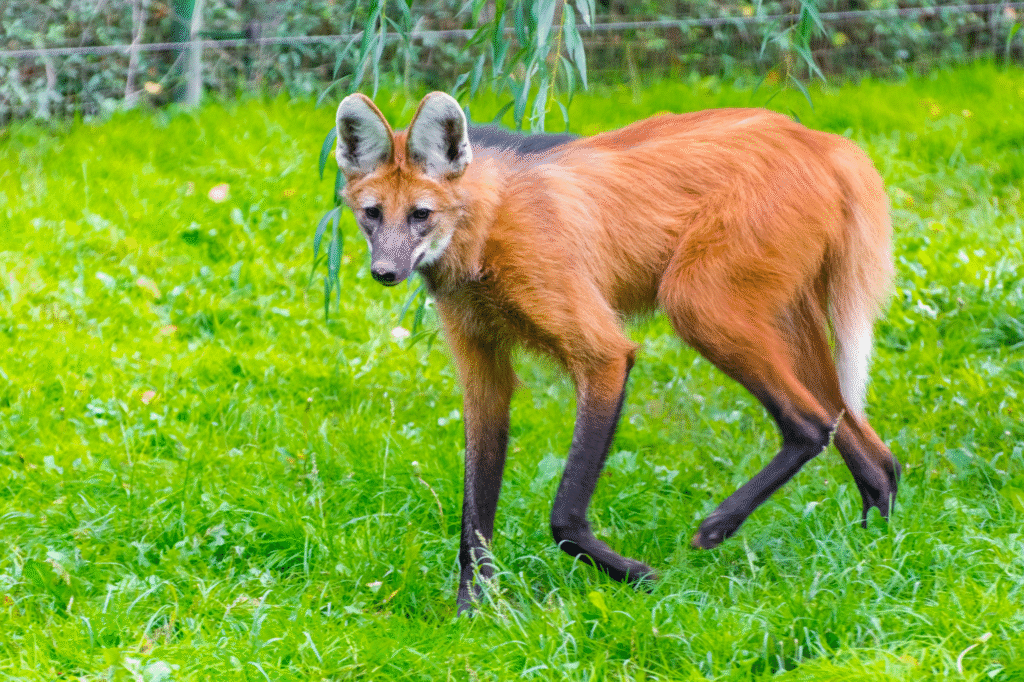
If you’ve ever seen a photo of a maned wolf and thought it looked Photoshopped, you’re not alone. The legs are too long, the body too skinny, the face too foxlike for your brain to accept it as real. But the weirder part is, that’s not even the half of it. This animal isn’t a wolf, isn’t a fox, doesn’t bark, and smells like weed. Here’s what makes this gangly icon even more confusing.
Its legs are longer than any wild canid on earth.

The maned wolf’s legs are outrageously long, not because it’s extra tall overall, but because it evolved in the tall grasslands of South America. As discovered by the Smithsonian’s National Zoo, the stilts help them see above grass and hunt small prey on flat terrain. These aren’t normal dog legs. They look more like a deer with paws. The way it moves is almost ghostly, like it’s floating with every step.
It walks with a weird pacing gait, which means it lifts both legs on one side before the other. That’s a camel move. Not a dog move. The result is this fluid, striding, almost-too-elegant motion that looks staged. If you saw one coming out of the mist, you’d think it was some AI filter glitch in real life. But no, it’s just built like that.
It’s not actually a wolf and not even closely related to one.

Despite the name, this lanky animal isn’t a wolf. It’s in its own genus entirely, Chrysocyon, which translates to “golden dog,” and it’s more closely related to bush dogs and extinct ancient canids than to modern wolves. According to National Geographic, scientists have confirmed that the maned wolf diverged early from the wolf and fox family trees. It’s been doing its own thing for millions of years.
So if it looks like someone mashed a fox, a deer, and a dog into one body and then gave it high fashion runway legs, that’s because it kind of is. It didn’t come from wolves, didn’t evolve from foxes, and doesn’t fit anywhere neat on the canine family chart. It just exists in its own dramatic lane.
It smells like marijuana and zoos have gotten police complaints about it.
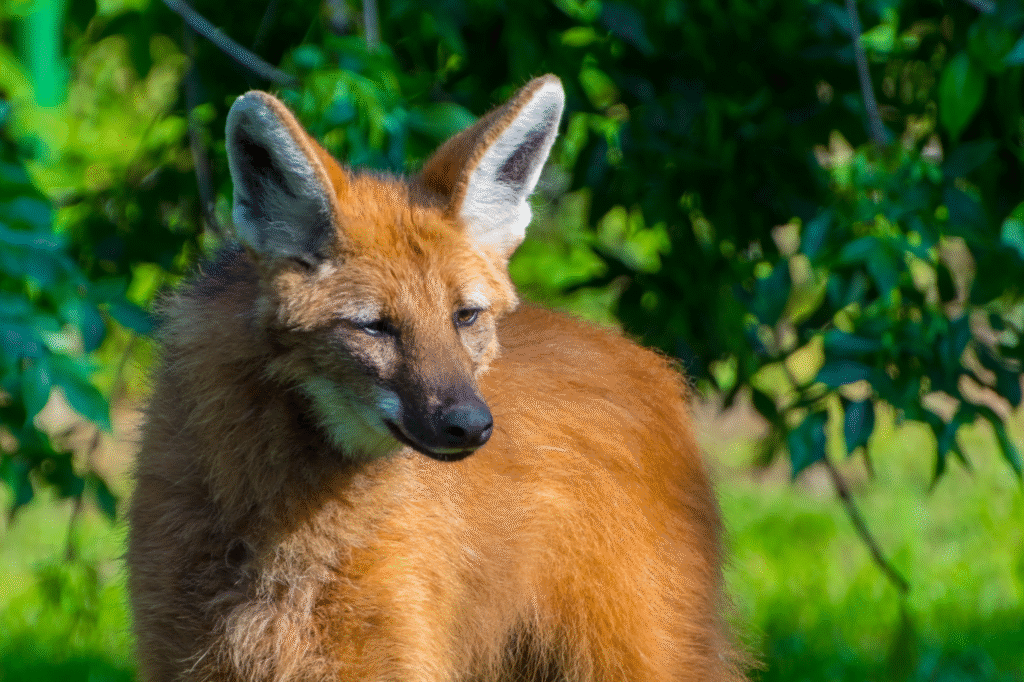
Zoos that house maned wolves have actually received calls from concerned guests or neighbors thinking someone is illegally lighting up. As stated by the Denver Zoo, the strong skunky scent comes from the animal’s urine, which contains a compound that smells eerily like cannabis. They use it to mark territory, and it lingers. People walking by sometimes think staff are getting high behind the exhibits.
The smell is not subtle. It’s musky and potent, and if you don’t know what’s causing it, you’d absolutely assume it’s human-made. But no, it’s all wolf pee. It’s such a consistent trait that zookeepers have used the smell to monitor territories or know which individuals are more dominant. Nature said this one should leave a trace.
It eats bananas, tubers, and fruit more often than meat.
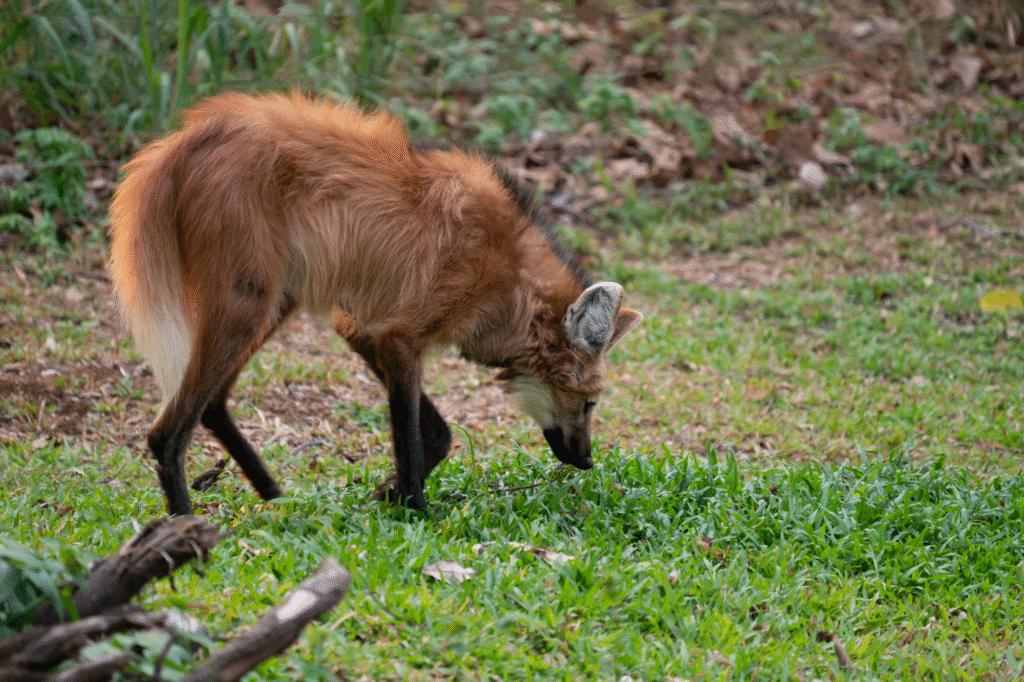
Even though it’s part of the canid family, the maned wolf doesn’t hunt like one. Its diet is about half plant-based, and it especially loves a little tomato-shaped fruit called the lobeira. It’s also been seen snacking on bananas, sugarcane, and even roots. The meat it eats is mostly small rodents, birds, or insects. This is not a carnivore tearing through a pack. It’s more of a quiet forager.
You won’t catch it stalking large prey or chasing anything for miles. It prefers to move through the landscape in silence, picking off snacks that don’t fight back. This makes it both elegant and oddly gentle, especially compared to actual wolves. Its vibe is more lone herbalist than apex predator.
It doesn’t howl or bark—it makes this deep haunting roar-bark.
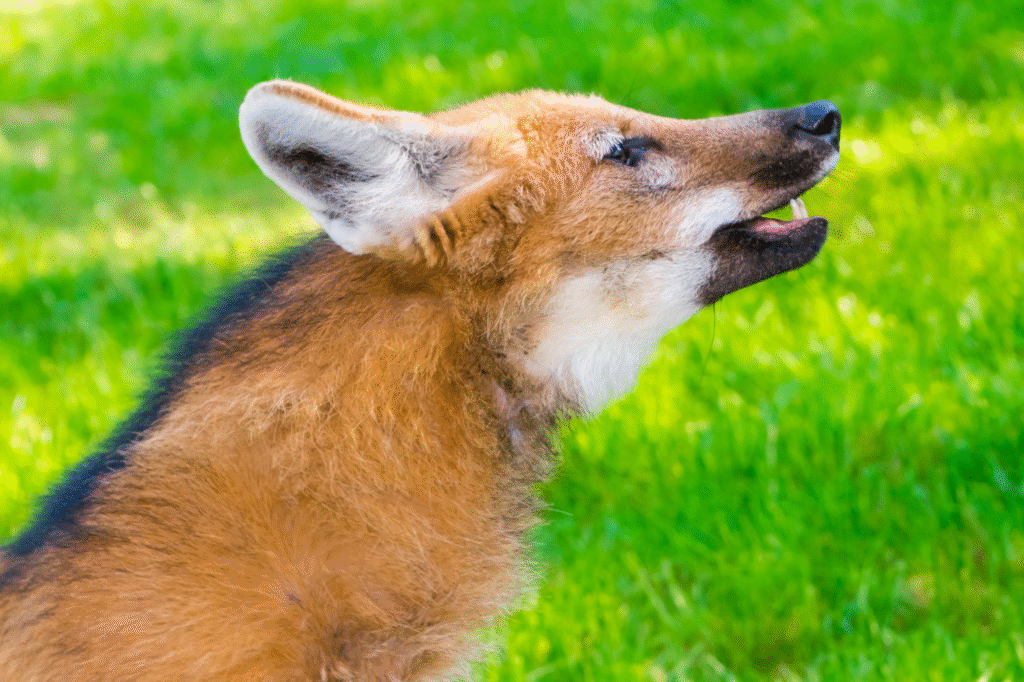
No howling at the moon for this one. When the maned wolf vocalizes, it uses a sound that’s more low-pitched and resonant than what you’d expect from something that lanky. The call is called a roar-bark, and it sounds like a weird cross between a deep woof and a guttural warning. It’s meant to carry long distances across the open plains, and it does.
The sound is eerie. If you were out camping in the Brazilian Cerrado and heard it echo at night, you’d probably assume it came from something massive and dangerous. But no, it’s just the supermodel of the dog world letting everyone know where its territory begins. The call is rarely used unless it’s mating season or a threat is nearby. Most of the time, it’s silent and elegant, walking through grass like it owns the place.
It’s the only wild canid that pees while doing a handstand.
Yes, it handstands. Male maned wolves do this bizarre gymnastic move while marking territory—lifting their back legs and balancing on their front paws so they can aim their scent higher up on vertical surfaces. No, not every time they pee, but when it’s time to flex dominance or make sure the message gets noticed, they get acrobatic. Other wild canids raise a leg. This one does parkour.
Scientists think it’s all about visual impact. The higher the scent mark, the bigger the animal appears to potential rivals. And in a flat grassy biome, even a few inches make a difference. You wouldn’t expect an animal that moves like a runway model to suddenly break into a circus act just to leave its scent, but here we are. This species really lives for the weird flex.
They rarely pair up, and when they do, they still live solo.
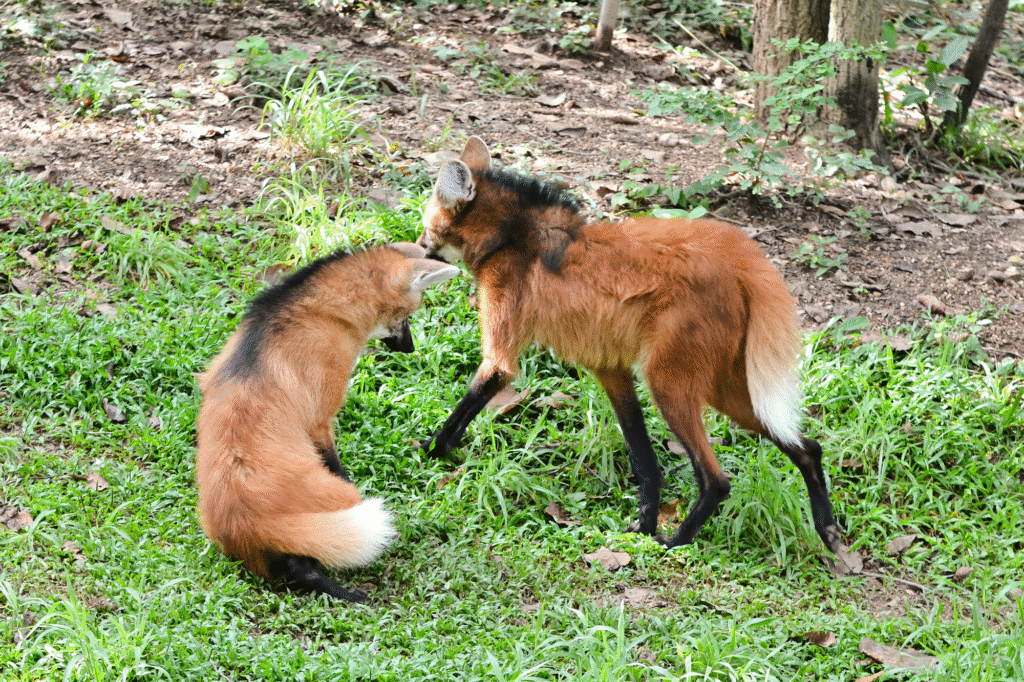
Maned wolves are technically monogamous, but not in the romantic way. A pair may stay together for breeding season and raise pups as a team, but the rest of the year, they keep to themselves. There’s no cuddling up for naps or sharing dens. They’ll roam separate territories that sometimes overlap but mostly keep contact minimal unless it’s business.
This weirdly antisocial vibe makes them unique in the canid world. Most wild dogs either live in packs or operate completely alone. The maned wolf lives in this strange in-between. It’s like they text their partner once a year, have kids, and then ghost each other for months. Zoologists say this loose relationship style likely evolved to match their low-density lifestyle and the scattered resources of their native grasslands.
Their pups come out pitch black and look nothing like them.
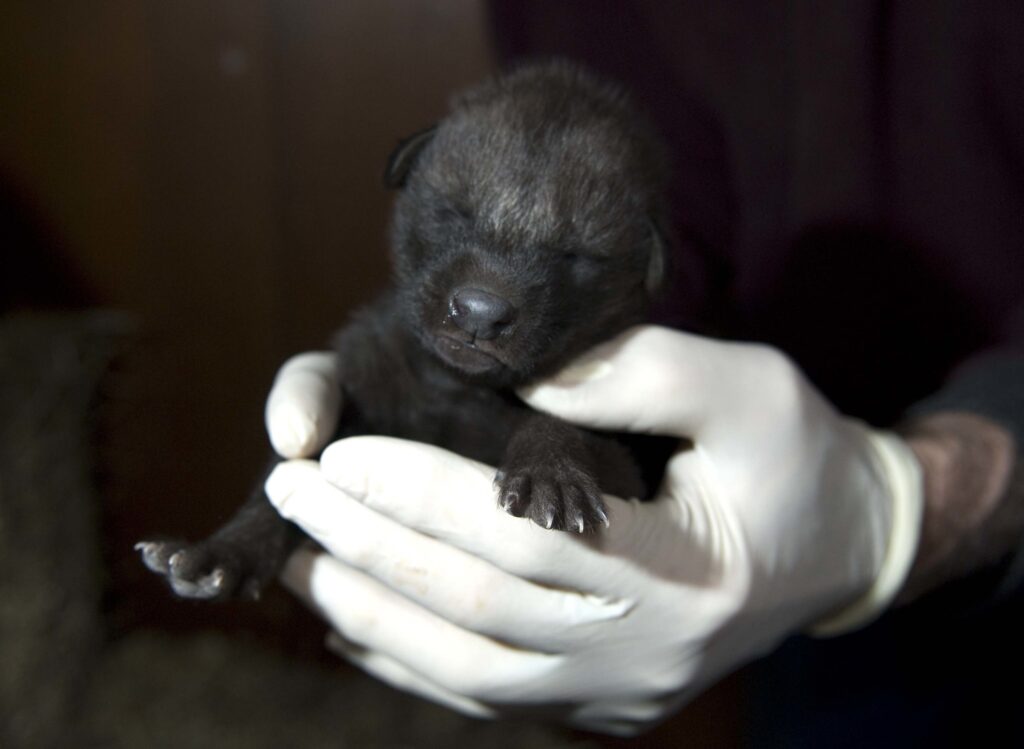
Baby maned wolves don’t resemble their parents at all. They’re born jet black with just a few tan markings, looking more like fluffy bear cubs or dark foxes than mini versions of their leggy parents. For the first few months, they’re clumsy and pudgy, with none of the exaggerated limbs or signature mane. If you saw one, you wouldn’t guess what it would turn into.
The dark color might help with camouflage in the thick grass or when tucked into dens, but it’s jarring to see how dramatic the glow-up is. As they grow, their legs shoot up, their coat lightens into that rusty reddish hue, and suddenly they start walking like they’re wearing heels. But that first phase? Nothing about it screams maned wolf. It’s a total transformation.
Their fur bristles up into a mohawk when they feel threatened.
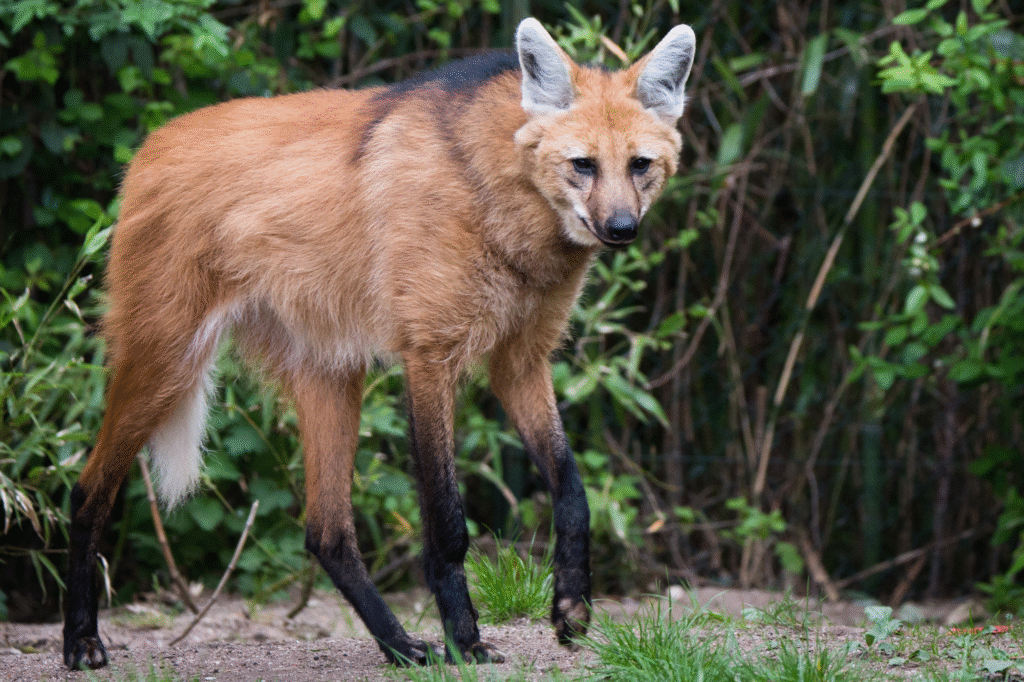
The “mane” part of the maned wolf’s name comes from a patch of black fur running down the back of its neck and shoulders, which it can raise like a mohawk. When scared or trying to look bigger, it puffs up that fur and angles its body sideways, kind of like a cat arching its back. The goal is to look taller and more intimidating, and with those stilts for legs, it definitely works.
This isn’t some passive fashion choice. The move is deliberate. It’s part of how they hold their own out in the open where hiding isn’t always an option. They don’t often get into fights, but if they feel threatened, they’d rather posture than pounce. It’s all about presence. They show up, flare up, and walk like they know exactly what they’re doing. And honestly, they kind of do.