
Life above the forest floor comes with a different set of rules, and they’ve mastered every one of them.
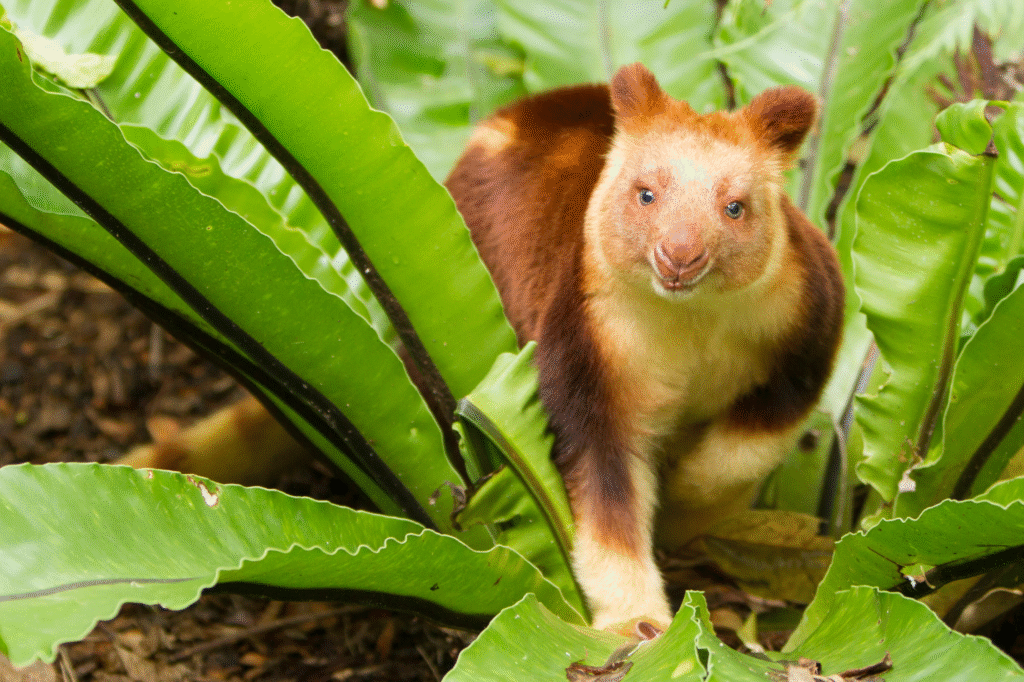
The average kangaroo is a ground-hopping, sunbaked icon of Australia. The tree kangaroo, though? It’s a high-altitude gymnast living hundreds of feet up in the mossy cloud forests of Papua New Guinea and northeastern Australia. They’re fur-coated enigmas that move with the grace of a tightrope walker, surviving in places few humans ever see. Here’s what makes them such masters of the treetop world—and why their sky-high lifestyle is more calculated than it looks.
1. Powerful legs give them a vertical advantage.
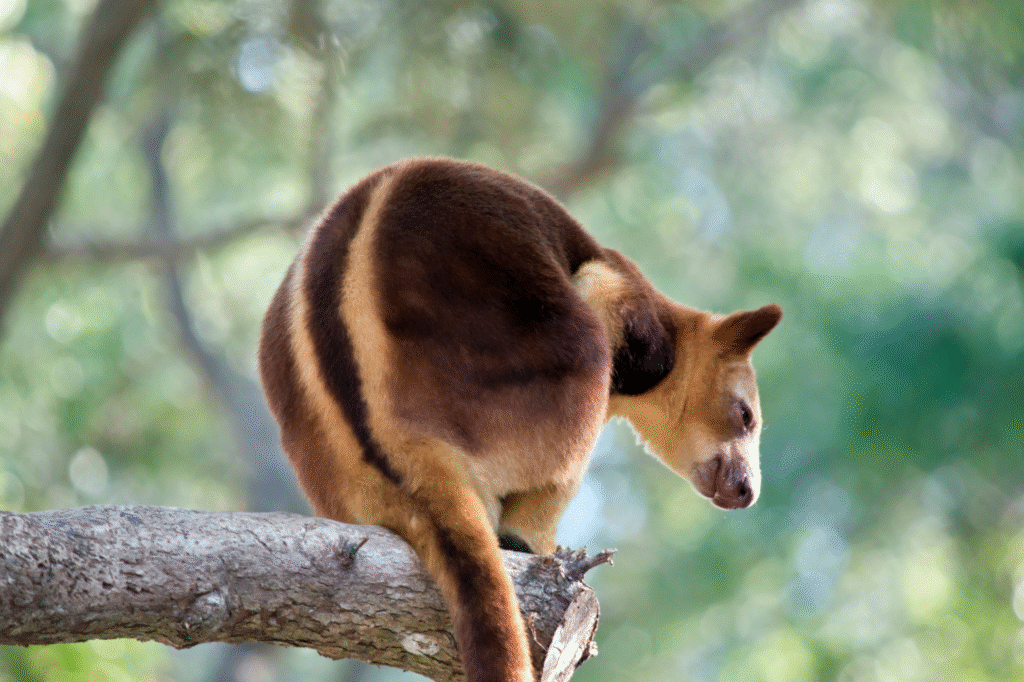
The tree kangaroo’s body is a masterclass in climbing adaptation. As reported by the Australian Museum, their legs are shorter and more muscular than ground kangaroos, while their forelimbs are unusually strong for pulling themselves up trunks. This combination lets them grip bark, scale heights quickly, and leap between branches without the awkward hopping gait that would betray a ground-dweller. Every muscle is tuned for stability in an unstable environment.
What makes this truly remarkable is the control they have in mid-air. Leaps aren’t reckless; they’re calculated for safe landings, even on thin, swaying branches. They can descend backward like a rock climber or take running leaps across canopy gaps the width of a living room. While their land-based cousins excel at speed, the tree kangaroo trades raw velocity for the kind of deliberate, powerful movement that keeps it alive in a three-dimensional maze of wood, vines, and air.
2. A tail acts like a gymnast’s balancing pole.
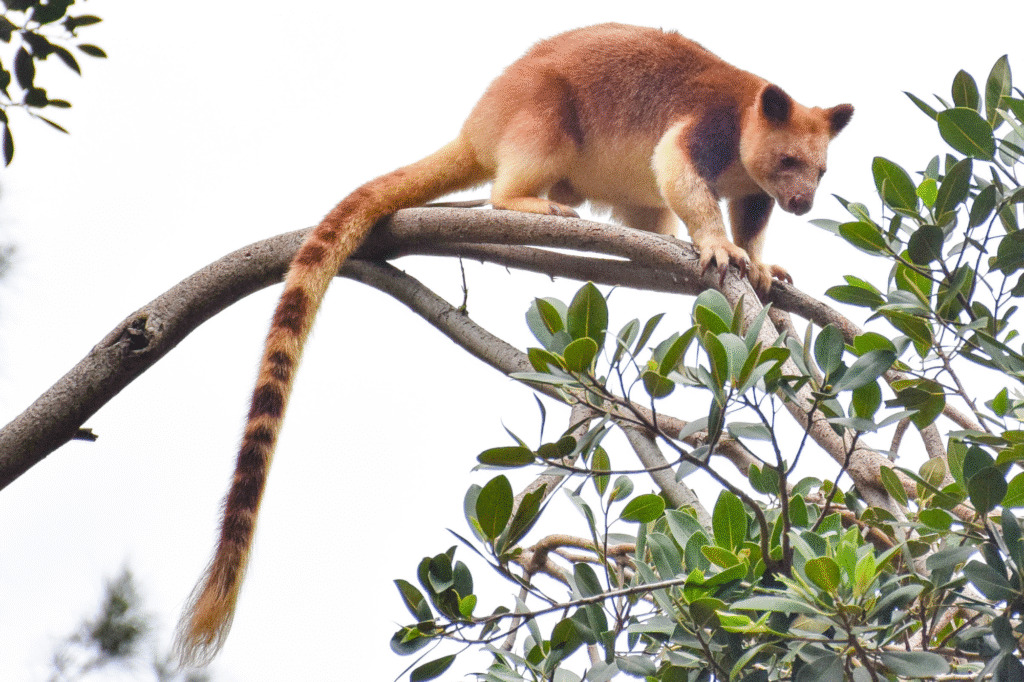
Tree kangaroos navigate branches as if the air itself supports them, and much of that comes down to tail control. As stated by National Geographic, their long, thick tail doesn’t curl or grip—it counterbalances their body like a tightrope walker’s pole. This allows them to lean forward without tipping, correct mid-leap, and twist into a landing with pinpoint accuracy.
The tail is especially vital during high-risk moves. Picture a branch no thicker than your arm swaying under wind and weight, and you’ll see why perfect equilibrium is life or death. Without that counterweight, a mistimed leap could mean a fall from over 30 feet. In the slow-motion world of a canopy predator’s approach, the tail’s role is as much about precision escape as it is about everyday movement. It’s a constant, silent player in their survival story, as important as their sharp eyes or powerful hind legs.
3. Cloud forest mist is their constant backdrop.
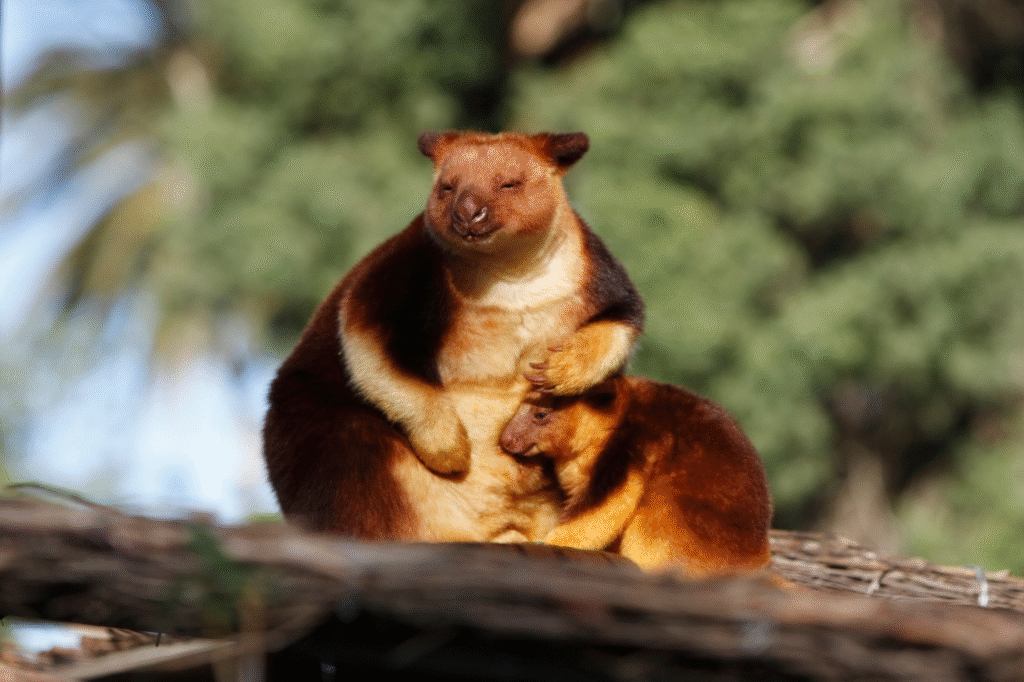
Tree kangaroos live in some of the most moisture-rich forests on Earth. The University of Queensland notes that cloud forests are shrouded in mist almost year-round, creating a damp, cool, and densely vegetated habitat. For a tree kangaroo, that means endless moss-covered branches that act like natural cushioning for landings and a soft blanket of camouflage from above.
These high-altitude forests are unlike any lowland rainforest—less sunlight, cooler temperatures, and layered canopies that offer multiple escape routes. The mist itself helps by reducing scent trails, making it harder for predators to track them. Yet, it also brings challenges: slippery surfaces, less predictable food sources, and the need to keep fur insulated against constant dampness. Living here requires not just strength and agility, but also an almost intuitive knowledge of every branch, vine, and landing spot hidden in the foggy green above.
4. Long-distance leaps keep them mobile and safe.
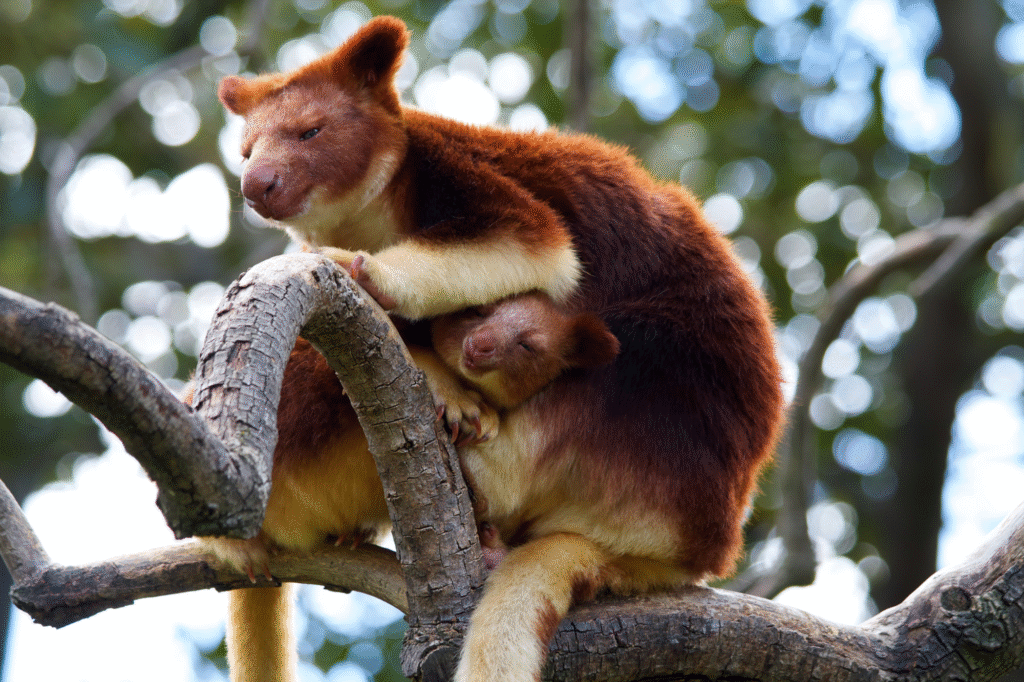
Few animals their size can match the horizontal jumps of a tree kangaroo. They can clear distances up to the length of a pickup truck between branches, using explosive power in their hind legs to propel themselves forward. This isn’t done for show—it’s a necessity to reach feeding areas or evade predators without descending to dangerous ground.
In the dense canopy, distance jumping allows them to string together an entire route without breaking cover. This mobility keeps them unpredictable, something aerial predators like eagles struggle with. And because the forest is layered, they can choose to leap across the same plane or drop slightly with each jump, making them even harder to track. This skill is the ultimate combination of raw athleticism and mental mapping, allowing them to move fluidly through a world that’s constantly shifting under weather, growth, and competition.
5. A selective diet shapes their daily routes.
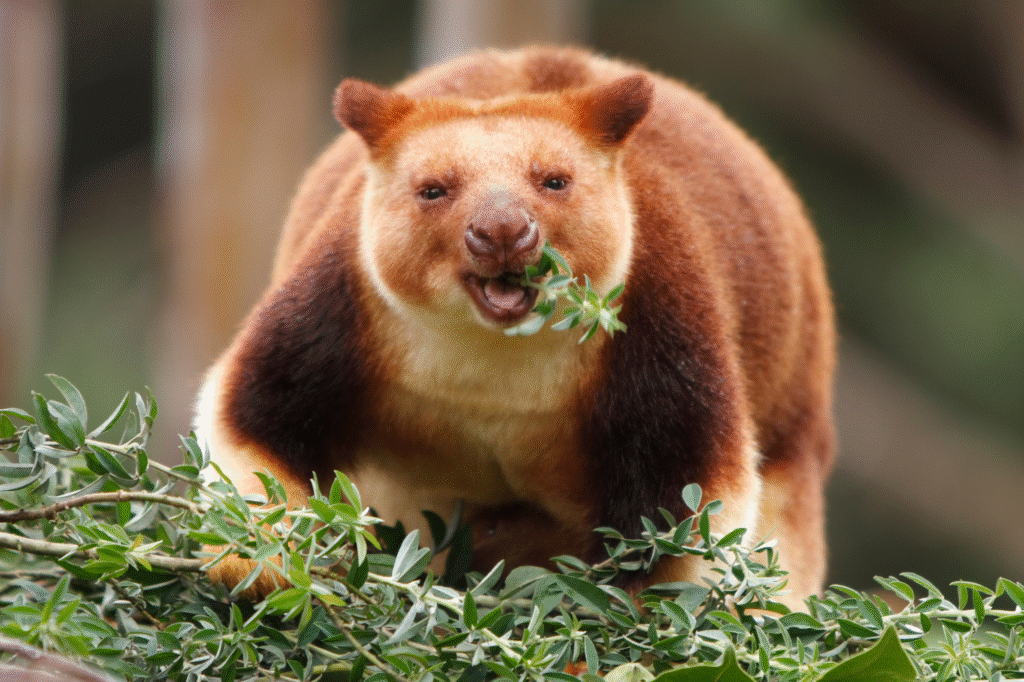
Tree kangaroos aren’t indiscriminate grazers. They prefer specific leaves, fruits, flowers, and even bark from particular trees, which means they need to remember exactly where and when these foods will be available. Their feeding habits shift seasonally, forcing them to move through a wide home range to keep up with changing resources.
This selectiveness isn’t a luxury—it’s a survival strategy. By targeting certain plants, they can maximize nutrition without wasting energy on lower-quality food. It also means they’ve evolved to navigate efficiently, using their acrobatic skills to reach exact branches high above the ground. The result is a mental map of their forest that rivals the accuracy of a human-made trail system. And because food is scattered vertically as well as horizontally, they remain in constant motion, turning the canopy into a living buffet line that demands both memory and mobility.
6. Camouflage makes them almost invisible overhead.
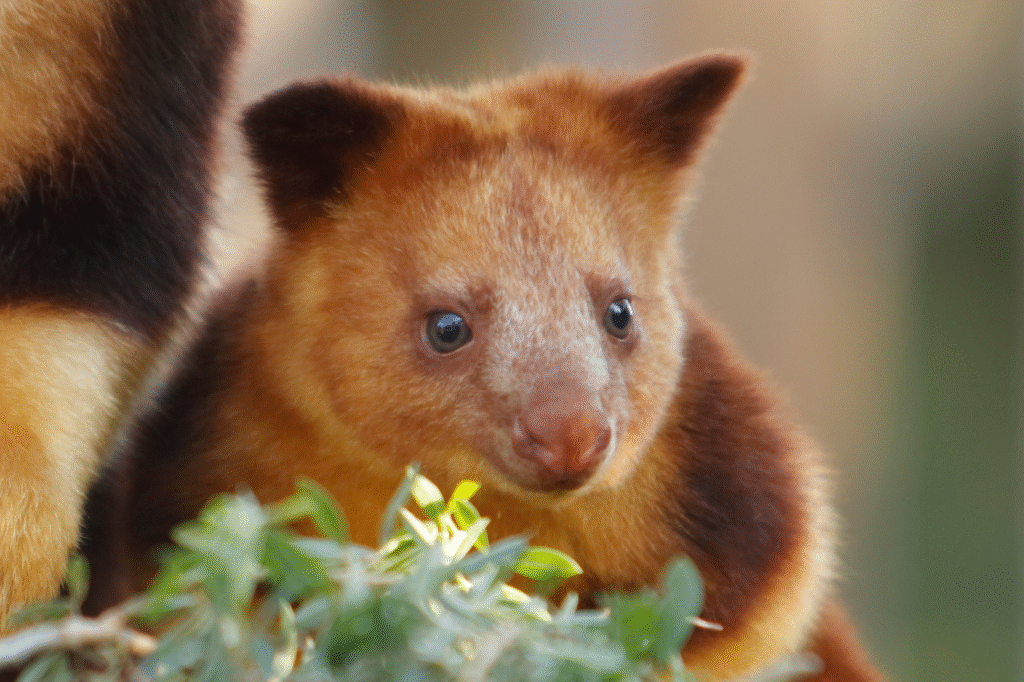
Spotting a tree kangaroo in the wild is notoriously difficult, even for trained researchers. Their thick, reddish-brown fur blends seamlessly with the dappled light of the canopy, where sun filters through leaves in shifting patterns. By staying perfectly still, they can all but vanish against a backdrop of moss, bark, and shadow.
This invisibility is their first line of defense against predators like pythons and large birds of prey. It also helps them avoid confrontations with other tree kangaroos, since encounters can lead to aggressive displays or fights over food-rich areas. The key is patience—they wait for threats to pass rather than risk an escape that could expose their position. In an environment where every movement draws attention, this ability to disappear in plain sight can be just as important as their skill in moving through the treetops.
7. Rest periods are part of their survival plan.
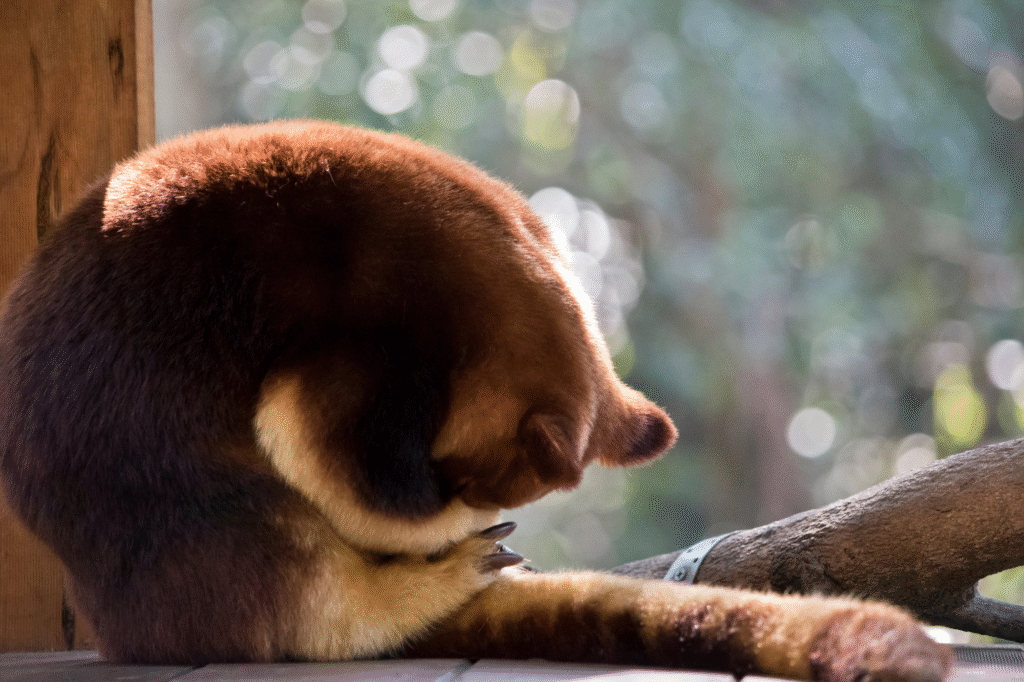
For all their athleticism, tree kangaroos spend a surprising amount of time resting. The cloud forest diet—high in fibrous leaves—takes energy to digest, so long periods of inactivity help conserve calories. They often lounge in forked branches for hours, letting the cool air regulate their body temperature while their digestive systems work.
This unhurried pace also reduces risk. Moving less means fewer opportunities to slip, miscalculate a jump, or attract unwanted attention from predators. The contrast between their bursts of dynamic movement and their stillness is part of what makes their lifestyle sustainable. They can afford to be acrobats because they know when to stop, balancing energy expenditure with the unpredictable nature of finding food in a vertical, seasonal environment.
8. Human expansion threatens their aerial highways.
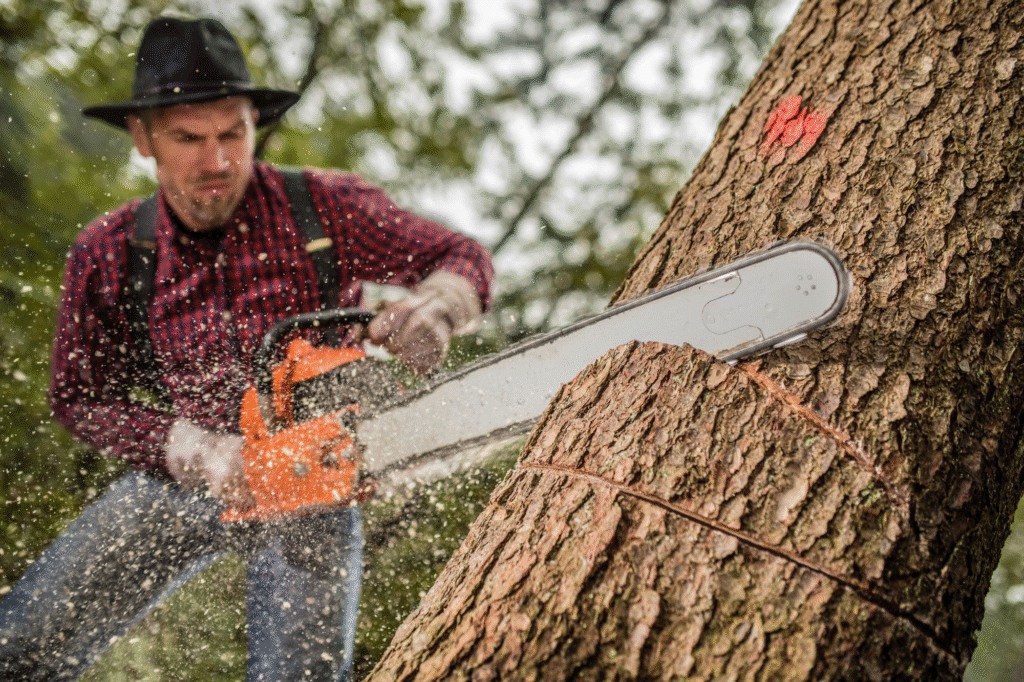
Even the most skilled climber can’t adapt to a vanishing forest. Tree kangaroos depend on continuous canopy to move and feed without descending to the ground. Logging, agriculture, and road-building carve gaps into these routes, forcing them to risk crossing open ground where they’re far more vulnerable.
As these gaps widen, their home ranges shrink, leading to overcrowding in remaining patches. This increases competition for food and reduces genetic diversity. In effect, habitat loss grounds them—not because they can’t climb, but because there’s nowhere left to climb to. Without intervention, their mastery of the canopy could become irrelevant in the face of fragmented, degraded landscapes that no longer support their unique way of life.
9. Some of them may be vanishing before we even study them.
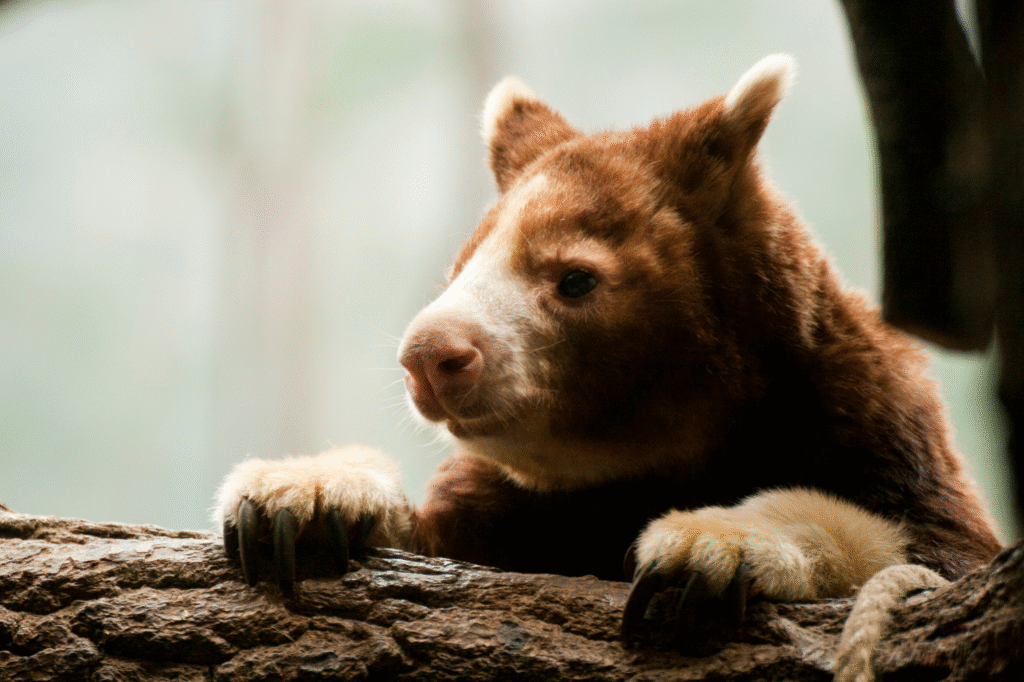
Certain species of tree kangaroo, like the Wondiwoi, are so rarely sighted that scientists aren’t sure if they still exist in viable numbers. The combination of small ranges, human encroachment, and low population densities makes their survival incredibly fragile.
The tragedy here is that their specialized lifestyle makes relocation nearly impossible. They can’t simply move to another forest if it lacks the precise structure and climate they’ve evolved for. Without swift, targeted conservation, these cloud forest acrobats could disappear quietly, leaving only fragmented sightings and a few museum specimens as proof they were ever there.