
The latest discoveries suggest this monument carried many meanings across centuries.
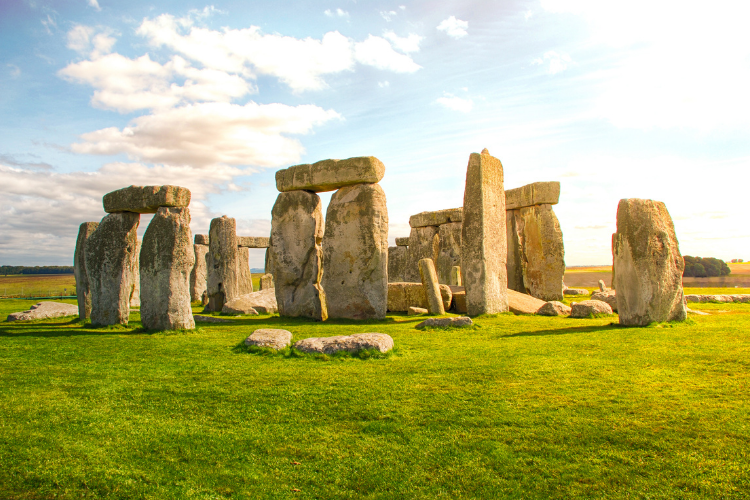
Stonehenge looms on Salisbury Plain as a riddle carved in stone, a monument older than the pyramids yet still not fully understood. For generations, it has drawn theories about druids, cosmic observatories, or alien landing pads. But modern archaeology has chipped away at the myths, revealing a site shaped by human hands, human choices, and human meaning.
The new discoveries don’t settle the mystery with a single answer. Instead, they show Stonehenge wasn’t built for just one purpose. It was cemetery, calendar, gathering ground, and monument of unity, shifting in meaning over centuries. That layered story makes it more compelling than any single theory ever could.
1. The bluestones came from the hills of Wales.
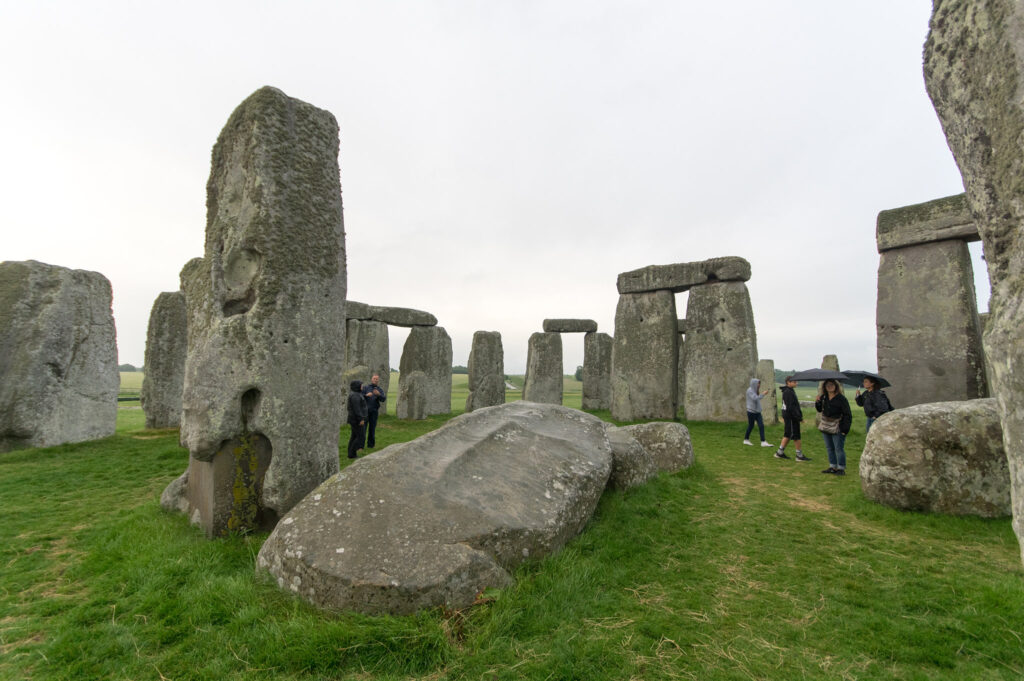
Geologists traced Stonehenge’s smaller bluestones to the Preseli Hills nearly 150 miles away. According to Antiquity, quarry sites in Wales match the stone’s chemical makeup exactly, confirming they were hauled across rivers and valleys by Neolithic builders. The journey required astonishing labor and planning.
These stones weren’t chosen just for size or shape. Their Welsh origin suggests symbolic meaning, perhaps linking ancestral homelands to the Salisbury Plain. Dragging them so far implies they carried memory and identity, transforming Stonehenge into more than a local project. It was already, from the beginning, a monument tied to multiple regions.
2. The towering sarsens were brought from nearby.
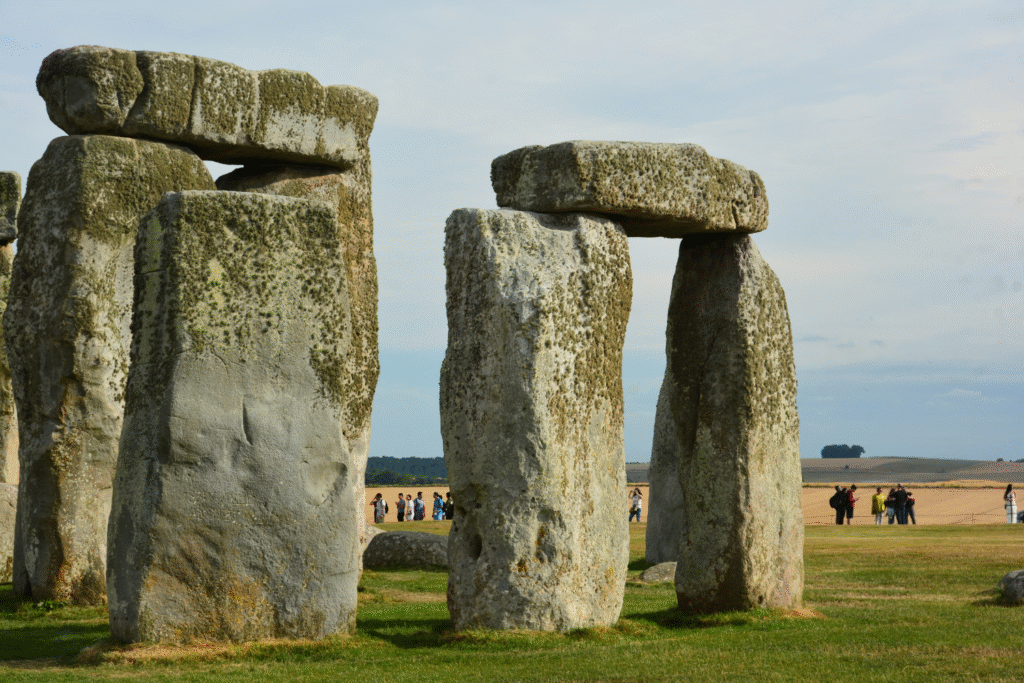
In contrast, the larger sarsens came from just 15 miles away. A 2020 analysis in Science Advances proved most originated in West Woods, a local quarry. The match was precise enough to end decades of speculation about their source. The builders mixed far-flung bluestones with local sandstone giants.
The decision wasn’t random. Using nearby sarsens for size and structure while hauling in distant bluestones for symbolic weight suggests deliberate design. Stonehenge was built both for practicality and for meaning. It reflected a merging of materials, just as it reflected the merging of communities.
3. Burial remains show Stonehenge began as a cemetery.
Archaeologists discovered cremated remains in pits around the earliest phases of Stonehenge. As stated by English Heritage, some of the ashes belonged to people from Wales, the same region where the bluestones originated. That suggests the stones and the dead were carried together to the site.
These burials root Stonehenge in memory and ancestry. Before it became a grand circle, it was already sacred ground. The earliest builders treated it as a place to anchor the dead, tying community identity to both people and stone. Later generations layered new meanings on top of this foundation.
4. The sun dictated its orientation.
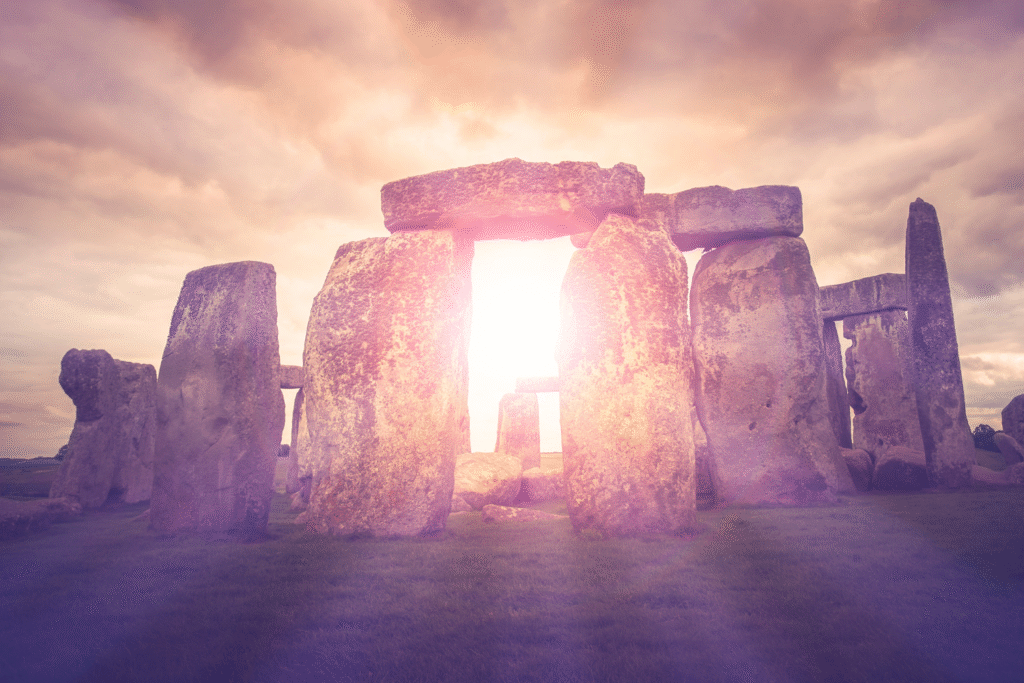
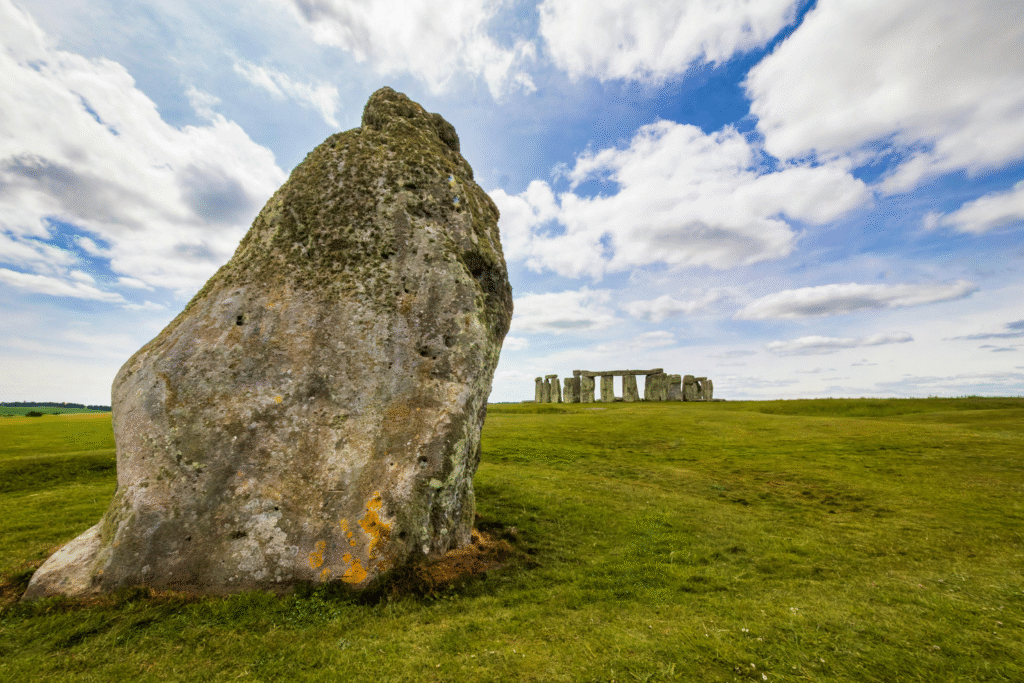
The monument’s alignment with solstices remains its most famous feature. On the summer solstice, the sun rises perfectly framed by the Heel Stone. On the winter solstice, it sets between the great trilithons. The design is too precise to be coincidence.
For Neolithic communities, these alignments weren’t aesthetic—they were survival. They marked seasonal cycles of planting, harvest, and migration. Stonehenge functioned as a calendar written in stone, grounding cosmic time into human ritual. This is where the monument shifted beyond burial ground to become a clock for the community.
5. Seasonal feasts turned the plain into a gathering place.
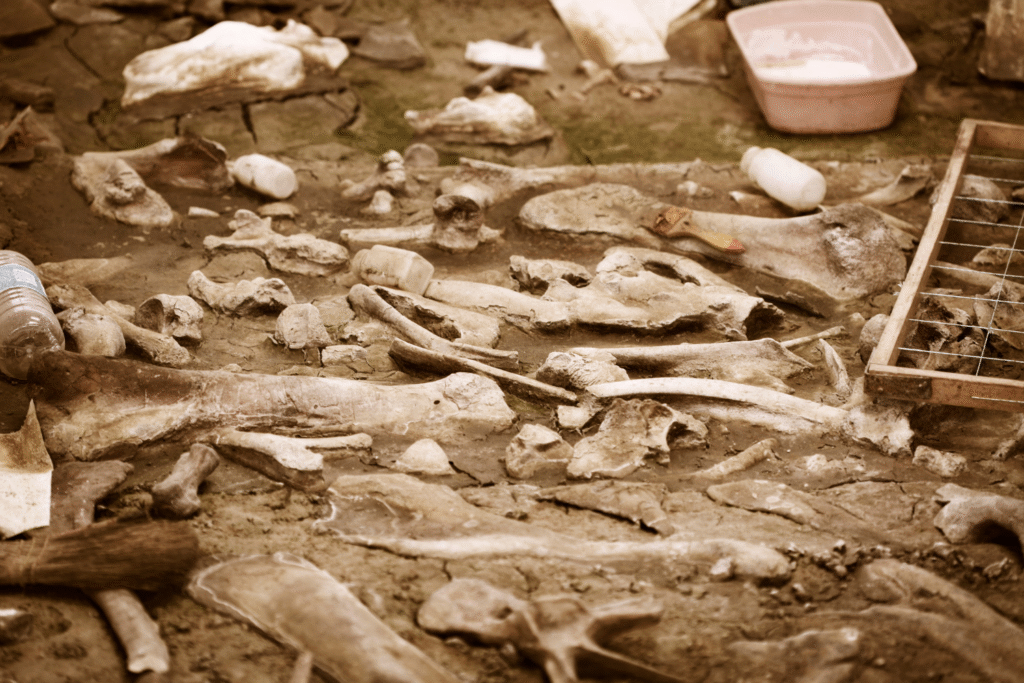
Animal bones unearthed at nearby Durrington Walls tell of mass feasts tied to Stonehenge ceremonies. Pigs and cattle were herded from hundreds of miles away, then slaughtered in seasonal cycles. The scale of these gatherings suggests whole communities converged for solstices.
The feasts weren’t only about food. They were about solidarity. People brought livestock, labor, and ritual to the plain, strengthening bonds across distant groups. The monument became not just a sacred site but a social magnet, pulling people into shared rhythms of life.
6. Wooden monuments reveal a wider ceremonial landscape.
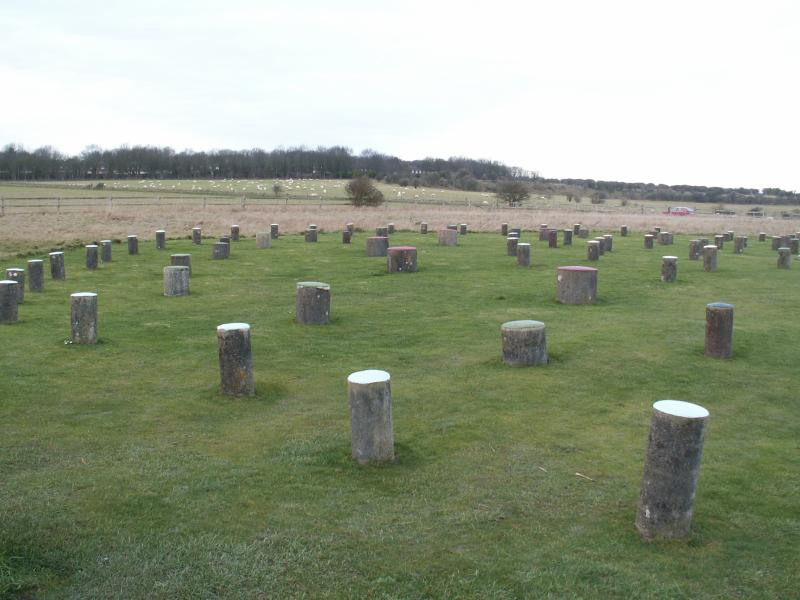
Excavations have uncovered timber circles and posts near Stonehenge. These structures, long rotted away, hint at a ceremonial network of wood and stone. Archaeologists believe wooden monuments represented life, while stone embodied ancestors and permanence.
That contrast paints Stonehenge not as a solitary site but part of a larger symbolic journey. Moving from wood to stone, from perishable to permanent, could have mirrored the passage from living to dead. The meaning lay not just in the circle itself but in the landscape of which it was part.
7. Generations reworked the monument again and again.
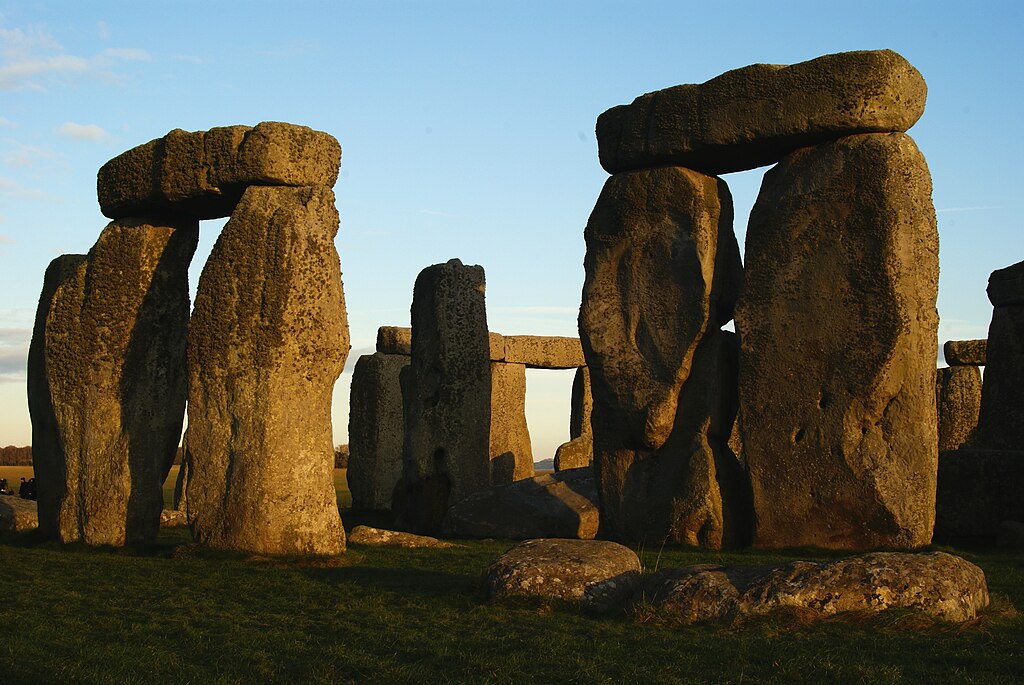
Stonehenge wasn’t built in one moment. It evolved over centuries, with stones moved, removed, and reset. The bluestones were rearranged multiple times, while the massive sarsens arrived later in a coordinated effort.
That constant reshaping means its purpose also shifted. One generation emphasized burials, another solstice ceremonies, another grand displays of unity. The monument was a living site, always changing. Its mystery isn’t that we don’t know what it was for—it’s that it was many things at once.
8. Processions and pathways shaped its use.
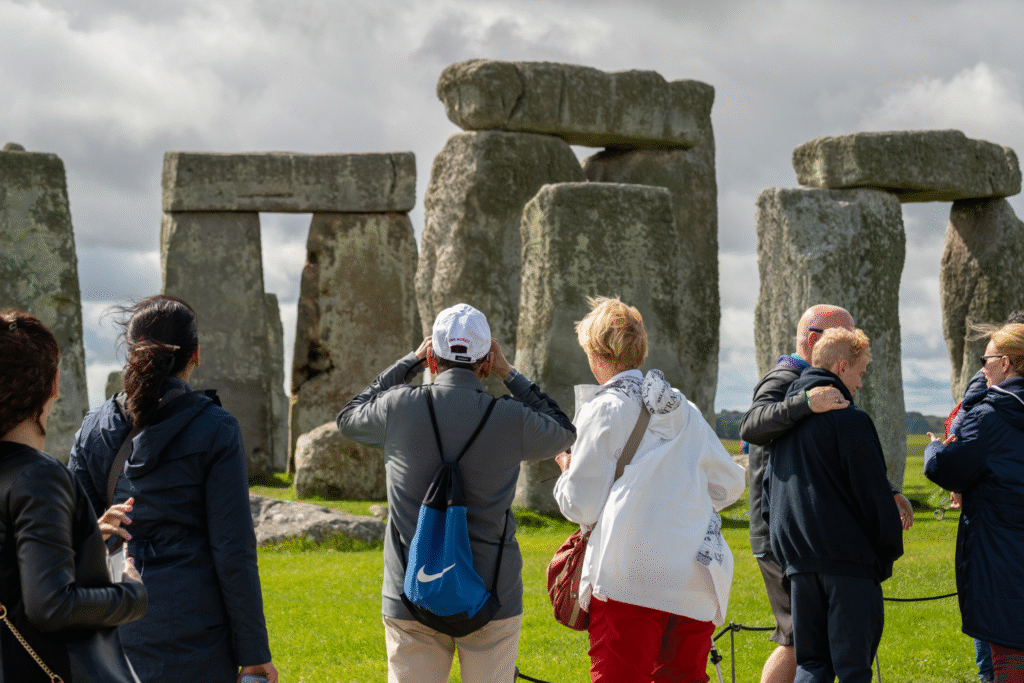
The Avenue, a ceremonial route linking Stonehenge to the River Avon, suggests processions were part of the ritual. Archaeologists believe people may have journeyed from riverside settlements and feasts at Durrington Walls to the stone circle itself.
This framing turns Stonehenge into more than a destination. The act of walking there, carrying offerings, or leading rituals through the landscape was part of its power. Stonehenge was one chapter in a larger performance, a node in a story told across earth and sky.
9. Old myths have lost ground, but the awe remains.

Legends about druids, Merlin, or even aliens once dominated explanations of Stonehenge. Modern dating and analysis have moved past those tales, showing it was built long before druids existed. Radiocarbon results and quarry evidence make extraterrestrial theories unnecessary.
Yet the myths endure because the site still stirs imagination. And in truth, the real story is no less remarkable. It doesn’t need magic or science fiction. It was human skill, human will, and human meaning etched in stone. That alone explains why the monument still grips us.
10. The “why” may not be one answer but many.
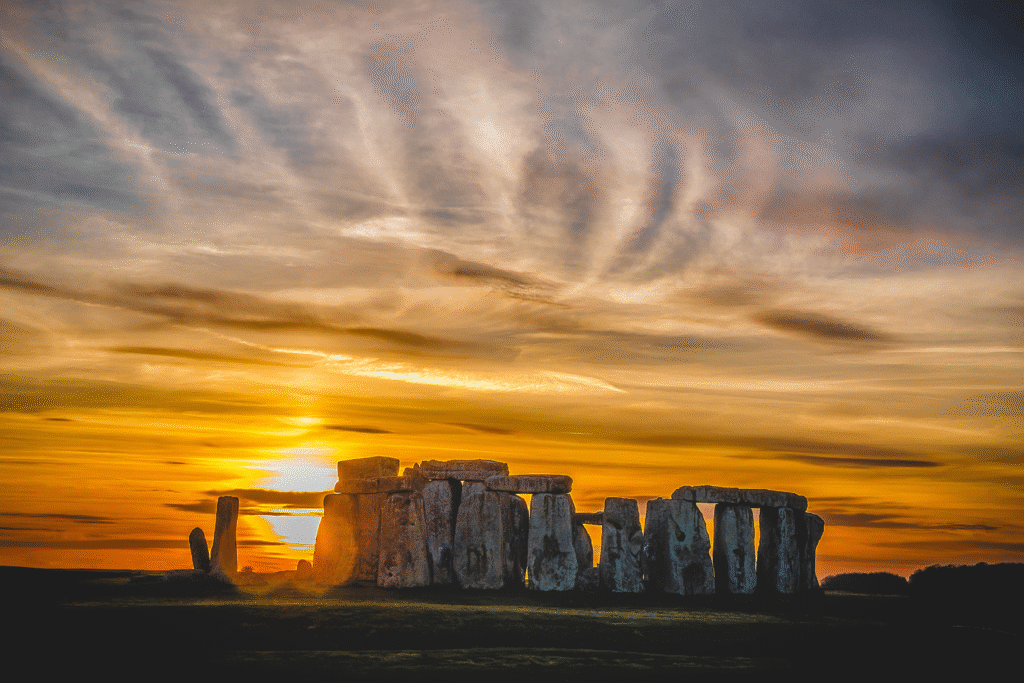
Every new discovery reinforces the same idea: Stonehenge wasn’t just one thing. It began as a cemetery, evolved into a solar temple, became a feasting ground, and symbolized unity among scattered communities. Its meaning shifted with time, layered like the soil beneath it.
That’s why the mystery is not gone but reshaped. Stonehenge may never yield a single, simple explanation. Instead, it offers a story of change, where each generation built meaning into stone. The truth is less about solving the riddle than accepting that it was never one puzzle to begin with.