
Animals are responding faster than the arguments.
Animals are responding faster than the arguments.
Across forests, oceans, and skies, something is shifting in ways that are difficult to explain away. Species are moving, breeding, arriving, and disappearing on altered schedules, often in places they have never been recorded before. These changes are not isolated or symbolic. They are measurable, repeated, and unfolding in real time.
Long before climate models reach consensus or policies catch up, wildlife is already reacting to new conditions. The signals appear in migration routes, nesting failures, shrinking ranges, and unexpected arrivals. Taken together, they form a pattern that does not rely on belief or politics. The natural world is adjusting to a changing planet, whether humans are ready to acknowledge it or not.
1. Birds are nesting weeks earlier than before.
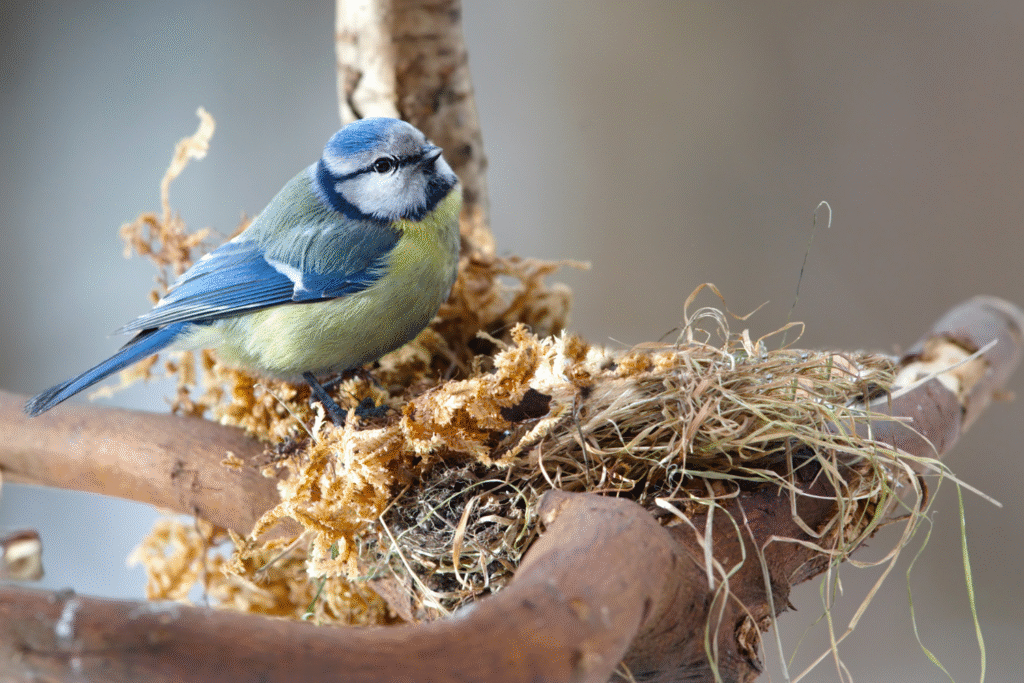
Across North America and Europe, long-term bird studies reveal that species like robins and blue tits are laying eggs earlier each spring. According to research published in Science, this trend began accelerating in the 1980s as average spring temperatures rose. The mismatch between hatching dates and insect abundance is leaving chicks at risk of food shortages. What once felt like minor timing shifts now maps directly onto warming patterns, creating ripple effects throughout entire food webs.
2. Arctic caribou migrations no longer align with food.
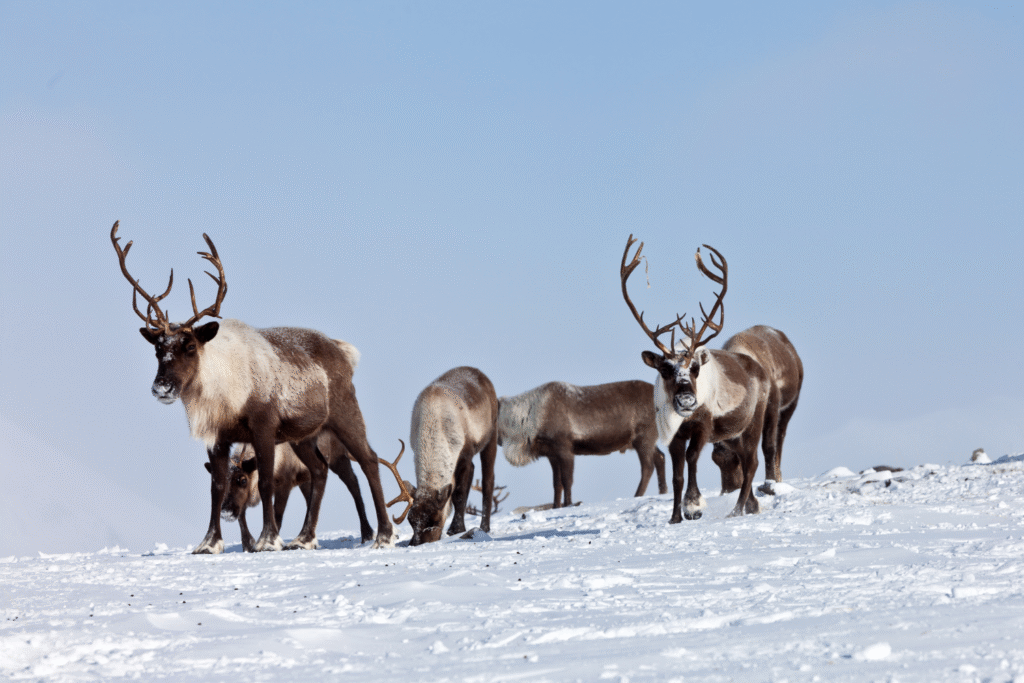
Caribou herds historically migrated with remarkable precision, arriving at calving grounds just as plants bloomed. But warmer springs are pushing vegetation cycles earlier, leaving newborn calves facing empty tundras. This mismatch has reduced survival rates significantly, as reported by the National Snow and Ice Data Center. The disruption highlights how even slight climate changes fracture survival rhythms that evolved over thousands of years.
3. Butterflies are moving north at rapid pace.
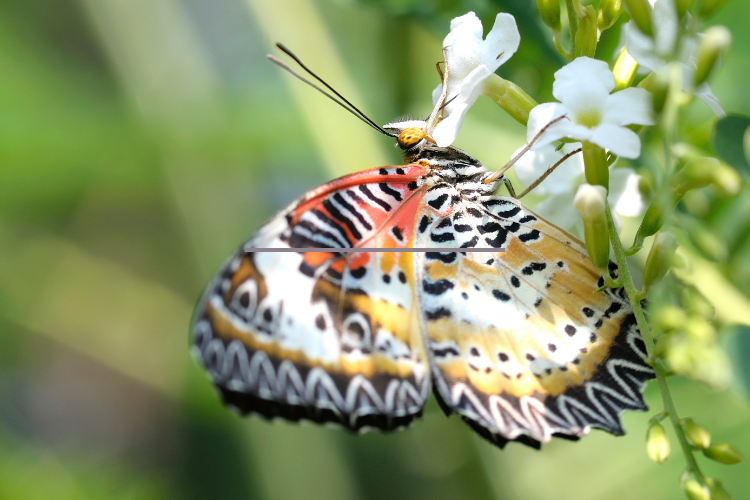
In the past two decades, studies across Britain have documented butterflies shifting their ranges northward by tens of miles per decade. As stated by the UK Centre for Ecology & Hydrology, warmer conditions are opening habitats once too cold for survival. These rapid expansions may look like wins at first glance, but they also expose gaps where local plants cannot keep up, leaving fragile populations vulnerable.
4. Polar bears are spending longer on land.
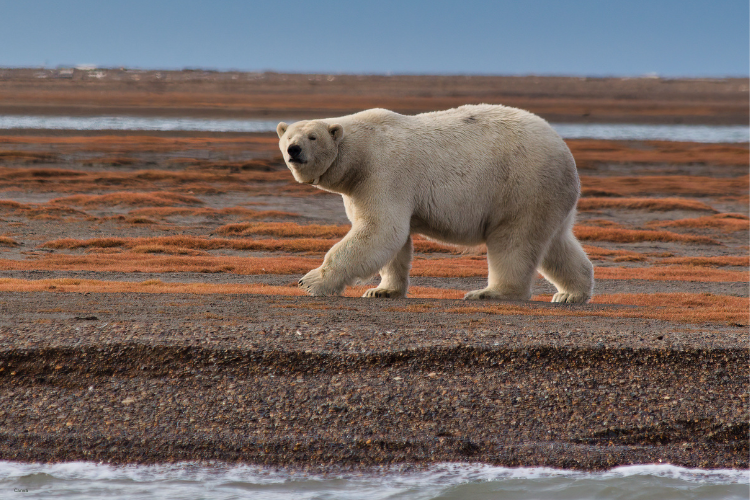
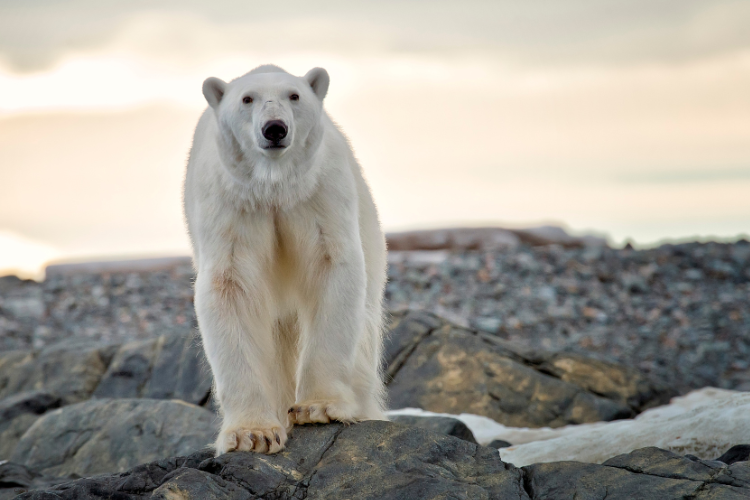
The shrinking of sea ice has forced polar bears to spend more time ashore, where food is far scarcer. Observers in Hudson Bay note bears scavenging in human settlements or hunting birds in cliffs—behaviors rarely seen before. With ice-free seasons lasting longer each year, the iconic predator has become a living marker of climate change, struggling to survive without its frozen hunting grounds.
5. Frogs now sing their mating calls much earlier.
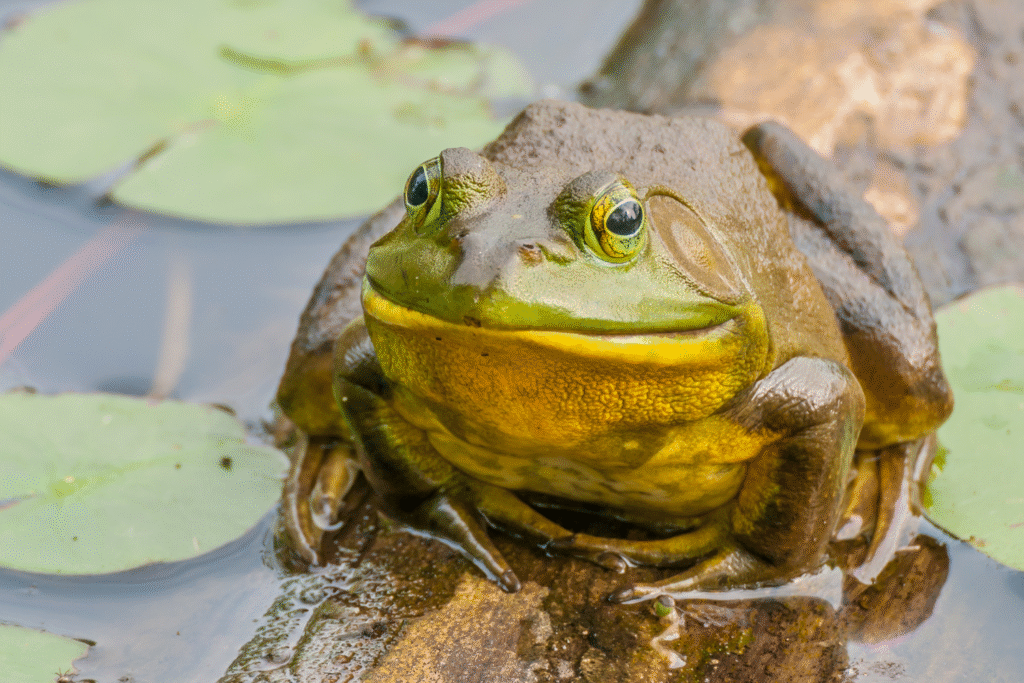
In regions like Japan and the eastern United States, frogs have shifted their mating calls weeks ahead of traditional schedules. The earlier onset of warmer nights is triggering instinct too soon, leaving some populations vulnerable if sudden frosts return. Amphibians, with their sensitivity to temperature and moisture, are among the clearest bio-indicators of the shifts reshaping ecosystems.
6. Salmon struggle to reach cooler waters upstream.
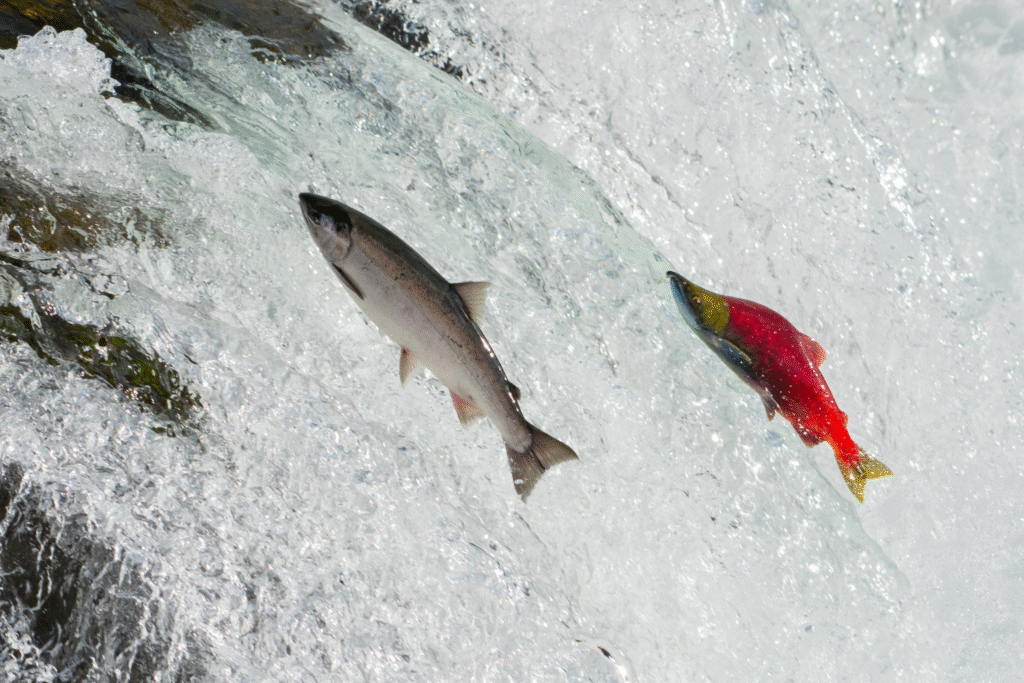
Rivers warming in the Pacific Northwest have driven salmon to migrate earlier, but low summer flows now block their routes to cooler habitats. The fish are caught in a trap between instinct and altered waterways, with many populations declining steeply. Biologists monitoring these runs describe the stress as a slow unspooling of cultural memory, where entire lineages lose their chance to reproduce.
7. Alpine plants push animals higher up mountains.
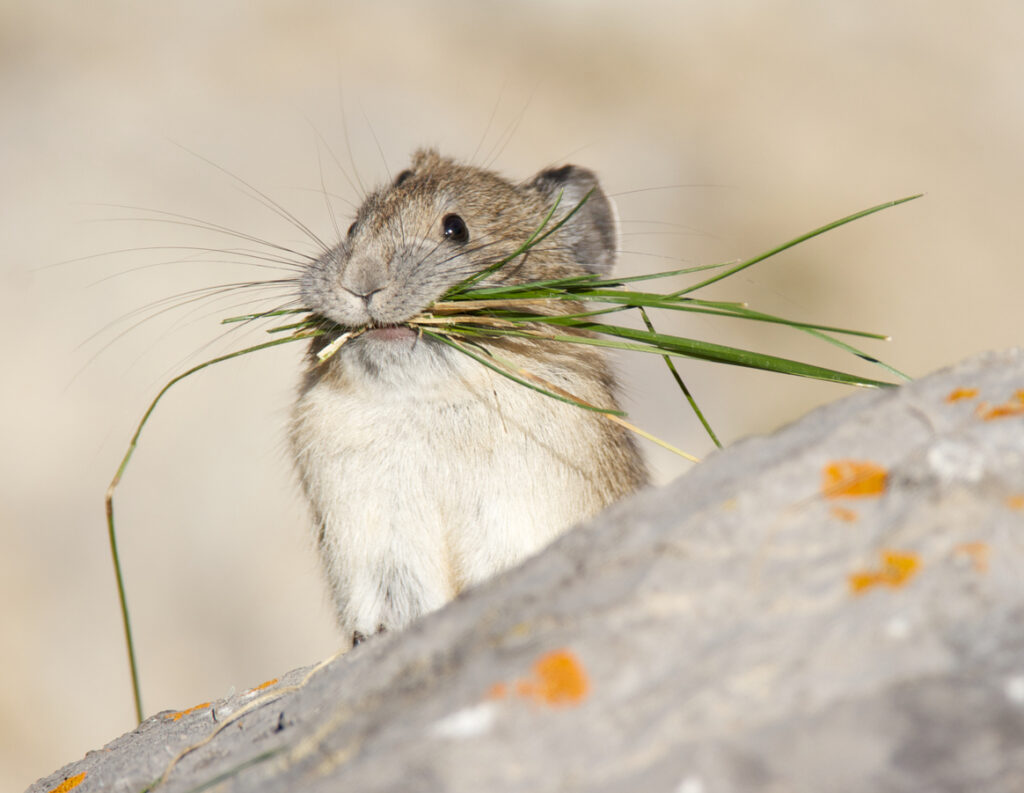
As treelines inch upward, mountain animals like marmots and pikas are climbing higher in search of cooler ground. Yet these species eventually hit the literal ceiling of available habitat. Once that final refuge disappears, extinction becomes a near certainty. Their movements sketch a desperate race against altitude limits imposed by a steadily warming climate.
8. Monarch butterflies face collapsing migration cues.
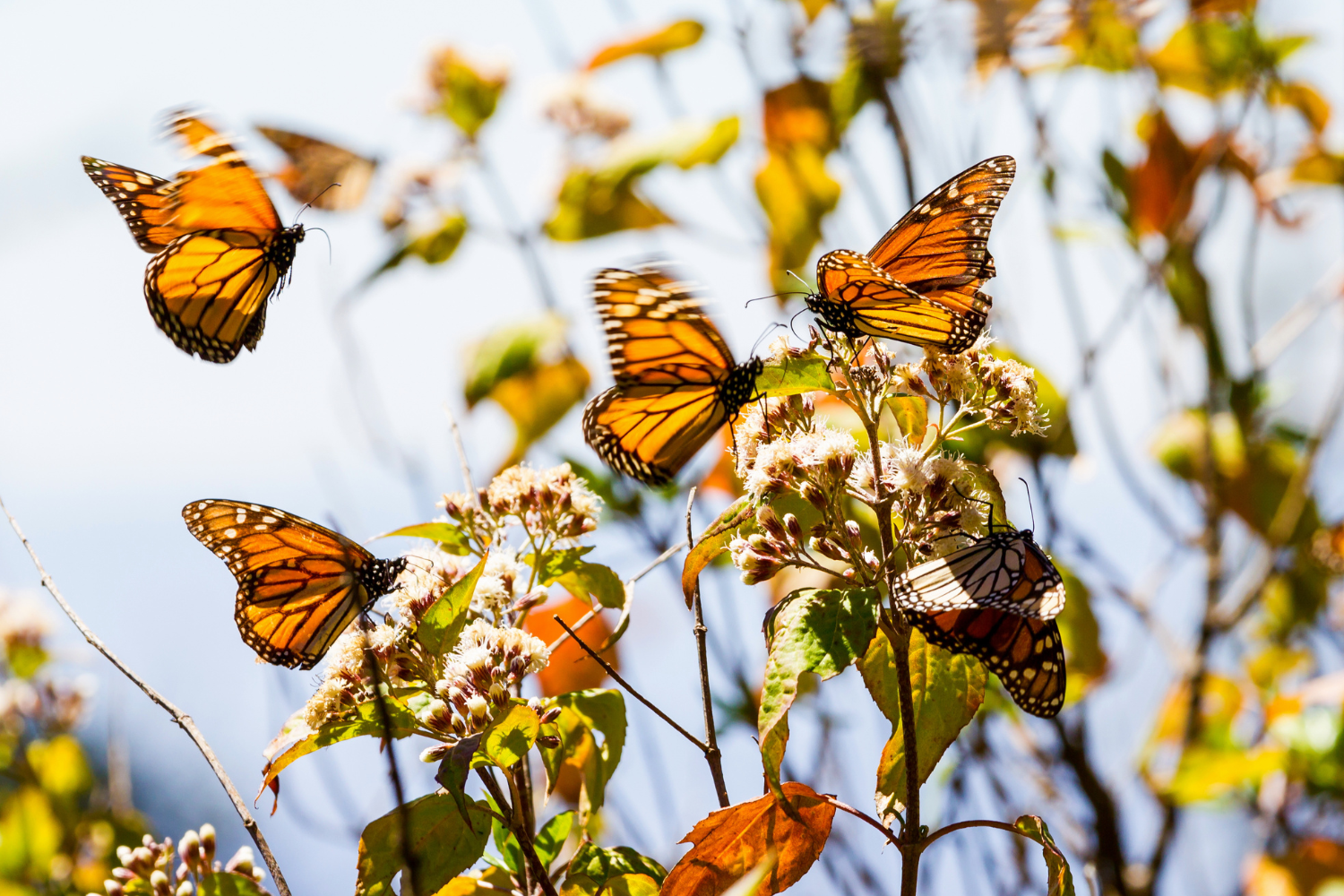
The timing of milkweed growth no longer aligns with monarch arrivals in many parts of North America. Changing rainfall and temperature patterns confuse a migration already stretched to its limit. Conservationists say the iconic orange wings still flutter across fields, but each generation faces deeper odds stacked by climate shifts disrupting their navigational instincts.
9. Marine mammals alter feeding grounds unexpectedly.

Whales, sea lions, and seals are chasing prey into waters that were once too cold for them. As fish like sardines and anchovies migrate poleward, predators follow. This has led to new clashes with fishing industries and unexpected strandings in unfamiliar coastlines. Each movement becomes a visible signal of marine ecosystems being redrawn by shifting currents and ocean temperatures.
10. Insects vanish from long-stable meadows and forests.
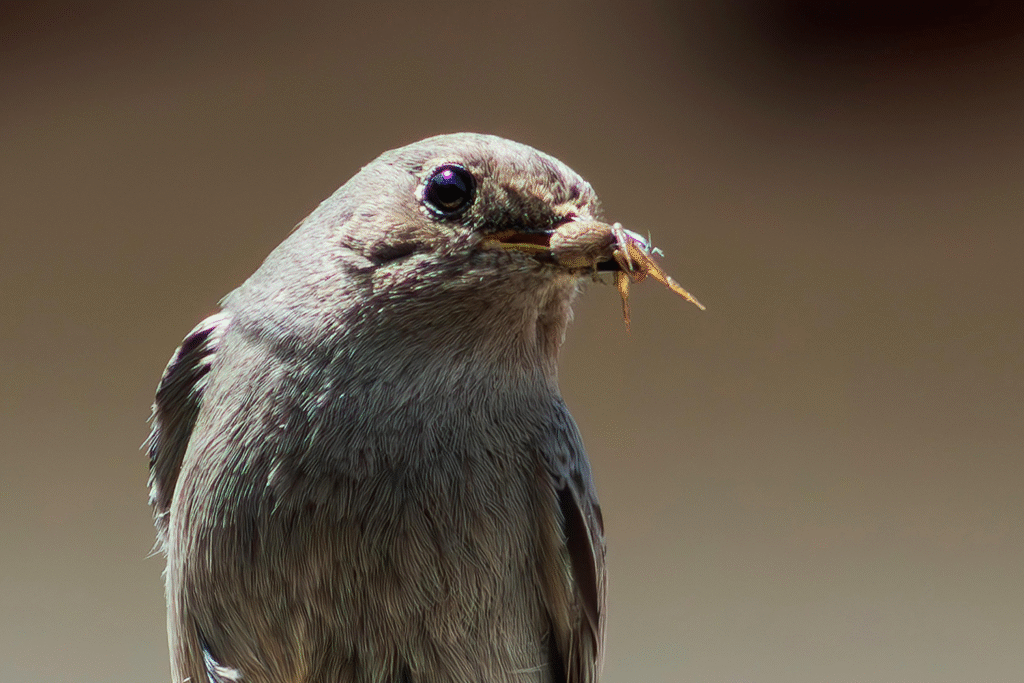
Research in Germany and Colorado has tracked staggering drops in insect biomass, with climate stress amplifying habitat loss and pesticide exposure. These declines ripple outward, starving birds, bats, and amphibians that once thrived on buzzing abundance. The silence settling over summer fields and evening skies tells its own haunting story of how climate change strips life from the bottom up.
11. Reptiles hatch with skewed sex ratios now.
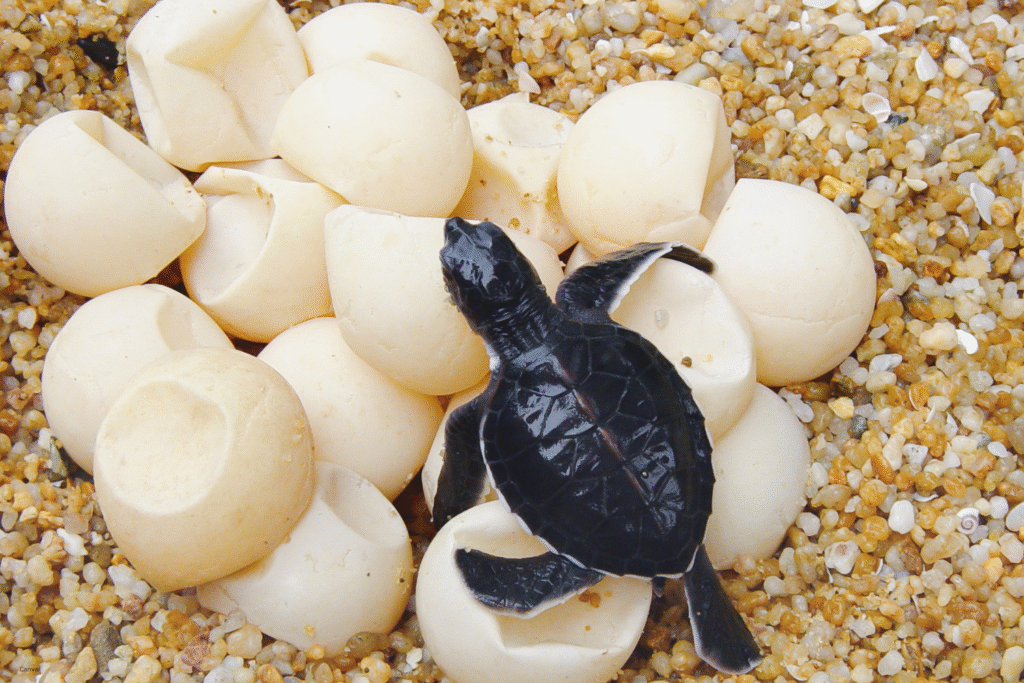
Species like sea turtles rely on sand temperature to determine hatchling sex. Warmer beaches are producing far more females than males, throwing entire populations off balance. Biologists monitoring Caribbean nesting grounds now warn of future generations collapsing simply because climate change has rewired one of nature’s most delicate reproductive systems.
12. Elephants roam farther in search of dwindling water.

In parts of Africa, elephants are traveling longer distances and clashing with villages as waterholes dry earlier each season. Their movements highlight how warming climates are not only ecological but also social flashpoints, driving conflict between wildlife and people. These giants, long celebrated for memory and intelligence, are now living roadmaps of stress etched into landscapes reshaped by relentless heat.