
Their songs speak to something older than memory.
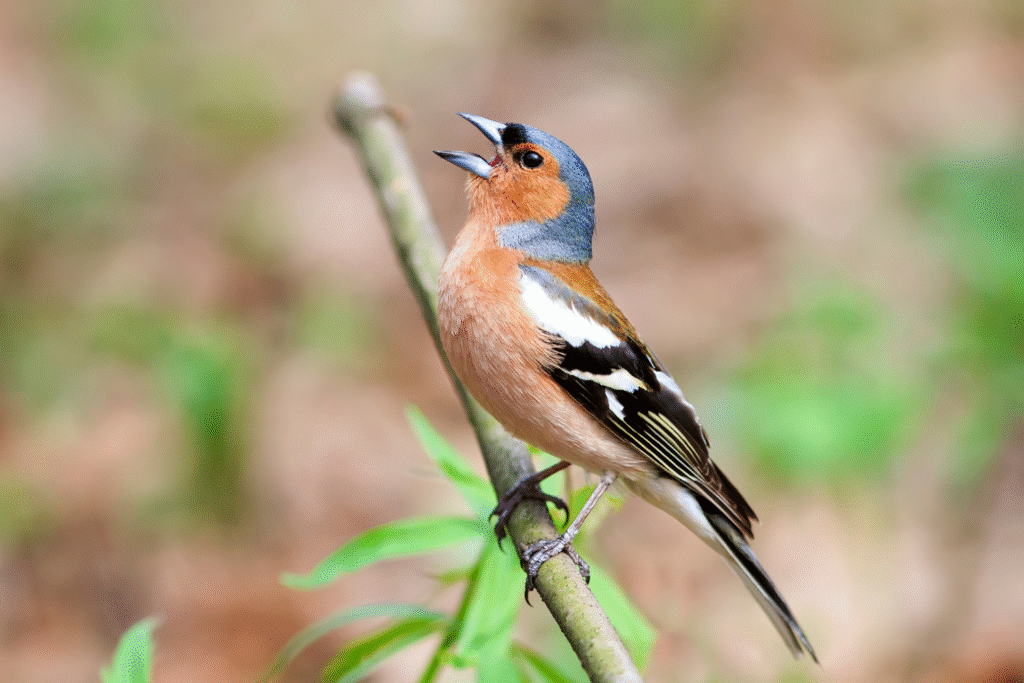
There’s a reason birdsong can reset your whole mood in seconds. Long before alarms or playlists, early humans woke up to the chatter of finches and the chorus of dawn calls, and something in our brains never forgot. Those sounds carried meaning—safety, presence, time itself. Today, science is catching up to what our ancestors already knew: that the rhythms of birdsong align with our own biological need for peace. It’s ancient, instinctive, and wired deep into us, long before we even had words for comfort.
1. Our ancestors linked birdsong with safety and daylight.

In prehistoric times, the first morning birdsong meant predators had retreated and the sun was rising. It wasn’t just pleasant—it was survival. According to research in Proceedings of the Royal Society B, early humans developed a neurological association between bird calls and safety from nocturnal threats. That same brain wiring lingers, which may explain why a robin’s trill still soothes us today. When birds are singing, it tells our subconscious that the world is stable, calm, and safe to rest in.
2. The human brain syncs to the rhythm of bird calls.

Scientists have found that listening to bird sounds can alter brainwave patterns, promoting alpha waves linked with relaxation and creative thought, as stated by the Journal of Environmental Psychology. Those rhythms mirror the steady pulse of nature—unpredictable yet harmonious—and our brains quietly fall into step. It’s as if evolution tuned us to the same frequency as birds. Even brief exposure to their calls, like walking near trees after rain, has been shown to reduce stress hormones faster than silence.
3. Early humans used birds as emotional barometers.

Ancient people often interpreted bird behavior as a reflection of the environment’s emotional “weather.” When the forest went silent, it meant danger or change. As discovered by researchers at the University of Exeter, the presence of bird sounds is now scientifically tied to higher reported happiness levels in modern humans. In ancient times, that same pattern meant safety and stability. So when birds sing freely around us, part of the human brain still translates that as “the world is okay,” and peace quietly follows.
4. Their songs mimic the patterns of human speech.

Birdsong doesn’t just sound beautiful—it has syntax. Many bird species arrange notes into repeating patterns with rhythm and variation that mirror human language. Our brains unconsciously recognize this structure, which activates the same neural areas used for communication. This shared rhythm explains why we hear melody in their chatter and feel emotionally pulled by it. Over millennia, our auditory system learned to interpret complex natural sound sequences as meaningful, which is why even a sparrow’s tune feels oddly familiar.
5. Birds marked the passage of time before clocks existed.

For early humans, birds were nature’s timekeepers. Dawn chorus meant morning, midday calls echoed during hunting hours, and night songs signaled rest. These daily cycles built our internal sense of time long before sundials or calendars existed. Listening to birds still reconnects us to that ancient natural clock. Our bodies recognize the cues instinctively, grounding us in rhythm and routine. That’s why bird sounds can make even chaotic modern mornings feel a little more human again.
6. Ancient rituals used birdsong to calm the mind.
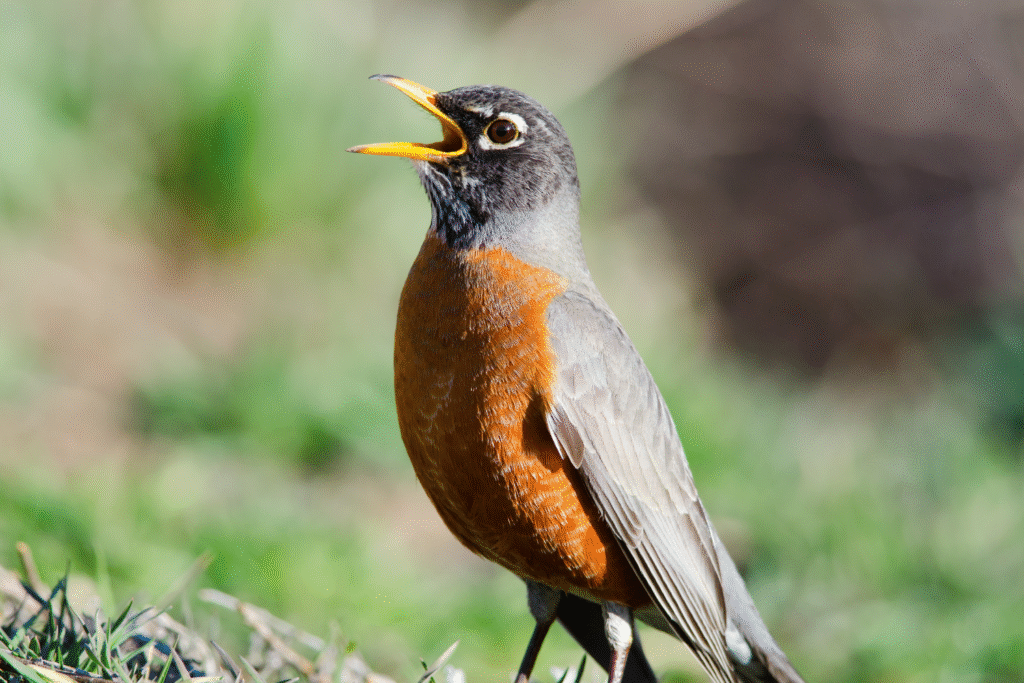
Across cultures—from Indigenous American ceremonies to Greek healing temples—birds were thought to carry sacred energy through sound. Their songs were used to cleanse spaces or ease anxiety before prayer. Even now, natural soundscapes with birdsong are used in mindfulness therapies for the same effect. These practices trace back to an ancient idea: that peace can be heard. Modern science might call it acoustic therapy, but the wisdom behind it has been echoing through forests for tens of thousands of years.
7. Bird calls trigger dopamine, the brain’s “feel good” signal.

Hearing birds sing lights up the same pleasure centers that respond to music or loved ones’ voices. That’s because our brain’s reward system evolved to value environmental cues that signaled thriving life. Birdsong meant food sources, clean water, and safety. Today, it still sparks small dopamine surges, a quiet reward for being in harmony with our surroundings. It’s the most ancient form of reassurance—one that doesn’t need words or touch, just sound drifting through air.
8. Our bodies slow down in response to familiar tones.

The tempo of birdsong naturally falls within a rhythm that calms human breathing and heart rate. Unlike mechanical or synthetic noise, these natural sounds carry subtle fluctuations that gently slow the body’s internal metronome. You might not notice it, but your pulse matches their pace. This physiological response evolved because listening closely once meant survival. It’s the reason that even city dwellers feel calmer when a pigeon coos near a window or sparrows chatter outside a café.
9. Birdsong reconnects us with environments we evolved in.
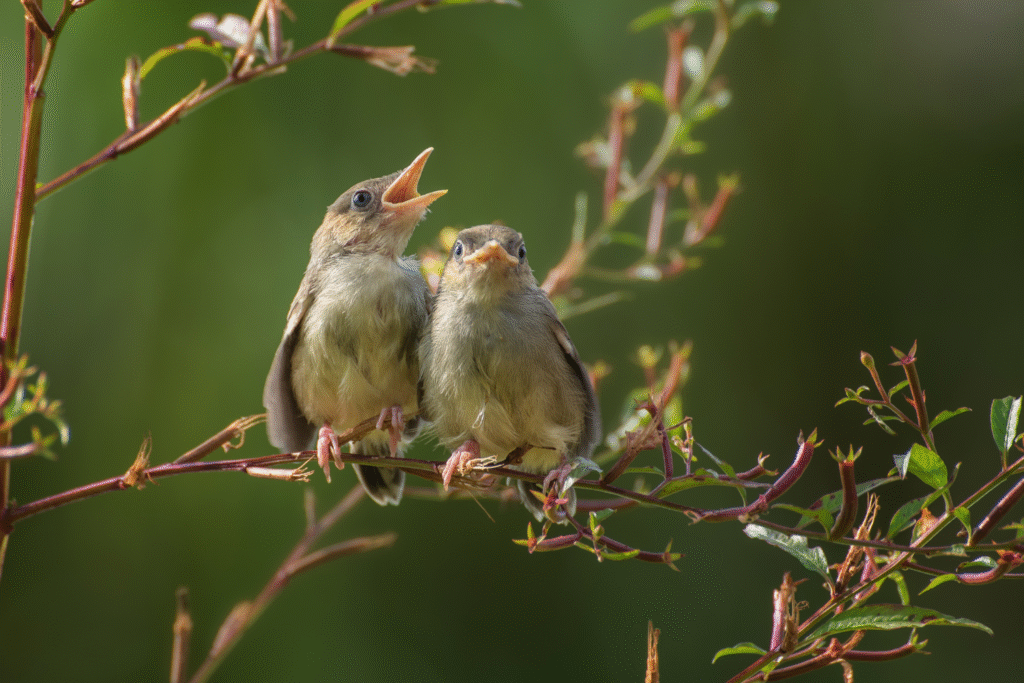
Humans spent 99 percent of our existence living outdoors, surrounded by soundscapes alive with wings, wind, and rustling leaves. Our nervous systems evolved to function best in those conditions. Modern life stripped most of it away, but hearing birds can instantly reawaken that lost equilibrium. It’s why even artificial bird recordings can lower blood pressure and anxiety. Deep down, our biology recognizes home in their sound, reminding us of forests, fields, and freedom long before concrete walls appeared.
10. They remind us we’re part of a living chorus.

Every bird call is a thread in the tapestry of life, and our brains never stopped hearing ourselves as part of it. That’s what makes birdsong feel grounding—it pulls us back into the collective rhythm of nature where every sound matters. In a world of constant digital noise, those calls cut through as something ancient, real, and restorative. Listening to birds doesn’t just calm us; it reconnects us to what it means to be human at all.