
What scientists uncovered inside challenges assumptions about isolation.
For tens of thousands of years, this cave remained sealed off from the outside world, untouched by weather, animals, or people. Its darkness preserved silence and separation so complete that researchers assumed anything inside would reflect a frozen moment of the past. When scientists finally entered, they were not prepared for what emerged. The discovery was not human, yet it carried implications that reach far beyond a single site. It suggests life persisted, adapted, and possibly interacted in ways that isolation was supposed to prevent, raising new questions about what truly disappears when places are cut off for millennia.
1. The cave entrance was sealed some 57,000 years ago.
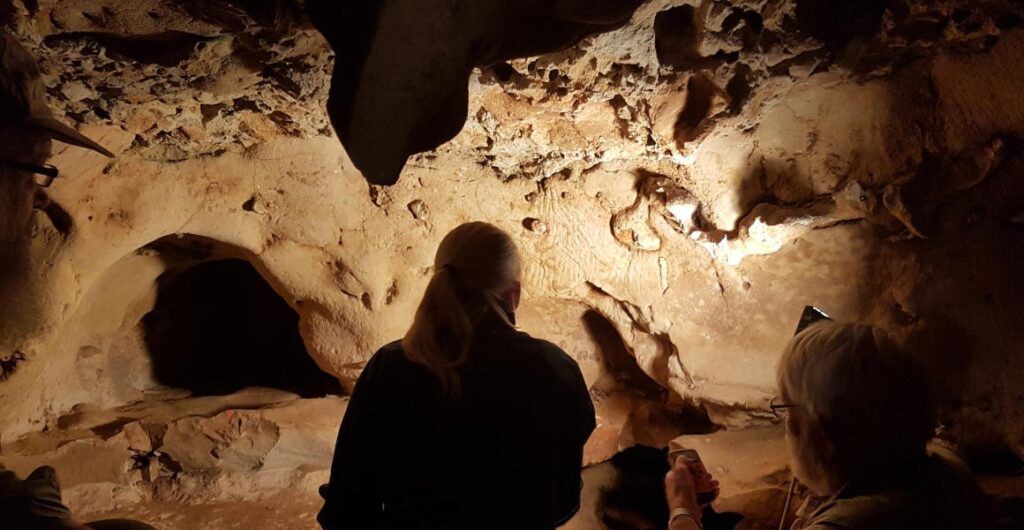
Sediment analysis at La Roche-Cotard in the Loire Valley revealed that the cave entrance had been blocked by natural deposits roughly 57,000 ± 3,000 years ago, trapping everything inside for millennia. In the middle of the study’s results, researchers described how optically stimulated luminescence dating confirmed that no human could have entered after the sealing event, as stated by PLOS ONE. This finding transforms the site into a geological time capsule that perfectly preserves whatever occurred before the barrier formed. The sediments became both the cave’s lock and its protective casing, freezing a chapter of prehistory beneath them.
2. The wall engravings were created by Neanderthals not humans.
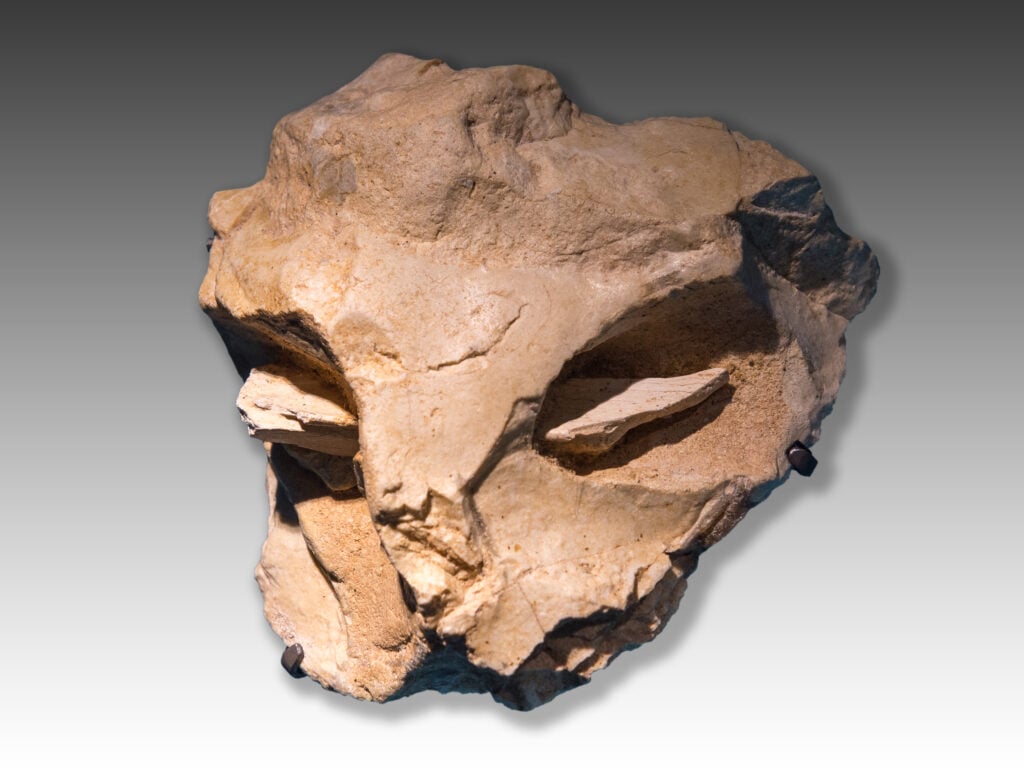
Found beside the Loire River near Langeais, the piece suggests symbolic thinking existed earlier than believed. If intentional, it reframes how cognition, creativity, and culture developed beyond our own species entirely alone.
A comprehensive analysis of markings inside the sealed chamber determined that the engravings aligned with Neanderthal occupation layers rather than modern human presence, according to a 2023 report by Smithsonian Magazine. The study identified only Mousterian stone tools, technological signatures of Neanderthals and concluded that Homo sapiens could not have reached this region when the cave was open. The implication is significant: the wall markings were deliberate creations by Neanderthals, not incidental scratches. This shifts the narrative of symbolic expression back thousands of years and places it in the hands of another species entirely.
3. A carved face emerged long before humans were expected.
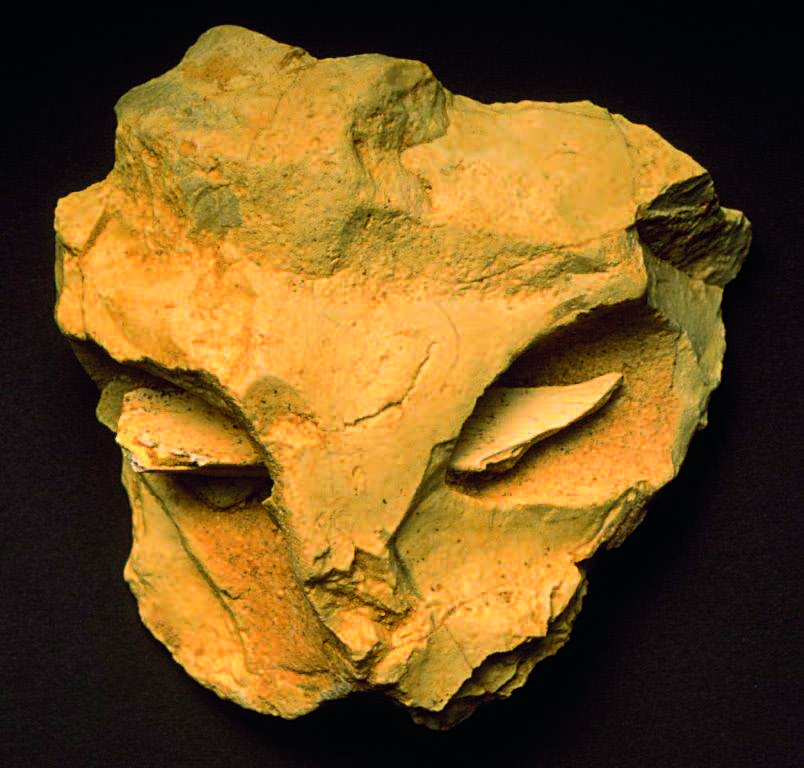
Discovered in 1975 at the entrance of La Roche Cotard Cave in central France, the object now called the “Mask of La Roche Cotard” challenged assumptions immediately. Carved from flint with a bone fragment set across it, the form resembles a face without being representational. Its age places it roughly seventy five thousand years ago, during the Mousterian period, a time associated with Neanderthals rather than modern humans.
4. The engravings consist of organized lines and dots across panels.

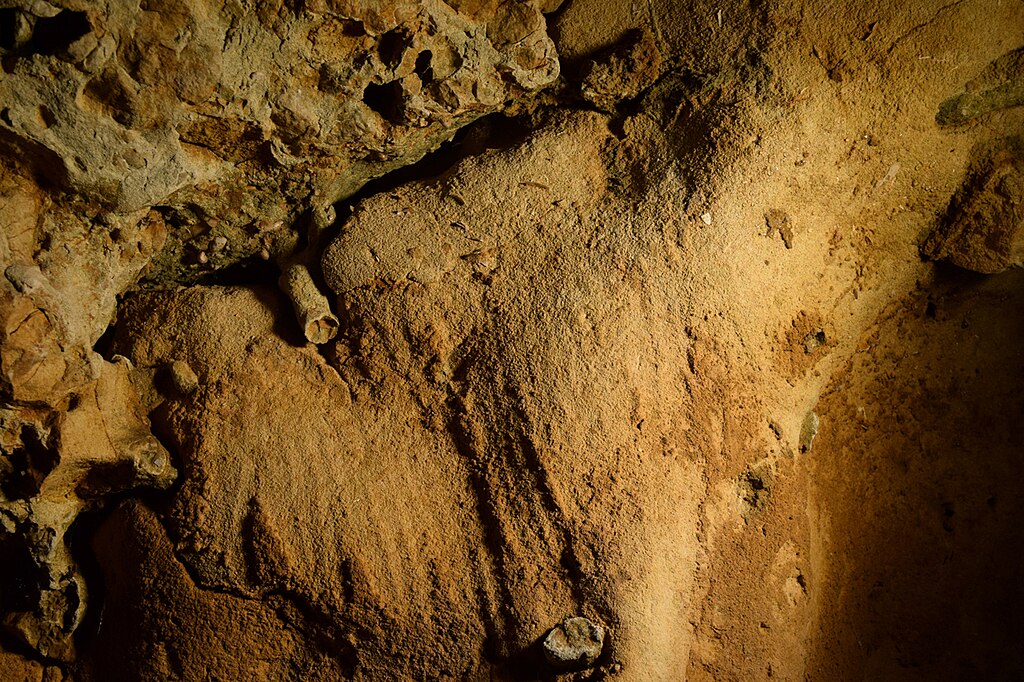
Inside the cave, researchers documented eight panels of intricate engravings composed of lines, dots, and branching curves arranged in clear spatial patterns. During the publication of their findings, they described how the textures matched fingertip traces rather than tool marks, as reported by the Natural History Museum of London. These were not random scrapes but systematic gestures repeated with consistent pressure and rhythm. Such structure suggests intentional design, possibly for communication or ritual. The discovery demonstrates that these Neanderthals engaged visually with their environment, producing symbols long before art became a hallmark of our species.
5. The tool context strongly supports a Neanderthal creator.
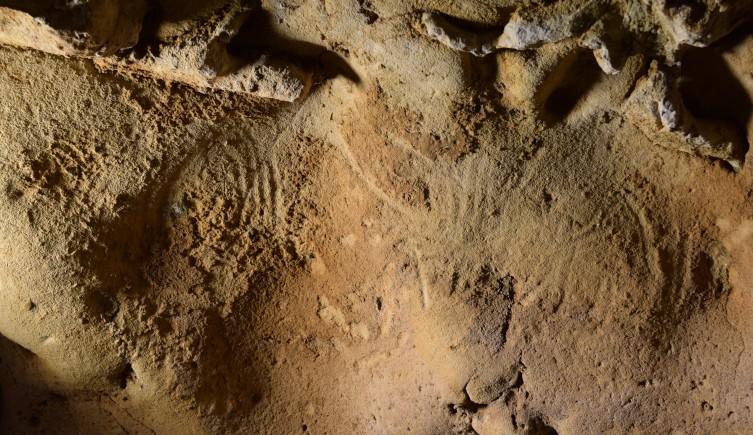
Archaeologists excavating the same sealed chambers uncovered stone tools consistent with the Mousterian culture and animal bones bearing cut marks typical of Neanderthal activity. No artefacts linked to Upper Paleolithic or Homo sapiens groups were present. Because the cave’s entrance was blocked soon after these items were left behind, their association with the engravings remains intact. This direct relationship between tools, sediments, and wall markings strengthens the argument that Neanderthals created the engravings rather than later visitors. Each layer of evidence reinforces the idea that these were purposeful, thoughtful actions from a population capable of abstract behaviour.
6. The find challenges prevailing views about symbolic behaviour in archaic humans.

For decades, researchers viewed symbolic thought and visual expression as traits unique to Homo sapiens. The La Roche-Cotard engravings disrupt that hierarchy, suggesting Neanderthals could conceptualize patterns and record them deliberately. Their marks display repetition and spatial balance that imply more than idle scratching. If these lines carried social or ritual meaning, they represent an early form of symbolic communication. This discovery reframes Neanderthals as complex thinkers who interacted with their surroundings in intentional and aesthetic ways, narrowing the cognitive gap between them and us.
7. Preservation conditions make this cave a rare archaeological time capsule.
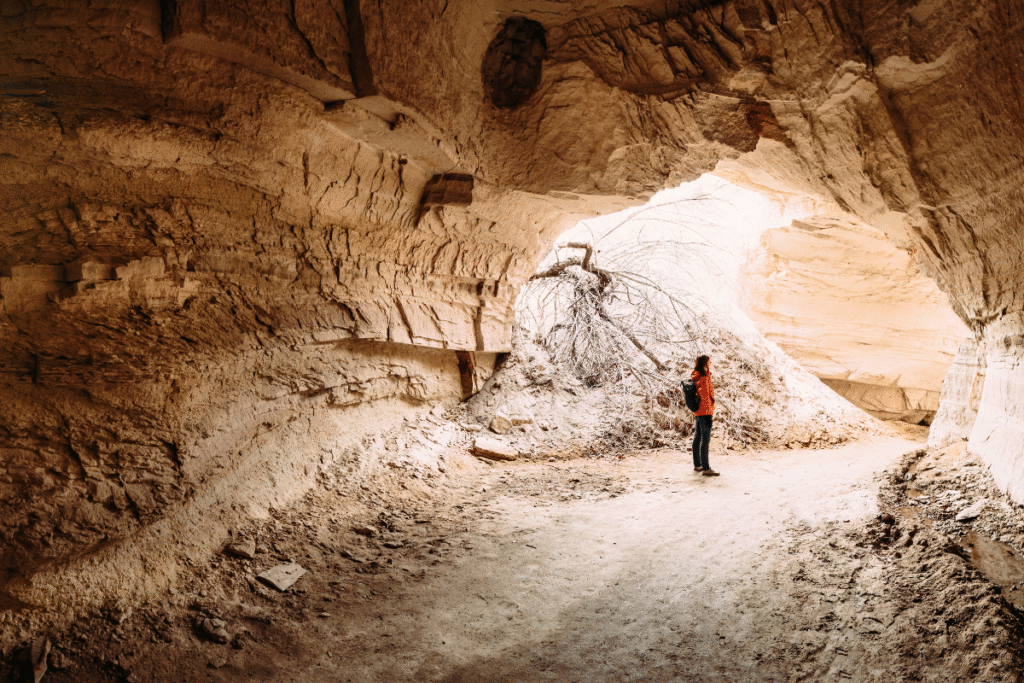
The cave’s natural sealing provided ideal conservation. Without exposure to air, moisture shifts, or later human activity, its contents remain unaltered. The engravings retain the same clarity and texture they had tens of millennia ago, while the sediment layers act as chronological markers that corroborate dating results. Such pristine preservation is rare in Paleolithic contexts, where open caves often suffer from erosion or contamination. In this case, the sealing sediments served as both tomb and archive, preserving an ancient record of behaviour that would otherwise have vanished into geological noise.
8. The implications extend into how researchers view human evolution and creativity.

The evidence of intentional engraving by Neanderthals undermines outdated portrayals of them as cognitively inferior. These findings reveal an evolutionary continuum of symbolic thought stretching back further than previously recognized. If multiple human species were capable of mark-making, then the origins of culture, communication, and even art must be reconsidered as shared inheritances rather than sudden innovations. The cave’s discovery widens the evolutionary lens, reminding science that creativity was not invented once, it may have emerged many times across parallel human lineages.
9. Future investigations may uncover more sites like this one.
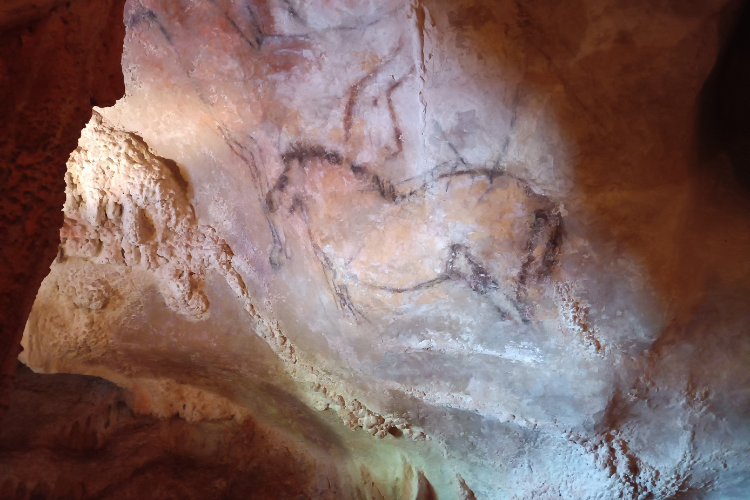
The successful combination of luminescence dating, photogrammetry, and 3D surface analysis at La Roche-Cotard provides a new blueprint for identifying sealed Paleolithic contexts. Researchers now intend to apply these methods across Western Europe in hopes of locating other undisturbed caves that might hold Neanderthal markings. If comparable engravings appear elsewhere, it would confirm that this behaviour was neither isolated nor accidental but part of a broader cultural pattern. The technology enabling these discoveries continues to refine how archaeologists read the faint signatures left behind by ancient minds.
10. The patterns of the marks may reflect social or cognitive practices.

The deliberate repetition and symmetry of the engravings suggest that they were more than casual doodles. Spatial clustering and consistent finger strokes imply coordination, shared intention, and possibly group activity. These traits point toward social learning—individuals observing and repeating techniques within a cultural framework. Even without knowing their purpose, the act of creating structured designs signifies an awareness of aesthetics and shared experience. The engravings thus offer glimpses of Neanderthal society as interactive, communicative, and deeply connected through symbolic practice rather than isolated acts of instinct.
11. This discovery alters the cultural narrative of our evolutionary cousins.
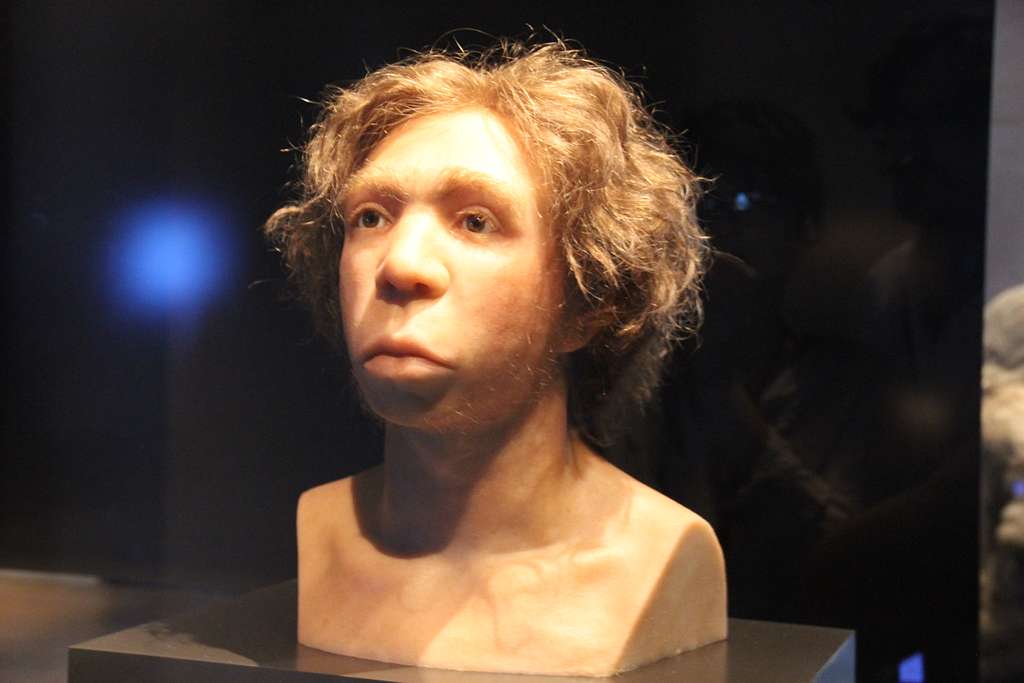
La Roche-Cotard’s sealed chamber bridges a conceptual gap between Neanderthals and modern humans, showing that both species experimented with meaning and form. The cave stands as tangible proof that creative impulse did not begin with Homo sapiens but likely ran deeper in the hominin lineage. This redefinition affects how scholars discuss art, cognition, and cultural emergence in human evolution. The story told by those silent engravings is not about difference but continuity, an ancient dialogue between species whose minds were far closer than previously believed.