
New Roman spa emerges beneath volcanic ash.

In the ancient city of Pompeii, buried by the eruption of Mount Vesuvius in 79 CE, archaeologists have uncovered a lavish private bathhouse that remained untouched for nearly two millennia. This newly revealed complex, located in the Regio IX section of the site, consists of rooms for hot, warm and cold bathing and appears to have served an elite resident’s social and political lifestyle. Intriguingly, the remains of at least two individuals were found inside, offering a haunting snapshot of the day disaster struck.
1. The bathhouse is one of the largest ever found in Pompeii.
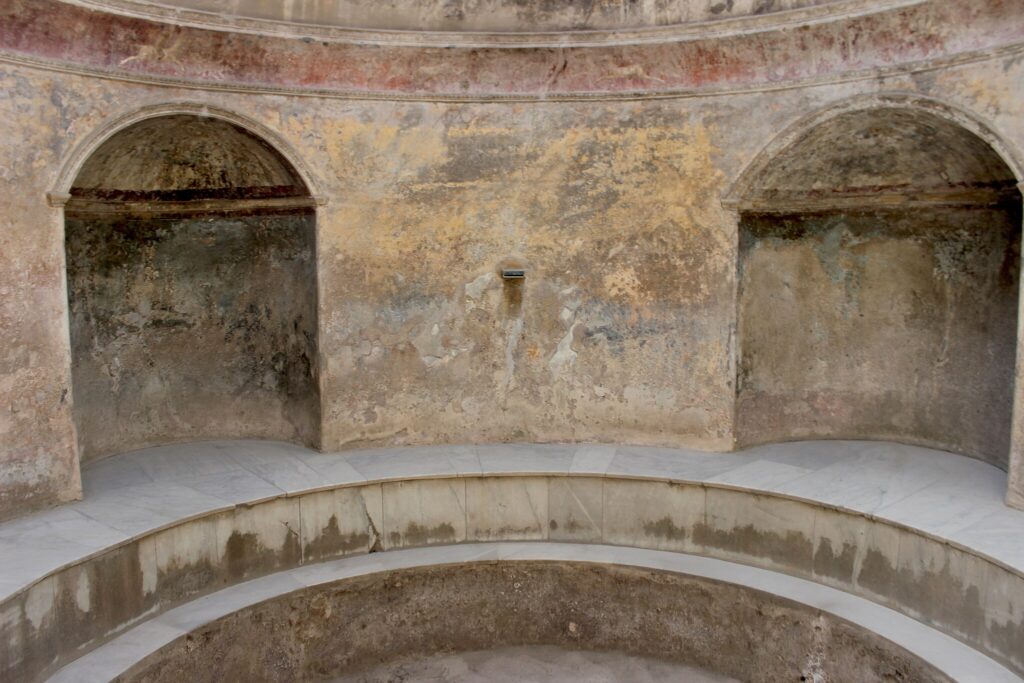
Archaeologists describe this thermal complex deep in Pompeii as perhaps the largest private bathing installation uncovered in the city thus far, as reported by the Associated Press. It includes a calidarium, tepidarium and frigidarium arranged around a large basin and mosaic flooring, set within the home of a wealthy Roman. The scale and quality of the mosaics, heated floors and decorative marbles suggest that the homeowner spared no expense. This extraordinary size and luxury reflect how bathing and banquet culture were intertwined in Roman elite domestic life.
2. Skeletons discovered inside show abrupt tragedy on that day of eruption.
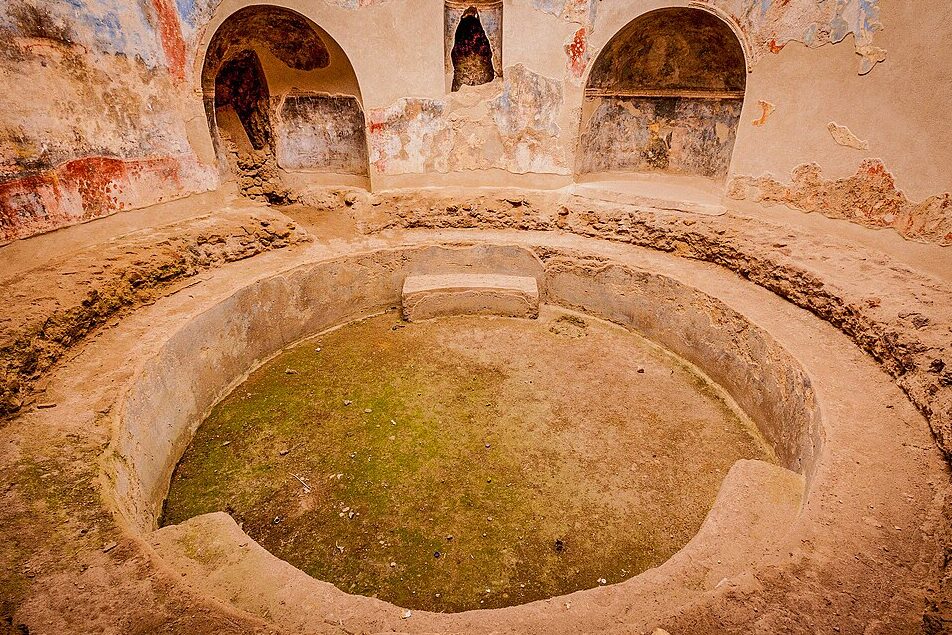
Inside a small room adjacent to the bathhouse the remains of a woman and a younger man were uncovered, according to Smithsonian Magazine. The woman was found curled on a wooden bed, jewellery and coins still clutched in hand, and the man was pinned beneath a collapsed wall as pyroclastic flow rushed in. Their preservation in situ provides chilling evidence of the moment the eruption consumed the city. The way the remains show posture, context and belongings offers direct connection to the eruption’s human cost.
3. The bathhouse dates to roughly 2,000 years ago and reflects elite Roman lifestyle.

Detailed excavation shows the bathhouse was built in the early first century CE, putting it at nearly two thousand years old, as stated by Archaeology Magazine. Decorative details include Greek-style motifs, large amphorae for oils and a layout designed for socialising and political networking. Scholars note that such complexes were more than cleanliness venues—they were tools of persuasion and status. Bathing, dining and negotiation occurred in suites like these, linking domestic luxury to public influence in Roman society.
4. The location lies in Regio IX, a previously under-explored area of Pompeii.
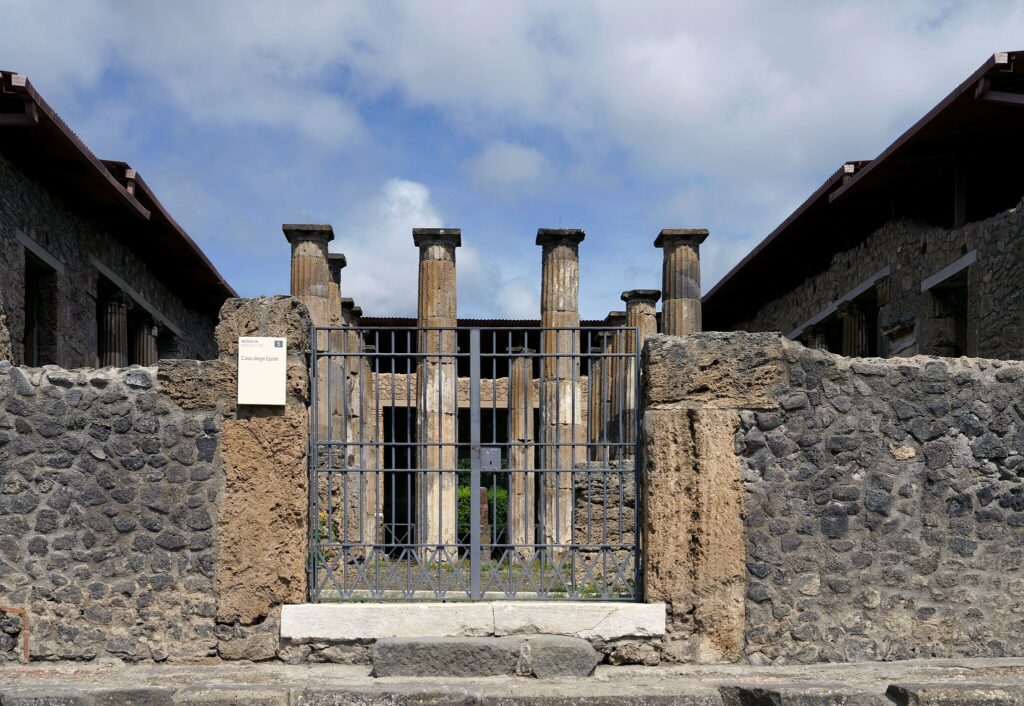
This residence sits in Regio IX of Pompeii, a district that archaeological teams are now revealing after decades of preliminary work. The urban block includes not only the bathhouse but adjoining banquet halls, service quarters and decorative spaces. Its central yet still partially unexcavated position suggests the wealth of the homeowner and the potential for further major finds in the zone. Exploration here is rewriting the map of elite domestic architecture in the city.
5. The structural design includes hot, warm and cold rooms linked to social rituals.
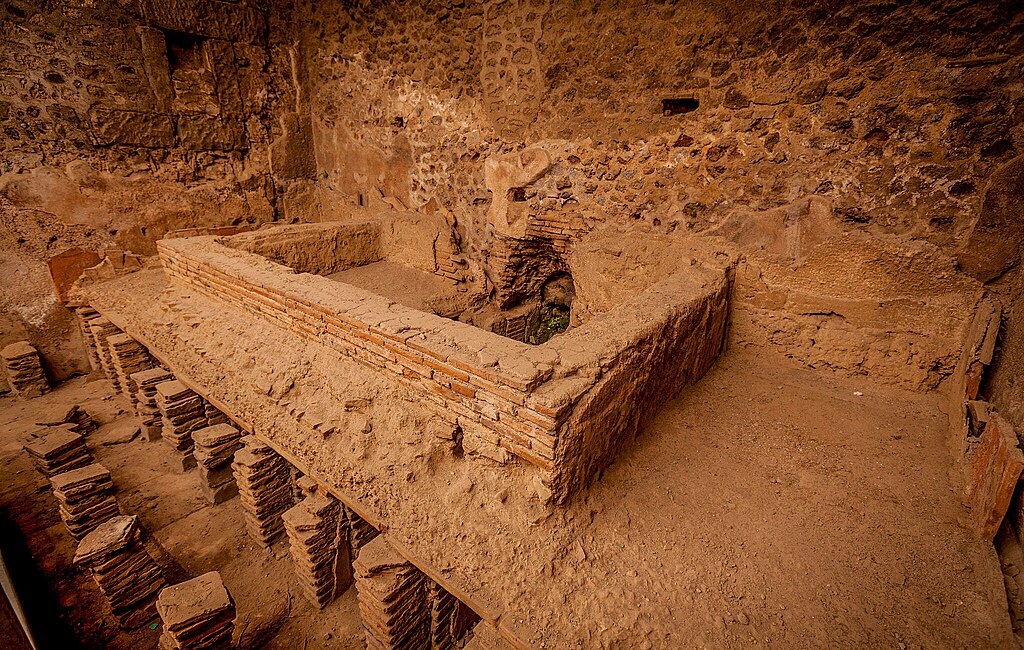
The bathhouse features distinct rooms: a hot-water chamber (calidarium), a warm room (tepidarium) and a cold plunge (frigidarium). The architectural sequence guided guests through a ritualised course of bathing and relaxation, ending in a social lounge or banquet space. This arrangement shows bathing was part of a public performance of status, hospitality and networking, not mere hygiene. The complex design shows how Romans structured domestic environments to support social strategy.
6. Decorative mosaics and luxury materials underscore the owner’s elite status.
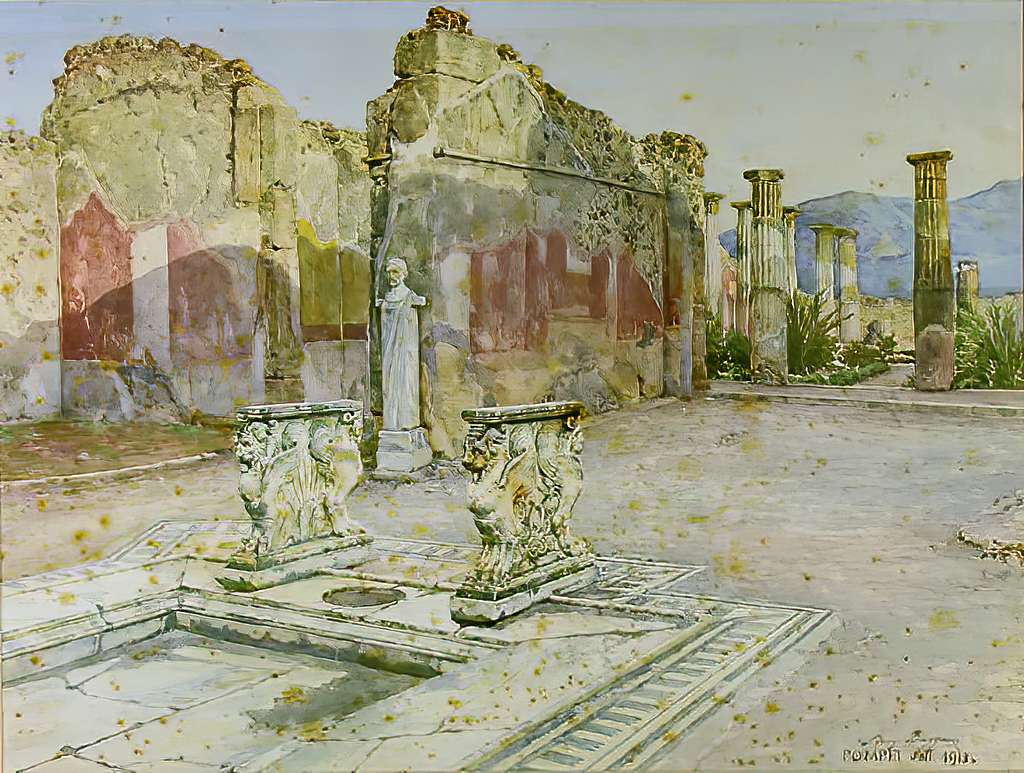
Mosaic floors, marble cladding and fresco-painted walls decorate the bath complex, indicating high cost and skilled artisanship. Amphorae found on site suggest storage of oils or wine, and alcoves reveal designed lighting or heating features. These luxurious materials and layout show that the homeowner used bathing as a stage for power display. In effect, the bathhouse functioned as a living room, performance space and political tool embedded into domestic life.
7. The skeletons offer insight about the eruption’s final moments in the household.
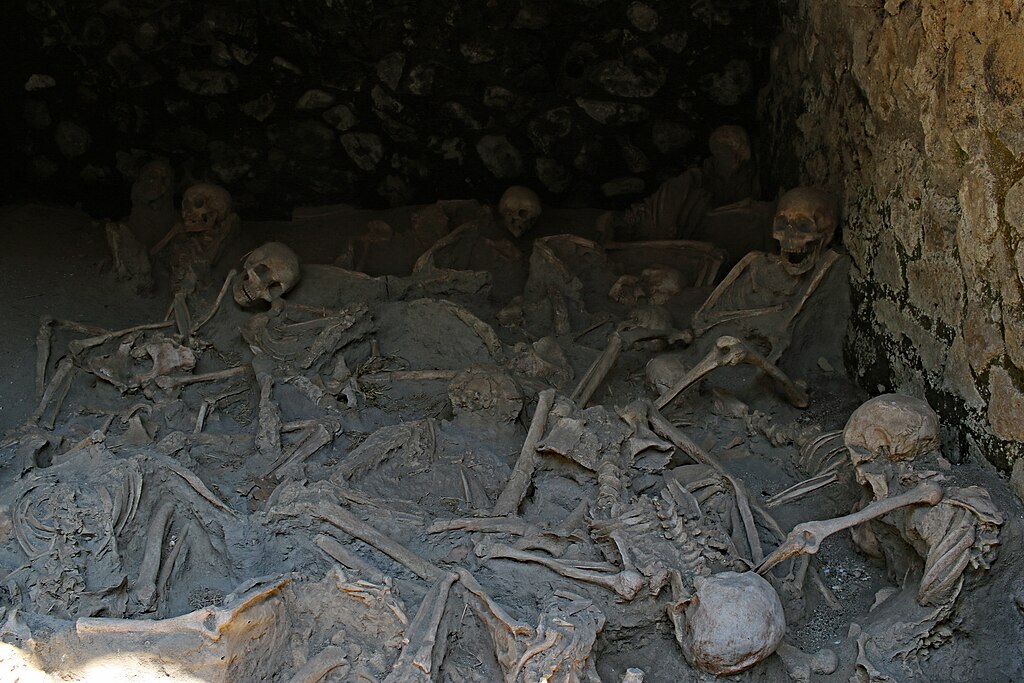
The preserved remains of the woman and young man offer poignant clues: the man beneath a fallen wall suggests a collapse triggered by the pyroclastic surge, the woman on a bed suggests she sheltered or was undone while reclining. Their belongings were undisturbed, meaning they likely died instantly or were trapped without warning. Their positions link the eruption to everyday life—in a home, during leisure—and show how sudden the catastrophe was for those inside.
8. Findings challenge previous views of Roman domestic bathing culture.

While Roman public baths are well documented, this private suite of such size and luxury alters understanding of how elites used bathing for social strategy. The discovery shows that wealthy Romans invested domestic spaces as much as public amenities in performing status. It also suggests that bathing culture permeated not just public life but also elite homes in dramatic fashion, merging hospitality, politics and leisure under one roof.
9. Conservation and excavation of the site will proceed slowly due to complexity.
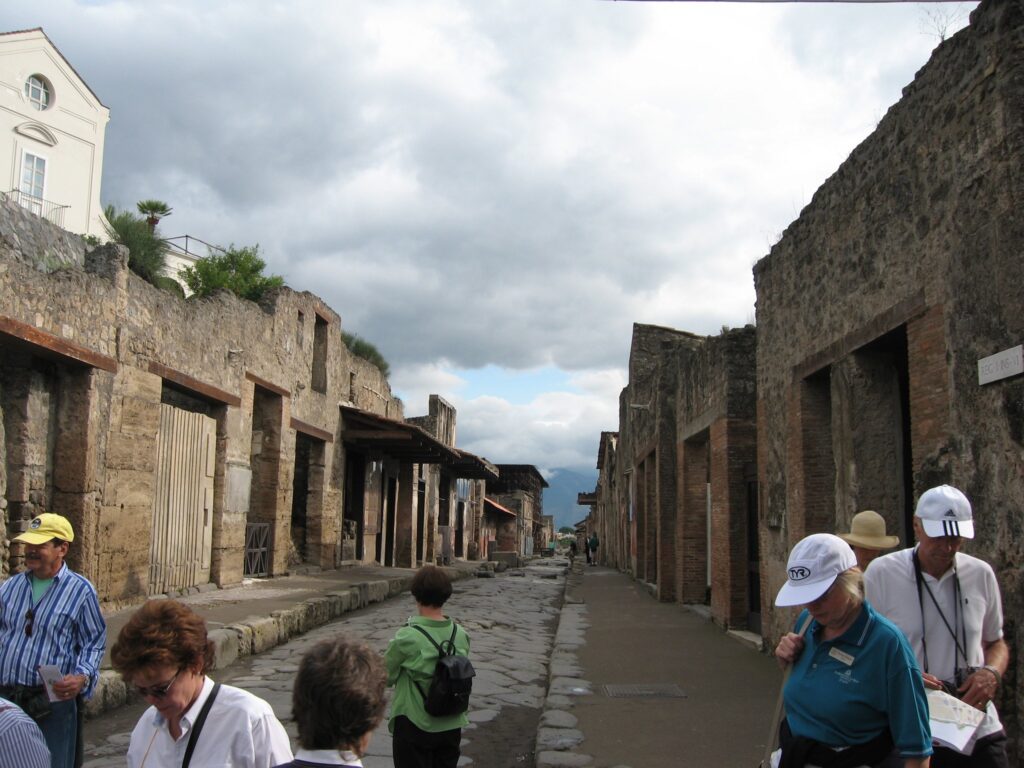
Because of the bathhouse’s fragile state, the mosaic floors, marble cladding and remains will require painstaking conservation. Archaeologists indicate that further excavation in Regio IX will take years, as they stabilise structures, document art and human remains, and open the space for public access. The complexity of underground heating systems, decorative elements and human finds means this is not a quick dig—it’s a long-term project revealing layers of Roman domestic life.
10. The bathhouse fill-in story enriches our image of Pompeii before the eruption.
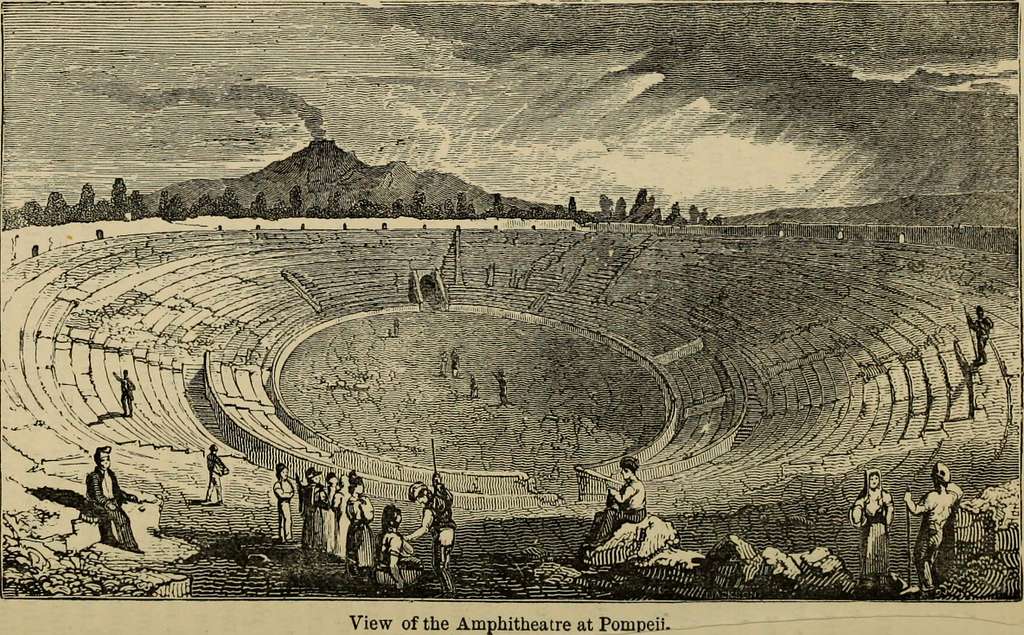
This discovery adds nuance to the narrative of Pompeii. The city wasn’t just a snapshot of day-to-day Roman life; it also harboured grand homes where bathing, dining and politics intersected in luxurious spaces. The presence of skeletons reminds us that luxury and disaster were inseparable in the city’s fate. This bathhouse under volcanic ash stands as a testament to how roman elites lived and died—and how their homes have become time capsules for our understanding of a vanished world.