
A remote high-mountain stronghold rewrites ancient power structures.

Rising from an arid stretch of land, the structure does not announce itself with ruins or inscriptions. It appears instead as a pattern, deliberate, expansive, and difficult to dismiss as accidental. Dozens of rooms emerge where no settlement was expected, arranged in a way that hints at planning rather than survival. Archaeologists are still assembling the picture, but the questions are arriving faster than the answers. Who built something this large so far from known centers. What was it meant to control, protect, or organize. The desert has preserved it in silence, and that silence is now becoming difficult to ignore.
1. The fortress is perched at three thousand metres with 50 rooms.

Perched high on the Tirişin Plateau in Turkey’s remote Gürpınar district, the newly identified stronghold feels deliberately out of reach. Sitting nearly three thousand meters above sea level, it includes roughly fifty chambers, inner citadels, and a stone wall stretching close to four kilometers, according to recent reporting by Arkeonews.
The scale alone is arresting, but the elevation raises the sharper question. Why build something so large, so permanent, in such an unforgiving place. The location suggests visibility without accessibility, power without proximity. Its layout hints at elite control, defensive pressure, and possibly ritual purpose during the Iron Age. This was not just a refuge. It was a message carved into the landscape.
2. The structure dates back roughly three thousand years to the Urartian period.

Archaeologists now believe the fortress belongs to the late Iron Age kingdom of Urartu, dating it to around 1000 BC, as stated by Anatolian Archaeology’s account. Its architecture, placement, and scale align closely with Urartian strategies of control, especially the use of elevated strongholds to dominate territory without relying on large populations nearby.
That timing is critical. Around this period, regional kingdoms were expanding, reorganizing, and responding to new political pressures. In that context, the site likely functioned as more than a military outpost. It reads as a statement of authority, projecting power across a volatile landscape where borders were fluid and visibility itself became a form of control.
3. The find changes assumptions about ancient royal power distribution and mobility.

The discovery is forcing historians and archaeologists to rethink how power was displayed in ancient Türkiye: rather than lowland palaces near rivers, this fortress shows that elites could govern and demonstrate authority from remote, elevated locations, as reported by Indian Defence Review. It hints at mobility, mountain control, and alternate models of kingship that may have been networked rather than centred. In effect, this stronghold may represent a previously-under-appreciated strand of royal power, tailored to terrain and visibility.
4. The location suggests strategic oversight of routes and pastures.

High up on the Tirişin Plateau the fortress dominates valleys, watering points and mountain passages. From this vantage the occupants could monitor movement, herd routes or military approach. The placement implies the builders valued oversight and control. Such a site would serve as both a lookout and a statement—royal command projected into the landscape rather than hidden behind river banks.
5. Architecture and materials hint at elite and ceremonial functions.

The fortress is not simply functional; the quality and scale of construction suggest ceremonial as well as defensive role. Rooms are numerous enough to support gatherings, administration or ritual. Stone-walls spanning kilometres speak to resources, organisation and craft. The combination of functional architecture with symbolic placement indicates the site likely hosted ceremonies, official functions or elite activity beyond mere war-defence.
6. The discovery repositions our map of power away from riverine centres.

Traditionally ancient power in Anatolia has been seen clustering near rivers and trade roads. But this fortress shows that mountain strongholds could host elite activity. The shift means scholars must widen their lens beyond accessible valleys to hidden plateaus. In doing so the stronghold opens doors to reinterpret other remote sites that may have been overlooked.
7. The find highlights the importance of elevation and visibility in royal display.

Having a fortress at three thousand metres means power would be literally above the ordinary. Elevated sites offer visibility, symbolic dominance and perhaps ritual proximity to sky or gods. For an ancient ruler, controlling the high ground was strategy—and spectacle. In one sense this fortress appears built to be seen, assumed, and respected by people below.
8. The fortress may reflect a decentralised model of rulership and control.

Rather than one palace in one city, the site suggests that power could be spread across multiple nodes, especially in rugged terrain. Elites may have moved seasonally, governed through a network of high locations tied to pastures, herds and routes. This challenges static models of kingship and invites us to see fluid, mobile power systems adapted to mountain frontiers.
9. Local herding and high-pasture economies may have supported elite strongholds.

High plateaus often host herders, seasonal camps and trans-humance economies. The fortress’ location suggests it may have tied into these systems—monitoring herds, collecting tribute, or controlling movement. If so the stronghold was not just military but economic in nature—a hub connecting pastoral wealth and elite power.
10. Further excavation will refine chronology, function and social context.
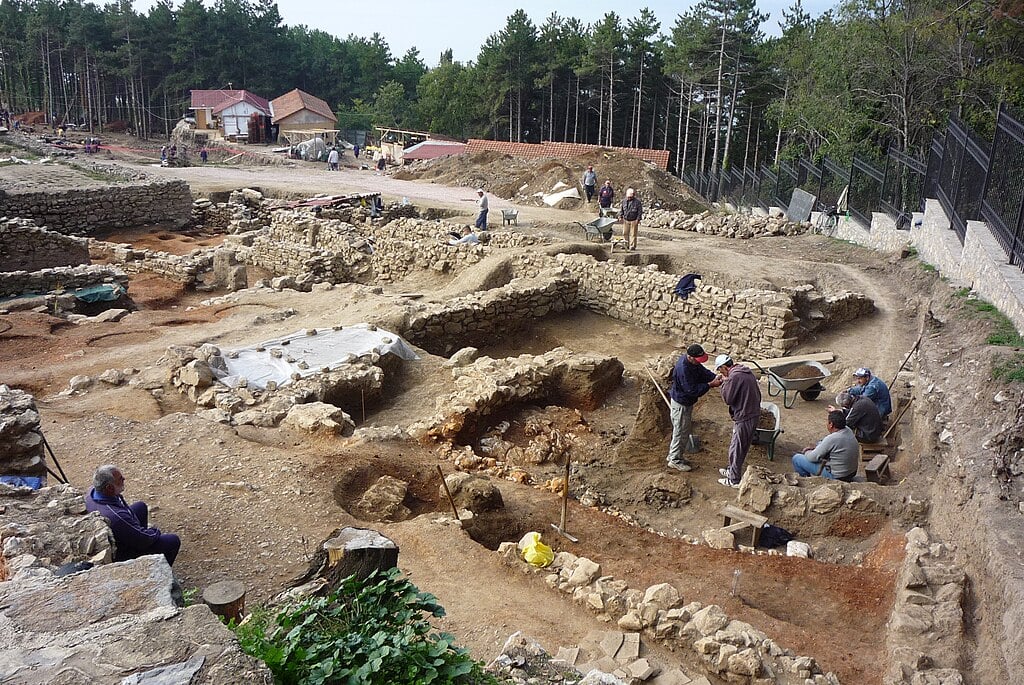
Now that the stronghold is exposed, next steps include detailed dating, analysis of ceramics, metallurgy, and human remains. Understanding who lived there, how they used the fifty rooms, and how they interacted with surrounding communities will fill the narrative. Each new layer will tell how this fortress fit into the larger story of ancient Türkiye and reshape how we visualise royalty, mobility and power in the past.