
These experiences show up with unsettling consistency.
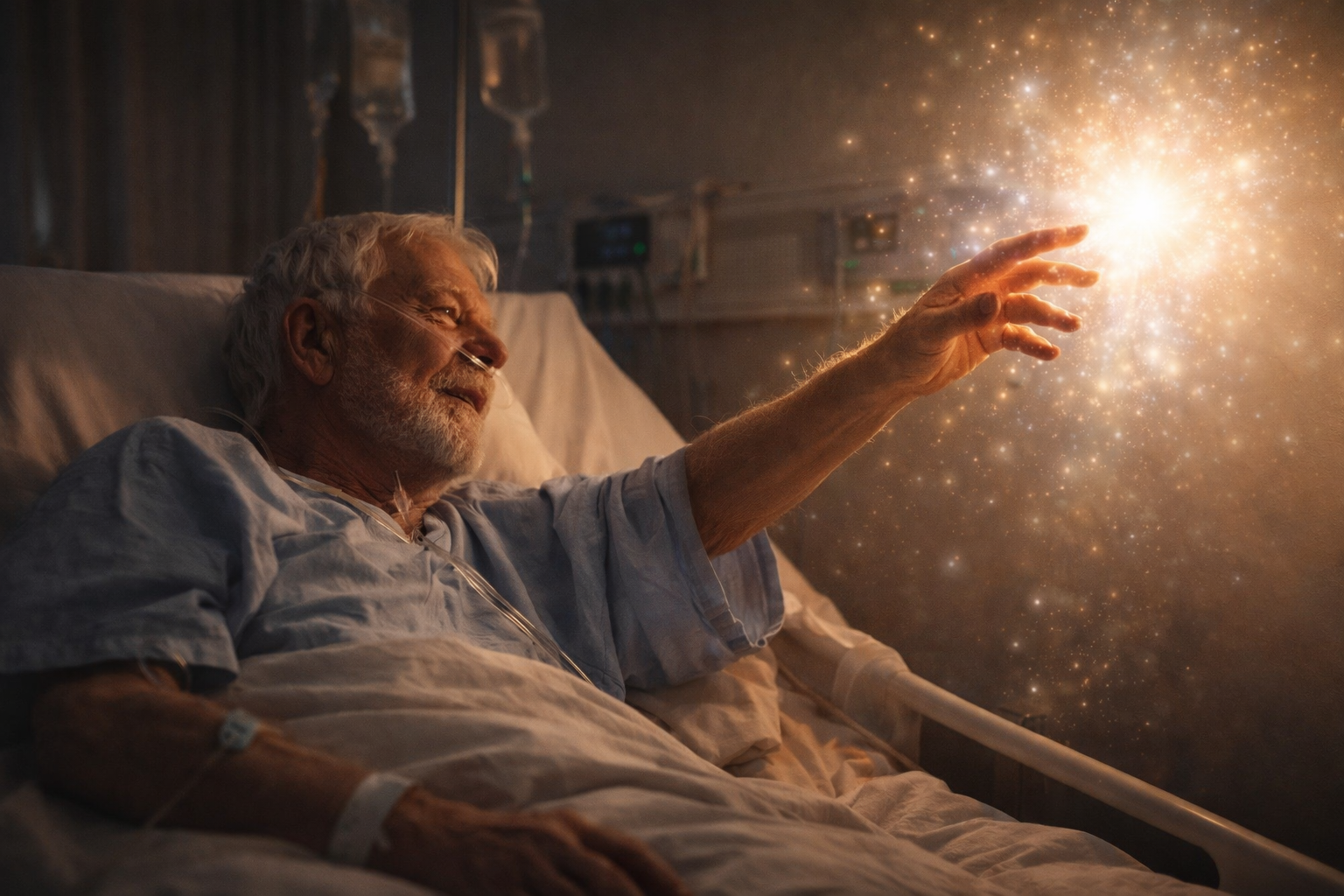
In hospitals and hospice rooms, certain moments repeat with a consistency that is difficult to dismiss. Different people, different lives, different beliefs, yet the descriptions begin to overlap in ways that feel more structured than random. Patients who have never met describe similar scenes, similar figures, even similar sensations in their final hours. Researchers studying these reports are beginning to take the patterns more seriously, not as isolated hallucinations, but as something that follows a recognizable shape. What people claim to see at the end of life is no longer just anecdotal. It is becoming something that invites closer examination.
1. Loved ones who passed appear to welcome them.

Many dying patients describe seeing relatives who died years earlier, standing near their bed or waiting in a bright place. A large study from Hospice & Palliative Care Buffalo found that 88 percent of terminally ill patients experienced at least one vivid “visitation” of this kind before death. These appearances often come with feelings of warmth and reassurance rather than fear. Medical staff note that after such experiences, patients frequently relax, smile, or express readiness to go, suggesting these moments might help ease the transition.
2. A sense of traveling or walking toward light, as stated by NYU Langone researchers.

Researchers at NYU Langone’s Center for Near-Death Studies documented dozens of cases in which patients described moving through tunnels, crossing water, or walking toward a radiant light. The sensation is often calm, not frantic, and paired with a feeling of purpose or invitation. Unlike dreams, these experiences tend to happen during periods of lucidity shortly before the heart stops. The reports suggest the brain may be generating a coherent narrative as consciousness fades, one that provides emotional comfort at life’s end.
3. Reviewing memories in a clear, organized sequence.

Scientists at the University of Haifa studied terminal patients who described vivid “life reviews” where memories, sometimes long forgotten, appeared in panoramic detail. Participants said they could relive entire moments, often with new understanding or forgiveness. These reviews weren’t random flashes but structured, meaningful reflections centered on relationships and pivotal choices. The researchers proposed that the brain, under metabolic stress, may activate deep autobiographical memory networks. To those experiencing it, however, the moment feels less like science and more like reconciliation.
4. Beloved pets return as silent companions.

A surprising number of patients report seeing cherished pets near their bed in their final hours. These animals appear calm, quiet, and familiar, often sitting at the foot of the bed or beside them. Nurses note that patients who loved animals find enormous comfort in these moments. While no clear physiological explanation exists, many interpret the presence as emotional memory breaking through the body’s decline. Whatever the cause, it helps ease anxiety and creates a sense of companionship that words can’t provide.
5. Familiar places from childhood reappear in perfect detail.

Some people describe finding themselves in childhood homes, gardens, or schools, places that shaped who they were. These visions are often peaceful, filled with soft light and the scent of trees, bread, or the sea. The accuracy of sensory recall is striking; people describe specific wallpaper patterns or furniture no one else remembers. Researchers believe such scenes may reflect deep memory activation, triggered as the brain shuts down. But for the person experiencing it, the comfort feels as real as any place they’ve known.
6. A brilliant white light fills the entire space.

Among all end-of-life experiences, the most consistent is the appearance of an all-encompassing light. Patients describe it as soft, bright, and filled with emotion rather than glare. Some call it “a presence,” others “a door.” Studies from hospice units in both the United States and Europe found the light vision reported in over half of observed cases. It’s often followed by deep calm or a final breath, suggesting the experience aligns closely with the biological process of death.
7. Voices or music emerge from unseen sources.

Hearing songs or voices is common among people close to death. Some describe hymns, others hear the voices of parents or children calling their name. Neurologists note that hearing is one of the last senses to fade, so the mind may fill silence with emotionally resonant sounds. Families often notice their loved one responding, smiling faintly or mouthing words to songs no one else hears. Whatever its cause, this phenomenon leaves the room charged with emotion, as if the invisible and visible worlds briefly overlap.
8. The feeling of a boundary between worlds becomes clear.
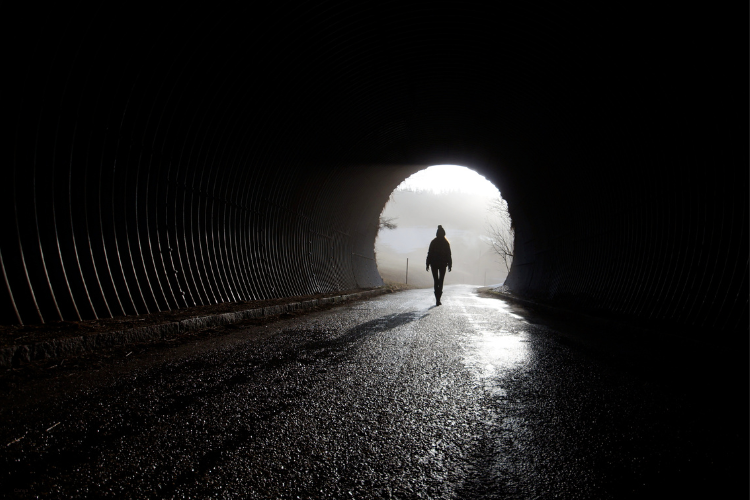
In their final hours, many describe being “halfway between here and there.” They might say they see a bridge, a riverbank, or a threshold of light. Nurses call it “the crossing language.” Patients become calm but distant, sometimes speaking to unseen figures. Researchers suggest this could be a neurological transition as consciousness diminishes, but for loved ones, it feels like witnessing someone glimpsing beyond. The boundary imagery appears universal, showing up in hospice studies across cultures.
9. Time seems to stop, and the world grows still.

Moments before death, some individuals describe time slowing or stopping completely. They feel detached from pain, surroundings, or even breathing. Caregivers often notice this shift, a sudden quiet, steady eyes, an almost serene awareness. Scientists theorize this may occur when the brain’s perception of time collapses as energy fades, producing a timeless sense of peace. The stillness that follows often signals to loved ones that the person has found internal calm before release.
10. A profound quiet descends, followed by peaceful departure.

In the final stage, speech ceases and the body relaxes. Many patients whisper, “It’s beautiful,” or simply smile before passing. Nurses and families describe a palpable calm that settles over the room. Physiologically, the body is shutting down; emotionally, it feels like resolution. For those left behind, these quiet endings often transform fear into acceptance. The moments leading up to death remain mysterious, but what’s clear is that they’re not always dark, they can be full of grace, memory, and light.