
Traces that raise questions about humans beyond Earth.

It is the kind of claim that spreads before anyone can fully examine it. A fragment of rock, older than most life on Earth, suddenly linked to something unmistakably human. At first glance, it sounds like a breakthrough that would rewrite everything we know about life and its origins. But almost immediately, scientists began pushing back. The details did not line up, the biology made no sense, and the timeline raised more questions than answers. What started as a stunning discovery quickly turned into something else entirely, a test of how quickly extraordinary claims can outrun the science meant to verify them.
1. The Martian meteorite is real, but the DNA isn’t.
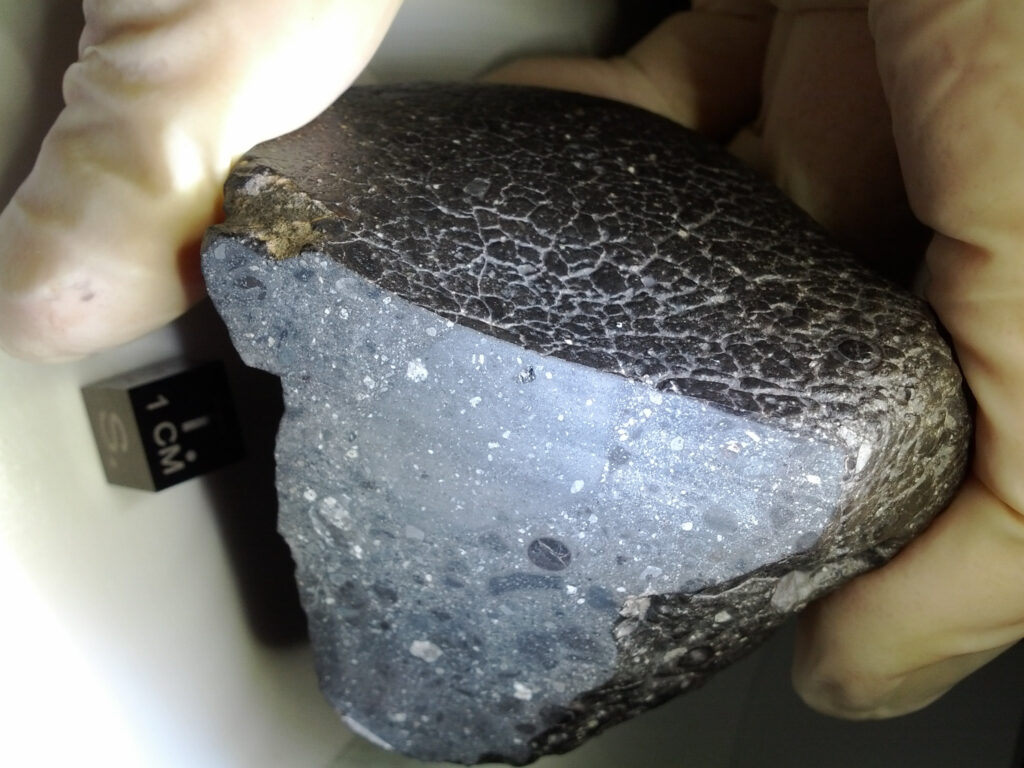
The rock in question, Northwest Africa 7034, truly is from Mars, as confirmed by NASA’s Goddard Space Flight Center. The meteorite formed around 2 billion years ago, during a time when Mars still had water and volcanic activity. It’s one of the most studied Martian samples on Earth, prized for what it tells us about the planet’s geology. But no peer-reviewed research has ever found organic tissue or DNA in it. The idea that human genes survived inside a rock hurtling through space for billions of years goes against everything known about molecular science.
2. NASA scientists say it’s biologically impossible to survive that long.
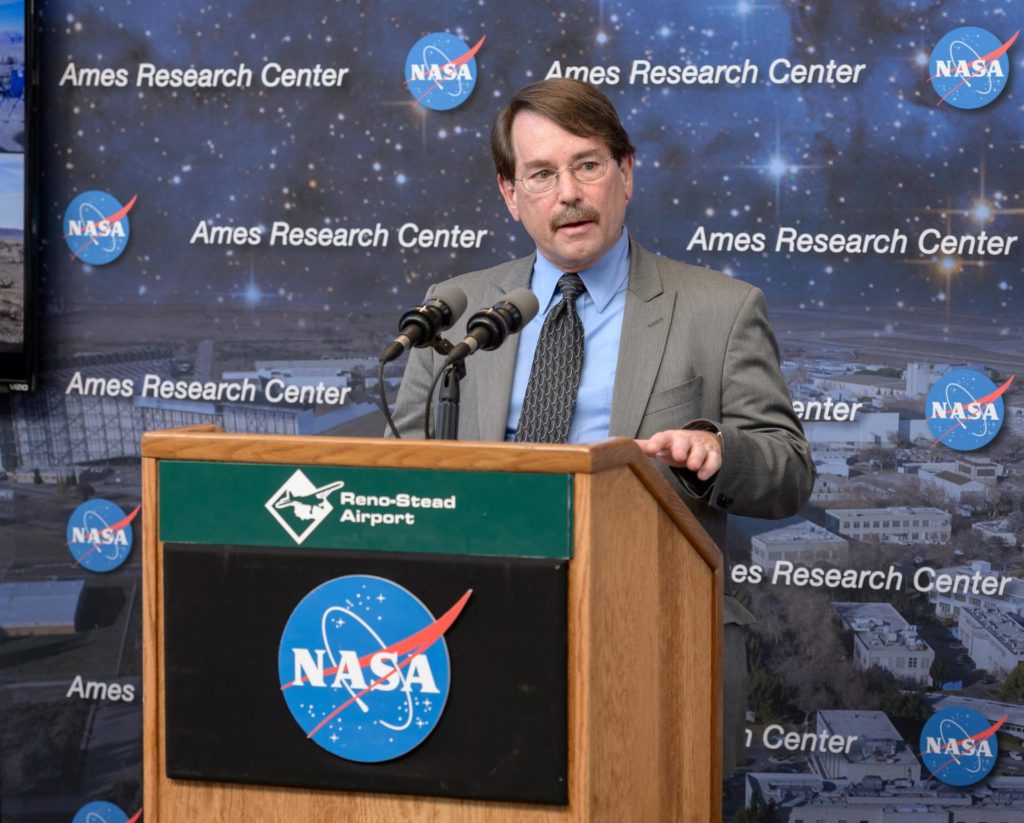
According to astrobiologist Dr. Lindsay Hays of NASA’s Astrobiology Program, DNA breaks down far too quickly to survive on any planet for more than a few million years, let alone billions. Radiation, heat, and cosmic exposure destroy the delicate genetic code almost instantly. Even on Earth, ancient DNA rarely lasts beyond a few hundred thousand years. That’s why experts believe that if any human DNA was detected in the rock, it came from people who handled it recently, not from ancient life on Mars. The survival scenario just doesn’t fit what biology allows, according to NASA experts.
3. No published scientific paper supports the extraordinary claim.
Despite the flood of social-media buzz, no research journal such as Nature or Science has published a verified study on human DNA in Martian meteorites. The Meteoritical Society, which tracks all known space rocks, lists Black Beauty for its mineral makeup, not for any trace of biology. Earlier peer-reviewed analyses of this rock show volcanic minerals and traces of Martian water, but no evidence of life. Until researchers publish full, reviewed data that can be independently tested, this claim remains speculation, not science. Real discovery demands open data, verified methods, and hard evidence, not viral headlines.
4. Contamination from human handlers is the simplest explanation.

Every scientist working with meteorites knows contamination is a huge problem. Even a single human touch can leave microscopic DNA behind. Collectors, traders, and researchers all handle these rare stones long before they ever reach a clean laboratory. That’s why NASA and the European Space Agency now use sterile gloves, sealed containers, and filtered air when studying planetary samples. Without that level of control, human DNA easily sneaks into rocks. So if someone really found our genes inside Black Beauty, the most logical answer is simple, they put it there accidentally.
5. The path of planetary transfer makes the idea impossible.
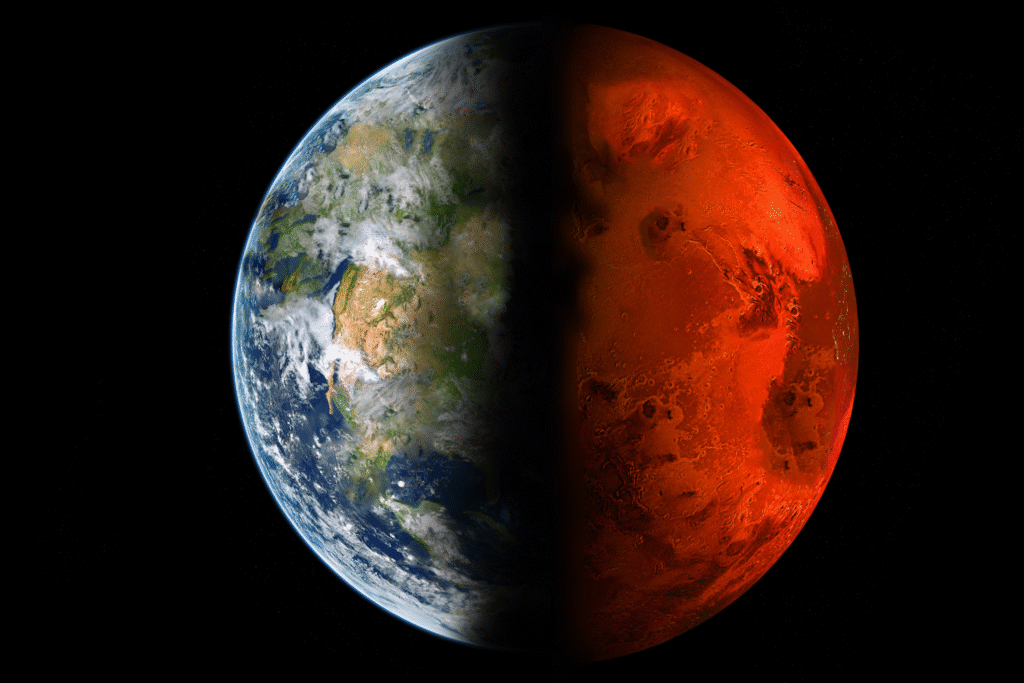
For human DNA to exist naturally in a Martian rock, material from Earth would need to reach Mars billions of years ago, get trapped inside, and then return to Earth much later. That scenario is impossible. Meteorites move from Mars to Earth, not the other way around. Human DNA didn’t even exist when this rock formed. The odds are beyond astronomical. Scientists agree it’s far more plausible that the sample picked up human DNA after landing on Earth, through contact, humidity, or lab mishandling, than it ever coming from Mars itself.
6. Past “life in meteorites” stories collapsed under scrutiny.
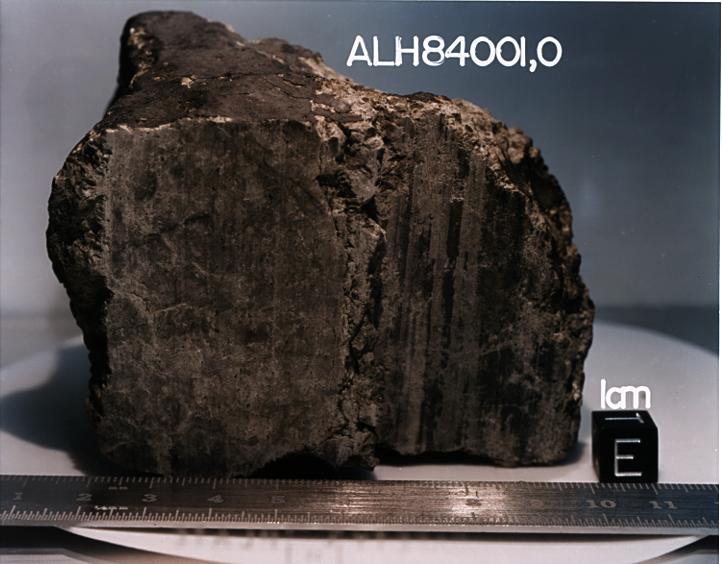
In 1996 NASA scientists famously claimed that a different Martian meteorite, ALH84001, held fossilized bacteria. For a while, it thrilled the world. Years later, researchers proved the “fossils” were just mineral patterns formed by natural chemistry. The Black Beauty claim follows the same path: a sensational story that sounds exciting but lacks data. The scientific community has learned to approach such claims cautiously. Without transparent testing, extraordinary discoveries are simply not credible. History shows that the more dramatic the headline, the weaker the evidence tends to be.
7. The real meteorite contains minerals, not molecules of life.

What makes Black Beauty fascinating isn’t DNA, it’s the chemistry of its rocks. Scientists studying it have found ancient basalt, traces of water, and elements that hint at early volcanic systems on Mars. These discoveries help map how the Red Planet once supported rivers and possible conditions for microbial life. But that’s as far as the evidence goes. No proteins, cells, or genes have been detected. In short, the meteorite tells the story of Mars’ geology, not its biology, and certainly not any connection to human genetics.
8. Viral stories twist science into shareable myths.

Bold claims like “human DNA found on Mars” travel faster online than any real data. A few social posts, vague photos, and dramatic captions can spiral into global news in hours. But real science takes months, or years, of verification. Scientists worry that these viral headlines undermine public trust, turning real discoveries into entertainment. Still, every time one of these claims surfaces, it sparks public curiosity about space and life beyond Earth. The challenge is keeping that curiosity grounded in truth instead of clickbait.
9. Future Mars missions will bring cleaner, uncontaminated samples.
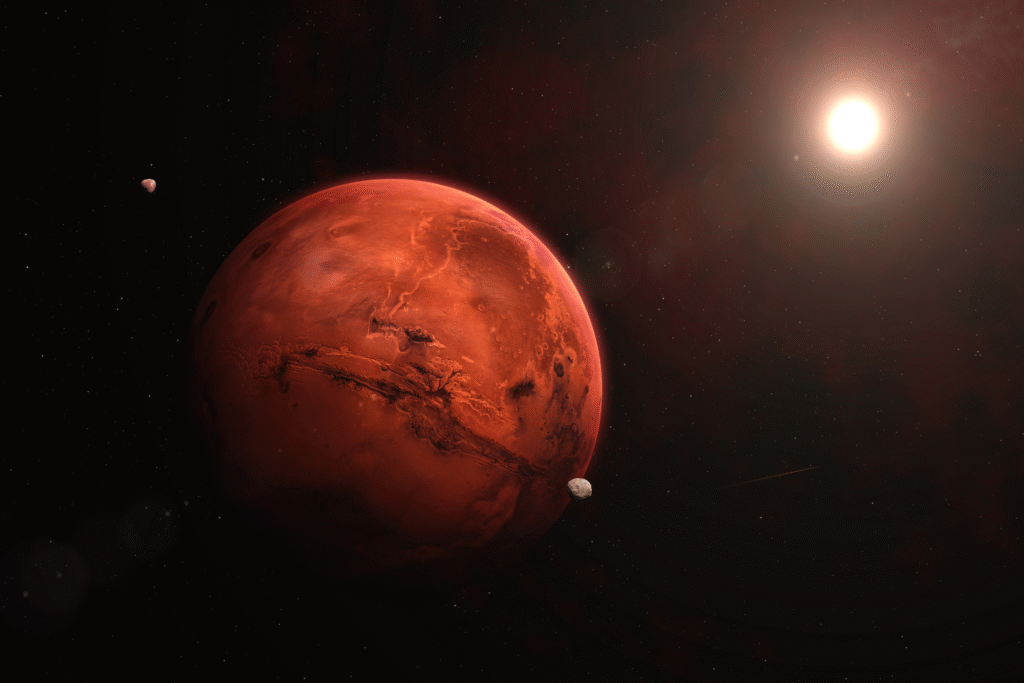
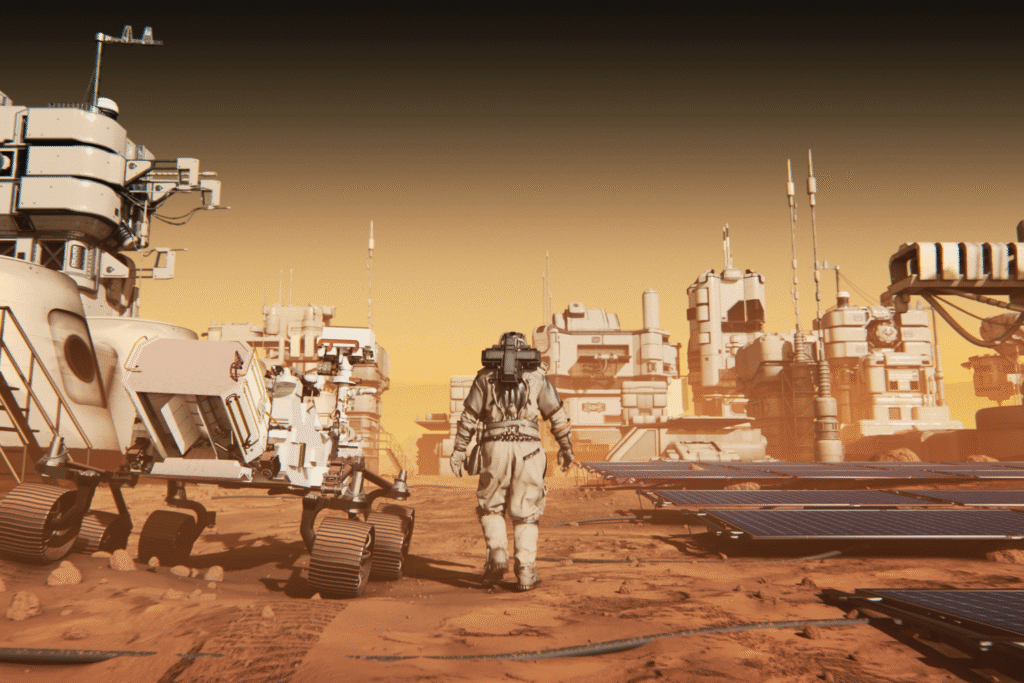
NASA’s Mars Sample Return mission aims to bring sealed, untouched material directly from Mars’ surface to Earth in the early 2030s. These samples will be isolated from human contact from the moment they’re collected until analysis. That effort is designed to eliminate contamination, ensuring scientists can finally study Martian rock chemistry without interference. If any true biological molecules exist on Mars, this mission will find them, with full transparency, clean methods, and peer-reviewed publication. Until then, stories like Black Beauty’s “human DNA” are only distractions from real science.
10. The fascination says more about us than the rock.
People want to believe that life connects Earth and Mars, that we share some hidden link across the solar system. That longing drives both science and speculation. But for now, Black Beauty remains only what scientists know it to be: an extraordinary piece of Mars’ crust that reveals the planet’s watery, ancient past. It holds no trace of us, no genetic imprint, and no proof of cosmic kinship. Yet its mystery reminds us why we keep searching, the truth about life beyond Earth still lies ahead, waiting in the dust of another world.