
A mission beyond expectations uncovering Pluto’s secrets.
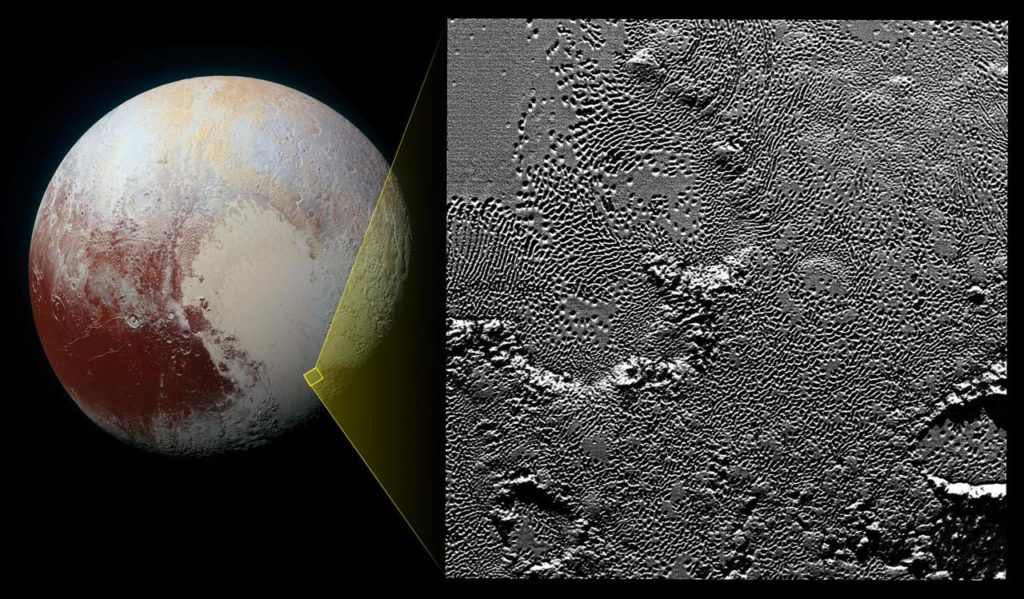
When New Horizons made its historic flyby of Pluto in July 2015, after a decade-long journey, the data it returned shattered expectations. Instead of a cold, inert rock drifting at the solar system’s edge, Pluto turned out to be a surprisingly dynamic world with mountains, glaciers, layered haze in its atmosphere and even hints of an internal ocean. The encounter changed Pluto from a distant dwarf planet to a place alive with geologic and atmospheric activity, reminding us that the outer reaches still hold vivid surprises.
1. Pluto’s surface revealed dramatic ice mountains and plains.
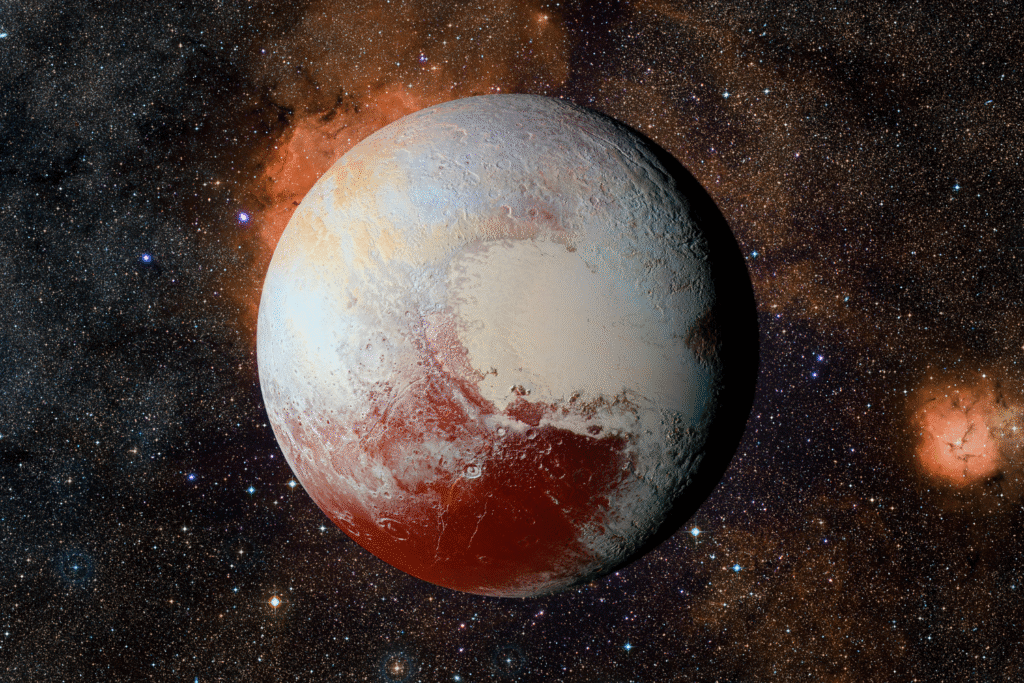
The flyby captured images of towering peaks and expansive plains composed of nitrogen-ice and water-ice, a revelation compared with earlier expectations. As stated by NASA’s mission summary, these landscapes show that Pluto is geologically active with recent resurfacing, not a frozen relic of the early solar system. The presence of such terrain suggests Pluto may still harness internal heat or processes that reshape its surface. These findings forced scientists to revisit assumptions about small worlds and dramatically expanded what we thought was possible so far from the sun.
2. The atmosphere displayed hazes and unexpected structure.
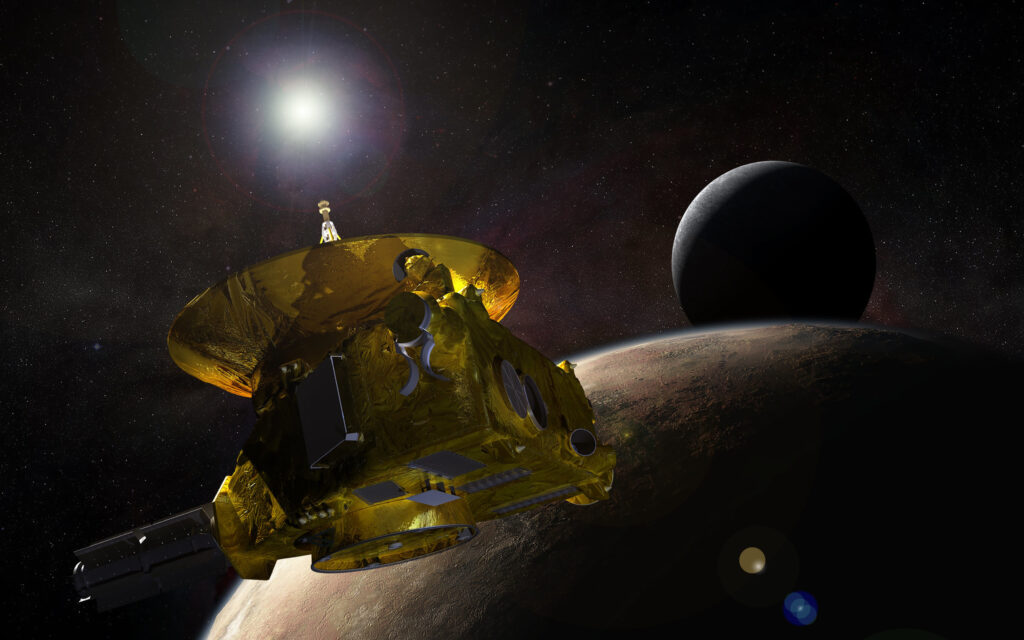
Pluto’s atmosphere turned out to be far more complex than anyone anticipated, with layered haze reaching high altitudes and intricate interactions between solar wind and atmospheric particles. According to Space.com, these structures point to active atmospheric chemistry and seasonal change even at that great distance. The data showed how particles escape, how the sun’s radiation affects the outer layers, and how the interplay of gas and ice continues to reshape the environment. Pluto’s sky therefore became a portal to unexpected climate-like behavior in a remote setting.
3. Evidence pointed to a possible subsurface ocean and active geology.

Multiple lines of evidence from the mission suggested that beneath Pluto’s icy crust lies a slushy ocean of liquid water or a water-ice mixture, as reported by Nature. The smooth plains, fault lines, and lack of an ancient equatorial bulge point toward an interior that remains warm and mobile. If confirmed, this means Pluto is still geologically alive despite its frigid outer shell. That realization broadens the class of worlds that might host hidden oceans and reshapes our understanding of life’s potential in the cold reaches of space.
4. Pluto and its moons formed a miniature planetary system.

Beyond Pluto itself, the flyby revealed a tightly bound network of Pluto and its largest moon, Charon, accompanied by smaller satellites. Their gravitational balance, mirrored surfaces, and shared scars of impact point to a deep, intertwined history. The two main bodies even orbit a shared center of gravity, an unusual trait in the solar system. Studying this partnership offers insight into how smaller planets and moons can evolve together, showing that complexity and interaction exist even in the farthest, quietest corners of space.
5. The flyby redefined what a Kuiper Belt object can be.

Before New Horizons, the Kuiper Belt was considered a graveyard of icy debris. Pluto changed that perception completely. Its varied landscape, atmosphere, and evidence of movement proved that small, distant bodies could be dynamic and geologically rich. Scientists began to suspect that many other Kuiper Belt objects might also harbor activity, internal heat, or volatile cycles. Pluto became a prototype for reimagining what these far-flung worlds might offer—and a reason to keep exploring past Neptune’s domain with new curiosity and purpose.
6. Data transmission itself became a feat of patience and technology.

After the close encounter, the real work began back on Earth. It took nearly sixteen months for New Horizons to beam home all the data it had collected, due to the vast distance and low bandwidth of its transmitter. Scientists had to plan every byte carefully, prioritizing which files arrived first. Waiting for those images and readings tested patience but emphasized how vast space truly is. Each new packet of data unveiled another piece of Pluto’s puzzle, making the long delay feel like unwrapping a cosmic story one whisper at a time.
7. New questions arose about solar system formation and evolution.

Pluto’s complexity raised deeper questions about how small icy worlds form and evolve in the outer solar system. If Pluto can remain active and layered with history, perhaps internal energy and heat are more common than once believed. This pushes planetary science to rethink theories about formation, heat retention, and geological life spans for distant bodies. Pluto now serves as a touchstone for understanding other icy moons and dwarf planets, showing that even at the edges of the Sun’s reach, planets continue to tell evolving stories.
8. The mission extended into the Kuiper Belt and beyond.

After the Pluto flyby, New Horizons continued on to explore deeper into the Kuiper Belt, including a close encounter with Arrokoth in 2019. That elongated, reddish body offered a glimpse into the solar system’s earliest days. The success of these encounters confirmed that New Horizons was more than a one-target mission—it was a pioneer mapping the outer frontier. Each object studied brought new context to what Pluto revealed, turning a single planetary visit into an ongoing exploration of the solar system’s frozen past.
9. Public engagement and imagery changed our view of the outer solar system.
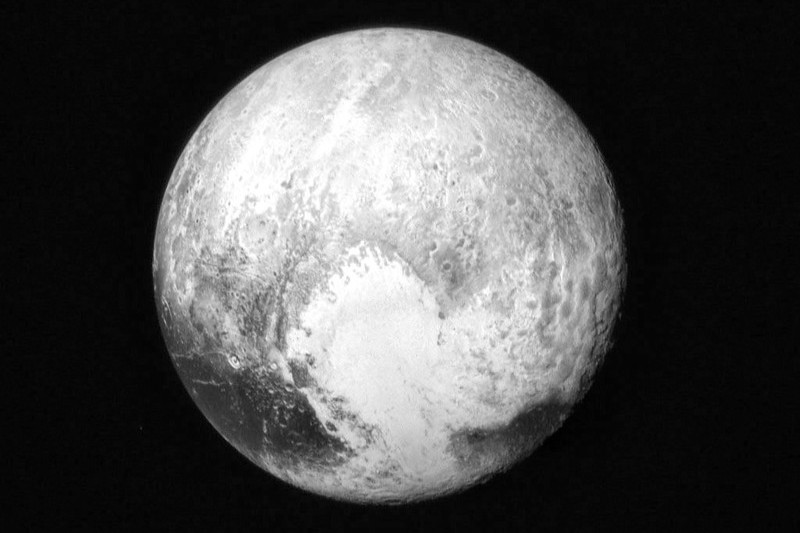
When the first detailed images of Pluto reached Earth, they showed vast nitrogen plains, rugged mountain ranges, and a striking heart-shaped region known as Tombaugh Regio. These visuals redefined Pluto not as a forgotten world, but as a living part of our cosmic neighborhood. The mission’s global broadcast ignited fascination with deep-space exploration, connecting science with emotion. It became a reminder that discovery is not just about data, but about wonder—the spark that turns distant pixels into living worlds.
10. Pluto’s unexpected world has inspired future missions and science.
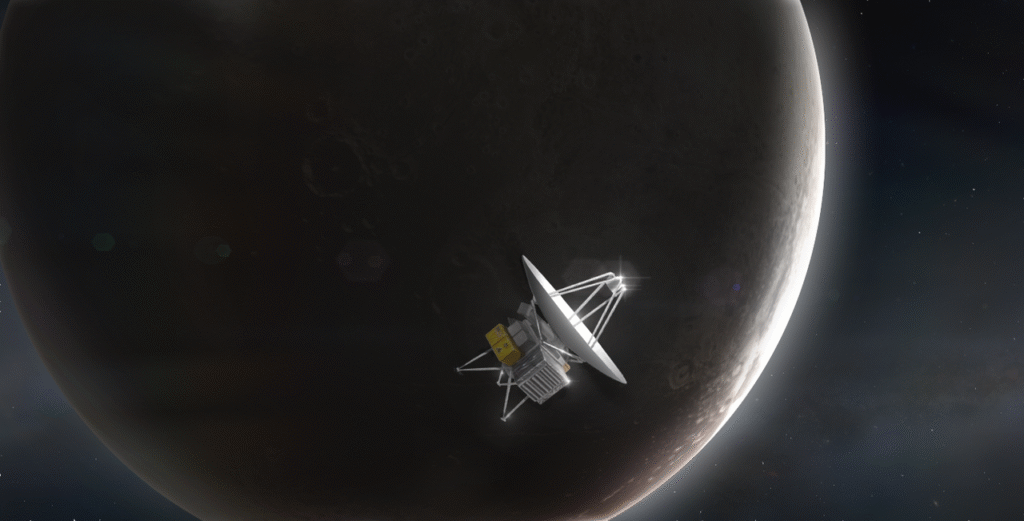
The discoveries of New Horizons set the stage for future missions to the Kuiper Belt and beyond. Pluto’s dynamic surface, layered sky, and possible ocean suggest that even distant bodies hold clues about planetary evolution and potential habitability. NASA and other agencies now discuss returning with orbiters or landers to explore these mysteries up close. Pluto proved that adventure does not fade with distance—it deepens, drawing science forward one world at a time, each revelation more extraordinary than the last.