
Subtle behavioural changes hint at deeper social strain.
For animals that survive through cooperation, social stability is everything. Meerkats are famous for their tightly knit clans, where grooming, shared vigilance and cooperative pup care hold the entire system together. Yet in several monitored populations, researchers have begun noticing subtle shifts in how these animals interact. The changes are not dramatic at first glance. Instead they appear as small adjustments in routine, timing and participation. Over time those adjustments begin to add up. When a species built on teamwork starts drifting toward weaker cooperation, the implications extend far beyond individual behaviour, raising questions about how resilient these social systems truly are.
1. Grooming behaviour is decreasing within monitored groups.

Field teams observing meerkats in long term study sites have documented a decline in grooming interactions, which is significant because grooming helps regulate stress and maintain alliances. According to Smithsonian Magazine, grooming reduction in cooperative species can signal early social instability. When animals spend less time strengthening bonds, tensions accumulate more easily and disagreements become harder to resolve. Young meerkats also lose opportunities to learn social cues from adults. As grooming wanes, the intricate emotional scaffolding that supports group cohesion begins to loosen, setting the stage for further declines in social reliability across daily activities.
2. Social networks show thinning connections among individuals.

Network analysis from long term behavioural monitoring indicates that meerkats in some regions are forming fewer stable connections with group members. Sparse networks reduce information flow, weaken coordination during foraging and limit the support individuals rely on during tasks such as pup rearing and vigilance, as stated by Science Advances. When social links become fragile, cooperation loses its rhythm and group responses slow down. Over time these reductions in connectedness make populations more vulnerable to environmental pressures, because the safety net of shared responsibility begins to fray, creating a cascade that affects nearly every cooperative behaviour.
3. Sentinel behaviour appears less consistent across several populations.
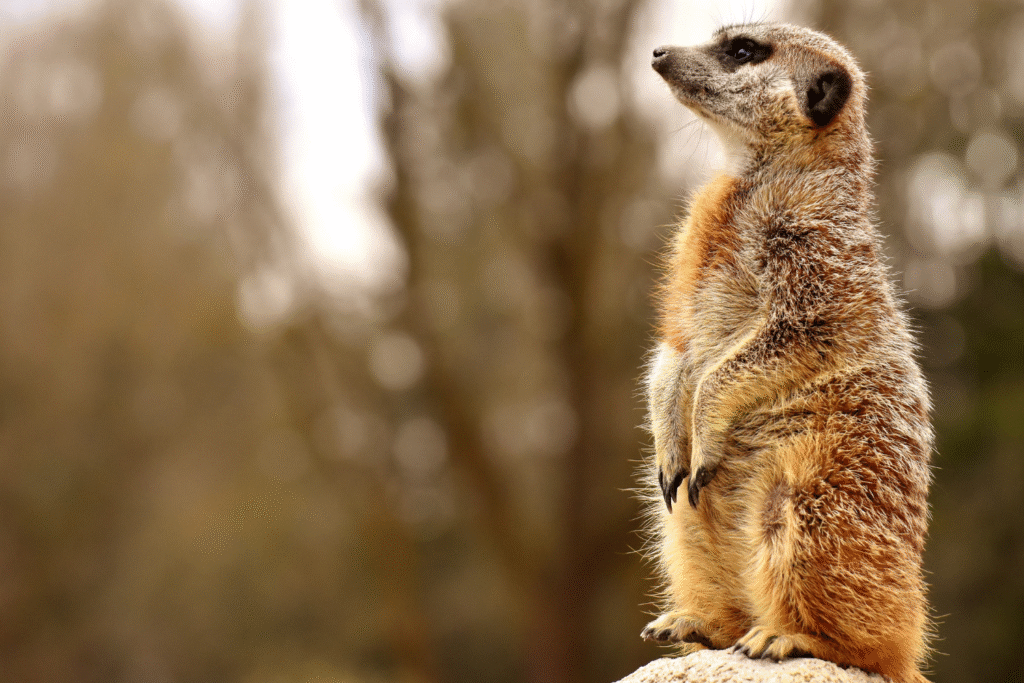
Researchers tracking vigilance patterns have noted that coordinated sentinel rotations are becoming irregular in certain groups. As discovered by BBC Science, lapses in sentinel duty disrupt the balance between safety and foraging efficiency. When fewer individuals volunteer for lookout roles or when rotations break down, the group becomes exposed to higher predation risk. This inconsistency affects the confidence of foraging members and can increase stress throughout the clan. As sentry roles weaken, the cooperative structure that allows meerkats to thrive in open landscapes becomes strained, feeding into other declines in social reliability.
4. Individuals are spending more time foraging alone.

An increase in solitary foraging changes the fundamental rhythm of meerkat life. When individuals forage at greater distances from the group, they lose access to collective vigilance and reduce opportunities to reinforce bonds through proximity. Solitary behaviour also limits the transmission of knowledge from older meerkats to younger members, weakening key developmental pathways. Over time the simple act of spreading out during foraging erodes the informal communication channels that keep groups synchronized. This gradual shift toward individual movement patterns signals a departure from the cohesion long associated with healthy meerkat societies.
5. Cooperative care of pups is declining in some clans.
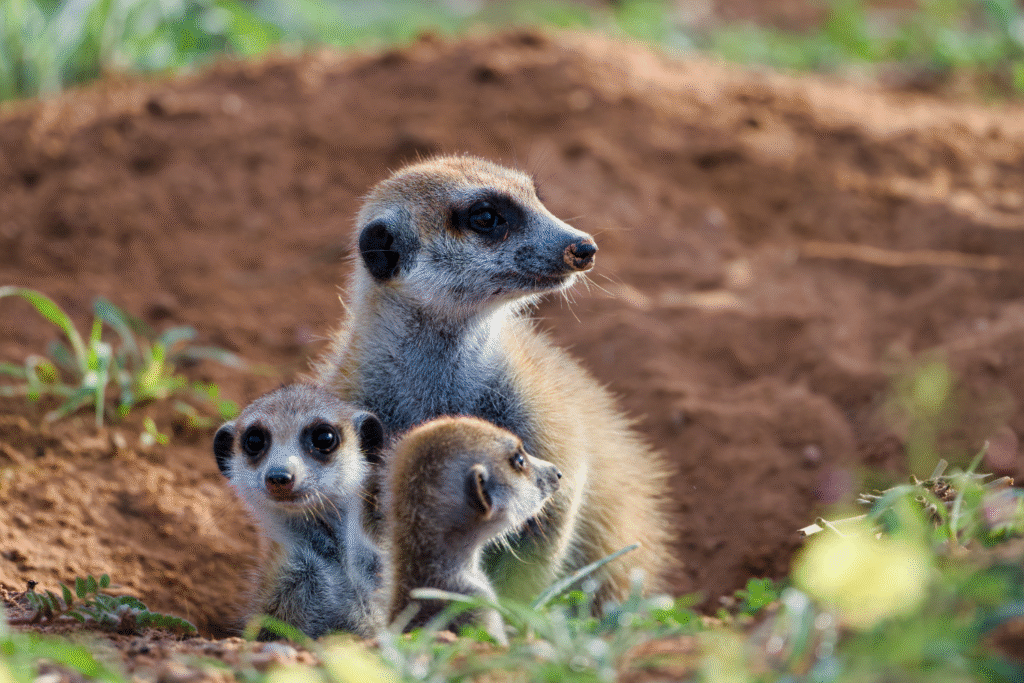
Alloparental support has always been central to meerkat survival, with helpers assisting breeders in feeding, guarding and teaching pups. A reduction in this participation places more pressure on dominant pairs and increases risk for juveniles. When fewer individuals step into caregiving roles, social contracts start to fray. Pups may grow more slowly or face higher mortality, and helpers may become less invested in group success. Such changes weaken generational continuity, making groups less resilient and less capable of maintaining established social systems during environmental or demographic stress.
6. Rising aggression suggests underlying instability within groups.
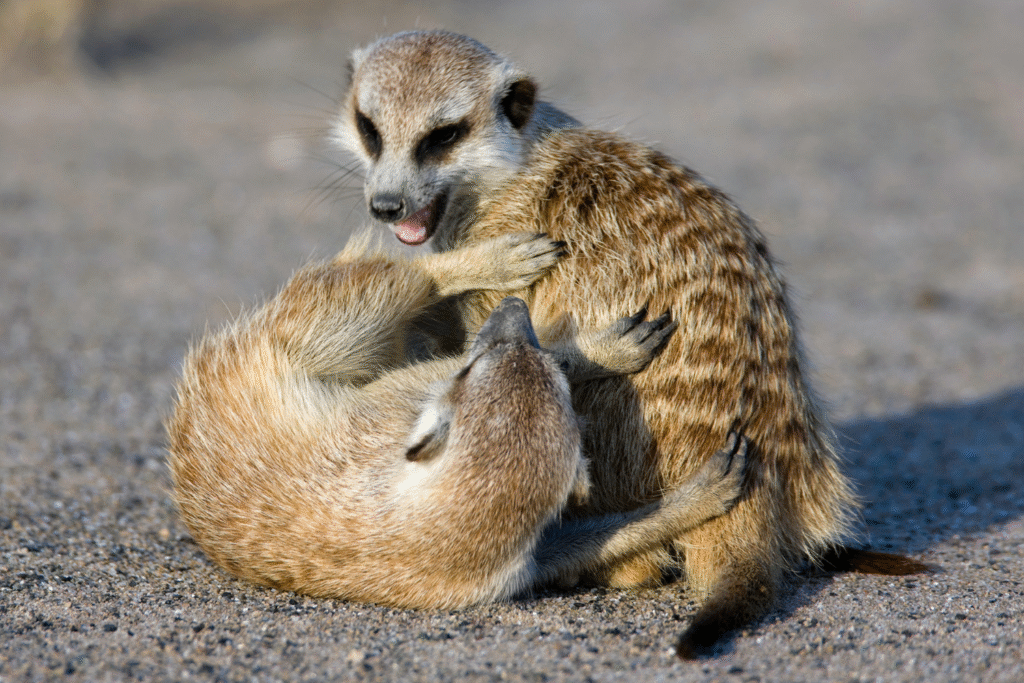
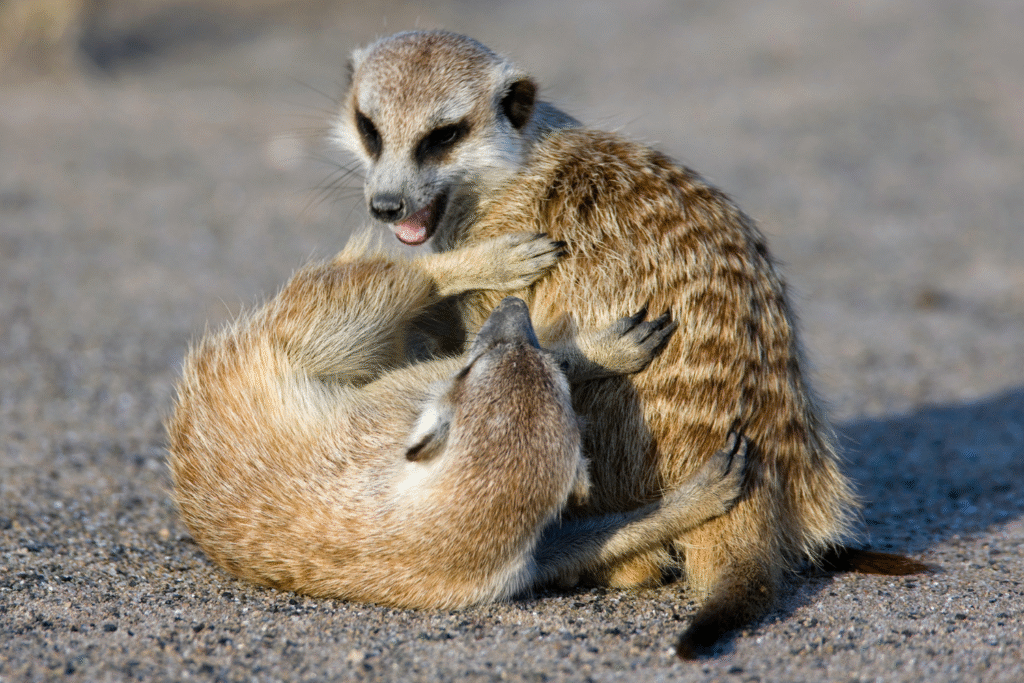
Shifts in behaviour often become apparent through subtle changes in conflict patterns. Increased aggression or more frequent dominance challenges can indicate that cooperation is breaking down. Energy normally reserved for shared tasks becomes spent on internal disputes, reducing efficiency in foraging, vigilance and care of young. Persistent conflict also raises stress levels across the group, which can suppress reproduction and reduce survival. These behavioural disruptions may be early signals that environmental pressure or resource scarcity is reshaping internal dynamics.
7. Fewer young meerkats are engaging in essential social roles.
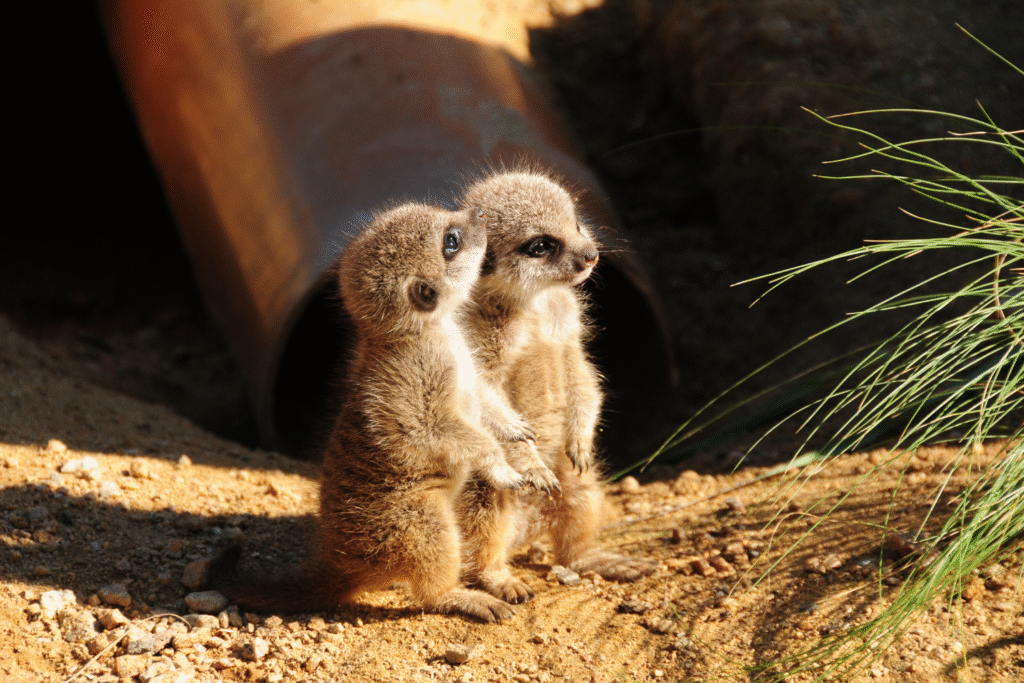
Observers have noted delays in how quickly juveniles assume responsibilities such as sentinel work or pup guarding. When young meerkats participate less, the transmission of knowledge becomes less reliable. This places a heavier burden on older individuals who must cover additional duties. A drop in youthful engagement slows the development of future cooperative members and undermines group adaptability. Over time such changes can destabilize the generational cycle that keeps meerkat societies functioning.
8. Movement within groups is becoming less synchronized.
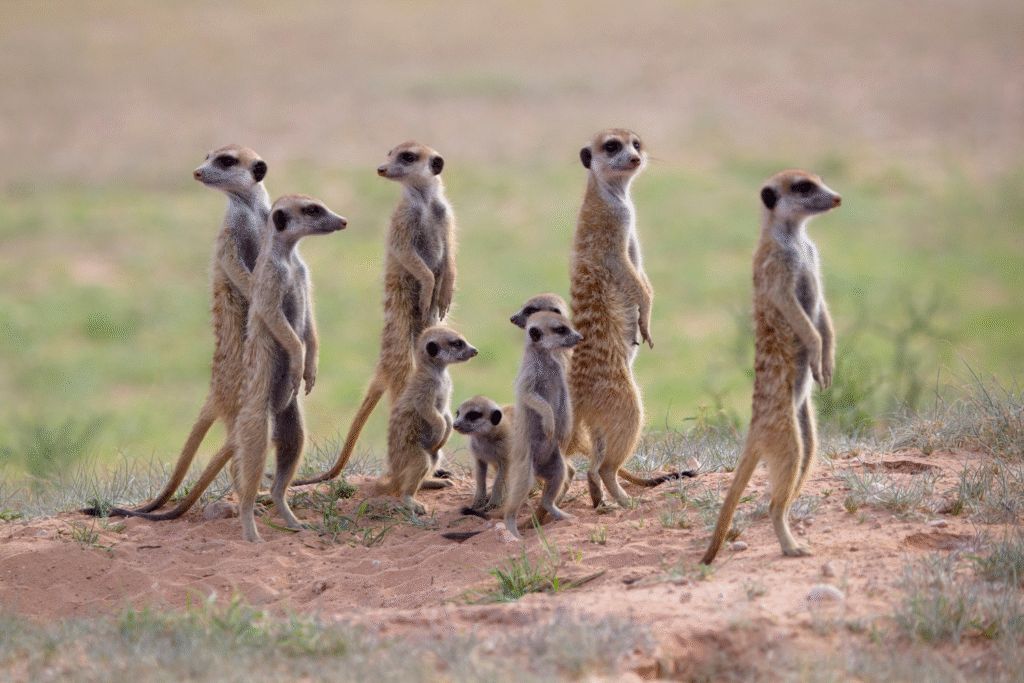
Meerkat clans usually move in coordinated formations, maintaining visual contact and responding almost instantly to alarm cues. When individuals begin to move independently or hesitate during directional shifts, the flow of group movement degrades. Disjointed motion increases risk during foraging and weakens the collective ability to detect danger. Over repeated episodes, these interruptions reshape the overall group rhythm, leading to slower responses and lower efficiency. Such changes in movement patterns often reflect deeper issues affecting group confidence, communication and shared motivation.