
A forgotten hilltop structure reshapes an ancient myth.
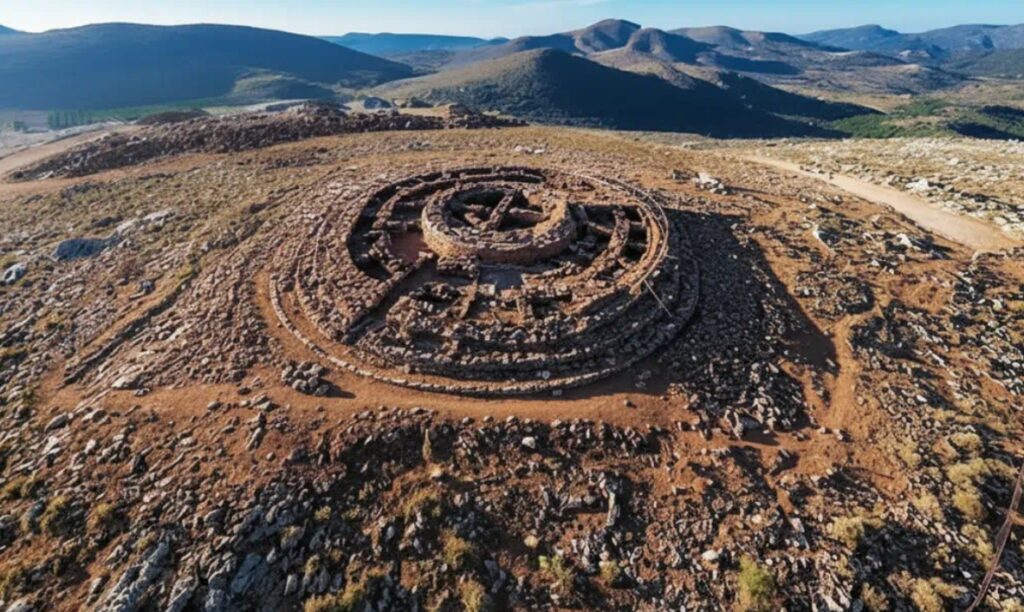
High on Papoura Hill in central Crete, archaeologists are uncovering a circular structure so unusual that it has forced a reexamination of one of Greece’s most enduring legends. The formation, built roughly four thousand years ago, rises in eight concentric stone rings across nearly fifty meters of terrain. For decades it was dismissed as a ceremonial space. Now, as its layout becomes clearer, researchers are wondering whether this mysterious Minoan complex helped spark the earliest versions of the Minotaur labyrinth myth.
1. Excavation at Papoura Hill reveals a distinct labyrinth pattern.

Archaeologists identified eight concentric stone rings forming a precise circular layout on Papoura Hill, northwest of Kastelli. The geometric pattern resembles early Bronze Age labyrinth symbols found in Minoan art according to BBC News. The similarities between the site’s spiraling passages and the repetitive curves depicted on seal stones have led researchers to reconsider long-held assumptions about where the Greek labyrinth story began.
As excavation deepens, new pathways and chamber outlines appear beneath collapsed sediment. The complexity suggests a deliberate spatial design rather than casual ritual construction, pointing toward a structure meant to impress or disorient visitors.
2. Dating places the structure centuries before the Minotaur myth.
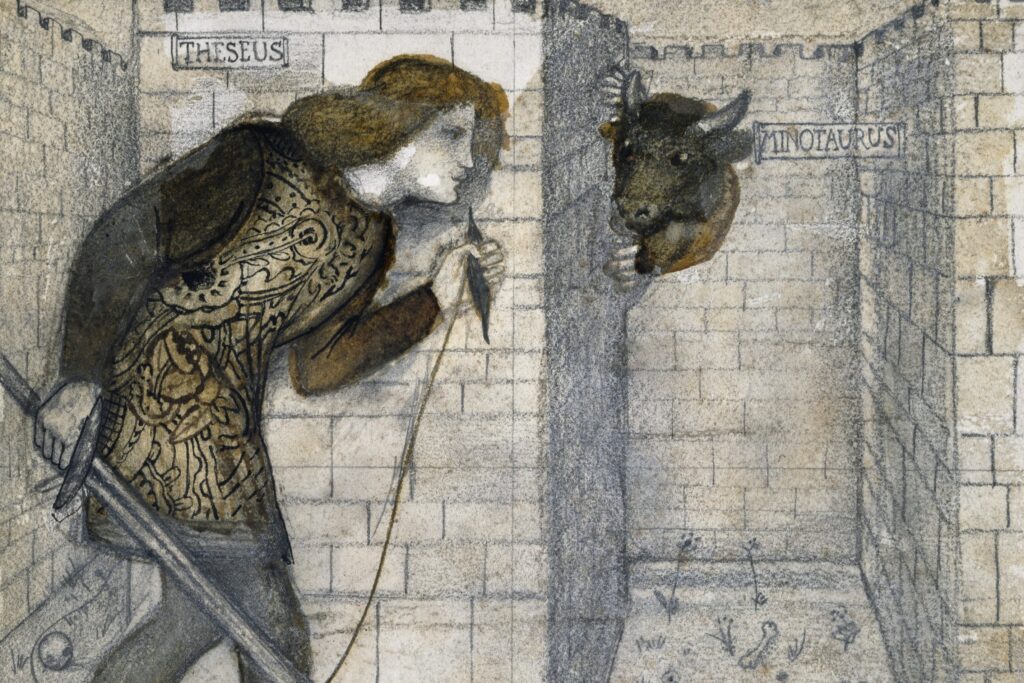
Carbon analysis from associated materials indicates the Papoura Hill structure dates between 2000 and 1700 BCE, long before Greek writers memorialized the Minotaur tale as stated by National Geographic. The time gap strengthens the theory that oral memories of an older Minoan site may have shaped mythic storytelling. The discovery suggests the roots of the legend predate classical Athens by generations.
The age of the structure adds weight to the argument for cultural continuity. Over centuries, its original purpose may have blended into local memory, evolving gradually into the narrative that later mythographers recorded.
3. Ancient writings reference labyrinth-like structures on Crete.

Classical sources described underground or maze-like buildings beneath the island, descriptions scholars once considered metaphorical. These accounts are now being compared to the circular structure’s unusual architecture as reported by The Guardian. While not an exact match, the combination of spirals, chambers and controlled movement aligns more closely with ancient descriptions than any previously known site in Crete.
The convergence of text and archaeology is striking. As more features emerge, the possibility grows that early Greek writers echoed distant recollections of Papoura Hill’s enigmatic design.
4. The site’s sheer scale hints at ceremonial choreography.

With a diameter of nearly fifty meters and inner rooms arranged in tight curves, the structure appears designed to guide people through specific movement patterns. The concentric rings allow only narrow access points, creating an intentional sense of progression. Archaeologists believe the built form manipulated light, sound and sightlines to heighten emotional response during rituals.
Such sensory distortion could leave lasting impressions. To outside observers, these controlled pathways may have felt confusing or ominous, planting the seeds for later stories about a fearsome maze guarding something powerful within.
5. Animal remains intensify the connection to bull imagery.
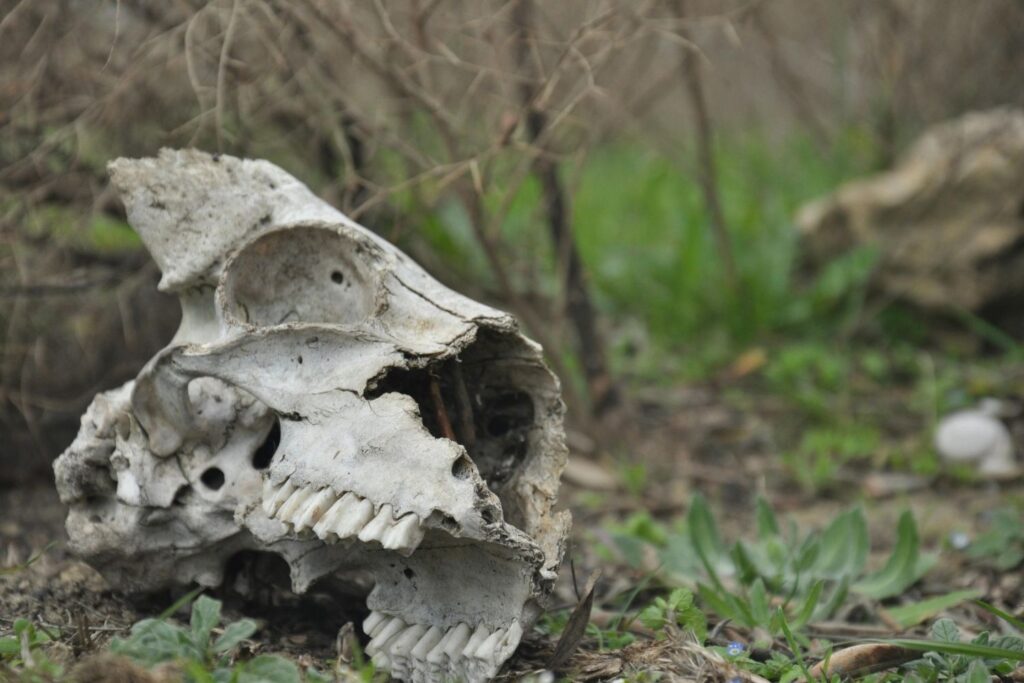
Fragments of cattle bones discovered around inner chambers hint at ritual activity involving bulls, a central symbol in Minoan culture. Bulls appear repeatedly in Minoan frescoes, seals and religious iconography, and their association with ceremonial performance is widely documented. The presence of these remains near a labyrinth-like space strengthens speculation that the site blended architecture with symbolic animal power.
Over generations, the fusion of bulls and a daunting structure may have been creatively reinterpreted. What began as ceremony could easily transform into stories of a creature trapped within twisting passages.
6. Earthquake shifts may have obscured the original design.

Crete’s seismic history complicates reconstruction. Multiple earthquakes over the centuries fractured walls, collapsed chambers and buried portions of the structure. Archaeologists believe the building once extended farther and may have included additional corridors now lost beneath debris. The incomplete state explains why its purpose remained misunderstood for so long.
This damaged footprint would appear fragmented and mysterious to later observers. A disrupted layout can fuel imagination, encouraging stories of danger, confinement or secrets buried out of reach.
7. Coordinated construction points to organized labor forces.
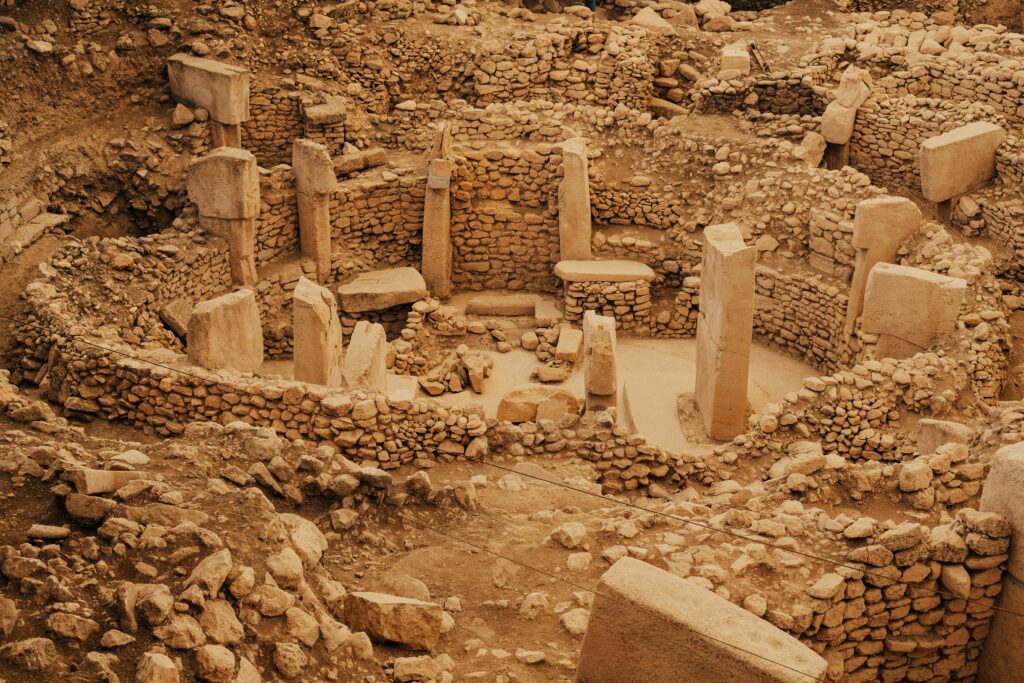
The precision of the stone rings and the scale of the central space suggest planning far beyond a small community effort. Such a structure likely required a coordinated workforce under a centralized Minoan authority. This level of organization indicates Papoura Hill was significant to the culture that built it.
Large-scale projects often become focal points of cultural memory. Their very existence invites mythmaking, especially when later generations no longer understand their function.
8. Artifacts nearby connect the site to major Minoan centers.
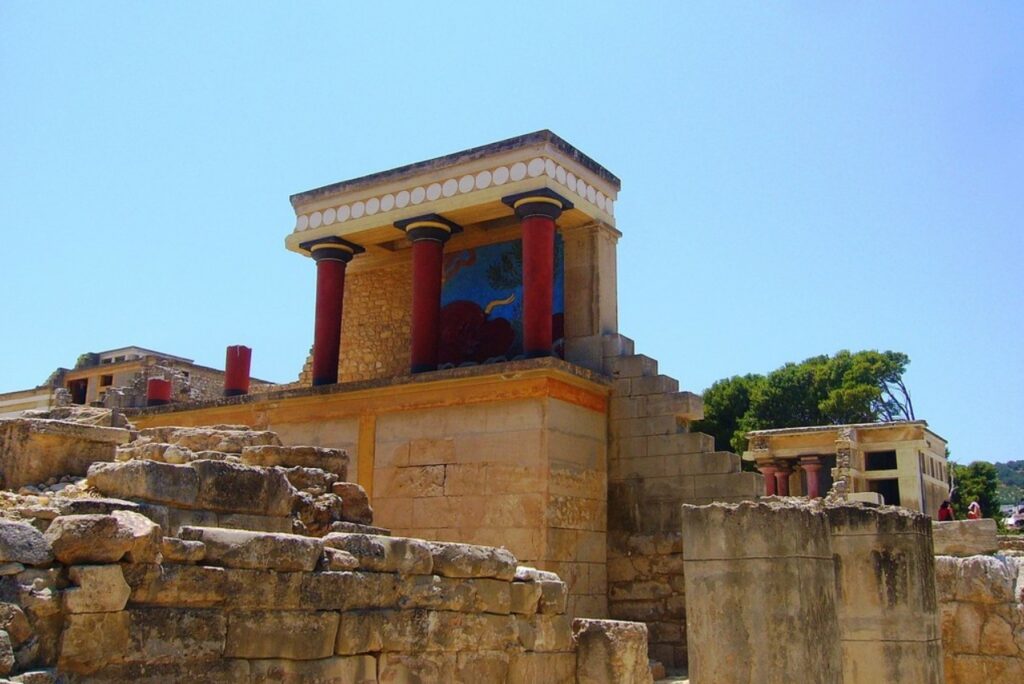
Pottery fragments found around the site bear motifs associated with palace complexes like Knossos and Phaistos. The artistic links imply interaction or shared cultural symbolism between regions. This connection suggests Papoura Hill was not an isolated anomaly but part of a wider architectural and ceremonial tradition within Bronze Age Crete.
These parallels make the structure more than a curiosity. They place it within a cultural network that shaped the Minoan world, strengthening the argument for its influence on later myths.
9. Ground mapping reveals deeper complexity beneath the surface.
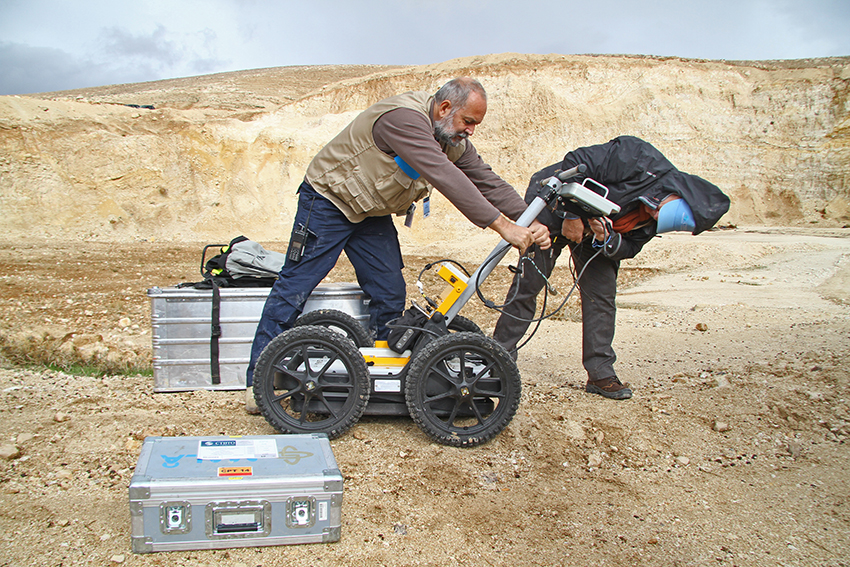
Ground-penetrating radar shows additional circular features and chambers extending under collapsed areas, revealing that the exposed rings represent only part of the full design. The newest digital reconstructions show shifting elevations, curved hallways and compartmentalized spaces that increase the resemblance to labyrinth concepts.
As the layout becomes clearer, the boundary between myth and architecture blurs. What once seemed like coincidence now appears more like a cultural echo of a real structure whose purpose was lost but whose shape survived in story.