
A long, slow pause reshaped the planet’s deepest rhythms.

Early in Earth’s history, the planet did something that seems impossible today. Its rotation slowed so dramatically that day length barely changed for nearly a billion years. For decades, scientists struggled to explain how a spinning planet could enter such a long pause. New research now points to a delicate balance between solar tides, the Moon’s pull, and rising oxygen levels in Earth’s atmosphere, revealing how geological and biological forces briefly locked Earth’s spin in place for a time itself.
1. Earth once stopped slowing despite tidal forces.
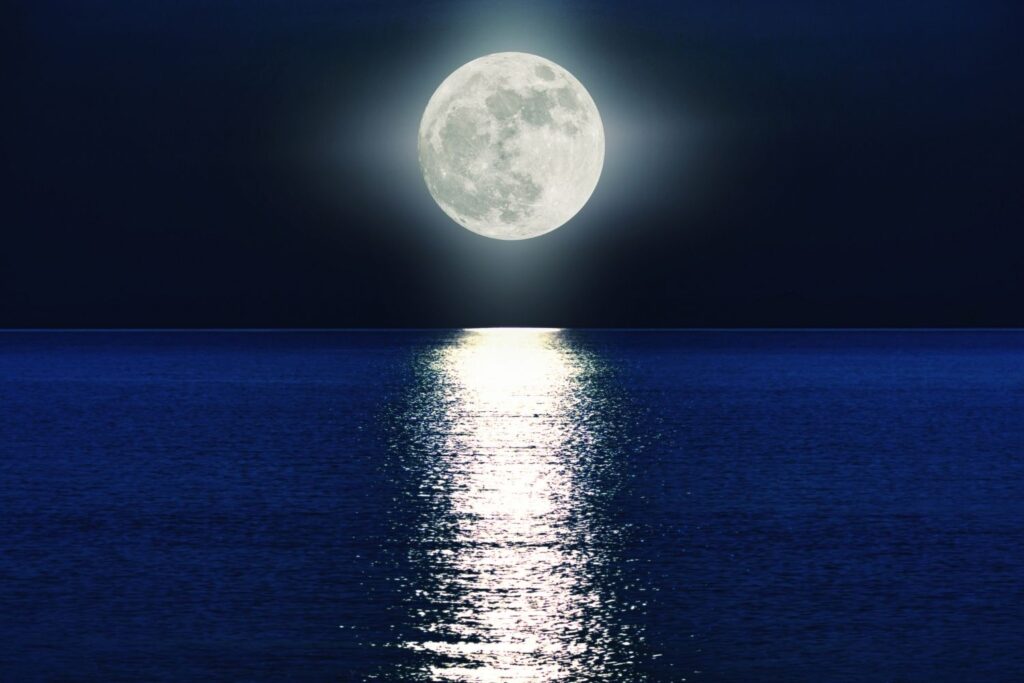
Normally, Earth’s rotation gradually slows as the Moon pulls energy away through tides. This process lengthens days over time. Yet geological records show a long interval when this slowdown nearly halted. According to research summarized by NASA Earth science teams, this stasis lasted close to one billion years during the Proterozoic Eon.
The Moon kept tugging, but something pushed back. The forces that usually brake Earth’s spin were being countered almost perfectly. That balance is what makes the period so unusual. Instead of steady change, Earth entered a rotational stalemate that defied expectations based on modern dynamics.
2. Atmospheric tides pushed Earth the opposite direction.

Sunlight heats the atmosphere unevenly, creating pressure waves called atmospheric tides. These tides exert torque on the planet itself. As stated by researchers at the University of Wisconsin Madison, during certain conditions these atmospheric forces can actually speed Earth’s rotation slightly.
During this ancient era, atmospheric tides grew unusually strong. They acted like a counterweight to lunar braking. The atmosphere was not passive. It became an active player, pushing Earth forward just enough to cancel the Moon’s slowing effect almost entirely.
3. Oxygen levels amplified atmospheric torque dramatically.

Atmospheric tides change depending on what the atmosphere is made of. When oxygen levels rose during the Great Oxidation and later periods, the atmosphere responded more strongly to sunlight. As reported by Nature Geoscience, this made atmospheric tides much stronger than before.
With more oxygen, the upper atmosphere absorbed more solar energy, creating larger pressure waves. Those waves pushed back against the planet itself. Earth’s rotation did not stop because forces vanished, but because opposing forces balanced each other, holding the planet’s spin steady for an unusually long stretch of time.
4. Continental arrangements reinforced the delicate balance.
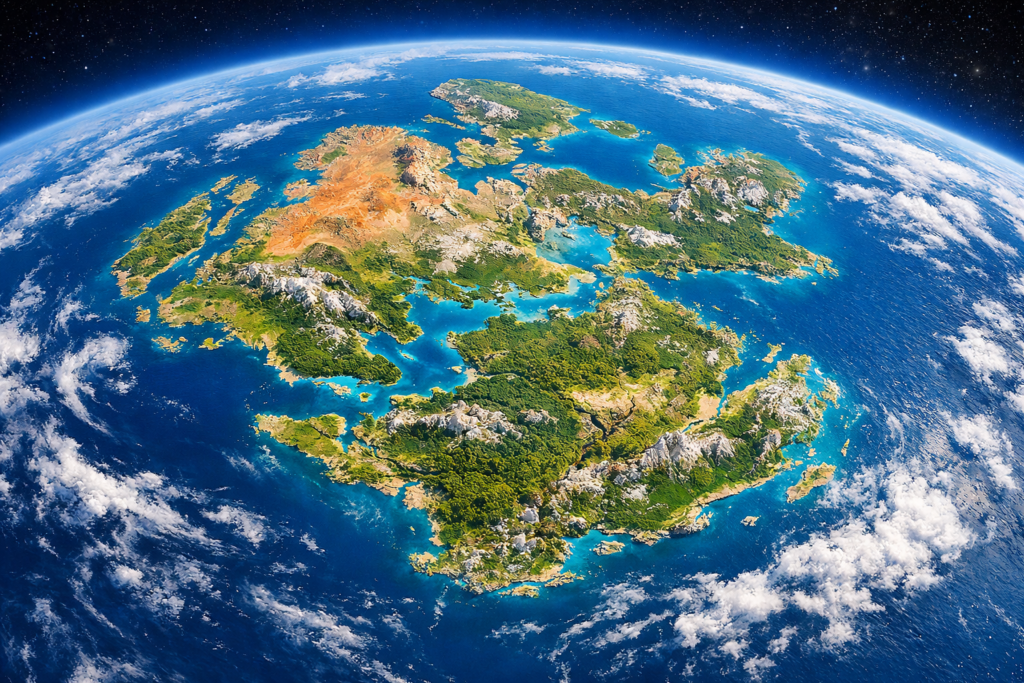
Earth’s continents were arranged differently during this era. Large landmasses sat near the equator, affecting heat distribution and atmospheric circulation. This geography strengthened global resonance between sunlight and atmospheric tides.
With continents influencing wind patterns and pressure zones, the atmosphere became tuned to Earth’s rotation rate. Small changes canceled out. The system locked into a stable configuration where rotation neither sped up nor slowed down appreciably for hundreds of millions of years.
5. Ocean tides alone could not break the stalemate.

Even with strong lunar tides acting on the oceans, the counteracting atmospheric torque held firm. Ocean basins at the time were shallower and shaped differently, reducing their efficiency at draining rotational energy.
Water still moved. Tides still rose and fell. But their braking power was muted compared to today. The Moon kept pulling, yet the combined system refused to yield. Earth’s spin hovered in place, constrained by geometry and physics rather than chance.
6. Day length remained nearly constant across eras.

Fossil growth rings and sediment layers record daily cycles from ancient life and environments. These records show day length staying remarkably consistent during the frozen rotation interval.
Microbial mats, stromatolites, and chemical layers captured time in stone. Their patterns reveal days that neither stretched nor shrank meaningfully for eons. Time passed, evolution continued, but the rhythm of daylight barely shifted, creating stable environmental cycles across vast spans of history.
7. Life evolved under a steady light dark cycle.

A constant day length shaped biological rhythms. Photosynthetic organisms adapted to predictable light exposure. Circadian processes stabilized long before complex life appeared.
This stability may have aided early ecosystems. With no gradual change in daylight duration, evolutionary pressure shifted elsewhere. Energy cycles became reliable. The frozen rotation did not stall life. It provided a steady backdrop against which biology diversified quietly.
8. The balance eventually broke as oxygen surged.

Later oxygen increases altered atmospheric structure again. Pressure waves strengthened beyond the equilibrium point. The atmospheric torque weakened relative to lunar tides.
Once imbalance returned, Earth’s rotation resumed slowing. Days began lengthening again. The frozen era ended not with catastrophe, but with chemistry tipping the scales. The same oxygen that once stabilized rotation eventually helped release it from stasis.
9. Modern Earth no longer sits near that resonance.
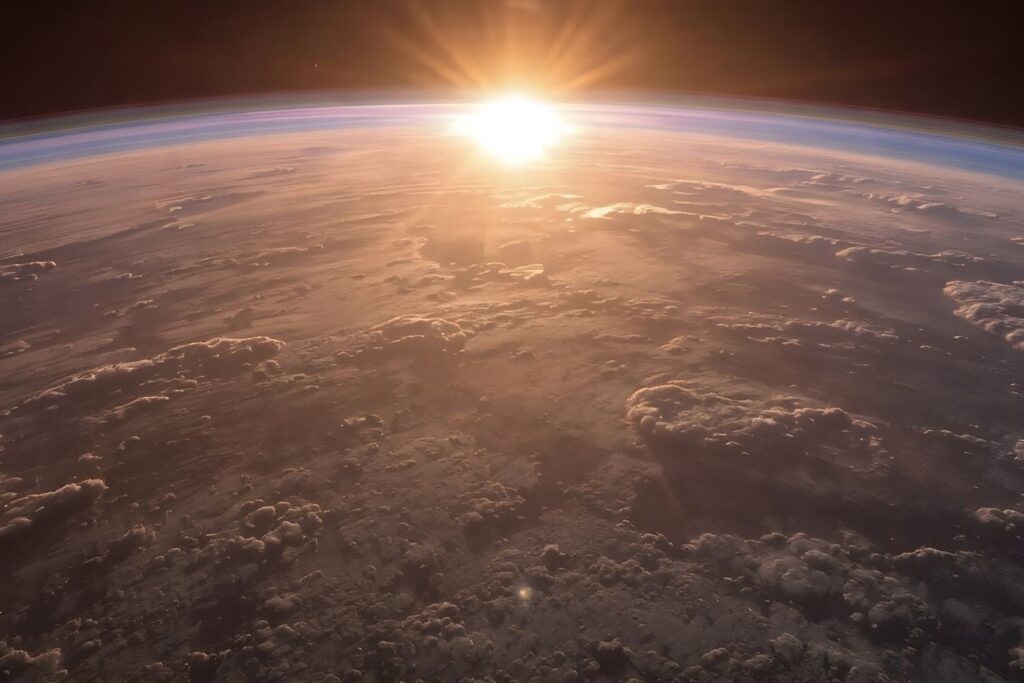
Today, Earth’s atmosphere no longer produces tides strong enough to counter lunar braking fully. Continental drift, ocean depth, and atmospheric composition have shifted the system away from resonance.
Rotation continues to slow predictably. Days lengthen by milliseconds per century. The conditions that once froze Earth’s spin were rare, precise, and temporary, requiring alignment across geology, chemistry, and orbital mechanics.
10. The finding reshapes how planets evolve over time.
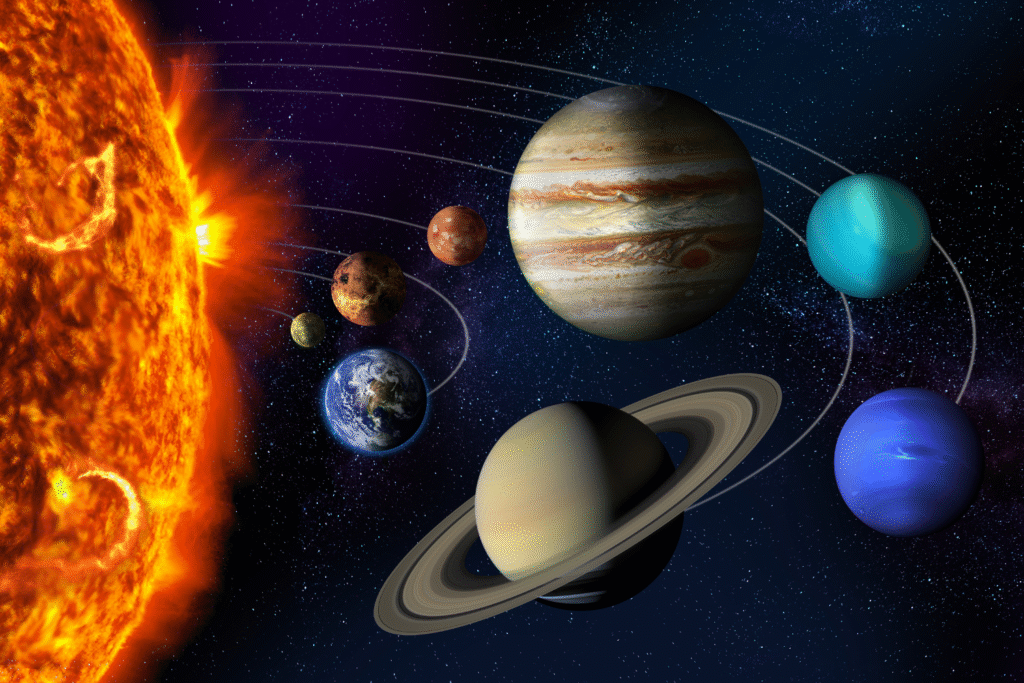
Earth’s frozen rotation shows that planetary behavior can pause without stopping motion entirely. Feedback loops can lock systems into balance for astonishing durations.
This insight changes how scientists think about exoplanets as well. Rotation rates may stall under the right atmospheric conditions. Timekeeping across the universe may not always follow smooth curves. Sometimes, planets hold their breath for a billion years.