
The hidden calculations behind every silken thread.

Spiders spin webs that appear effortless, yet every thread reflects precise spatial decisions. Across forests, fields, and city corners, they measure distance, tension, and angle without rulers or formulas. Biologists watching orb weavers at dawn see patterns repeat with eerie accuracy. What looks instinctive is actually a stepwise process refined by evolution and constant sensory feedback over long observed times.
1. They anchor frames using distance sensing first.

A spider begins by testing gaps between surfaces, walking edges and dropping silk lines. Each step samples gravity pull and airflow, helping estimate span length and anchor strength before committing energy to the web foundation during early construction moments daily.
This assessment reduces failure in exposed sites like shrubs or bridges, according to research summarized by National Geographic examining orb weavers across varied habitats and wind conditions worldwide during repeated observations conducted by field biologists over many seasons carefully documented.
2. Radial threads follow consistent angular spacing patterns.

After anchoring, spiders lay radial lines from center outward, adjusting angles through body rotation. Leg placement and tension feedback guide spacing so forces distribute evenly when prey strikes the web surface repeatedly, preventing collapse during sudden impacts and escapes attempts.
This geometry improves capture success and stability, as stated by researchers at the University of Oxford studying spider web mechanics under controlled laboratory stress tests using high speed cameras and force sensors across multiple species and build cycles repeatedly observed.
3. Spiral placement depends on real time adjustments.

Once the frame stands, spiders add sticky spirals inward, measuring distance with leg span. They correct spacing constantly, tightening or loosening silk as gravity, humidity, and tension shift during construction phases across minutes rather than fixed steps or rigid plans.
This dynamic spacing creates near uniform capture zones, as reported by Smithsonian Magazine covering biomechanical studies of orb weaving spiders filmed in slow motion inside research labs and outdoor enclosures under changing environmental conditions monitored closely by scientists worldwide today.
4. Tension control replaces numerical calculation entirely process.

Spiders never measure numbers, yet silk tension tells them everything. Vibrations travel through threads, informing thickness, elasticity, and placement decisions without visual confirmation or external reference points during active building sequences especially in low light conditions or darkness entirely alone.
This feedback loop mimics mathematical optimization, balancing strength and efficiency. Natural selection favored spiders that respond instantly to tension errors, preventing waste and collapse across generations within diverse habitats worldwide where weather and prey pressure constantly vary year to year.
5. Environmental cues shape web geometry daily choices.

Webs built near water differ from forest webs. Spiders adjust thread spacing and orientation based on wind, light, and insect traffic patterns sensed through repeated environmental sampling occurring across evenings mornings and seasonal changes within the same location repeatedly observed.
These adaptations explain why webs vary by site without losing efficiency. Geometry shifts subtly to match conditions, preserving capture rates despite constant external change driven by sensory feedback rather than fixed inherited blueprints alone within spider behavior over time scales.
6. Silk properties change depending on placement needs.

Different web sections use different silk types. Structural lines resist stretching, while capture spirals remain elastic, absorbing energy when insects hit at speed during nocturnal feeding hours common to many orb weaving species across regions worldwide consistently documented by observers.
Spiders decide silk type through tactile feedback, not planning charts. Each thread responds to touch and vibration, guiding the next placement instinctively during continuous movement around the web center hub while adjusting posture legs abdomen orientation repeatedly without pause breaks.
7. Central hubs form through repeated calibration cycles.

The hub acts as control center where tension balances converge. Spiders circle this area multiple times, correcting slight asymmetries until vibration responses feel even across successive passes made during quiet nighttime building sessions common in orb species worldwide today observed.
This iterative refinement mirrors calibration routines in engineering. Precision emerges gradually, not instantly, through feedback loops rather than rigid templates shaped by evolution and individual experience gained across many nights of rebuilding webs damaged by weather prey or human disturbance.
8. Mistakes prompt immediate structural corrections during building.

If a line breaks or sags, spiders respond instantly. They reinforce weak points or reroute strands, preventing cascading failures that could destroy the entire structure within seconds of detection using tactile cues sensed through legs and body hairs sensitive enough.
This responsiveness keeps webs functional in unpredictable environments. Rapid correction replaces predictive planning, relying on constant monitoring rather than foresight shaped by survival pressures where damaged webs mean lost meals energy and exposure to predators and weather events daily life.
9. Gravity awareness guides vertical web alignment choices.

Vertical webs angle differently than horizontal ones. Spiders adjust spiral spacing and silk stiffness to account for gravity pulling prey downward after impact especially in tall grasses forest edges cliffs buildings and bridge underpasses common urban settings worldwide today observed.
This orientation increases capture efficiency without additional material. Mathematical outcomes arise naturally from physical constraints the spider senses directly through its body weight tension and contact with moving air currents and vibrating threads during construction phases nightly routines repeated endlessly.
10. Web rebuilding improves precision over time locally.
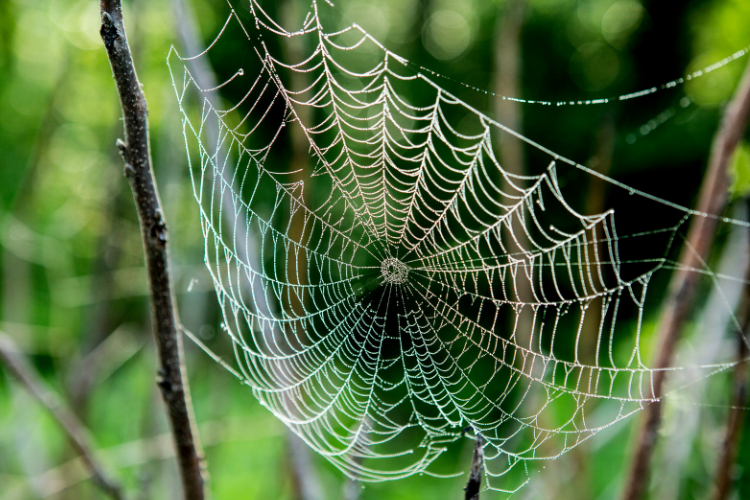
Most webs are rebuilt daily, offering practice. Each rebuild refines spacing and tension choices, learning from failures caused by weather prey size or disturbances experienced overnight within the same territory often revisited by the same spider repeatedly until maturity reached.
Precision increases with experience, not abstract planning. Older spiders often produce more symmetrical webs, reflecting accumulated sensory memory stored within neural circuits shaped by repetition feedback and environmental consistency over time spans of days weeks and seasons lived actively outside.
11. Body proportions influence measurable spacing outcomes naturally.

A spider leg span acts as a ruler. Step length helps maintain consistent spiral gaps, translating body size directly into web geometry without conscious calculation across individual builds in varied settings such as gardens fields forests barns sheds walls fences.
This embodied measurement scales webs appropriately. Larger spiders build wider webs, maintaining proportional accuracy without external reference tools while smaller individuals achieve similar efficiency using shorter strides leg reach and silk lengths adapted to size constraints naturally over growth stages.
12. Evolution refined algorithms without conscious thought process.

Web building behaviors evolved through survival success. Spiders whose construction responded best to physics captured more prey and reproduced more often across generations in ecosystems ranging from deserts to rainforests and urban zones worldwide under varied pressures and conditions constantly.
Math like precision emerges without awareness. The web becomes a physical record of adaptation, shaped by forces the spider senses but never names through repeated interaction with gravity tension vibration wind prey impacts and environmental change over time scales unseen.