
Facial hair that tells a deeper canine story.
A dog’s beard or mustache is more than decoration. Those wiry whiskers and flowing facial furnishings evolved alongside function climate and work. In Europe snowy fields favored insulation while farms demanded protection from debris. Today veterinarians breeders and groomers still read those facial textures for clues about skin health age and temperament. From bustling New York grooming studios to rural kennels in Bavaria these bearded breeds carry centuries of purpose written right on their faces.
1. The Schnauzer wears facial hair with serious purpose.
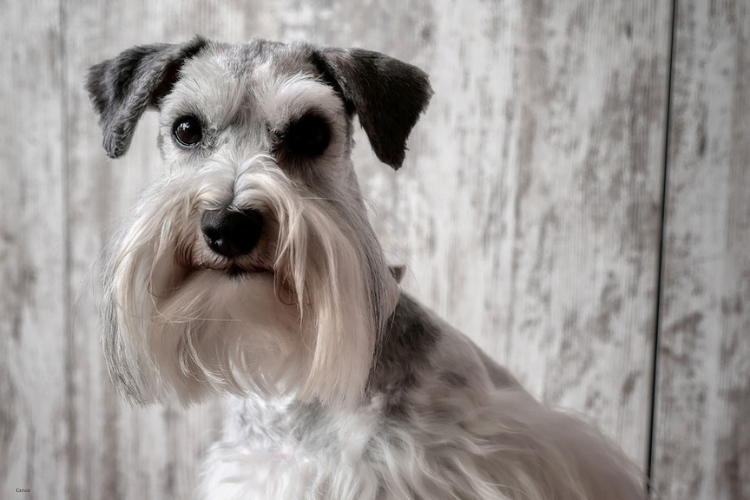
Schnauzers developed their stiff eyebrows and bristled mustaches while working as ratters and farm guardians in Germany during the fifteenth century. The coarse facial hair protected their muzzles from bites dust and debris as they hunted vermin in barns and fields. That texture also sheds water efficiently which mattered during long outdoor workdays.
Modern Schnauzers still show this functional coat pattern. Groomers note that healthy beards often reflect balanced skin oils and good nutrition according to the American Kennel Club. Owners who maintain regular cleaning prevent food buildup and skin irritation around the mouth.
2. Scottish Terriers carry history straight on their chins.
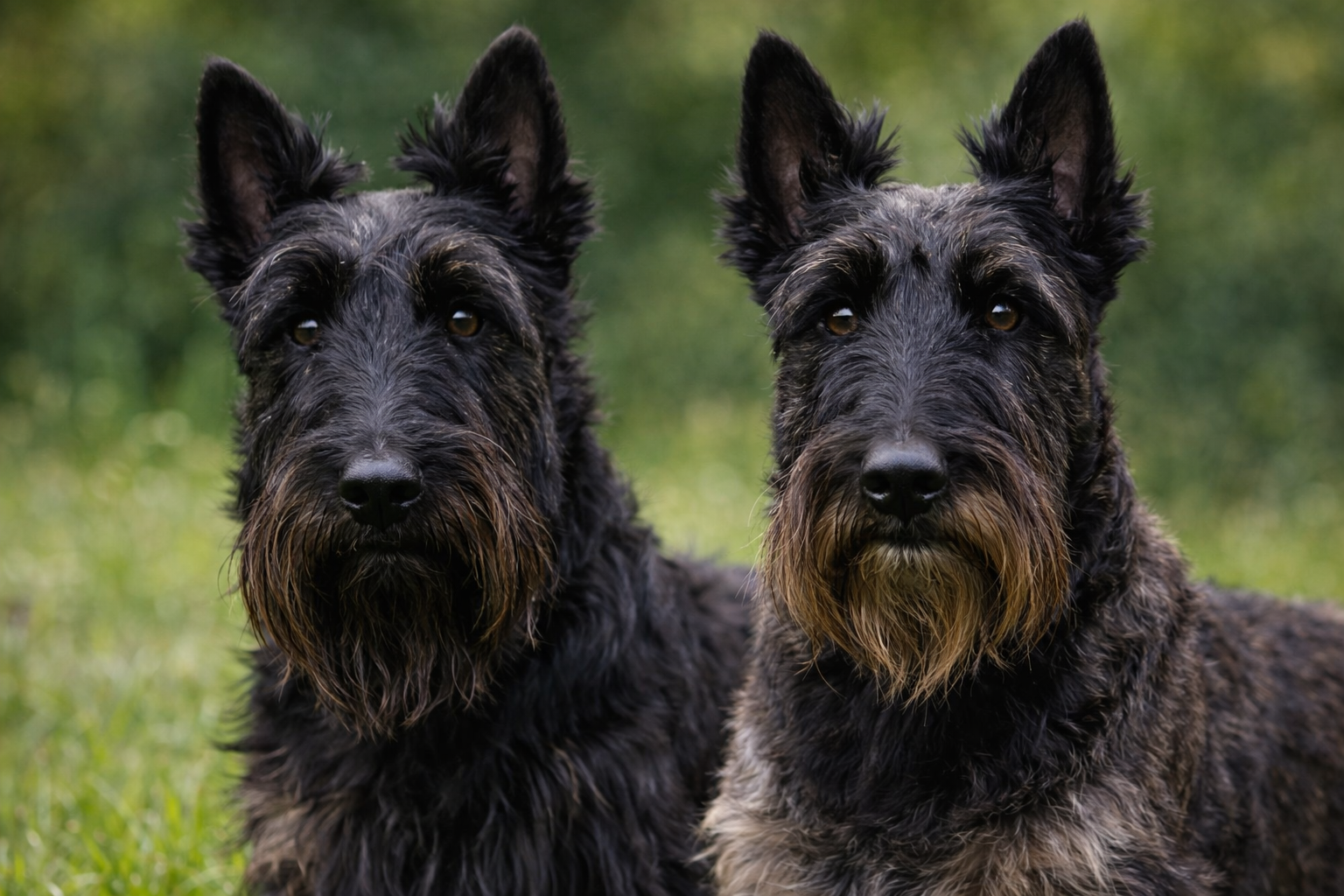
Scottish Terriers developed their iconic beard in the rugged Highlands where they hunted foxes and badgers in dense undergrowth. The facial hair shielded their mouths from thorns dirt and cold wind while they dug and tracked prey underground. That dense beard also helped deflect moisture in damp conditions.
Veterinary breed profiles note that Scotty facial hair tends to stay healthy when skin allergies are managed early as stated by the American Kennel Club Canine Health Foundation. Regular trimming helps prevent irritation while preserving the breed’s historic silhouette.
3. The Airedale sports a beard built for endurance.
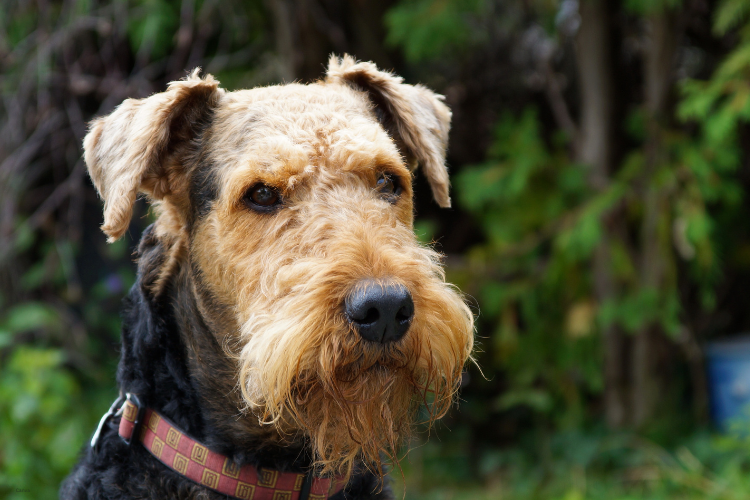
Airedales earned their thick mustaches while working as versatile hunters along river valleys in northern England. Their facial hair protected their muzzles from water reeds and biting insects during long retrieval sessions. The coarse texture dried quickly which helped prevent skin breakdown in damp environments.
Breed historians note that Airedale facial furnishings remain a marker of coat health as reported by the Kennel Club UK. When beards lose texture or thin noticeably veterinarians often look for dietary or hormonal causes before skin disease develops.
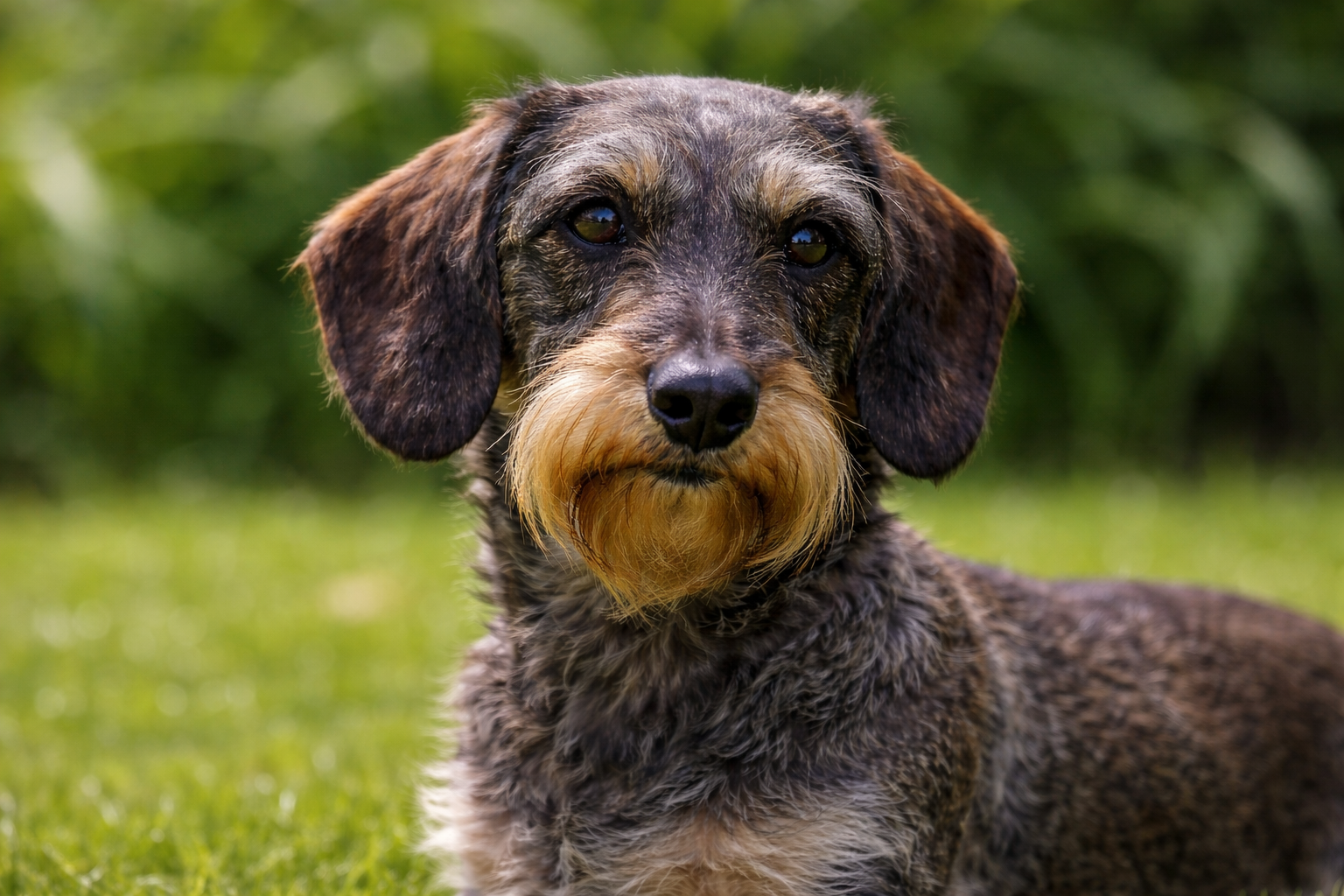
4. Wirehaired Dachshunds grew mustaches for underground work.
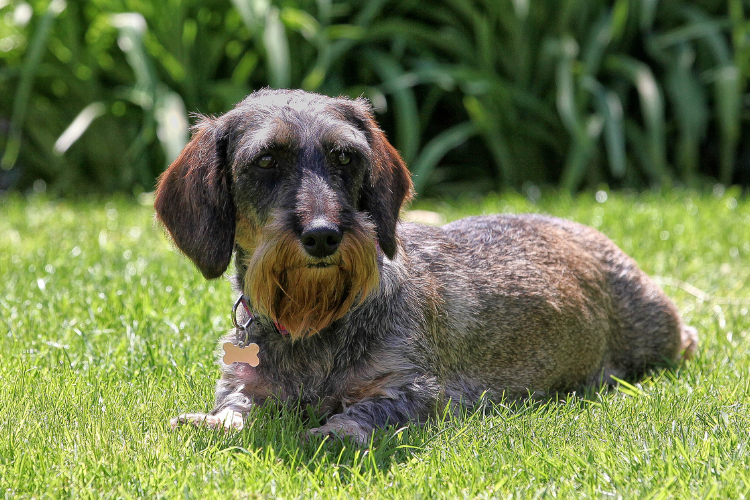
Wirehaired Dachshunds developed their facial hair to guard their faces while pursuing prey through burrows. The mustache protected sensitive skin from dirt abrasion and sharp roots as they navigated narrow tunnels. That hair also helped block debris from entering the mouth.
Today wirehaired Dachshunds retain this practical beard pattern. Groomers often observe that beard condition mirrors overall coat health. Dry brittle facial hair may indicate nutritional imbalance or environmental dryness rather than grooming neglect.
5. Bearded Collies earned their name through outdoor labor.
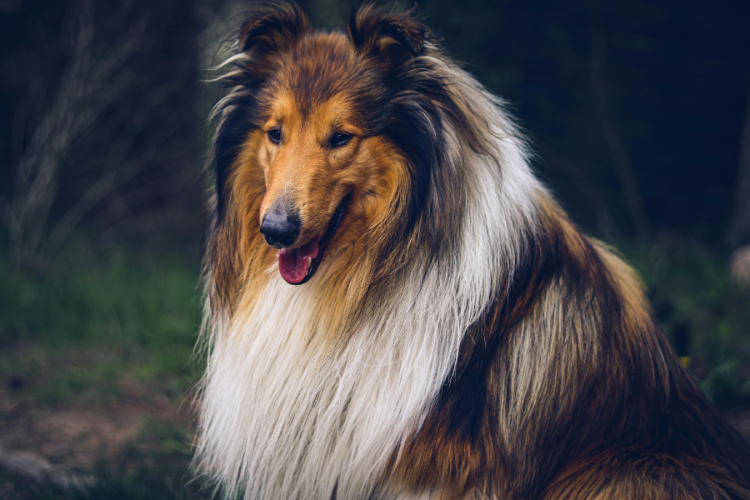
Bearded Collies worked long days herding sheep across Scotland’s wet and windy terrain. Their flowing facial hair helped shield their mouths from cold air rain and debris kicked up by livestock. The beard also funneled water away from the lips during harsh weather.
Modern Beardies still show this expressive facial coat. Owners who brush regularly prevent matting and skin irritation. Changes in beard texture often parallel shifts in seasonal coat growth and overall conditioning.
6. The Lhasa Apso beard reflects ancient palace life.

Lhasa Apsos developed their long facial hair while serving as sentinel dogs in Tibetan monasteries. The beard helped insulate their faces from cold mountain air and dust carried by high winds. That flowing hair also contributed to their alert expressive appearance.
Veterinarians note that Lhasa Apso facial hair requires attentive hygiene. Because the coat grows continuously beard condition often reveals eye drainage issues dental health or skin sensitivity before other symptoms appear.
7. Dandie Dinmont Terriers wear gentle distinguished whiskers.
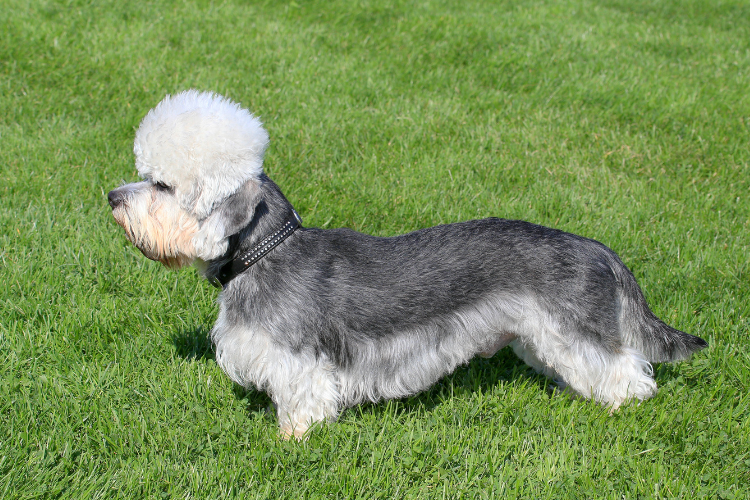
Dandie Dinmont Terriers originated in the border country between Scotland and England. Their soft mustache protected the mouth while hunting otter and badger along rocky streams. Unlike harsher terriers their facial hair feels silky rather than wiry.
Owners often notice that Dandie facial hair stays clean and resilient with balanced diet and hydration. Sudden changes in texture can signal digestive sensitivity or environmental stress rather than age alone.
8. The Brussels Griffon shows emotion through its beard.

Brussels Griffons developed their expressive mustaches while serving as stable dogs in Belgium. The beard protected their faces from dust straw and pests while accentuating facial expressions that handlers relied on.
Veterinarians often comment that Griffon facial hair highlights subtle health changes. Excessive staining or thinning around the mouth may reflect dental issues or tear duct changes rather than grooming habits.
9. Irish Wolfhounds carry rugged facial hair for weather.
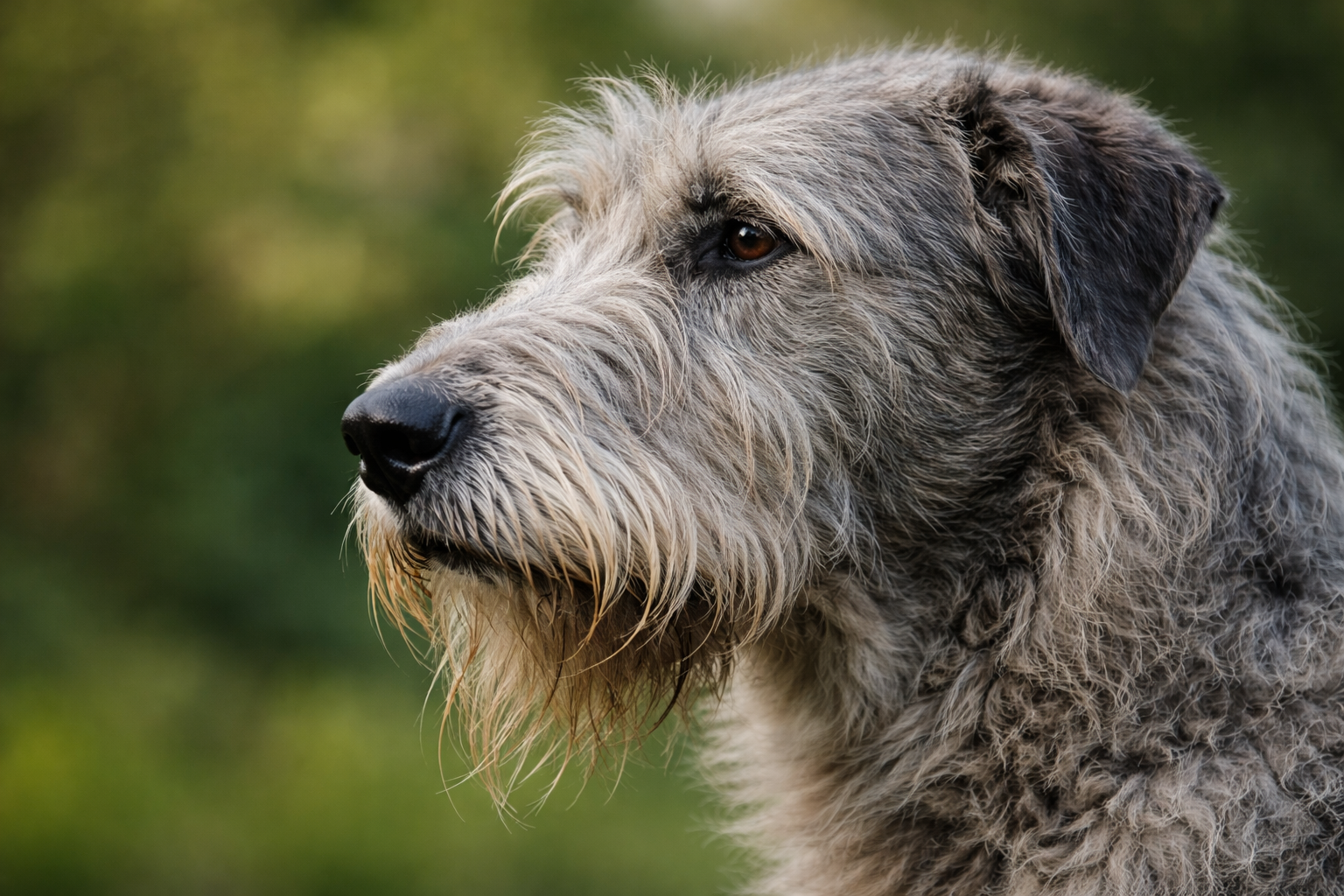
Irish Wolfhounds evolved with rough facial hair to shield against wind rain and cold during hunts across open Irish landscapes. The beard protected the muzzle during long pursuits and added insulation without trapping moisture.
Today that facial hair remains relatively low maintenance. Owners who notice sudden dryness or breakage often investigate nutritional intake and seasonal coat transitions rather than skin disease.
10. Tibetan Terriers wear beards shaped by altitude.
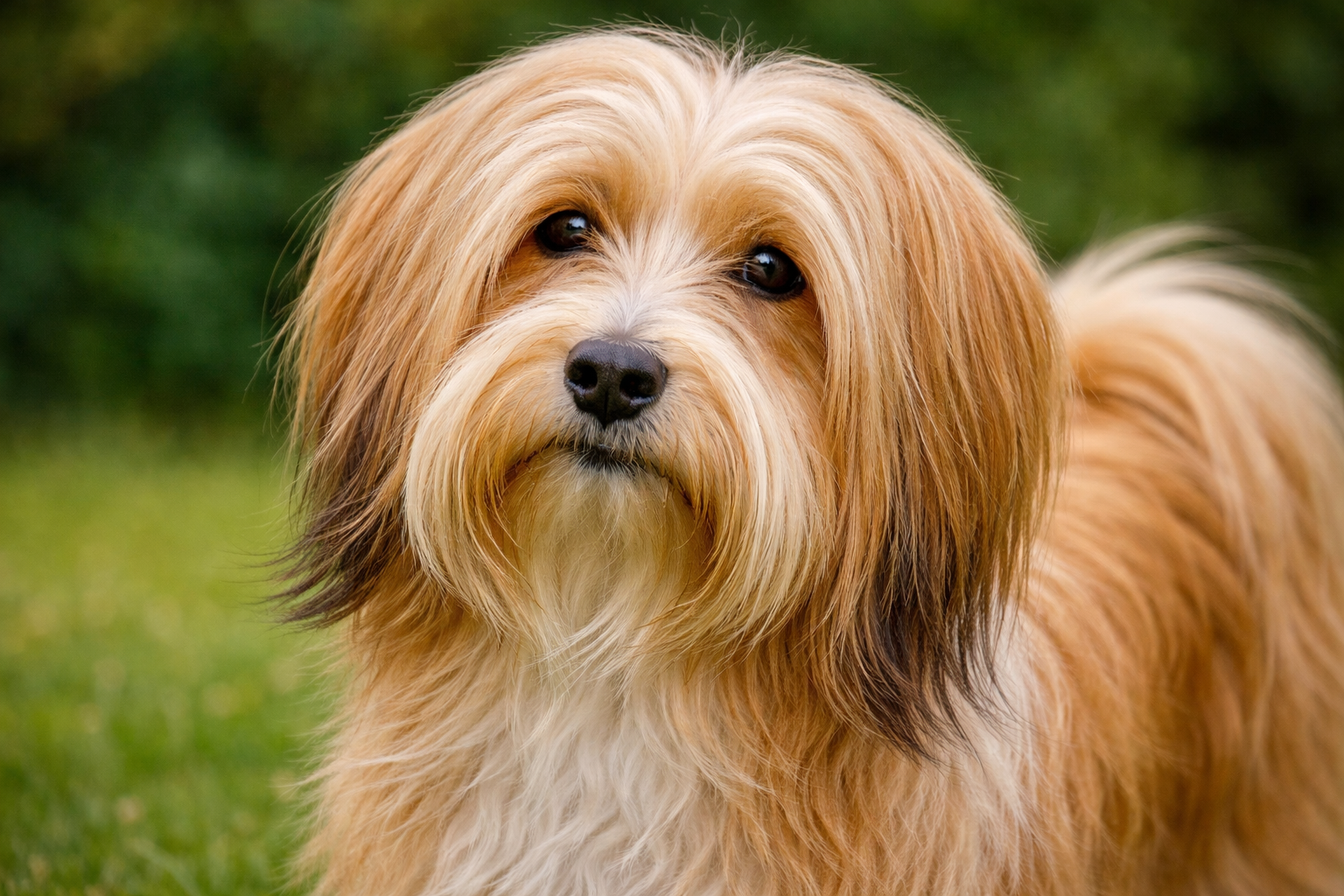
Tibetan Terriers developed thick facial hair while navigating rocky high altitude terrain. Their beard helped block dust cold air and snow while protecting sensitive skin. That hair also enhanced sensory awareness in harsh environments.
Modern Tibetan Terriers retain this adaptive feature. Groomers often observe that beard fullness mirrors overall coat cycles. Consistent texture usually reflects stable health and proper environmental care.