
Daily patterns quietly shape canine behavior.

Inside every home, routines form whether people notice them or not. Wake up times, meal schedules, work hours, noise levels, and emotional rhythms repeat day after day. Dogs do not just observe these patterns, they adapt to them. Over time, behavior that looks like personality change is often a flexible response to predictability, stress, or instability in daily life. Dogs evolved to read human patterns closely because survival depended on it. Modern households still shape canine behavior through routine, even when no training is involved.
1. Predictable schedules lower stress and soften behavior.

Dogs thrive on predictability because it reduces uncertainty. When meals, walks, and rest happen at consistent times, the nervous system relaxes. The dog no longer needs to monitor the environment constantly for cues. This lowered vigilance often appears as a calmer, more easygoing personality.
Over weeks, behavior shifts subtly. The dog may bark less, settle faster, and show more patience. According to the American Veterinary Society of Animal Behavior, consistent routines help regulate canine stress hormones, allowing behavior to stabilize and emotional reactivity to decrease without direct behavior modification.
2. Chaotic routines train dogs to stay emotionally alert.

In homes where schedules change frequently, dogs learn that outcomes are unpredictable. Walks happen late, meals vary, and attention comes inconsistently. This instability trains the brain to stay alert, scanning for signals rather than resting fully.
The result can look like a high strung personality. Dogs may pace, cling, or react quickly to small changes. As stated by the American Kennel Club, inconsistent daily routines can increase anxiety driven behaviors, as dogs compensate by staying emotionally ready for sudden shifts instead of settling into calm expectation.
3. Morning rituals shape confidence throughout the day.

How a household starts the day sets an emotional baseline. Calm mornings with predictable movement and gentle interaction create confidence. Rushed mornings with noise, tension, or abrupt departures teach dogs to brace early.
This conditioning carries forward. Dogs from calm households often appear relaxed later in the day. Those exposed to daily morning stress may remain on edge for hours. According to research summarized by the University of Lincoln Animal Behaviour Cognition and Welfare Group, early day experiences influence stress regulation and behavioral tone across the full daily cycle in dogs.
4. Meal timing influences emotional security and patience.

Feeding routines act as powerful anchors. When meals arrive consistently, dogs develop trust in resource availability. This reduces guarding behaviors, food fixation, and frustration around eating.
In inconsistent feeding environments, dogs may appear more demanding or anxious. Personality seems pushy or impatient, but it reflects uncertainty. Regular meal timing builds emotional security, allowing dogs to relax between feedings rather than staying mentally fixated on when resources will appear next.
5. Household energy teaches dogs how expressive to be.

Dogs mirror emotional tone. Loud, expressive households often produce more vocal, reactive dogs. Quiet, steady homes tend to shape dogs who communicate subtly and move calmly through space.
Over time, dogs adjust expression levels to match what gets noticed or rewarded. A dog may seem to change personality when moving homes, but the behavior reflects adaptation. Expression shifts to fit the emotional volume and responsiveness of the environment rather than innate temperament alone.
6. Evening routines teach dogs how to settle.

As the day winds down, dogs watch closely to learn what calm looks like. Homes with consistent evening patterns, dinner, light activity, then rest, teach dogs that arousal has an endpoint. The nervous system learns when vigilance is no longer required, allowing relaxation to arrive naturally rather than through correction.
In contrast, unpredictable evenings keep dogs alert. Late noise, sudden activity, or emotional spikes delay shutdown. Over time, dogs raised in structured evenings appear calmer and more balanced, while those without cues may seem restless or unable to relax, reflecting learned pacing rather than excess energy.
7. Human availability reshapes independence and attachment.
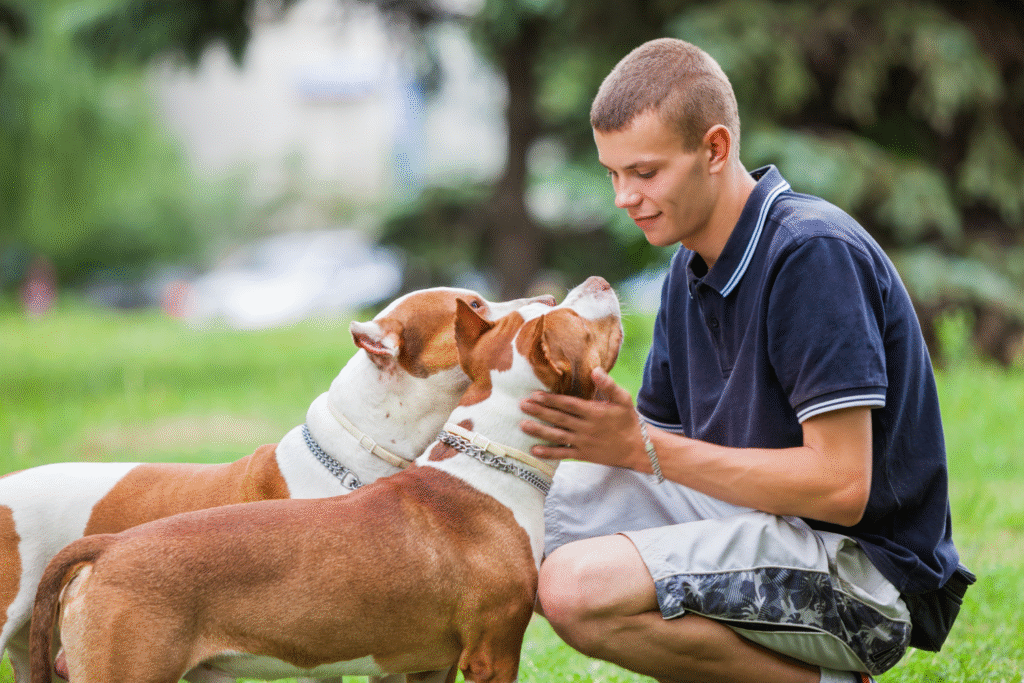
Dogs adjust their social behavior based on how reliably humans are present. Homes with predictable departures and returns teach dogs when connection will resume. This builds independence because absence feels temporary and safe rather than uncertain.
When availability changes daily, dogs often become more dependent or watchful. Personality may appear clingy or aloof depending on coping style. These traits are not fixed. They reflect learned strategies for maintaining security in environments where human presence feels inconsistent or difficult to predict.
8. Noise patterns influence confidence and reactivity.

Routine household noise teaches dogs what deserves attention. Predictable sounds fade into the background, allowing confidence to grow. Unpredictable noise keeps dogs orienting outward, reinforcing startle responses and alert behavior.
Over months, dogs adapt by becoming either reactive or withdrawn. This looks like personality, but it is pattern recognition. Dogs raised in stable sound environments tend to appear composed, while those in erratic noise landscapes often display heightened sensitivity as a learned protective response.
9. Walk timing affects emotional regulation patterns.

Regular walk schedules regulate more than physical energy. They structure anticipation, release, and recovery. Dogs learn when stimulation is coming and when rest follows, shaping emotional rhythm throughout the day.
In inconsistent walking routines, dogs struggle to regulate excitement and frustration. They may appear impulsive or impatient. The behavior reflects disrupted expectation rather than temperament. Consistent movement timing allows emotional balance to settle, shaping a dog that appears steady rather than reactive.
10. Long term routine molds flexible personality expression.

Dogs are not rigid personalities. They are adaptive systems shaped by daily structure. Over time, routines teach dogs when to engage, relax, vocalize, or wait. These learned patterns become the personality owners recognize.
Change the routine, and behavior shifts. Calm emerges in predictable homes, while vigilance develops in unstable ones. Understanding this flexibility reframes personality as adaptation. Dogs adjust not to please, but to survive comfortably within the rhythms humans create every day.