
A hidden sense guides survival in frozen landscapes.
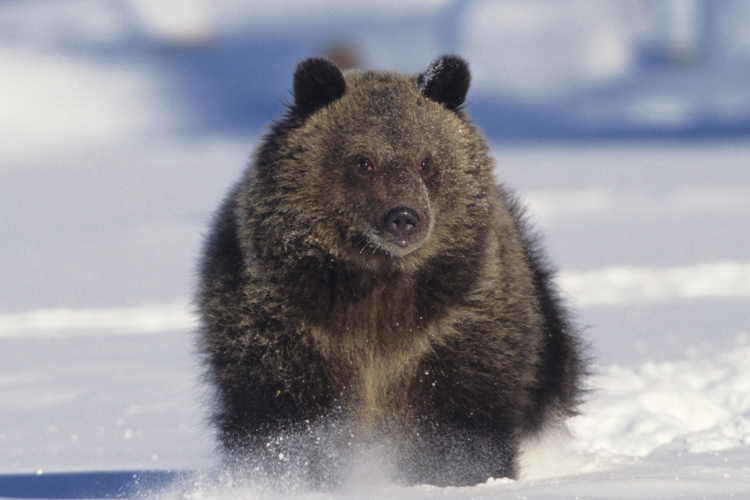
In bear country across North America, this scene repeats itself every year. Food locked in coolers, buried under snow, or sealed inside vehicles is still found overnight. Snowstorms, freezing temperatures, and distance do not stop it. Bears are not guessing. Their sense of smell is so advanced that it functions as their primary survival tool, guiding them toward calories when landscapes look empty to human eyes. This ability is shaped by anatomy, physics, memory, and constant evolutionary pressure to find food efficiently in harsh environments.
1. Bear noses contain an extraordinary number of scent receptors.
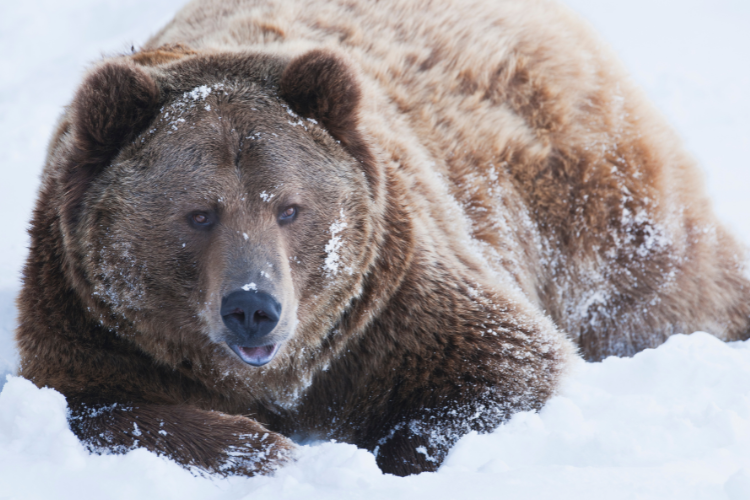
A bear’s nose is built for chemical detection on a scale that dwarfs human ability. Inside the nasal cavity are hundreds of millions of olfactory receptors that bind to odor molecules in the air. Each receptor responds to different chemical signatures, allowing bears to distinguish food scents from background environmental smells with extreme precision.
This sensitivity means even trace odor molecules matter. Tiny amounts of scent escaping through snow, soil, or packaging are enough to register. According to the National Park Service, bears possess one of the most powerful olfactory systems of any land mammal, capable of detecting food sources from over a mile away under favorable wind and temperature conditions.
2. The brain devotes massive resources to interpreting smell.
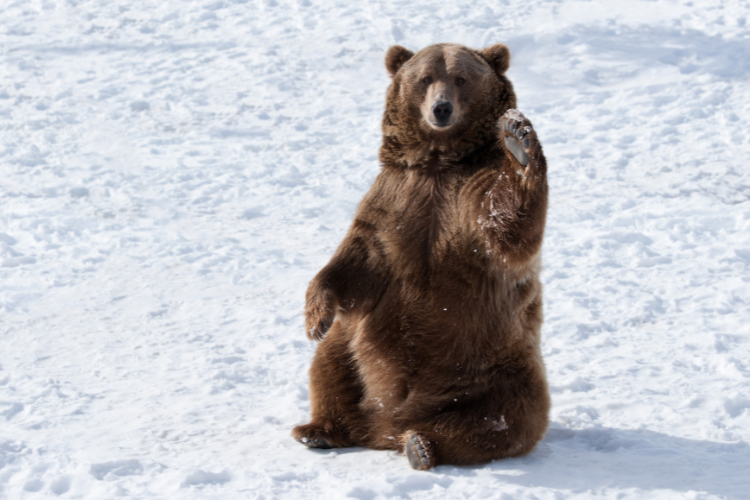
Smell is not just detected, it is analyzed deeply. Bears have an unusually large olfactory bulb, the brain region responsible for processing scent information. This area compares intensity, direction, and freshness of odors, allowing bears to determine not just what something is, but how recently it was present.
As bears move, their brains constantly update scent maps in real time. This allows them to adjust direction with precision. As stated by the Smithsonian National Museum of Natural History, the size and complexity of the bear’s olfactory processing centers enable discrimination between overlapping odors, even when food scents are diluted, masked, or partially trapped beneath snow layers.
3. Cold temperatures preserve scent molecules longer.
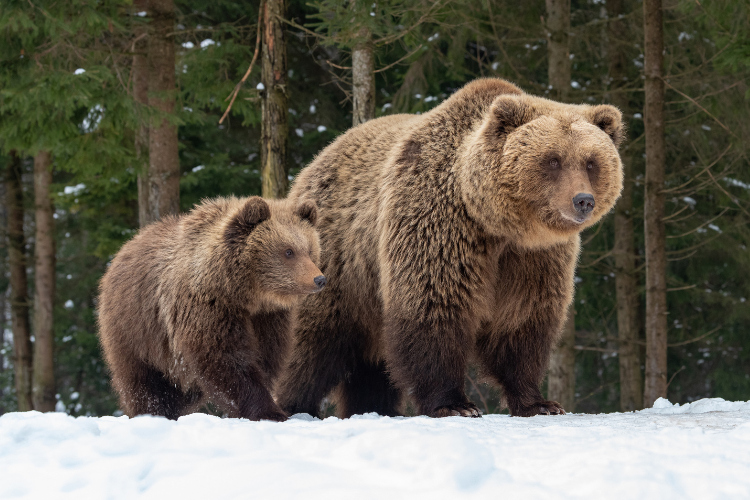
Temperature plays a critical role in scent detection. In cold environments, odor molecules break down more slowly than in warm air. Snow also reduces air turbulence, preventing scent from dispersing too quickly. This creates longer lasting scent trails that remain detectable for extended periods.
For bears, winter conditions are an advantage rather than an obstacle. According to Yellowstone National Park wildlife researchers, cold air and snowpack can preserve odor cues far longer than summer conditions, allowing bears to locate food sources buried beneath snow by following chemical traces that would disappear quickly in warmer weather.
4. Bears follow scent gradients rather than single points.

Bears do not simply smell food and walk straight toward it. They track scent gradients, noticing subtle changes in odor strength as they move through space. By adjusting direction continuously, they refine their path until the strongest concentration leads them directly to the source.
Snow does not block this process. Odor molecules rise through snowpack and spread laterally along the surface. Bears zigzag instinctively, testing air currents and ground scent until they isolate the most concentrated signal. This method allows accurate localization even when food is deeply buried or visually undetectable.
5. Snow structure and moisture allow odor to escape.

Snow may look solid, but it is full of air pockets. These spaces allow odor molecules to move upward slowly. Moist snow carries scent more effectively than dry powder, creating faint but consistent odor release points at the surface.
Bears exploit this physics. They investigate subtle snow depressions, disturbed patches, or areas where scent leaks more efficiently. To humans, this behavior appears random. In reality, the bear is responding to precise chemical information escaping through snow layers that act more like filters than barriers.
6. Bears rely on long term memory to narrow searches.
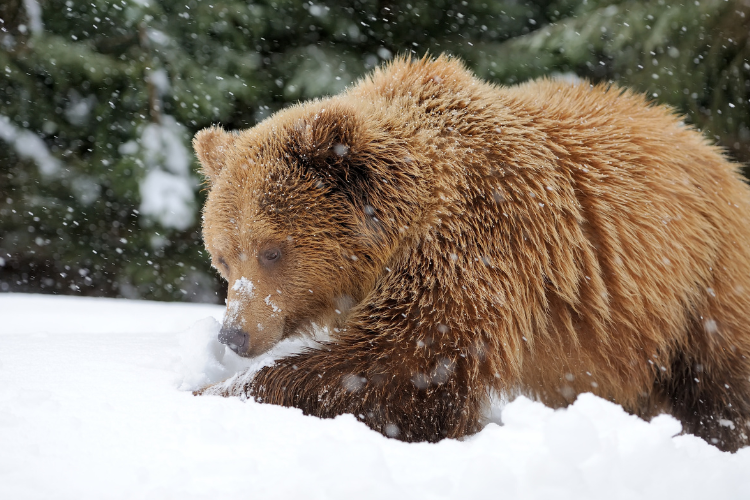
Smell works hand in hand with memory. Bears remember where food has appeared before, including campsites, garbage areas, berry slopes, carcass sites, and seasonal feeding grounds. When snow covers the landscape, memory provides the first clue and smell confirms it. This reduces wasted energy during foraging.
A bear returning to a familiar area does not search blindly. It tests the air, checks wind direction, and confirms whether past food sources remain active. Memory shortens search time, allowing bears to locate buried or distant food efficiently even when visual landmarks vanish under snow.
7. Wind direction dramatically extends detection distance.
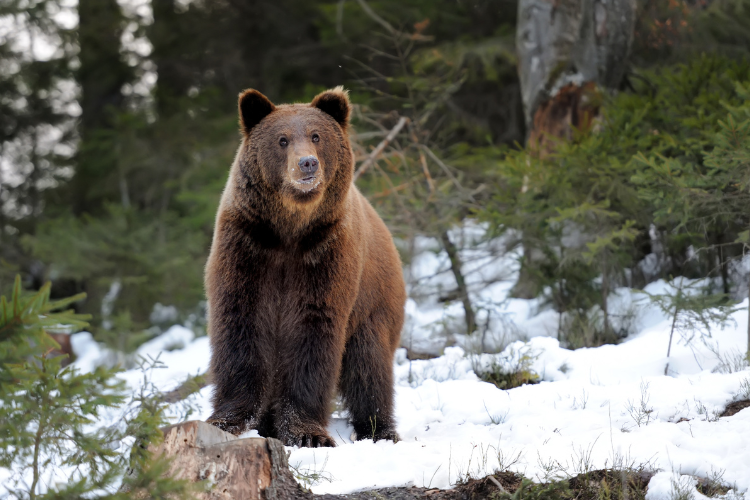
Wind acts as a conveyor belt for odor molecules. Bears instinctively position themselves downwind, allowing scent to travel directly toward their noses. A steady breeze can stretch food odor far beyond normal detection limits, sometimes exceeding a mile.
Bears frequently lift their heads, pause, and sample air currents. This behavior helps them stay inside the strongest odor stream. As wind shifts, they adjust course rather than continuing straight. This dynamic tracking allows bears to locate food sources with precision even across rugged terrain and deep snow cover.
8. High calorie needs sharpen constant scent awareness.
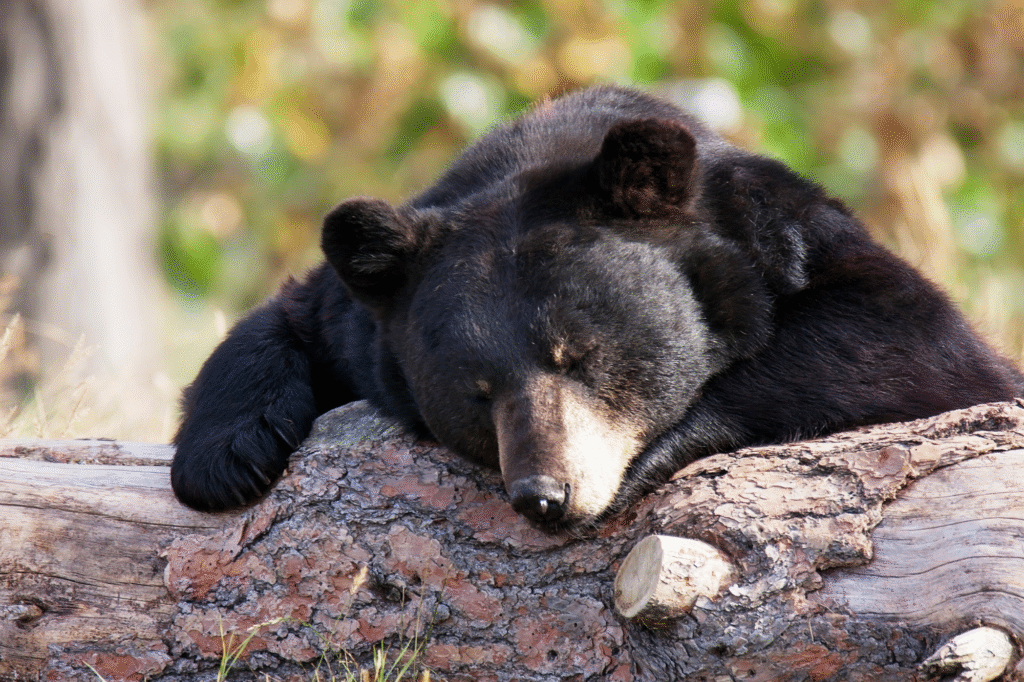
Bears operate under intense caloric pressure, especially before hibernation or during early spring. Their survival depends on finding dense energy sources efficiently. This biological urgency keeps their sensory systems tuned continuously to food related odors.
Unlike humans, bears do not tune smells out. Their brains prioritize calorie detection at all times. Even while resting, faint food odors trigger attention. This constant readiness explains why bears detect food quickly and why even small scent leaks become meaningful signals during periods of scarcity.
9. Experience improves scent interpretation with age.
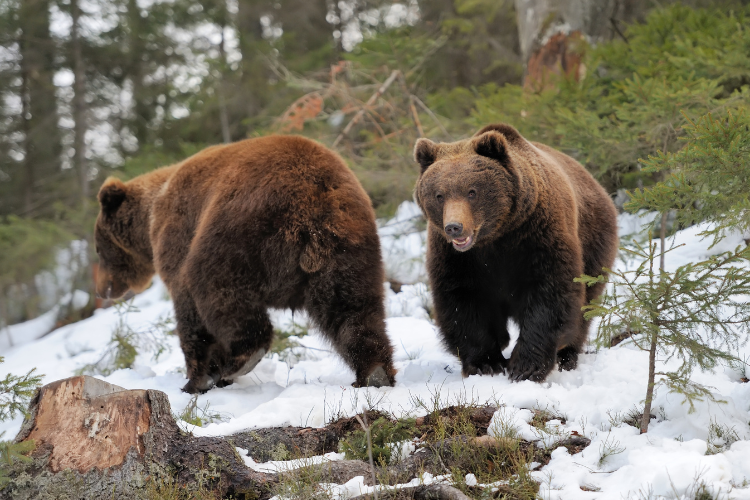
Young bears learn how scents behave under different conditions through repeated success and failure. Each discovery teaches how wind, snow depth, temperature, and terrain influence odor movement. Over time, this learning refines their accuracy.
Older bears interpret complex scent information faster and more confidently. What smells vague to an inexperienced bear becomes precise guidance to a seasoned one. This learning curve explains why older bears often locate food more efficiently and why repeated human food exposure increases conflict risk over time.
10. Human food produces unusually strong chemical signals.

Processed human food releases dense and complex odor profiles unlike anything found naturally. Oils, sugars, and additives create scent signatures that travel farther and linger longer than wild food sources.
Even sealed containers leak microscopic odor molecules. To a bear, these signals stand out sharply against natural background smells. This is why coolers, vehicles, and campsites attract attention so reliably. Bears are not targeting people. They are responding to powerful scent cues their biology evolved to follow without hesitation.