
Human expansion redraws ancient predator boundaries worldwide.
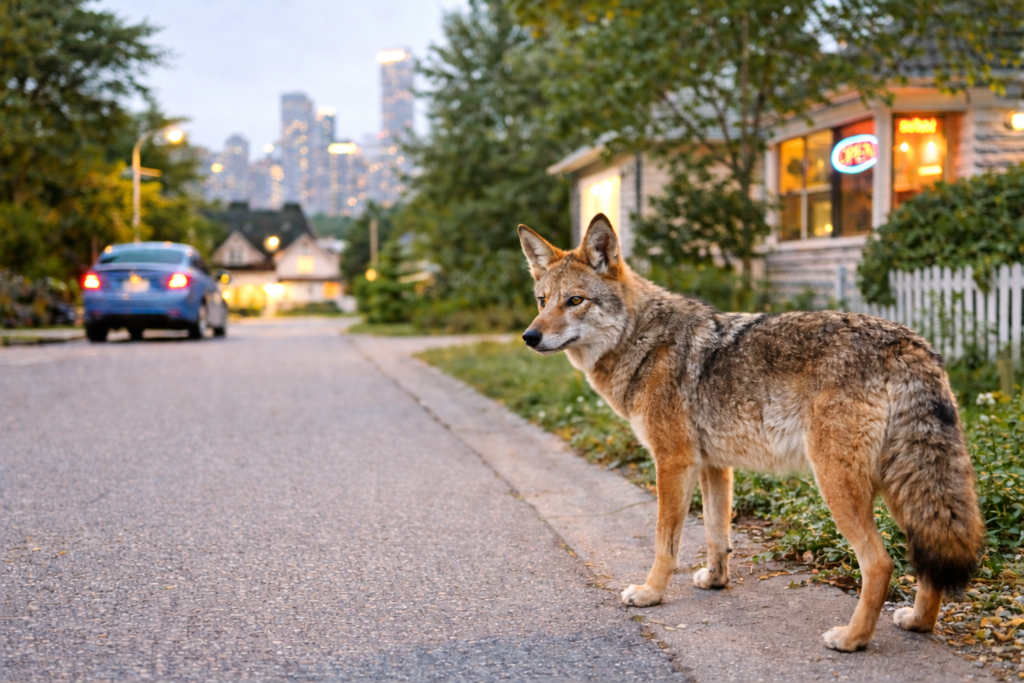
Across continents, large predators are appearing closer to towns, suburbs, and cities with increasing regularity. This shift is not random. Expanding development, fragmented habitats, climate stress, and stable food sources pull animals toward human dominated spaces. Researchers tracking movement patterns from North America to South Asia report the same trend. Predators are not invading out of aggression. They are adapting. Understanding which species are moving closer, and why, reveals how tightly human behavior now shapes the world’s remaining wild margins.
1. Coyotes now thrive inside major metropolitan regions.
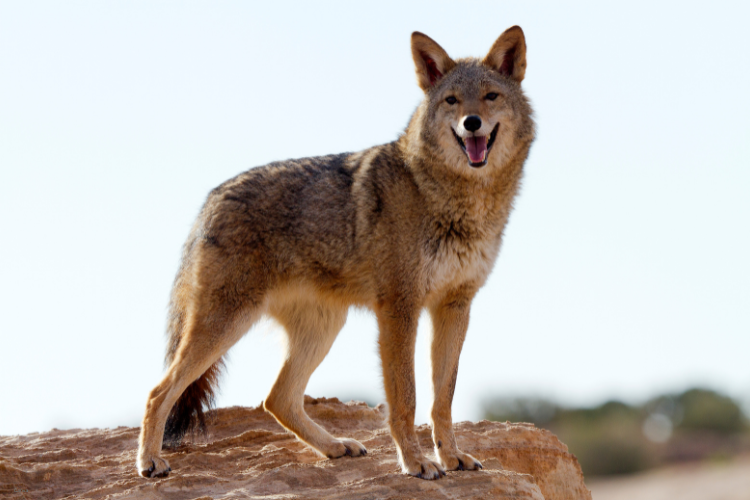
Coyotes have become one of the most successful urban predators in North America. In cities like Chicago, Los Angeles, and Toronto, they den in parks, rail corridors, flood channels, and golf courses while remaining largely unseen by residents during daylight hours across expanding metropolitan regions today with increasing frequency now.
They exploit rodents, feral cats, fallen fruit, pet food, and unsecured trash. According to the Urban Wildlife Institute, GPS tracked coyotes navigate dense neighborhoods primarily at night, learning traffic rhythms and human routines, which allows stable populations to persist inside cities without constant conflict or direct confrontation with residents nearby.
2. Mountain lions increasingly cross suburban development zones.

Mountain lions are appearing near housing developments built along historic dispersal corridors. In California, Colorado, and Chile, expanding suburbs intersect routes young males use when leaving natal ranges to establish territory elsewhere across fragmented foothills and valleys shaped by highways and housing tracts today.
These movements increase sightings without increased aggression. As reported by the National Park Service, tracked mountain lions regularly cross roads and residential zones to reach prey rich areas where deer flourish near irrigated landscapes, drawing predators closer while maintaining avoidance of direct human contact.
3. Black bears adapt quickly to human food systems.

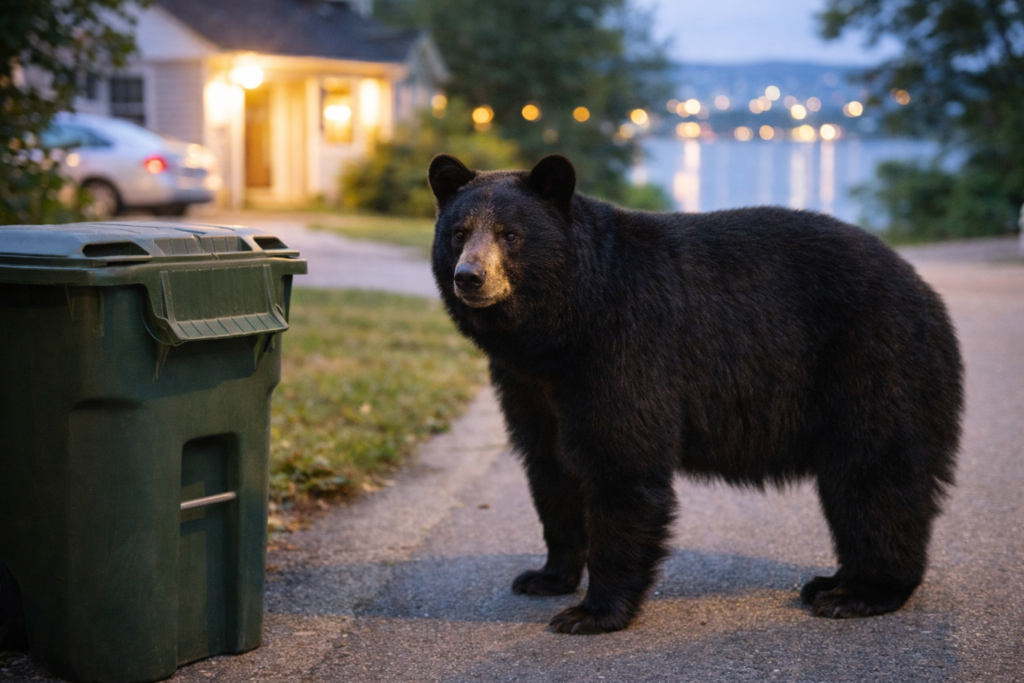
Black bears increasingly occupy forest edge communities where human food sources provide predictable calories. Garbage bins, compost piles, orchards, and bird feeders reduce the need for long seasonal foraging, especially during poor mast years and drought conditions across temperate regions today.
This access reshapes behavior. As stated by the International Association for Bear Research and Management, bears that successfully obtain human food rapidly adjust home ranges closer to neighborhoods, increasing repeated visits and encounters as learned behavior reinforces proximity over avoidance.
4. Wolves reappear near towns after long absences.
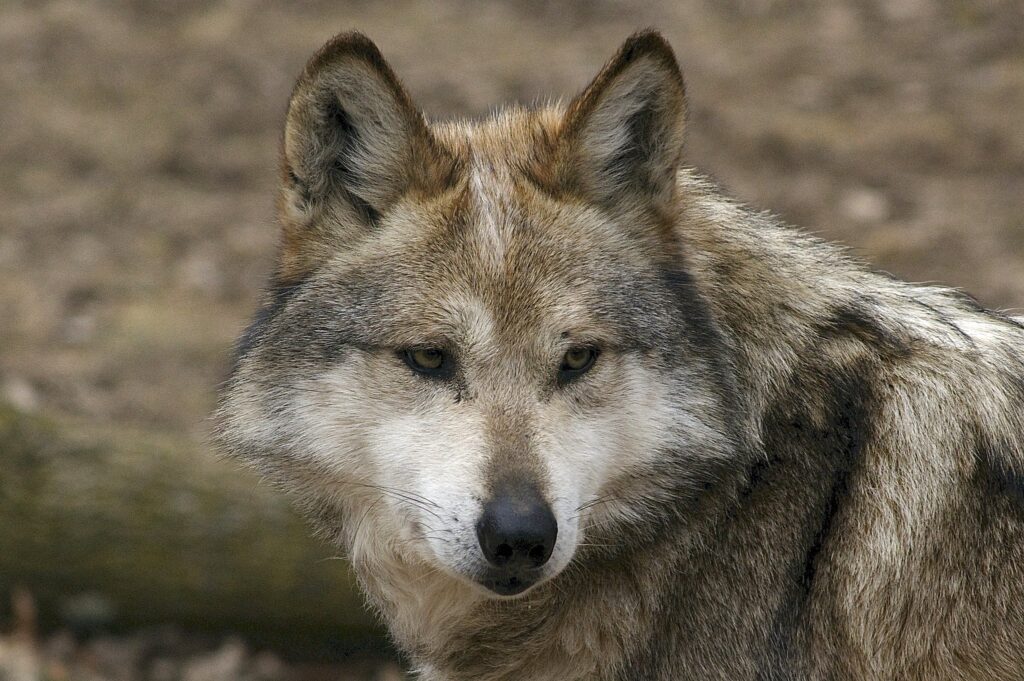
Wolves are recolonizing regions where they were eliminated decades ago. In parts of Europe and the western United States, legal protection and prey recovery allow packs to expand into landscapes shared with farms, roads, and small towns again.
They avoid people but not infrastructure. Fragmented habitats funnel movement through human spaces, increasing visibility. Most encounters involve sightings or tracks rather than attacks, reflecting overlap driven by geography rather than aggressive intent.
5. Leopards slip into cities using human infrastructure.

Leopards now move through and live near cities including Mumbai, Nairobi, and Kathmandu. They travel along railways, drainage canals, and undeveloped lots, hunting dogs, pigs, and deer attracted to urban edges at night.
Their stealth allows prolonged coexistence. Many urban leopards remain undetected for years, revealing how adaptable predators exploit human altered environments while minimizing confrontation, even within densely populated metropolitan regions.
6. Tigers encounter villages along shrinking forest edges.

Tigers increasingly encounter people along forest boundaries in India, Nepal, and Southeast Asia. Agricultural expansion, roads, and mining have fractured habitats that once supported wide territories. As forests shrink inward, villages now sit directly beside active tiger ranges.
These encounters are rarely random. Tigers follow prey like deer and wild pigs into crop fields and buffer zones. When livestock or people occupy the same space, conflict rises. Conservationists emphasize that density and land use, not tiger behavior, drive these dangerous overlaps.
7. Hyenas expand into towns following reliable waste.

Spotted hyenas are increasingly common near towns and cities across Africa and parts of the Middle East. Open landfills, slaughterhouse waste, and livestock carcasses provide dependable food sources unavailable in wild landscapes.
Hyenas are highly intelligent and socially flexible. Over generations, they learn human schedules and safe movement routes. Boldness grows from familiarity, not recklessness. Their presence reflects how human waste systems unintentionally support large predator populations near dense settlements.
8. Foxes establish permanent residence inside urban neighborhoods.

Red foxes now live year round in cities across Europe, Australia, and North America. Gardens, parks, rail corridors, and alleyways offer shelter and abundant prey like rodents and birds.
Urban foxes adapt their schedules to avoid people, becoming active late at night and early morning. Many residents never see them. Their success highlights how smaller predators exploit fragmented green spaces more efficiently than rural habitats.
9. Crocodilians patrol waterways beside expanding communities.

Crocodiles and alligators increasingly appear near human settlements in Florida, India, and northern Australia. Housing developments and tourism expand along rivers, canals, and wetlands that crocodilians have used for centuries.
These animals follow water, not people. As distance shrinks, encounters rise. Most incidents occur where humans enter water systems without barriers. The trend reflects overlap, not population explosions, as ancient predators maintain traditional routes beside modern growth.
10. Predators follow stability unintentionally created by people.
Across species, the pattern repeats. Human environments offer water, food, and predictable rhythms. Predators respond logically to these conditions, adjusting movement rather than intent.
This shift represents adaptation, not invasion. As landscapes change, predators move with them. Proximity is becoming normal rather than exceptional, forcing humans to reconsider coexistence in a world where wild behavior now unfolds closer than expected.