
A Norwegian field is forcing new questions.
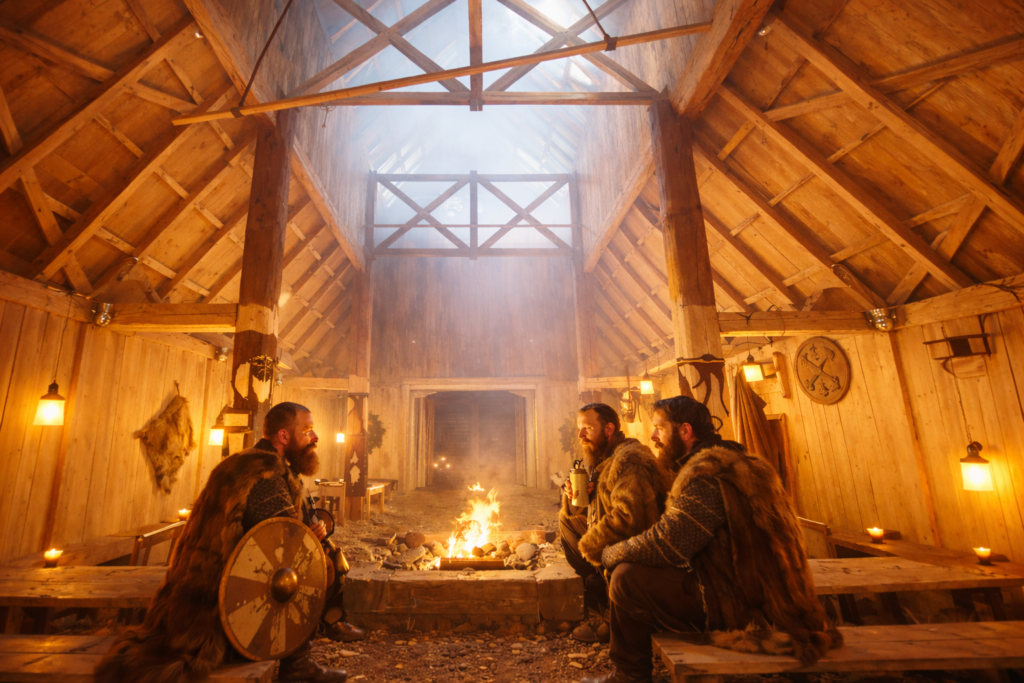
In southeastern Norway, a working farm near Vestby appeared unremarkable for generations. Crops rotated, machinery passed, and nothing suggested buried authority. In 2018, ground penetrating radar scans revealed shapes beneath the soil that did not match natural features. Archaeologists from the Norwegian Institute for Cultural Heritage Research returned carefully, aware the land was still productive. The structures date back more than a thousand years and span centuries of use. The site is inland, agricultural, and intact, complicating long held ideas about where Viking power operated.
1. Radar surveys first detected unexpected structures underground.

The discovery began in 2018 when farmland near Gjellestad was scanned using ground penetrating radar. Beneath active fields, long rectangular forms appeared in repeating patterns. Their scale suggested something beyond ordinary farm buildings. Archaeologists paused before excavation, knowing the implications could be significant.
Follow up analysis confirmed the outlines matched Viking Age halls rather than storage or agricultural features. The initial findings were widely reported and verified through independent review, according to the BBC. Multiple structures appeared aligned across time, raising early questions about permanence and authority.
2. Excavations exposed massive halls beneath farmland.

When excavation began, the dimensions were unmistakable. Several halls stretched over fifty meters long, matching elite sites known from sagas and royal centers. Their foundations cut deep into undisturbed soil, indicating long term planning rather than seasonal use.
The work was led by archaeologists from the Norwegian Institute for Cultural Heritage Research. Multiple construction phases were identified across centuries, as stated by the National Museum of Denmark. These buildings were rebuilt and expanded, suggesting inherited control rather than temporary occupation.
3. Artifacts indicate elite political and economic power.

Objects recovered quickly exceeded expectations. Decorative metalwork, imported materials, and specialized tools surfaced in layers associated with the halls. These items were not consistent with ordinary rural households.
The artifacts were documented by excavation teams and conservation specialists working on site. Their significance and broader context were later summarized in international coverage, as reported by Smithsonian Magazine. The material culture points to access, coordination, and influence between AD 750 and 1000.
4. The inland location contradicts traditional Viking models.

Viking authority is often associated with coastal hubs, ships, and fortified towns. This site sits inland, surrounded by arable land rather than ports. Its placement suggests a different strategy for maintaining influence.
Control of land and food production may have mattered as much as access to maritime routes. The farm’s location implies power embedded within agricultural systems. That positioning challenges long held assumptions about how Viking leadership organized territory and resources.
5. Continuous rebuilding shows generational authority.

The halls were not constructed once and abandoned. Archaeological layers describe cycles of rebuilding, enlargement, and reinforcement across generations. This continuity implies succession rather than disruption.
Such patterns point to dynastic authority rooted in land ownership. The farm functioned as a stable center of influence long after Viking expansion slowed. Power here appears inherited and domestic, complicating portrayals of Vikings as primarily mobile or transient.
6. Daily life appears structured and hierarchical.
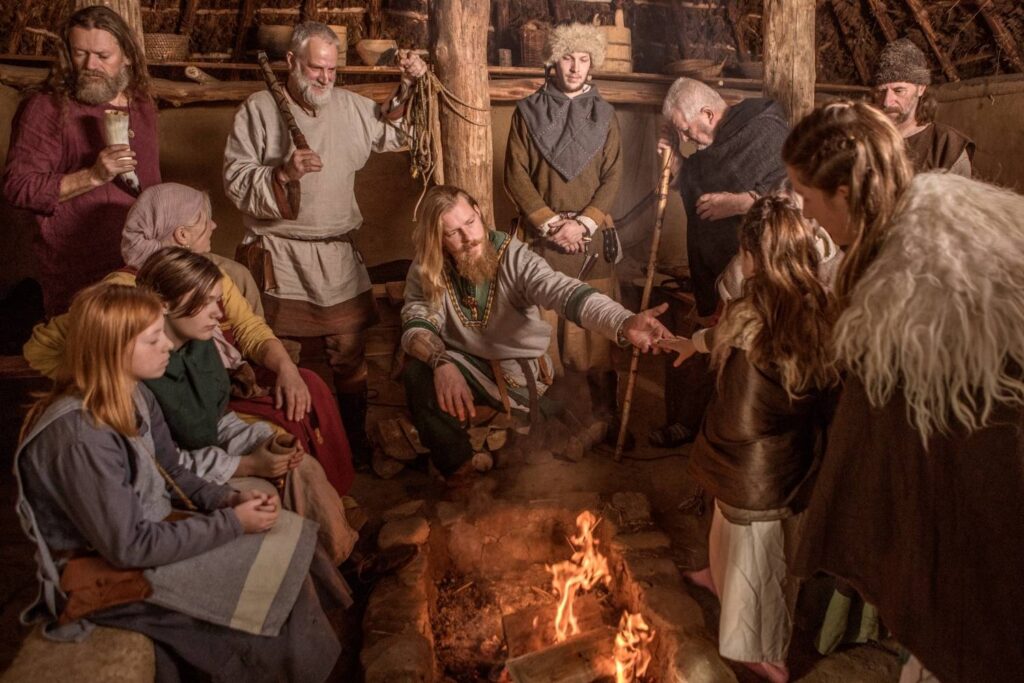
Interior layouts show clear organization. Cooking zones, storage areas, and communal spaces followed consistent patterns. Waste deposits and tool placement suggest regulated routines rather than informal use.
This structure implies hierarchy and coordinated labor. Authority shaped daily life, not just ceremonial moments. The farm reveals disciplined domestic systems supporting leadership, contrasting with popular images of loosely organized Viking households.
7. Agriculture and leadership operated as one system.
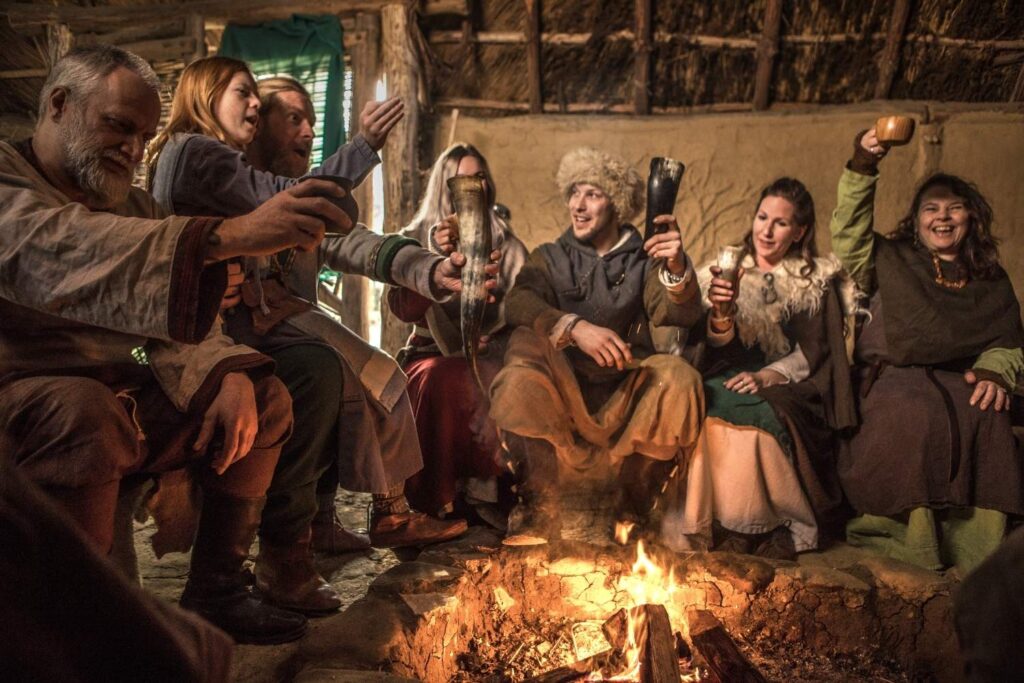
This was not a farm supporting authority elsewhere. Agricultural output enabled gatherings, obligations, and feasts that reinforced leadership locally. Control of food meant control of participation.
Leadership may have been exercised through planting cycles and harvest coordination. Governance appears woven into rural productivity. The discovery highlights how Viking power could function quietly through land management rather than overt military display.
8. Multiple halls suggest layered political relationships.

The presence of several large halls raises questions about shared or sequential authority. They may represent succession, alliance shifts, or overlapping leadership within one lineage.
Power may have been negotiated rather than centralized. This complexity challenges simplified hierarchies and suggests Viking leadership networks were grounded in property and kinship rather than singular rulers alone.
9. Surrounding landscapes are now under scrutiny.

Attention has expanded beyond the original farm. Nearby fields, roads, and burial sites are now being surveyed. What once appeared empty carries new potential.
Modern farming may conceal additional halls, workshops, or graves. The Gjellestad site suggests Viking influence extended through working countryside rather than isolated monuments. Each new scan reshapes regional maps of power.
10. The farm is changing how Viking sites are searched.
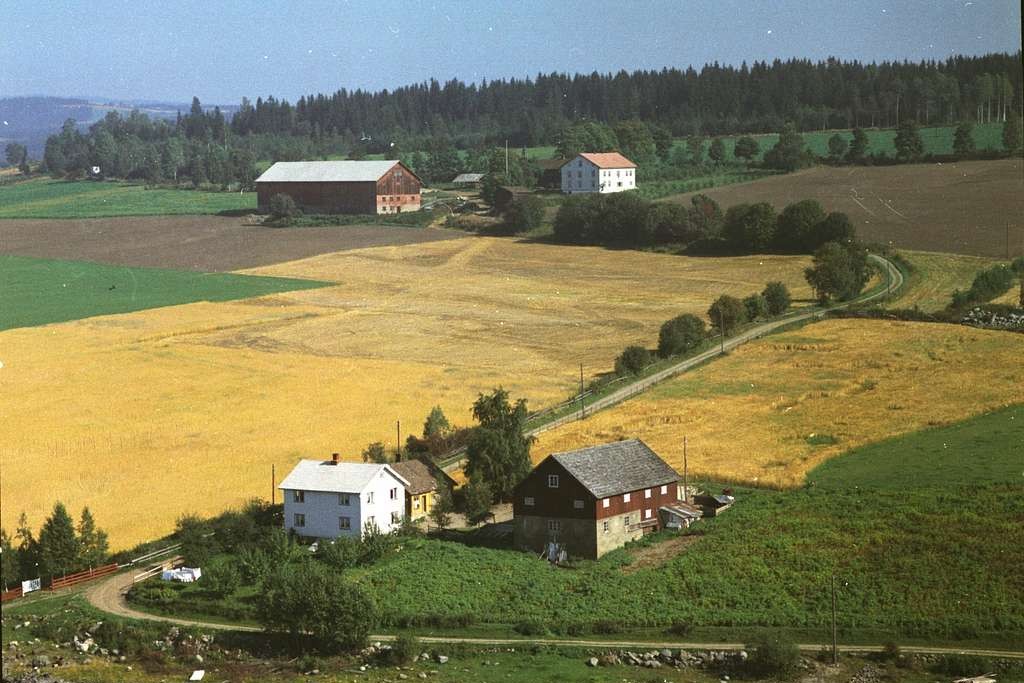
This discovery forces archaeologists to reconsider absence. Landscapes without visible ruins may still hold complex histories beneath active use.
Working farms can preserve authority quietly. The Vestby site demonstrates Viking power did not always announce itself through stone or ships. Sometimes it endured beneath plowed fields, waiting for technology to reveal what memory forgot.