
Ancient teeth are reshaping a familiar seafloor.

Off Florida’s Gulf Coast, divers and researchers are examining teeth far older than the shoreline itself. The fossils date back roughly fifteen million years, yet their sudden concentration has raised new questions. Found offshore and documented recently, the teeth suggest activity within ancient marine environments now buried beneath modern waters. Scientists involved stress caution as analysis continues. The investigation focuses on context, movement, and preservation rather than spectacle, because misreading these clues could distort understanding of prehistoric oceans and predators.
1. Teeth were recovered from submerged Gulf sediments.

Several fossilized shark teeth were recovered offshore along Florida’s Gulf Coast during recent survey dives. Their size and serration patterns immediately stood out, suggesting a giant predator. The concentration of finds raised questions about whether currents moved them or whether they marked an ancient habitat preserved underwater.
Initial identification linked the teeth to Otodus megalodon, a species known from Miocene deposits. Marine paleontologists involved are coordinating analysis through state collections. Similar Gulf Coast finds have been documented previously, according to the Florida Museum of Natural History, though this cluster requires closer contextual study and timing remains uncertain pending stratigraphic confirmation.
2. Currents complicate how ancient fossils reach seabeds.

Teeth discovered offshore do not always originate where they are found. Ocean currents, storms, and sediment shifts can move heavy fossils long distances. That uncertainty makes it difficult to determine whether the site represents a former feeding ground or a relocated accumulation disturbed over time.
Researchers are modeling sediment movement along the Gulf shelf to clarify origin patterns. Seafloor mapping helps reconstruct ancient coastlines. Similar redistribution processes have been observed in fossil beds worldwide, as reported by the National Oceanic and Atmospheric Administration, but local conditions must still be reconstructed carefully before conclusions about habitat or behavior are drawn confidently.
3. Tooth preservation offers clues about burial history.

Condition of the teeth varies noticeably across the finds. Some edges appear sharp while others show rounding, suggesting different exposure histories. These differences complicate interpretation and raise questions about how long the fossils remained exposed before burial within sediment layers offshore.
Paleontologists examine wear patterns under magnification to estimate transport time. Chemical analysis can reveal mineral replacement during burial. Comparable preservation studies have guided interpretations at other marine sites, as discovered by Smithsonian Magazine, though conclusions remain probabilistic rather than definitive at this stage. Additional sampling across depths may further refine these assessments later as more data become available regionally.
4. Megalodon inhabited warm shallow seas during Miocene.

During the Miocene epoch, warm shallow seas covered much of what is now Florida. Those environments supported large marine mammals and apex predators. The presence of megalodon teeth fits regional fossil records, yet the precise behavior of these sharks remains debated.
Some researchers propose breeding or feeding grounds, while others suggest migratory routes. The Gulf’s ancient geography differed significantly from today. Reconstructing those conditions is essential, but interpretations must remain cautious until stratigraphic context and dating are fully resolved. That uncertainty keeps multiple ecological scenarios viable within current evidence limits while encouraging continued offshore sampling and modeling efforts by scientists.
5. The discovery timing coincides with increased offshore surveys.

The teeth were documented during a period of expanded coastal research activity. Improved diving methods and mapping have increased fossil recovery. This timing raises questions about whether similar discoveries were previously missed rather than absent.
Florida’s Gulf Coast has become a focal area for marine paleontology. Collaboration between divers, museums, and universities has grown. As search coverage expands, interpretation must separate genuine clustering from discovery bias. Understanding that distinction is critical before assigning broader significance to any single site without overextending conclusions beyond what stratigraphy and dating can support during early stages of investigation and peer review processes in progress.
6. Researchers are examining whether teeth indicate activity zones.

Clusters of large teeth can suggest repeated presence rather than random loss. If megalodon frequented this area, it may reflect feeding, breeding, or migratory behavior tied to ancient conditions. That possibility carries weight because it reshapes how scientists map predator distribution.
However, clustering alone cannot confirm behavior. Teeth shed naturally and can accumulate through currents or erosion. Researchers are comparing spacing, depth, and orientation to distinguish activity zones from transported deposits. Until patterns are consistent across multiple layers, interpretations remain provisional rather than definitive.
7. Ancient sea levels complicate modern location assumptions.

Fifteen million years ago, sea levels were significantly higher. Coastlines sat miles inland from their current positions. What is now offshore may once have been nearshore or even coastal habitat.
This shift complicates assumptions about where megalodon lived and hunted. The teeth’s current underwater location may not reflect original environment. Paleogeographic reconstructions are essential to avoid projecting modern maps onto ancient ecosystems inaccurately. Context depends on understanding how dramatically Florida’s shape has changed since the Miocene.
8. Dating methods remain central to ongoing analysis.
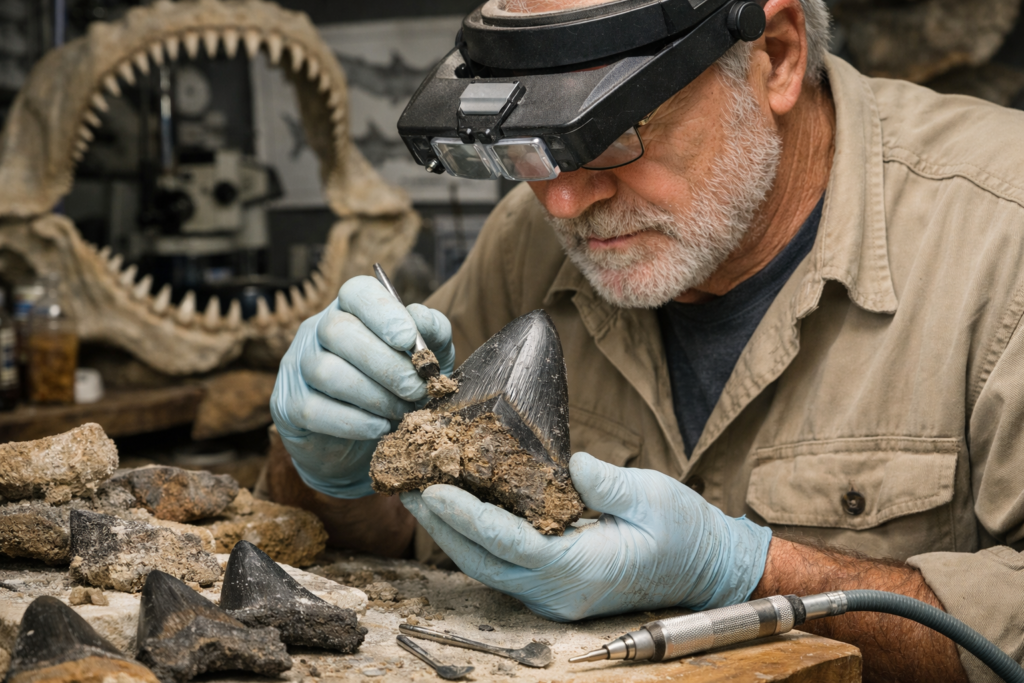
Assigning precise age to the teeth requires more than species identification. Stratigraphic context, associated fossils, and sediment composition all factor into dating. Without clear layers, timelines blur.
Researchers are collecting surrounding material to refine age estimates. Radiometric dating is limited underwater, so relative dating dominates. Small errors can shift interpretations by millions of years. That uncertainty reinforces why scientists avoid firm claims until multiple dating lines align consistently.
9. Public fascination risks overstating scientific certainty.
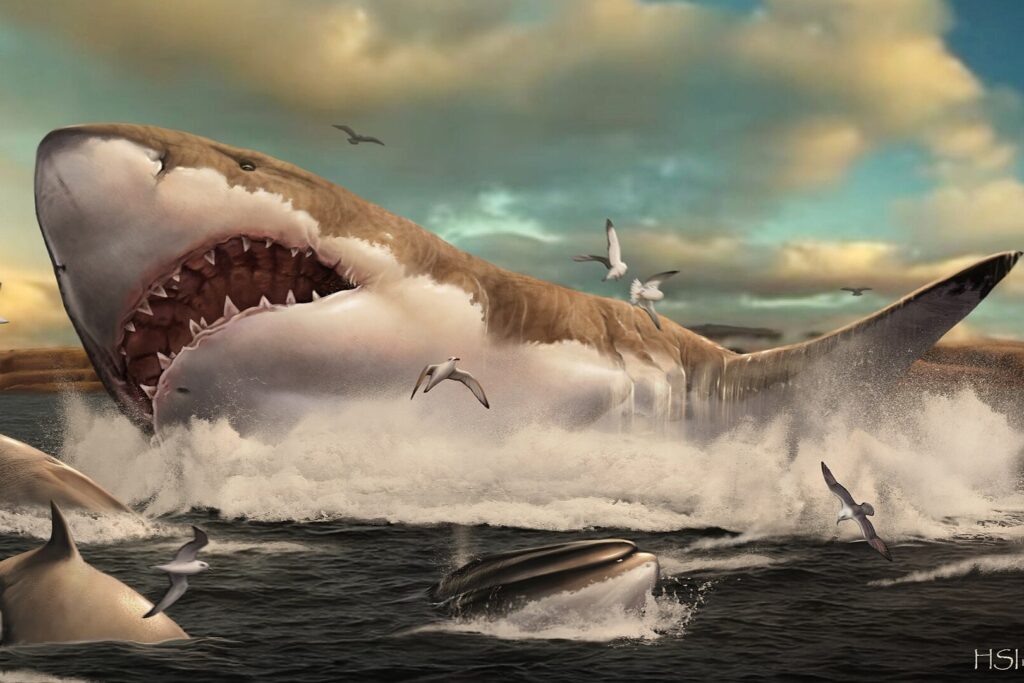
Megalodon discoveries attract attention quickly. Large teeth and familiar names fuel speculation. That interest can pressure interpretations toward dramatic narratives rather than cautious analysis.
Scientists involved emphasize that fascination should not rush conclusions. Each tooth adds data, not answers. The risk lies in oversimplifying complex processes for public consumption. Careful communication remains part of the investigation to preserve accuracy while acknowledging curiosity.
10. The investigation may reshape regional fossil expectations.
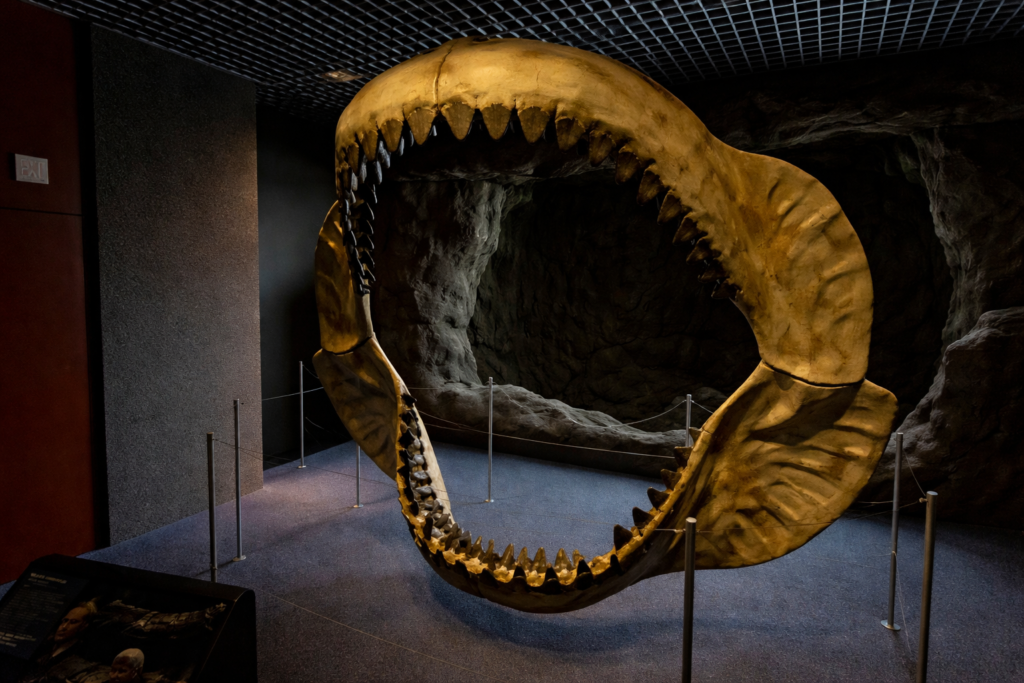
If patterns hold, this site could signal richer offshore fossil zones than previously assumed. That possibility encourages broader surveys and revised search strategies along the Gulf shelf.
However, confirmation requires replication. One site cannot redefine regional history alone. The investigation’s value lies in prompting new questions rather than settling old ones. As analysis continues, the discovery’s importance will depend on how consistently evidence supports emerging interpretations across wider areas and independent studies.