
The formation raised questions long before answers appeared.

In eastern Montana, a striking rock formation began circulating online after hikers shared photos showing straight edges and stacked layers that seemed anything but natural. Some viewers saw evidence of ancient construction. Others suspected modern interference. As foot traffic increased, geologists were asked to take a closer look. The debate that followed revealed less about lost civilizations and more about how easily geology can challenge human intuition when nature builds with unexpected precision.
1. Its setting explains why few noticed it before.
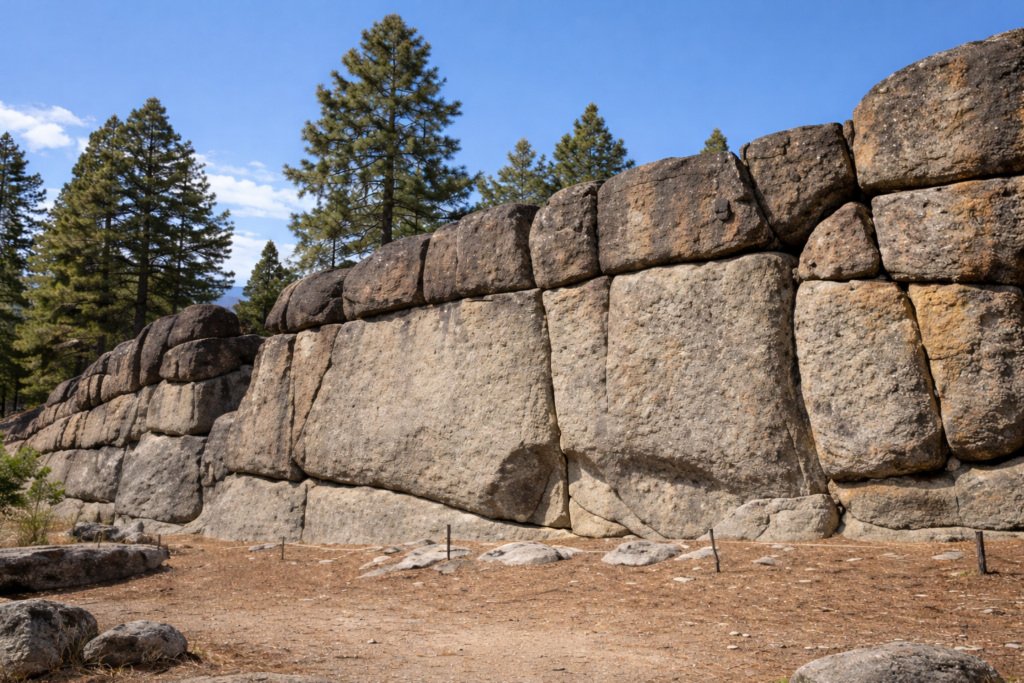
The feature commonly called the Sage Wall sits in Garfield County, not far from the small town of Jordan. It stretches along a hillside on private land, rising from the surrounding terrain in long, flat segments. Its remote location kept it largely unnoticed for decades, but accessibility from nearby trails made it easy for visitors to photograph and share once interest sparked.
2. Human pattern recognition does most of the convincing.

Straight lines and right angles trigger a powerful mental shortcut. Humans associate them with tools, planning, and labor. When those shapes appear in nature at large scale, the brain searches for human explanation first. The Sage Wall presents multiple visual cues associated with construction, making it especially persuasive to casual observers encountering it without geological context.
3. Geological processes offer a less dramatic explanation.
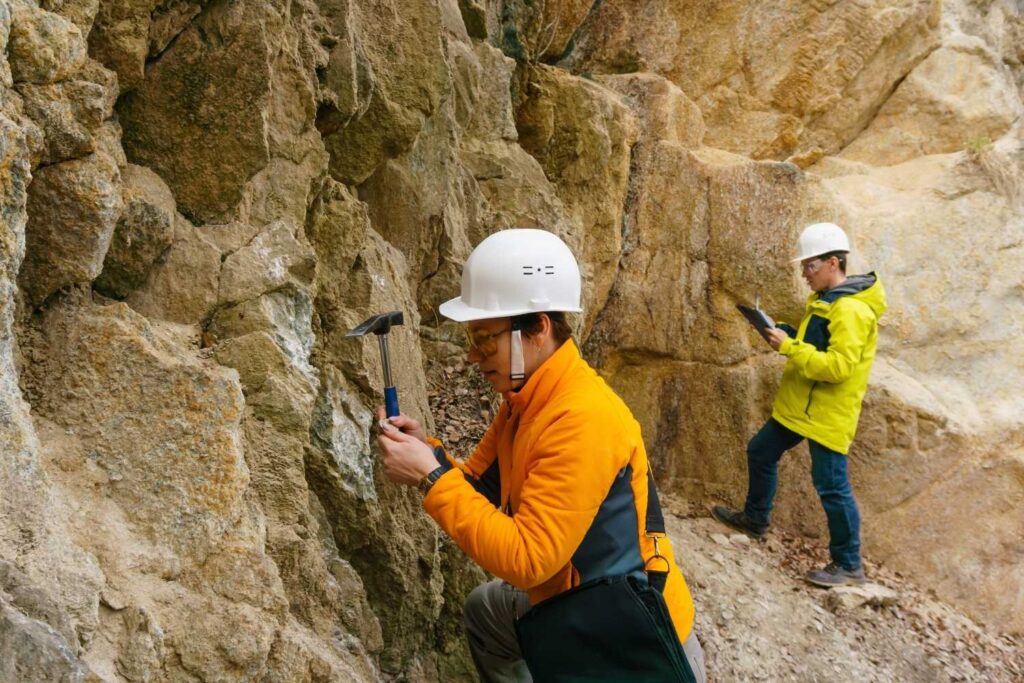
Geologists explain the Sage Wall as a product of natural fracturing within sandstone and volcanic influenced rock layers. As stress builds underground, rock splits along predictable planes. Over long periods, erosion removes weaker material, leaving behind blocky faces that appear deliberately shaped despite forming entirely without human involvement.
4. Expert debate centers on process, not origin.

While experts broadly agree the formation is natural, discussion continues over which processes dominated its formation. Some emphasize fracture patterns, others point to regional uplift and erosion timing. The disagreement is not about human involvement but about which geological forces best explain the wall’s unusual clarity and scale.
5. Online speculation changes how evidence is perceived.

Online videos often frame the Sage Wall as proof of a lost ancient civilization, sometimes assigning extreme ages or unsupported cultural connections. These claims spread faster than scientific explanations, drawing attention away from careful study. Researchers stress that extraordinary interpretations require physical evidence, which has not been found at the site.
6. What researchers did not find is equally important.

Archaeological sites rarely exist in isolation. Tools, debris, or cultural materials typically surround constructed features. Extensive surveys around the Sage Wall have produced none of these indicators. That absence strongly supports a geological origin, even when the formation itself looks engineered at first glance.
7. History shows nature often fools the human eye.

Geologists point to formations like Giant’s Causeway in Northern Ireland or columned basalt sites worldwide. Many were initially believed to be artificial due to their symmetry. Detailed study eventually showed natural processes could produce remarkably ordered structures, reinforcing how misleading surface appearance can be.
8. Mystery fills gaps faster than research can.
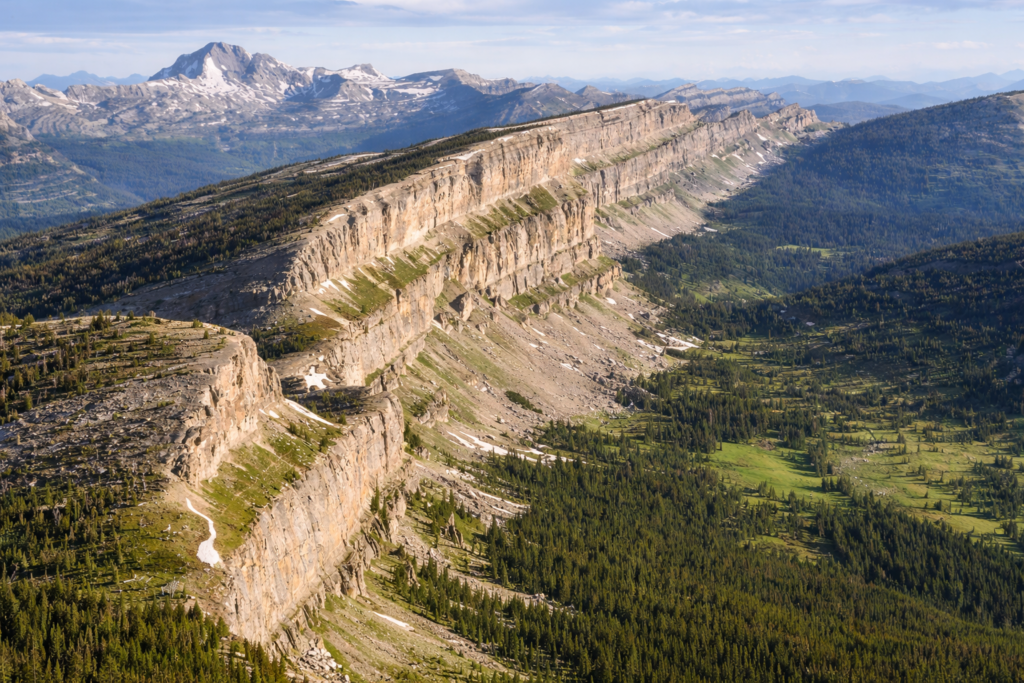
Stories about ancient builders capture imagination, especially in regions where monumental stone architecture is rare. When nature creates something that looks intentional, it invites narrative. The Sage Wall taps into that desire for mystery, filling gaps in knowledge with speculation before science has time to respond.
9. Clear criteria would force a scientific reassessment.

Clear signs of quarrying, tool marks with consistent patterning, or associated cultural materials would force reassessment. So far, none have been documented. Until such evidence appears, scientists classify the Sage Wall as a geological formation, not an archaeological one.
10. The real lesson lies in resisting easy conclusions.

Rather than rewriting history, the Sage Wall highlights how complex and deceptive natural processes can be. It reminds both scientists and the public that intuition is not evidence. In this case, the real story is not about ancient builders, but about nature’s ability to create structures that rival human design.