
A long theoretical idea is facing new tests.

In March, researchers across physics, computer science, and cosmology began revisiting an old question with new tools. The idea that reality could be simulated has long lived on the fringes of philosophy, but recent studies have pushed it into measurable territory. Patterns in physics, limits of computation, and strange regularities in nature are being examined with fresh urgency. None of the findings prove anything outright. But together, they raise uncomfortable questions about whether the universe behaves like something built.
1. The question moved from philosophy into testable science.
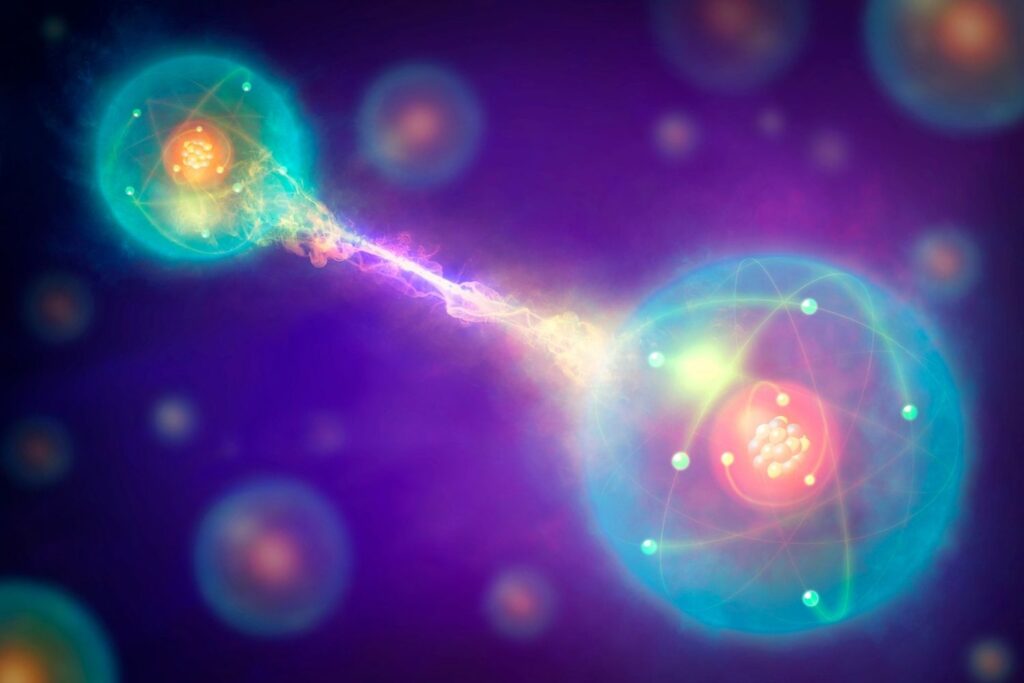
For decades, the simulation idea lived mostly in thought experiments. That began to change as physicists started identifying physical limits that resemble computational constraints. Energy thresholds, discrete measurements, and informational caps now appear in serious discussions.
According to Scientific American, researchers argue that once a hypothesis produces falsifiable predictions, it enters scientific territory. The simulation idea is no longer treated as a metaphor. It is increasingly framed as a model that can be challenged, tested, or ruled out using physical evidence.
2. Information limits in physics raised early suspicions.
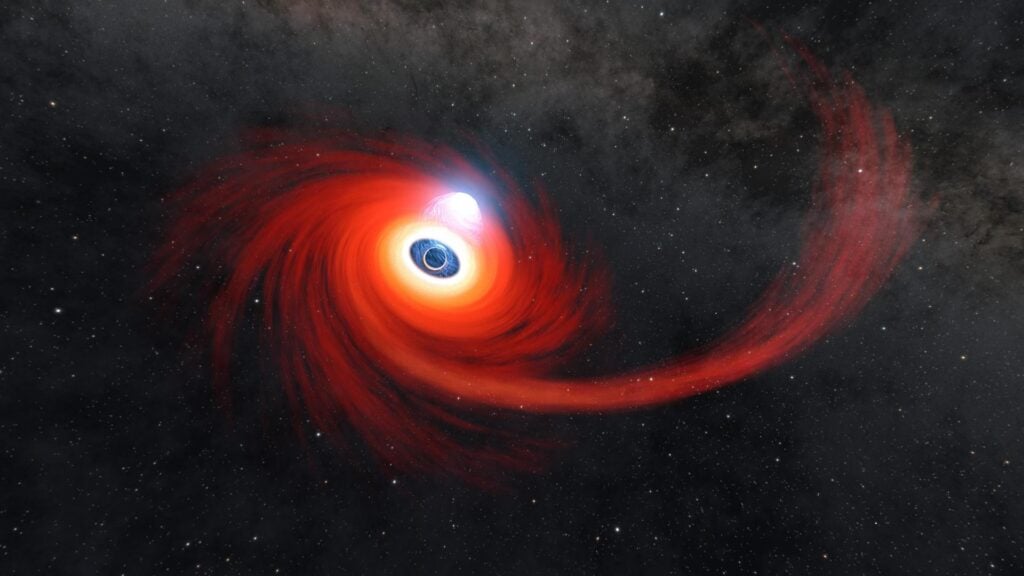
Modern physics increasingly treats information as fundamental. Black hole entropy, quantum bits, and spacetime encoding suggest reality may operate under strict data limits.
As reported by Nature Physics, some physicists note that the universe stores information in finite units rather than continuous streams. This resembles how digital systems operate. While this does not imply design, it raises questions about why physical laws resemble optimized information processing rather than arbitrary behavior.
3. Cosmic resolution appears strangely constrained.

Measurements of spacetime suggest a smallest measurable unit, beyond which finer detail cannot exist. This limit appears regardless of experimental refinement.
As stated by New Scientist, researchers studying Planck scale physics argue that spacetime behaves like pixels rather than a smooth surface. Some scientists caution against overinterpretation, but others note the resemblance to resolution limits in simulations. The finding does not imply intent, but it challenges assumptions about infinite continuity.
4. Quantum randomness may hide underlying structure.
Quantum mechanics describes outcomes as probabilistic, yet patterns emerge when large datasets are analyzed. Randomness appears bounded, not unlimited.
Some physicists argue this could reflect deeper rules beneath observed uncertainty. If randomness is constrained, it may suggest unseen structure shaping outcomes. Critics counter that statistical patterns naturally arise in large systems. The debate centers on whether observed limits reflect physics itself or something enforcing consistency behind it.
5. Physical constants appear finely balanced for complexity.

The universe depends on constants that sit within narrow ranges. Small deviations would prevent stars, chemistry, or stable matter from forming.
This observation has long fueled fine tuning debates. Some scientists see this as evidence for multiple universes. Others suggest simulated environments would naturally favor stable configurations. Neither explanation is proven. What unsettles researchers is how consistently reality occupies a narrow band that allows observers to exist at all.
6. Computational models increasingly mirror physical behavior.

Advances in simulation now allow complex worlds to emerge from simple rules. Cellular automata and physics engines recreate lifelike behavior unexpectedly well.
Some theorists note that reality itself may be governed by compact rules producing vast complexity. This does not imply artificiality. But the similarity between physical law and algorithmic emergence has shifted how scientists conceptualize the universe’s underlying mechanics.
7. Limits on energy may resemble processing constraints.

There appears to be a maximum rate at which information can be processed in any physical system. Energy, time, and computation are tightly linked.
This ceiling mirrors bandwidth limits in computing systems. Physicists debate whether this reflects deep physical law or incidental coincidence. Either way, the presence of hard limits challenges intuitive notions of boundless reality and keeps the simulation question alive within serious research.
8. Observers affect outcomes in measurable ways.
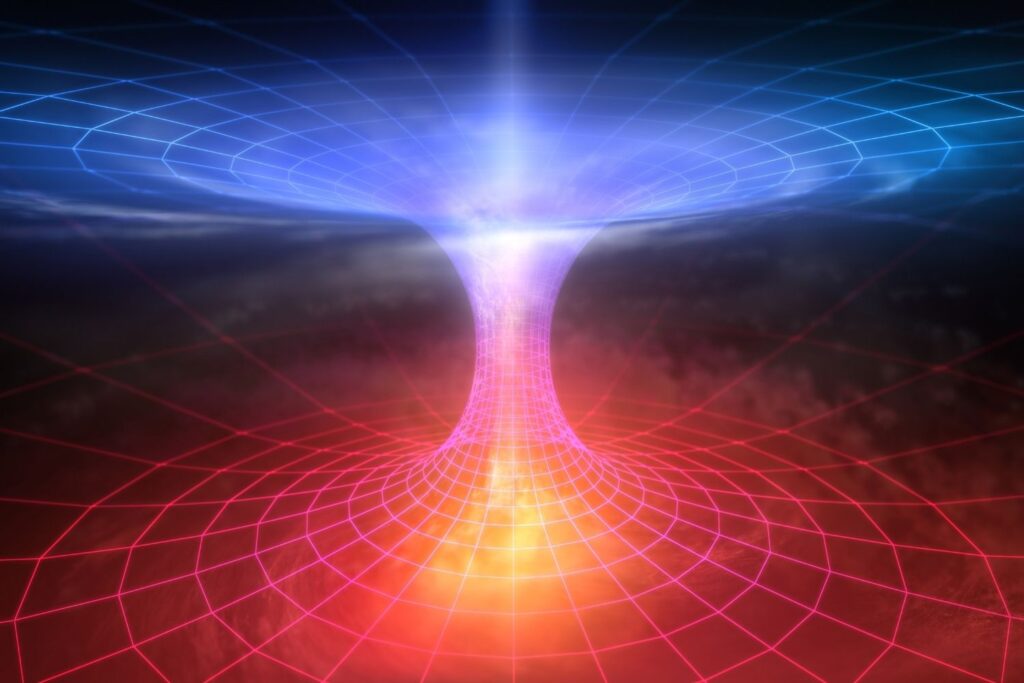
Quantum experiments show that measurement changes system behavior. Observation is not passive, it alters results.
Some researchers speculate that observer dependent effects resemble rendering optimization. Critics argue this analogy is misleading. Still, the fact that observation plays an active role unsettles classical assumptions about objective reality existing independent of interaction.
9. The hypothesis creates uncomfortable test implications.

If reality is simulated, detectable inconsistencies might exist. Researchers have proposed searching for lattice effects, energy cutoffs, or computational noise.
So far, no definitive anomalies confirm such signatures. However, the willingness to design tests marks a shift. The idea is no longer dismissed outright. It is being challenged experimentally, which itself represents a major change in scientific posture.
10. Skeptics warn against narrative overreach.

Many scientists caution that metaphor can outpace evidence. Similarities between physics and computation may reflect human modeling habits rather than reality’s nature.
They argue that simulation language risks becoming a storytelling shortcut. Without direct evidence, the hypothesis remains speculative. Still, skeptics acknowledge that exploring it has sharpened understanding of information, limits, and physical law in productive ways.
11. The debate is reshaping how reality is studied.

Regardless of outcome, the simulation question has reframed scientific priorities. Researchers now focus more on information, limits, and structure than substance alone.
This shift has practical consequences for physics and cosmology. Even if reality is not simulated, treating it as if it might be has generated new questions, new experiments, and a deeper unease about how much of existence we truly understand.