
A modern development uncovered something ancient and unsettling.

In 2021, construction crews working on a large housing development near Plymouth in Devon expected routine obstacles. Instead, excavation work exposed a void beneath the ground that halted progress immediately. The site, part of the new Sherford town project, suddenly carried risks far beyond engineering. Once the opening appeared, specialists were called to assess stability and potential historical significance. What lay beneath could not be rushed, because damage would be permanent and the implications were already larger than the build itself.
1. Builders accidentally broke into a sealed underground cave.
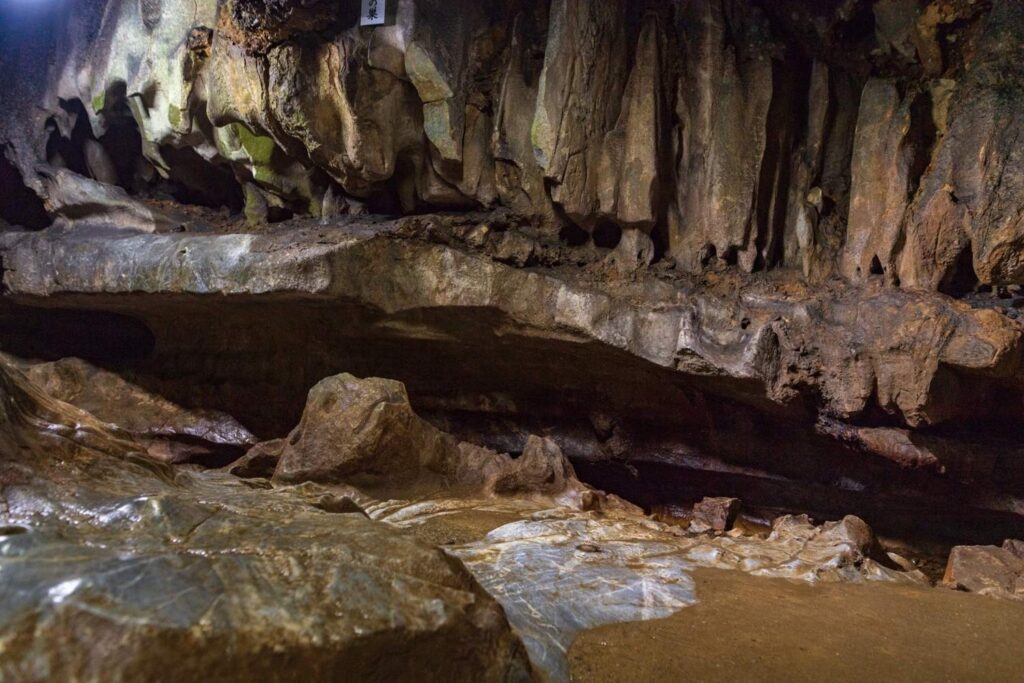
During infrastructure work, heavy machinery cut through limestone and opened an unexpected cavity beneath the site. The opening revealed a space untouched by modern activity, creating immediate concern about collapse and contamination. Construction stopped while experts assessed the chamber’s extent and stability.
Archaeologists later confirmed it was a natural limestone cave, not a manmade feature, according to the Natural History Museum. Its sealed condition suggested it had remained undisturbed since prehistoric times. Once exposed, the cave became vulnerable to air, vibration, and moisture changes. That made careful intervention essential from the very first day.
2. Thousands of bones emerged from the cave floor.
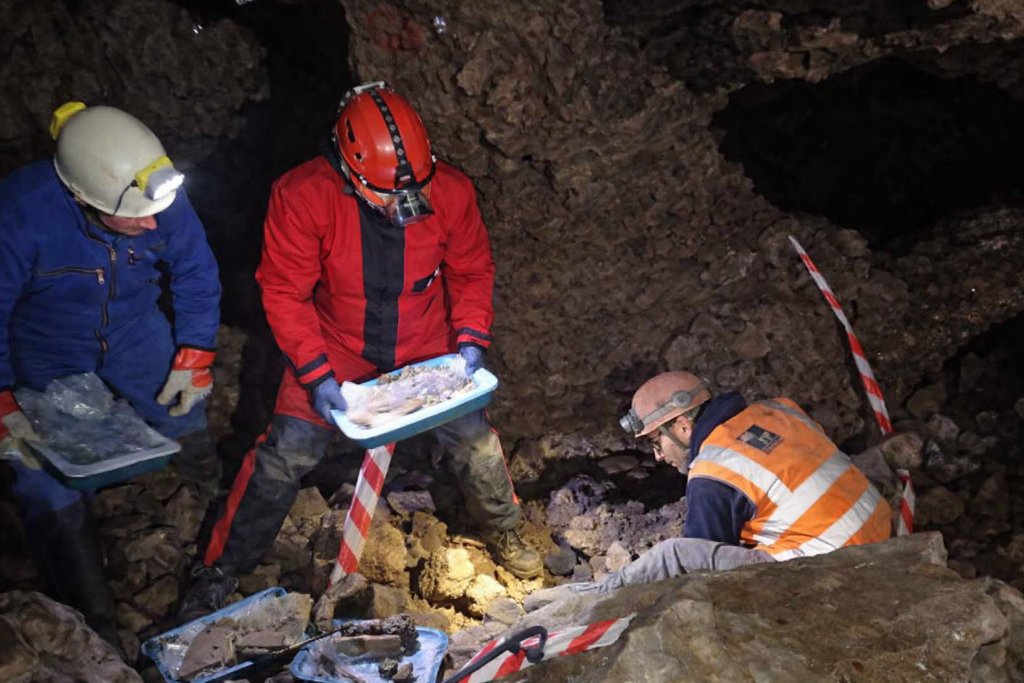
As the cave was stabilized, bones appeared in dense concentrations across the sediment. They were layered rather than scattered, suggesting repeated deposition rather than a single event. The sheer volume quickly ruled out a lone animal or recent intrusion.
More than four thousand bones were ultimately identified, as reported by Smithsonian Magazine. Their distribution indicated long term use of the cave by animals over thousands of years. Some bones showed signs of weathering while others remained remarkably intact. This variation hinted at multiple periods of entry and accumulation.
3. Dating confirmed the remains were Ice Age relics.

Determining the age of the bones was critical. If the remains were younger, the find would be notable but limited. Early sampling suggested something far older, raising the stakes of the investigation.
Analysis placed the bones between thirty thousand and sixty thousand years old, as discovered by researchers at the University of Plymouth. That timeframe aligned with the last Ice Age, when Britain supported megafauna now extinct. The dates confirmed the cave preserved a rare snapshot of ancient ecosystems. It also meant the site predated most known human occupation in the region.
4. Mammoths and rhinoceroses once lived here.

Among the remains were unmistakable bones from woolly mammoths and woolly rhinoceroses. These animals are typically associated with cold steppe environments, not modern southern England. Their presence challenged assumptions about regional climate during the Ice Age.
Such species suggest open grasslands rather than dense forest. That finding reshapes how scientists understand Devon’s prehistoric landscape. It also implies that migration routes passed directly through what is now a modern housing site. The cave captured evidence of a world radically different from today.
5. Predators played a role inside the cave.

Wolf and hyena remains were found alongside herbivores. Several bones bore tooth marks, fractures, and signs of scavenging. This suggested the cave was not merely a passive trap.
Predators may have dragged prey into the cave or used it as a den. Over time, this activity could explain the mixture of species and bone conditions. However, water movement and gravity may also have rearranged remains. Untangling those processes requires careful interpretation.
6. The cave likely functioned as a natural trap.

Geological analysis suggests the cave entrance may once have been concealed. Animals wandering across the landscape could have fallen in and been unable to escape. This mechanism would explain repeated deposits without human involvement.
Once trapped animals died, predators may have followed. Over centuries, this cycle could accumulate large numbers of remains. Such natural traps are known elsewhere in Europe. This one remained hidden until modern construction exposed it.
7. Exposure immediately threatened preservation.

The cave had been stable for tens of thousands of years. Once opened, air circulation, humidity shifts, and vibration threatened delicate bones and sediments. Even minor disturbances could erase contextual information.
Archaeologists worked under time pressure to document and stabilize the site. Sediment layers were as important as bones themselves, holding clues to climate and vegetation. Every removal carried risk. Preservation depended on balancing speed with precision.
8. The discovery forced a major redesign of plans.

The cave lay directly beneath planned infrastructure. Roads, utilities, and foundations could not proceed as designed without risking collapse or destruction. The discovery created financial and logistical challenges for developers.
Engineers adjusted layouts to avoid placing weight above the cave. The developers committed to preserving the site rather than building over it. This decision altered timelines and costs. It also set a precedent for protecting buried heritage during development.
9. Devon’s Ice Age history had to be reconsidered.

Evidence of such diverse megafauna in the West Country was previously limited. This cave provided direct proof of species distribution during colder periods. It expanded the known range of Ice Age ecosystems in Britain.
The find suggested southern regions played a larger role than once thought. Researchers now view the area as part of a broader prehistoric corridor. That realization may prompt reevaluation of nearby sites. Hidden caves could still exist beneath developed land.
10. Modern housing now sits above deep time.

Sherford is designed for thousands of residents. Beneath it lies a record older than civilization itself. The contrast between modern life and ancient remains is stark and unavoidable.
Plans now include long term preservation and continued study. Some remains are expected to be displayed locally, connecting residents to the land’s deep past. Responsibility for protection extends decades into the future. The discovery ensures that Sherford’s foundation is not just concrete, but history.