
Earth may be electrically active in ways unseen.
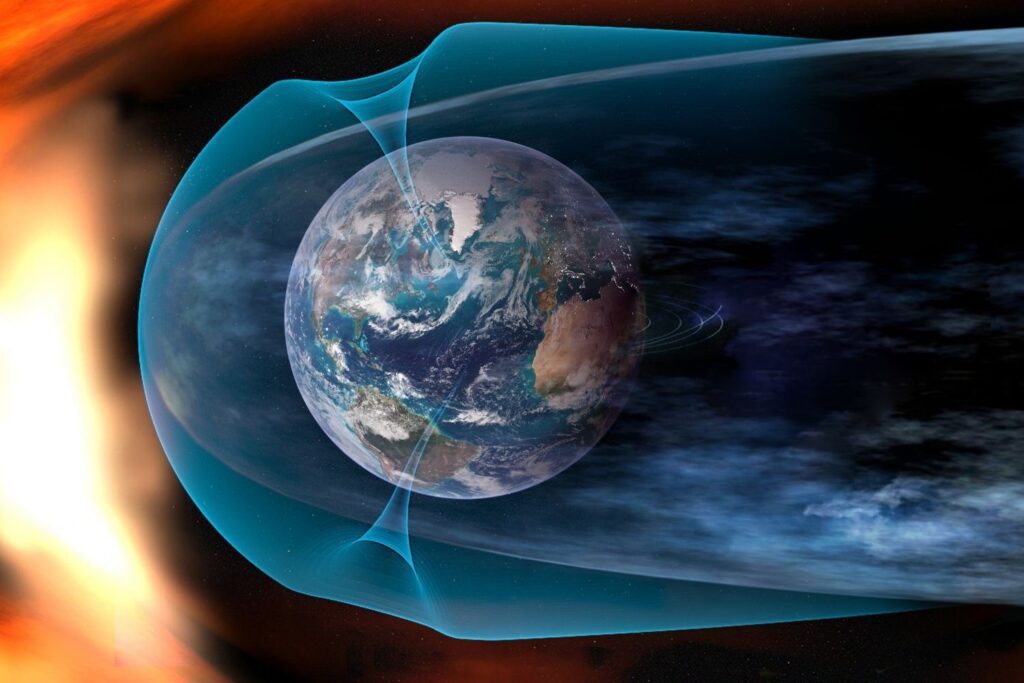
For decades, scientists believed the forces surrounding Earth were largely mapped. Magnetic fields, radiation belts, and solar interactions formed the accepted picture. Recent measurements are now disrupting that confidence. Instruments flying through near Earth space detected a persistent, planet wide electrical structure that had never been directly observed. It was predicted long ago, yet remained invisible until now. The discovery raises unsettling questions about how Earth retains its atmosphere, how energy flows around the planet, and how much of our immediate cosmic environment remains misunderstood.
1. Measurements confirmed a long predicted global electric field.

Scientists have theorized for decades that Earth should generate a weak electric field at the boundary between atmosphere and space. Until recently, it remained unmeasured. Direct observations finally confirmed its existence, revealing a continuous electrical structure encasing the planet.
The field is now identified as Earth’s ambipolar electric field, measured directly by NASA’s Endurance suborbital mission. Instruments detected a voltage difference of about half a volt stretching across vast distances, validating predictions that Earth actively shapes charged particle movement far above its surface.
2. The field controls how Earth loses atmospheric particles.
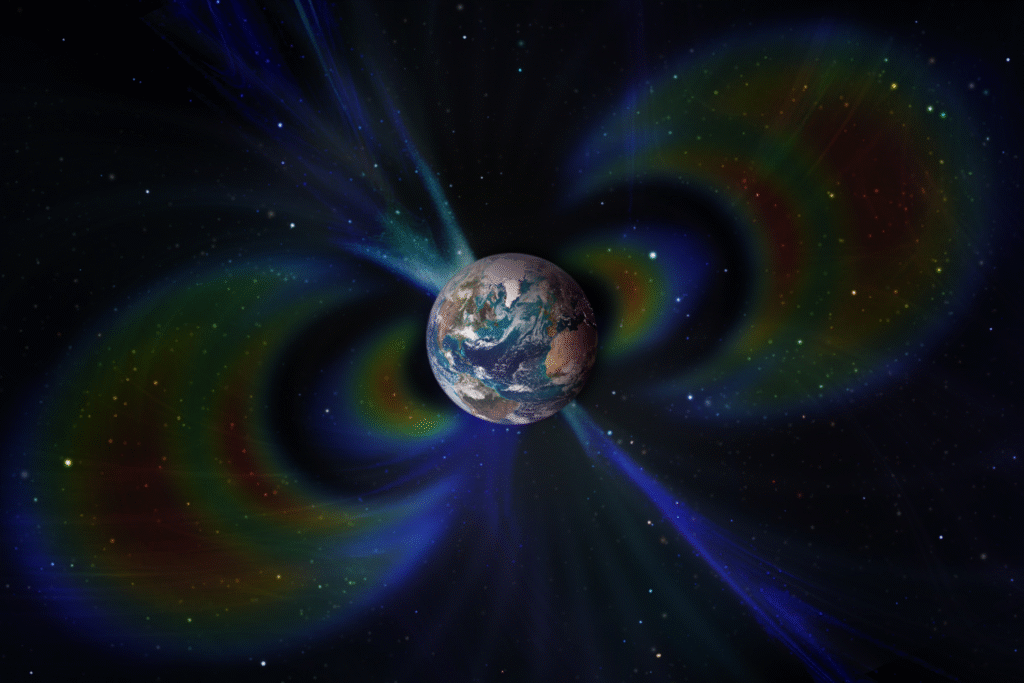
Earth constantly leaks ions into space, yet the rate never fully matched theoretical models. The newly measured electric field appears to regulate this escape, gently pulling heavier ions upward while preventing runaway loss. This balancing act affects how the atmosphere evolves over geological time.
Scientists found the ambipolar electric field creates a steady upward force on charged particles, acting like a global voltage regulator. This mechanism explains why lighter electrons and heavier ions escape together, preserving atmospheric stability rather than allowing rapid depletion.
3. Its weakness masks its planetary scale influence.

By everyday standards, half a volt sounds insignificant. Spread across tens of thousands of kilometers, however, that small potential becomes powerful. Over time, it moves enormous quantities of plasma, shaping the structure of near Earth space without dramatic bursts or storms.
Researchers emphasize that persistence matters more than strength. The ambipolar electric field operates continuously, influencing particle motion day and night. Its subtlety explains why it remained undetected for so long, despite shaping planetary behavior on a massive scale.
4. Earlier space missions were never designed to see it.
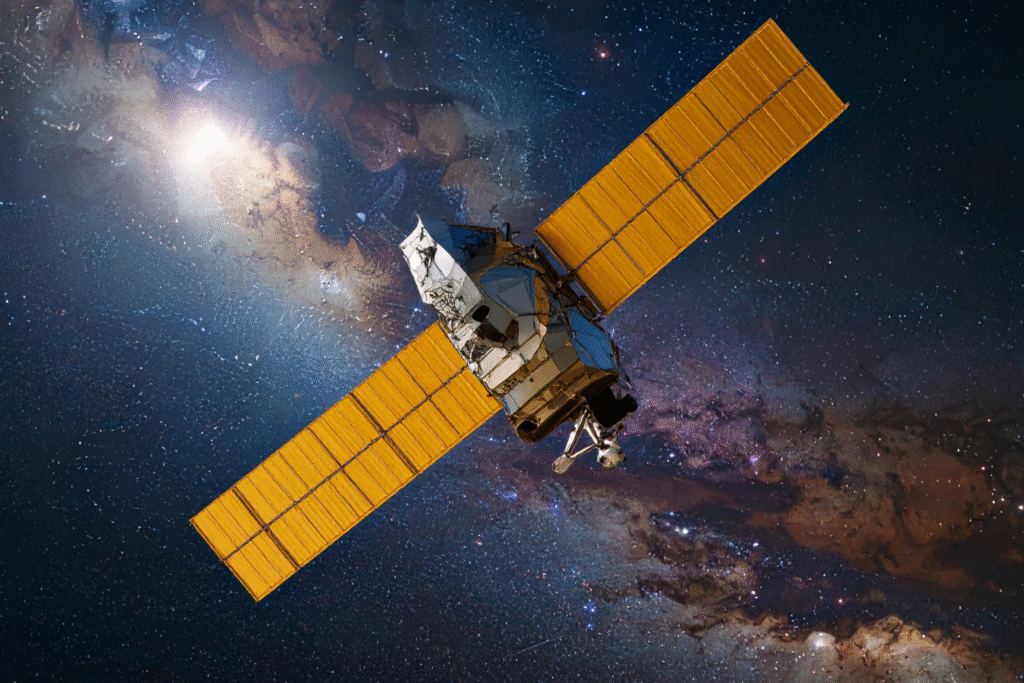
For decades, satellites focused on magnetic forces and energetic particles, not faint electric gradients. The tools required to isolate this field simply did not exist. As a result, the field was overlooked, not absent.
The Endurance mission carried highly sensitive plasma instruments capable of detecting tiny voltage differences. This technological shift suggests similar electric fields may exist around other planets, hidden not by rarity but by limitations in earlier observational design.
5. Earth emerges as an active electrical system.

The discovery reframes Earth as more than a passive object shaped by solar forces. The planet generates and maintains its own electrical environment, influencing how energy and matter move through space. That agency changes long held assumptions.
If Earth sustains a persistent electric field beyond its atmosphere, models of space weather, atmospheric loss, and planetary evolution must adjust. The planet appears to participate actively in shaping its surrounding space, not merely enduring it.
6. Solar storms bend but do not erase it.
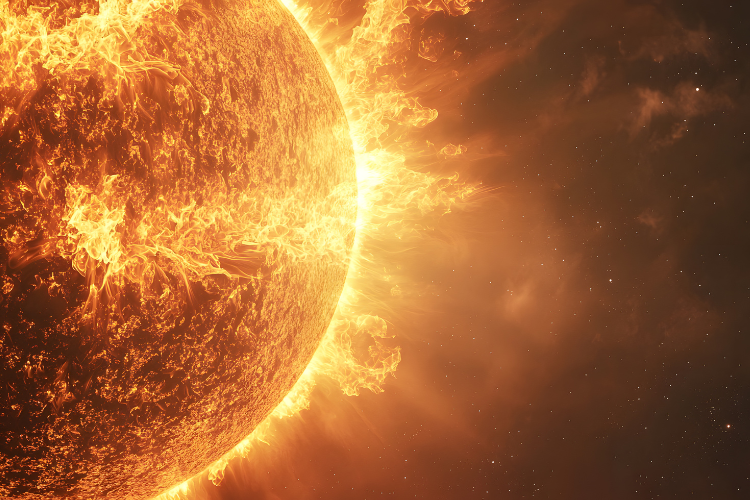
Scientists expected bursts of solar activity to overwhelm such a weak electric structure. Instead, measurements show the ambipolar electric field persists through calm conditions and geomagnetic disturbances alike. That resilience raises new questions about how multiple energy systems overlap near Earth.
During solar storms, the field appears to redistribute incoming charged particles rather than collapse. This behavior suggests Earth’s electrical environment responds dynamically to solar input, adding a previously missing layer to models of space weather interactions.
7. Satellite environments may be subtly altered.

Satellites orbit within regions once considered electrically neutral outside known radiation zones. The presence of a persistent electric field complicates that assumption. Over long durations, even faint forces can influence surface charging and instrument behavior.
Engineers are beginning to reassess spacecraft exposure models. Continuous interaction with the ambipolar electric field may affect satellite longevity and measurement accuracy, particularly for missions operating in low Earth orbit and polar regions.
8. Other planets may host similar hidden fields.

Earth was long treated as a baseline for planetary atmospheres. The confirmation of this field suggests that baseline was incomplete. Comparable processes may operate around planets with atmospheres and ionospheres.
Researchers are revisiting data from Mars and Venus, searching for overlooked electrical signatures. If similar fields exist elsewhere, assumptions about atmospheric loss, habitability, and planetary aging across the solar system may need revision.
9. Atmospheric history could require reinterpretation.

Over millions of years, small forces shape large outcomes. By regulating how particles escape, the ambipolar electric field may have influenced Earth’s atmospheric composition since early history. That possibility reshapes models of long term climate stability.
Scientists caution that this does not signal immediate atmospheric change. Instead, it introduces a slow acting factor that helps explain why Earth retained a dense atmosphere while other planets experienced dramatic loss.
10. The discovery exposes limits in scientific certainty.

Earth’s near space environment was assumed to be well understood. The late confirmation of this field challenges that confidence. Fundamental processes can remain hidden even in familiar territory.
As measurement tools improve, additional unseen structures may emerge. The ambipolar electric field stands as a reminder that discovery is ongoing, even around our own planet, and that established models can still be incomplete.