
Old ideas are unsettling modern political narratives.
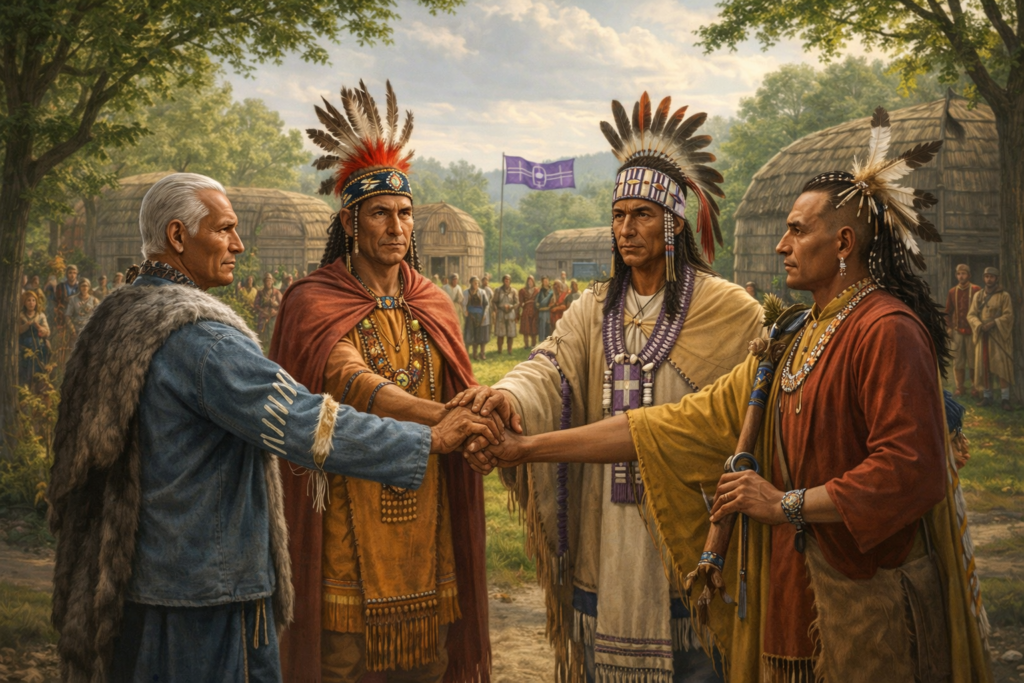
For generations, the origins of American democracy were framed almost entirely through European political theory. Recently, historians have returned to records from colonial North America with fresh questions. They are reexamining how Indigenous governance systems, particularly those of the Haudenosaunee Confederacy, also known as the Iroquois Confederacy, may have shaped early American political thinking. This reassessment challenges familiar civic stories taught in schools and echoed in public memory. The stakes are not symbolic. They reshape how democratic development is understood, who is credited, and how cultural exchange shaped the foundations of the United States.
1. Colonial leaders observed Haudenosaunee governance firsthand.

Early American colonies existed alongside powerful Indigenous nations. Diplomacy, trade, and conflict forced sustained interaction. Colonial leaders attended councils and treaty negotiations, witnessing political processes unlike European monarchies. These encounters left impressions that lingered beyond immediate diplomacy.
Haudenosaunee councils emphasized consensus, debate, and representation across nations. Observers noted orderly deliberation without centralized rulers. Exposure occurred during treaty councils across present day New York and Pennsylvania. These experiences provided living examples of alternative governance systems functioning effectively over generations.
2. Federal unity existed long before European constitutions.

The Haudenosaunee Confederacy united multiple nations under shared governance centuries earlier. This contradicted European assumptions that such unity required monarchs or coercion. Its longevity drew attention from colonial thinkers.
The Great Law of Peace outlined roles, responsibilities, and conflict resolution mechanisms. It balanced autonomy with collective decision making. This model demonstrated that diverse groups could coexist under shared principles. Its endurance made it difficult for colonial leaders to dismiss as primitive or unstable.
3. Consensus decision making challenged majority rule assumptions.
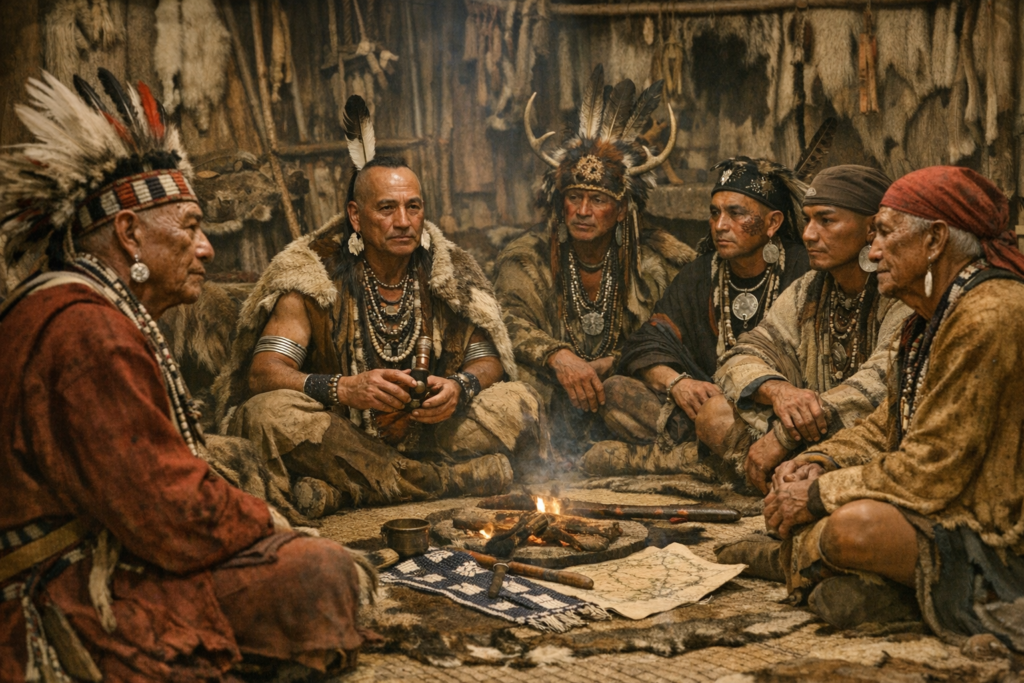
European political systems often relied on force or simple majorities. Haudenosaunee governance prioritized consensus to maintain unity. This process required negotiation rather than domination.
Consensus prevented factions from being permanently overruled. Decisions moved slowly but ensured broad support. Early American thinkers wrestled with balancing efficiency and legitimacy. Exposure to consensus models complicated assumptions about how authority should function in representative systems.
4. Checks on power limited unilateral authority.
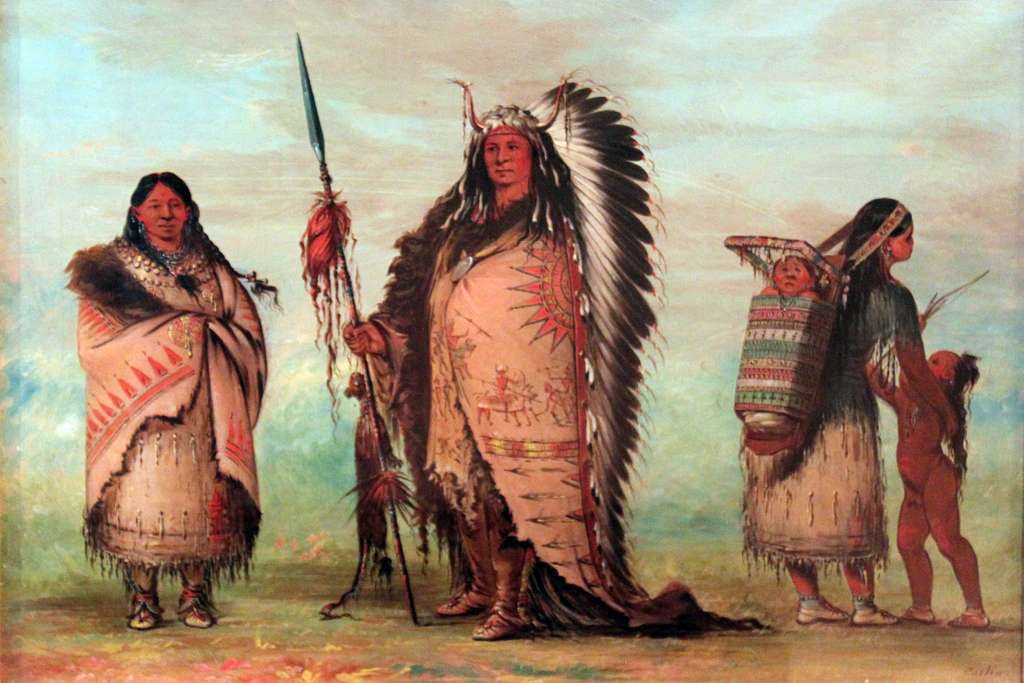
The Haudenosaunee system embedded limits on leadership power. Chiefs could be removed for misconduct. Authority flowed upward from clans rather than imposed downward.
This structure contrasted sharply with European hierarchies. American colonists debated fears of tyranny intensely. Indigenous models showing leaders accountable to the people offered tangible examples of restraint. These ideas resonated during discussions about executive power and accountability.
5. Women held political influence absent in Europe.
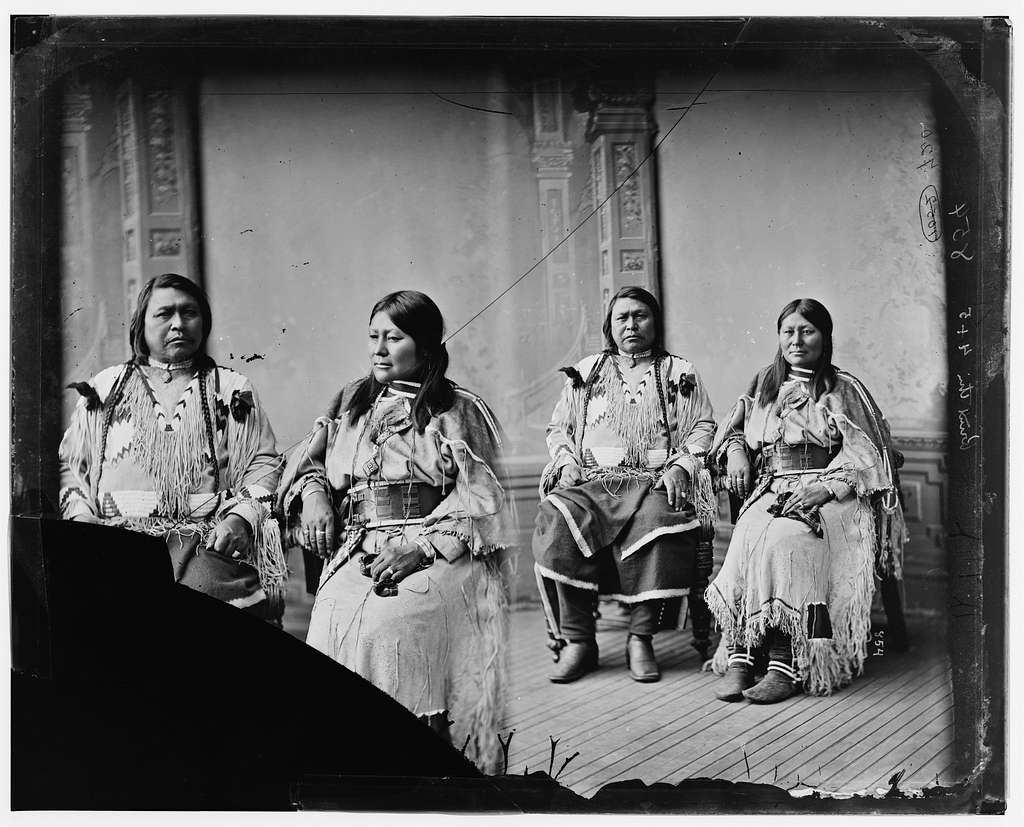
Haudenosaunee women played central roles in governance. Clan mothers selected leaders and influenced decisions. This stood in stark contrast to European exclusion of women from politics.
Colonial observers documented this system with curiosity and discomfort. While American democracy did not replicate gender roles, the existence of female political authority challenged assumptions about governance norms. It exposed colonists to political participation beyond European gender boundaries.
6. Intertribal diplomacy informed confederation debates.

Managing relations among multiple sovereign nations was a Haudenosaunee specialty. Their confederation handled disputes internally to prevent fragmentation. This skill impressed colonial negotiators.
As colonies debated unification, concerns about state autonomy echoed similar challenges. The Confederacy provided an example of layered sovereignty. Its success suggested that unity need not erase local authority, a central tension in early American federalism.
7. Oral law contrasted with written European traditions.

The Great Law of Peace was transmitted orally, reinforced through ritual and memory. Europeans viewed written law as superior. Yet oral systems proved remarkably stable.
American founders struggled with balancing rigid texts against flexibility. Indigenous legal continuity without codification complicated European assumptions. It demonstrated that legitimacy came from shared understanding rather than documents alone.
8. Symbolism influenced American political imagery.
Symbols such as the bundle of arrows represented unity among distinct entities. These images appeared in colonial political discourse and iconography.
American symbols emphasizing unity through diversity emerged during nation building. While not direct copies, Indigenous metaphors circulated widely. They shaped how unity was communicated visually and rhetorically to a diverse population.
9. Enlightenment thinkers engaged Indigenous political ideas.

European philosophers did not develop ideas in isolation. Accounts of Indigenous governance circulated widely in Enlightenment writings. These narratives influenced debates about human nature and society.
American intellectuals consumed these texts alongside classical sources. Indigenous examples expanded the political imagination. They offered evidence that complex democracy existed outside Europe, complicating linear narratives of progress.
10. Modern scholarship confronts resistance and controversy.

Reexamining Indigenous influence disrupts established national myths. Some scholars resist revising familiar stories. The debate itself reveals unresolved tensions.
Historical evidence does not claim direct copying but meaningful influence. Recognizing exchange does not diminish American founders. It situates democracy within a broader human context. The reassessment continues to evolve as archives and perspectives expand.