
The ground beneath us keeps changing history.
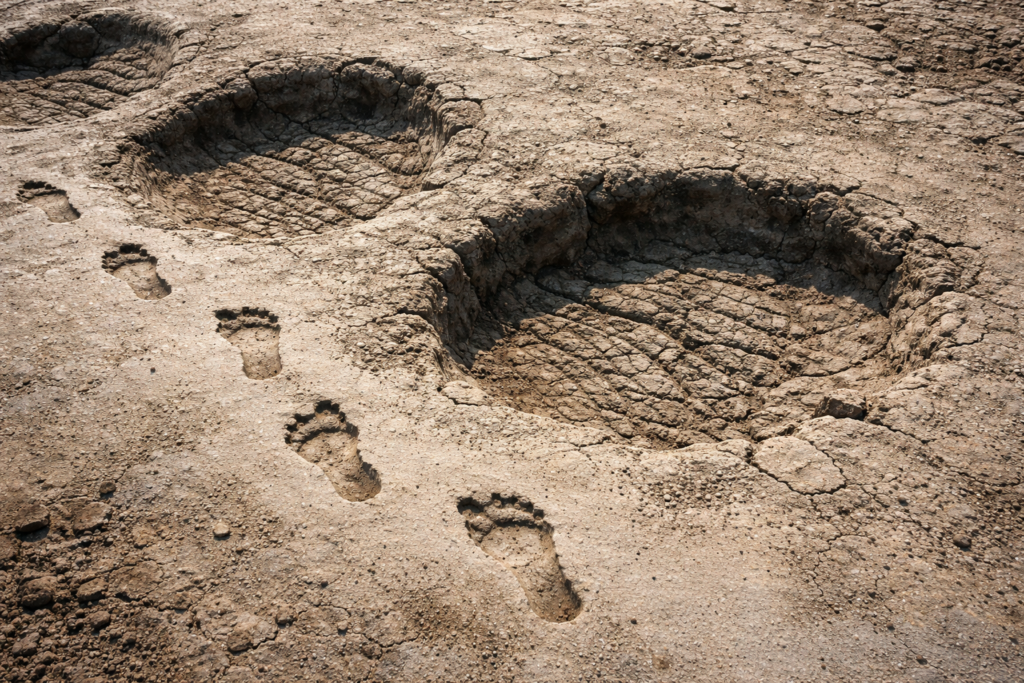
In a remote stretch of southern New Mexico, ancient footprints are forcing scientists to rethink what daily life looked like during the last Ice Age. Preserved in layers of dried lakebed sediment, the tracks show small children moving across the landscape alongside some of the largest animals ever to roam North America. The discovery raises difficult questions about survival, risk, and family life in a world dominated by megafauna. What these prints capture is not a hunt or a disaster, but something quieter and more unsettling.
1. The footprints were found at White Sands National Park.
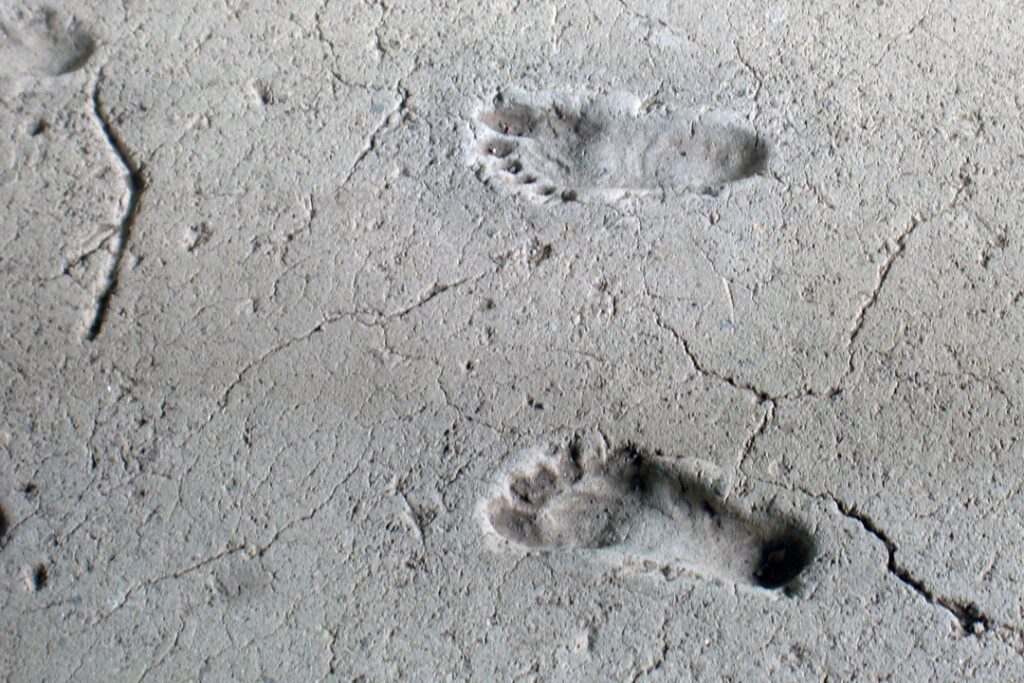
The tracks emerged from ancient lakebed sediments exposed by erosion and shifting sands. Their fragile nature meant they were visible only under specific moisture and light conditions. Once documented, they vanished again beneath the surface, creating urgency among researchers.
White Sands National Park preserves layers of gypsum and clay that once bordered a massive Ice Age lake. Scientists mapped thousands of footprints before reburial. The location provides rare preservation conditions that capture fleeting moments rather than tools or bones, offering a direct record of movement.
2. Radiocarbon dating places the tracks deep in the Ice Age.
Dating these footprints carried high stakes. If incorrect, conclusions about early human presence would collapse. Multiple dating methods were applied to surrounding sediment layers to reduce uncertainty.
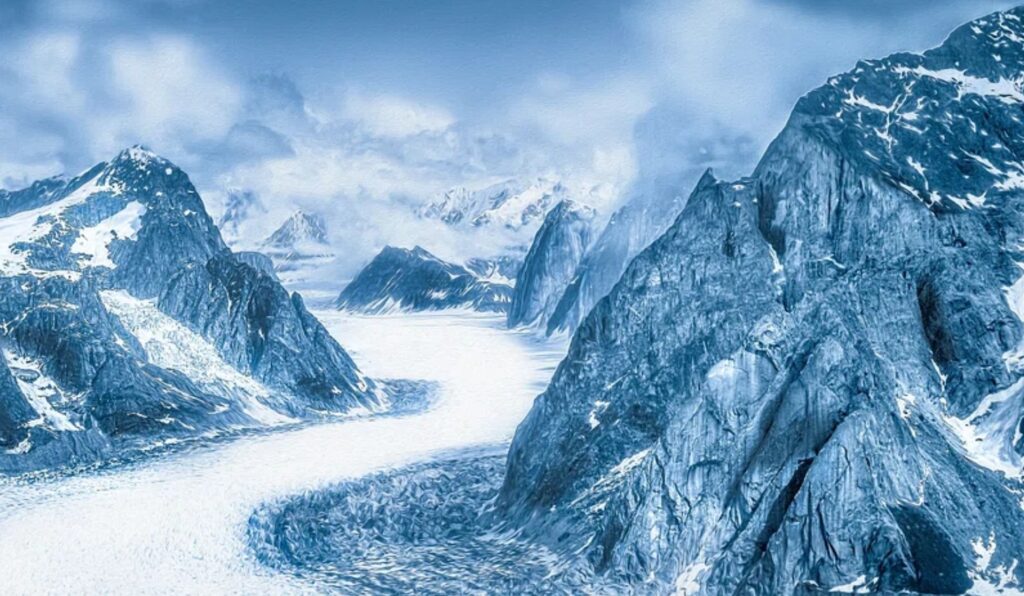
The results consistently place the footprints between roughly twenty one thousand and twenty three thousand years ago, or about 23,000 to 21,000 BCE. That period aligns with the Last Glacial Maximum, when ice sheets dominated northern North America. Survival pressures were extreme, making the presence of children especially consequential.
3. Many of the human footprints belong to children.
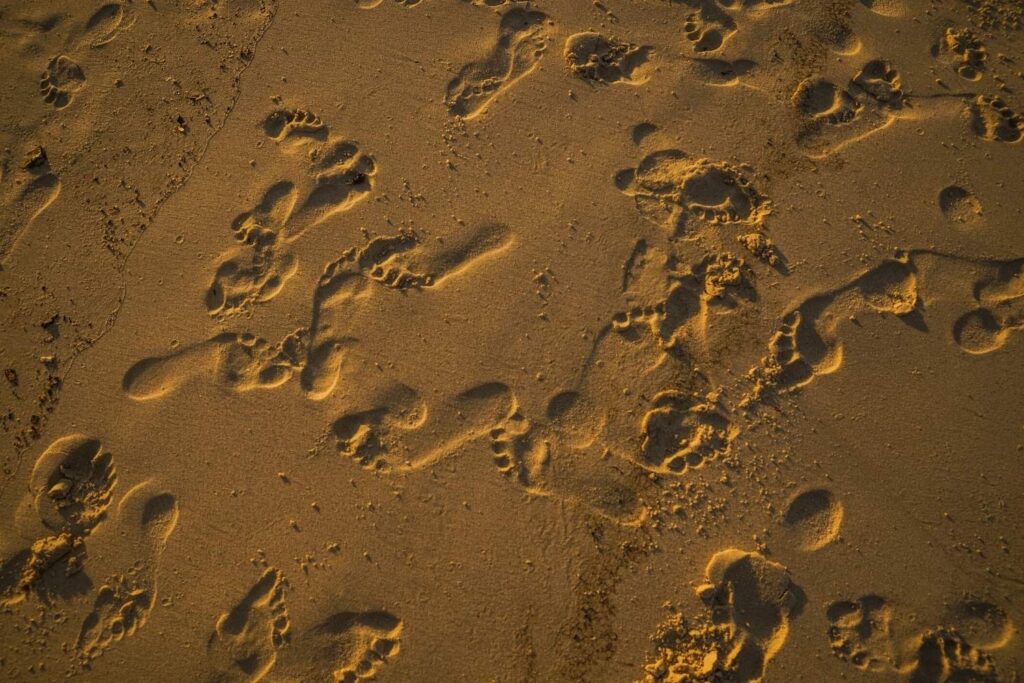
Foot size and stride length reveal that many track makers were very young. Some prints indicate toddlers, not adults. That detail complicates assumptions about who traveled across dangerous landscapes.
Children were present during daily movement, not sheltered away. Their involvement suggests family groups rather than specialized hunting parties. This challenges long held beliefs that only adult males engaged with risky environments. The footprints imply shared mobility and exposure across ages.
4. Mammoth tracks appear alongside human prints.

Massive circular impressions left by mammoths intersect with human paths in several areas. The proximity suggests shared timing rather than separate eras layered together.
Mammoths weighed several tons and posed serious danger. The overlapping tracks indicate people moved through the same space shortly before or after these animals. Whether encounters were observed or avoided remains unknown. What is clear is that humans navigated landscapes dominated by megafauna daily.
5. Giant ground sloth prints show unusual movement patterns.

Ground sloth tracks display abrupt turns and defensive postures near human footprints. Some impressions show claw marks and rearing behavior, suggesting awareness of nearby people.
This response hints at interaction rather than coincidence. Sloths may have detected humans and reacted defensively. The evidence suggests people were not invisible to megafauna. Encounters may have been tense, unpredictable, and frequent, even without direct confrontation.
6. The footprints record daily travel, not hunting scenes.
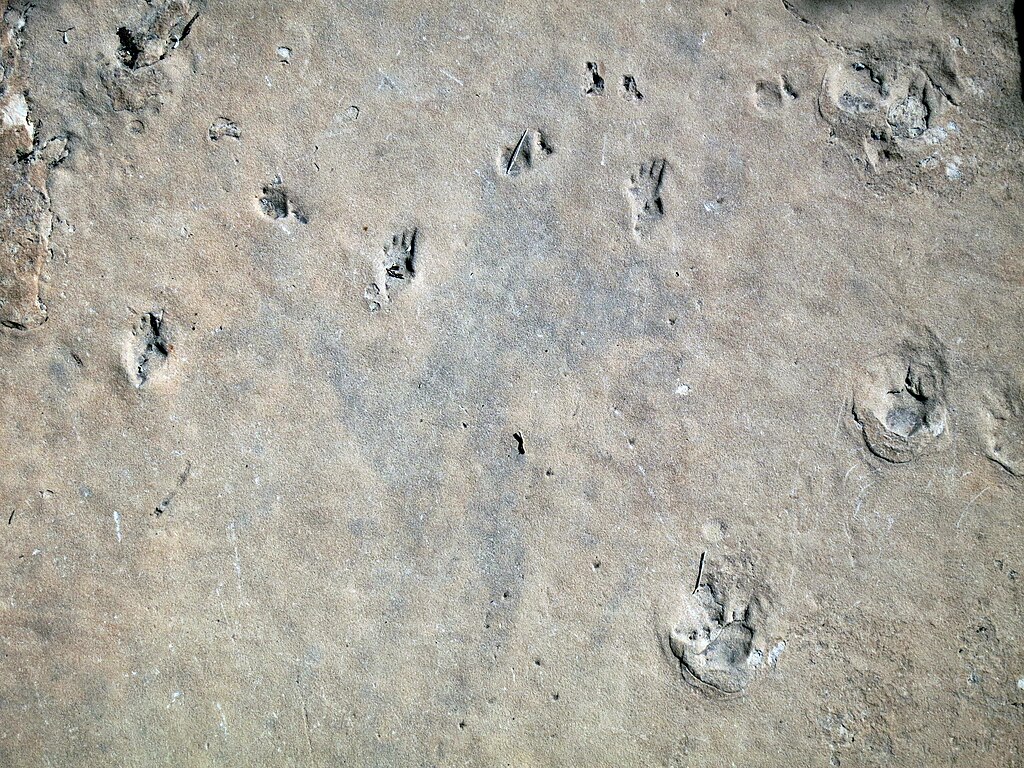
There are no clear signs of pursuit, weapons, or mass movement. Instead, the tracks follow meandering paths consistent with travel across a lakeshore.
This suggests routine activity such as gathering or relocation. The presence of children supports this interpretation. Life during the Ice Age involved constant movement through shared spaces with large animals, not isolated moments of dramatic conflict captured in artifacts.
7. The lake environment shaped where people walked.

At the time, White Sands bordered a shallow freshwater lake. The shoreline offered resources but also concentrated animal traffic. Soft mud preserved impressions before drying into stone.
People and animals favored the same routes for water and food. This overlap increased the likelihood of encounters. Environmental constraints forced coexistence in narrow zones, amplifying risk during ordinary movement rather than exceptional events.
8. The footprints challenge earlier migration timelines.
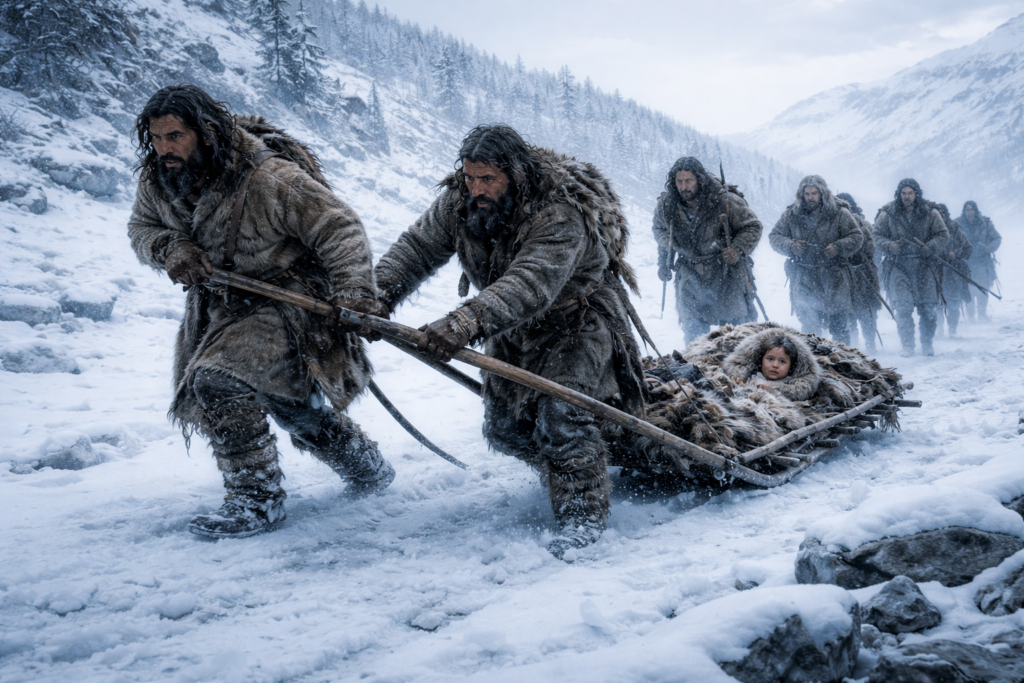
For decades, researchers believed humans arrived later, after glaciers retreated. These tracks contradict that narrative with physical evidence rather than tools.
If humans were present this early, migration routes and timing must be reconsidered. Coastal or southern pathways gain new relevance. The discovery forces a reexamination of how and when people spread across the Americas under extreme climatic conditions.
9. Preservation required rare and unstable conditions.
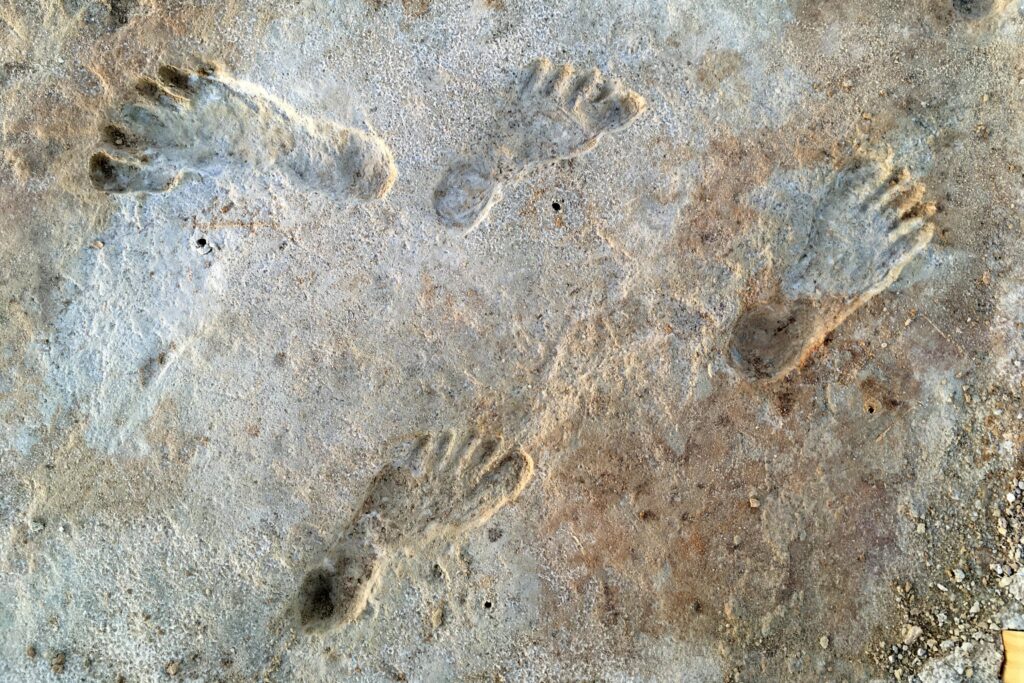
The tracks survived only because of a precise balance of moisture, sediment, and rapid burial. Slight changes would have erased them completely.
This fragility explains why such evidence is rare. Countless similar moments likely vanished without trace. The discovery highlights how much of human history depends on chance preservation rather than absence of activity.
10. The scene captures vulnerability rather than dominance.
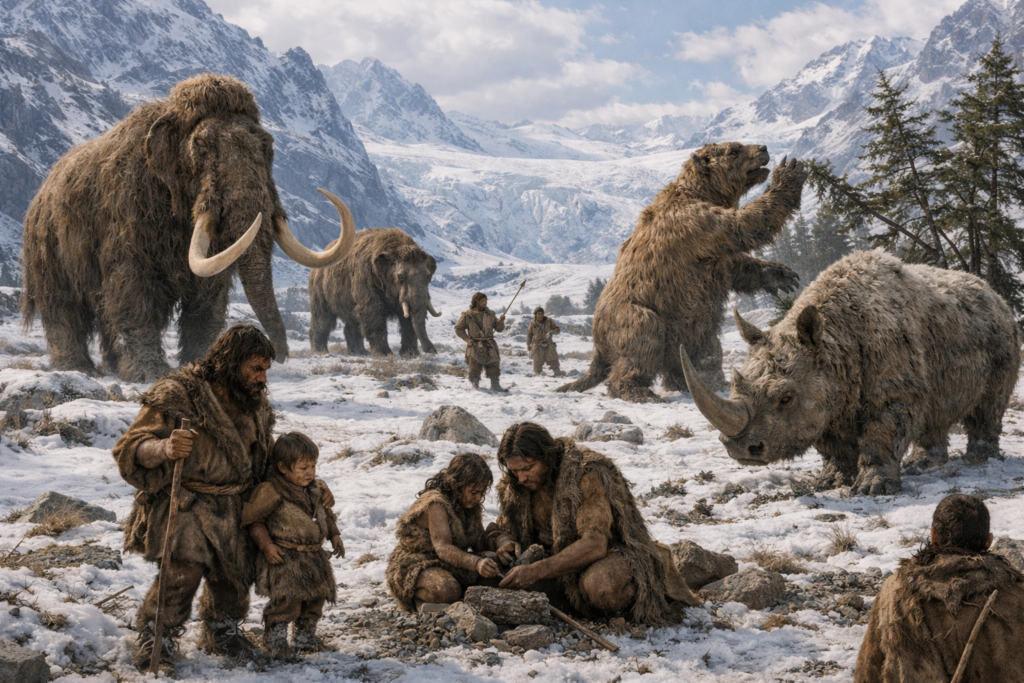
Children walking beside giant animals underscores human fragility. These were not conquerors of the landscape, but participants within it. Risk was unavoidable.
The footprints freeze a moment of coexistence rather than control. They show adaptation, awareness, and exposure. Survival during the Ice Age meant moving through danger together, including the youngest members of the group, in a world where size offered no guarantees.