
Deep underground, the timeline shifted.
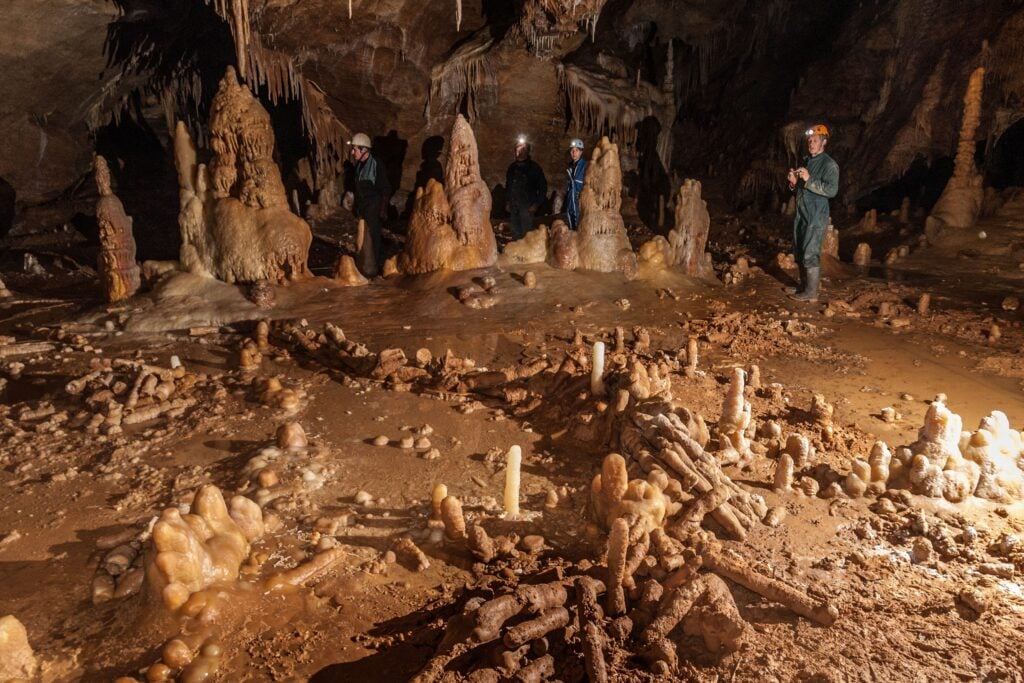
In southwestern France, far beyond daylight and well past the cave mouth where early humans typically left traces, something waited in darkness for more than 170,000 years. When researchers finally measured and dated what lay inside Bruniquel Cave, the numbers did not fit comfortably into the human story. The structure was deliberate, geometric, and far older than expected. If confirmed, it would force archaeologists to reconsider who was capable of complex planning deep underground long before modern humans arrived in Europe.
1. The rings were dated to 176,000 years.
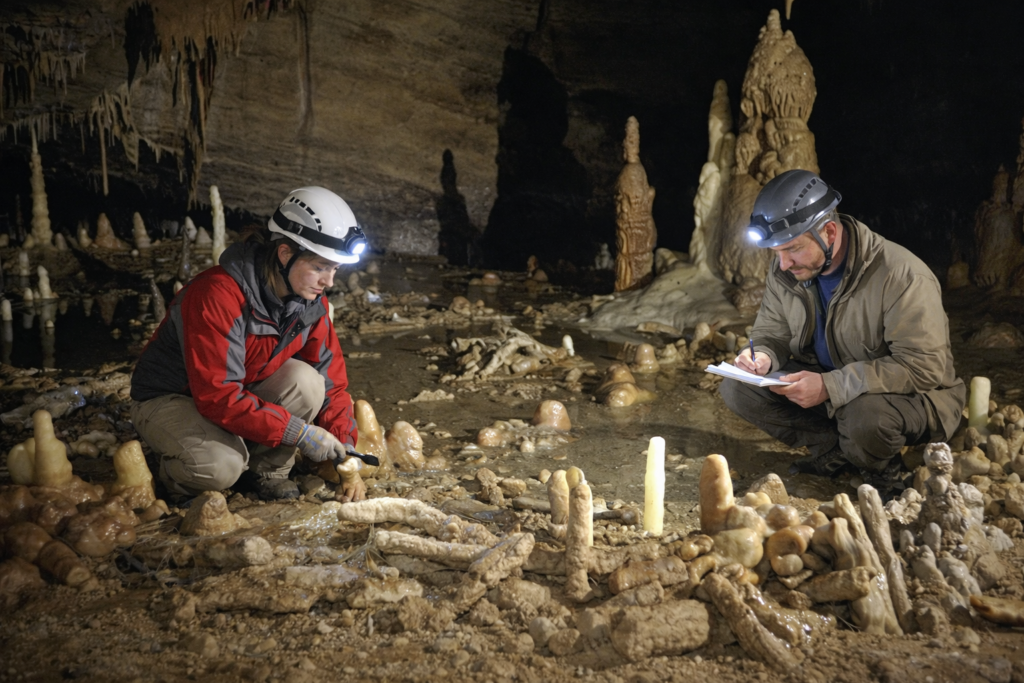
Deep inside Bruniquel Cave in southern France, researchers found nearly 400 broken stalagmites arranged in circular formations. Uranium thorium dating placed the construction at approximately 176,000 years old, long before Homo sapiens entered Europe. According to Nature, the study led by Jacques Jaubert confirmed the structures were intentionally built by Neanderthals.
The dating relied on calcite deposits that formed after the stalagmites were placed, locking in a minimum age. That timeline stunned researchers because it demonstrated complex underground activity more than 100,000 years earlier than previously documented for such behavior.
2. Bruniquel Cave lies far beyond natural light.
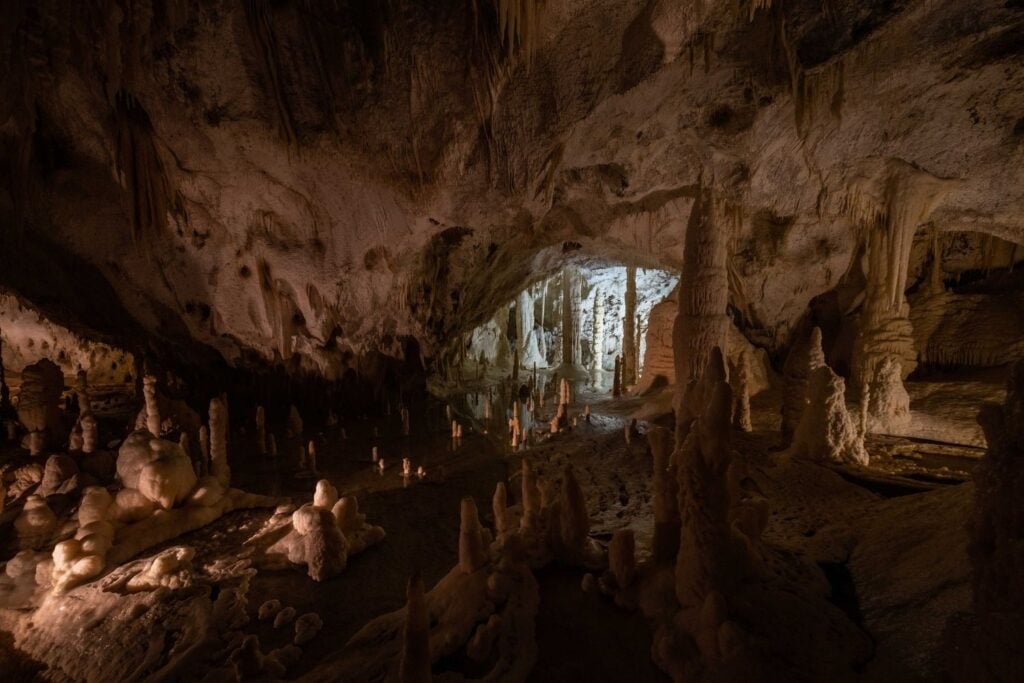
The formations sit roughly 336 meters from the cave entrance, well past any penetration of sunlight. Reaching that depth requires deliberate navigation through darkness, uneven surfaces, and confined passages. As reported by BBC News, soot marks and burned bones indicate controlled fire use deep inside the cave.
This distance matters because accidental gathering or casual shelter is unlikely at such depth. The location suggests intentional planning, coordinated movement, and sustained lighting, implying a level of logistical preparation that reshapes how Neanderthal capability is evaluated.
3. Nearly four hundred stalagmites were carefully arranged.
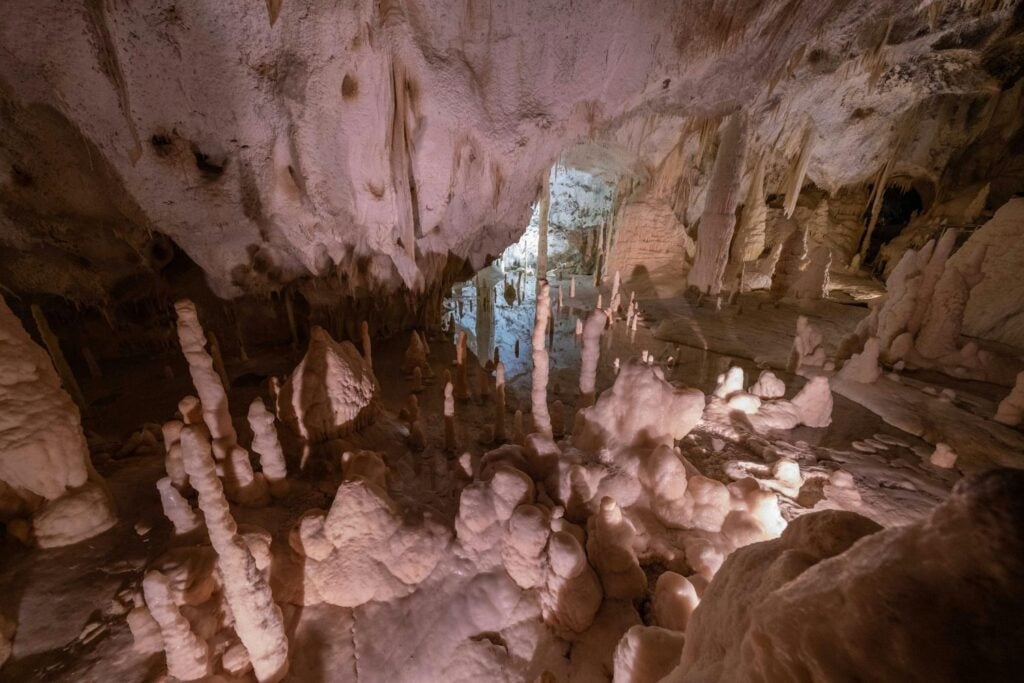
The structures consist of broken stalagmite sections, some stacked and aligned to form two large rings and several smaller piles. Researchers calculated a total length exceeding 112 meters of arranged material. As discovered by Smithsonian Magazine, many pieces were standardized in size, suggesting selective breaking and deliberate placement.
Heat altered surfaces show exposure to fire, and some fragments were wedged to stabilize others. The arrangement does not resemble collapse or natural formation. It reflects measured construction, raising questions about purpose and intent within a cave system sealed for millennia.
4. Fire traces reveal controlled underground lighting.
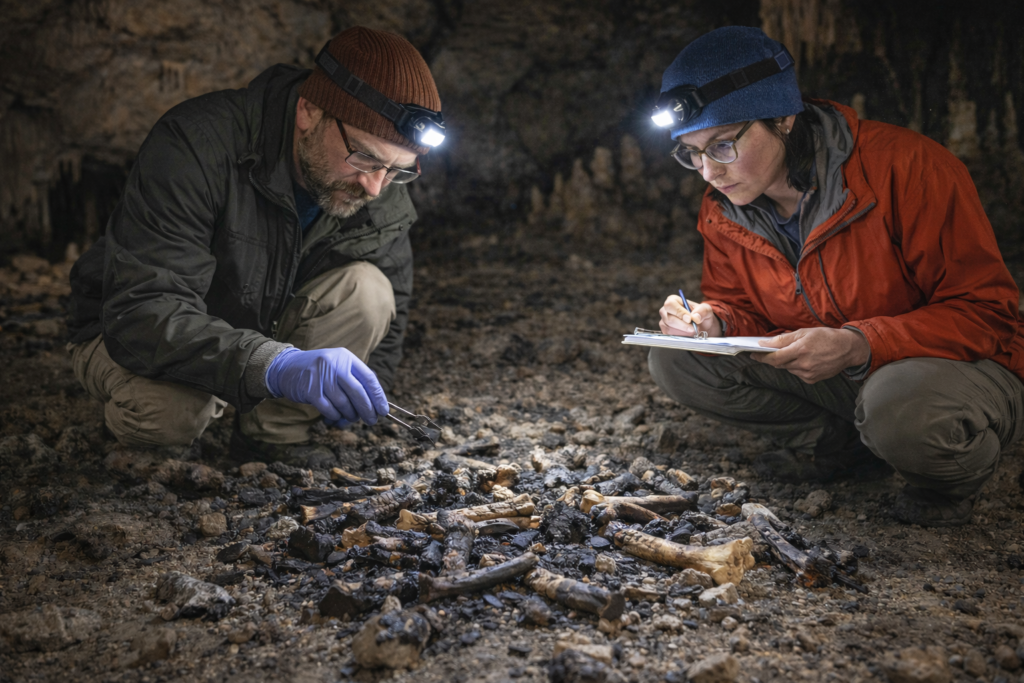
Burn marks on stalagmites and surrounding calcite show that fires were lit at specific points within the rings. Charred bone fragments were found embedded in mineral deposits, preserved by time.
Maintaining fire deep underground would have required fuel transport, airflow awareness, and coordination. Smoke accumulation alone presents hazards. The evidence suggests Neanderthals managed these risks intentionally, reinforcing the idea that the space served a structured function rather than a fleeting visit.
5. The cave entrance was naturally sealed.
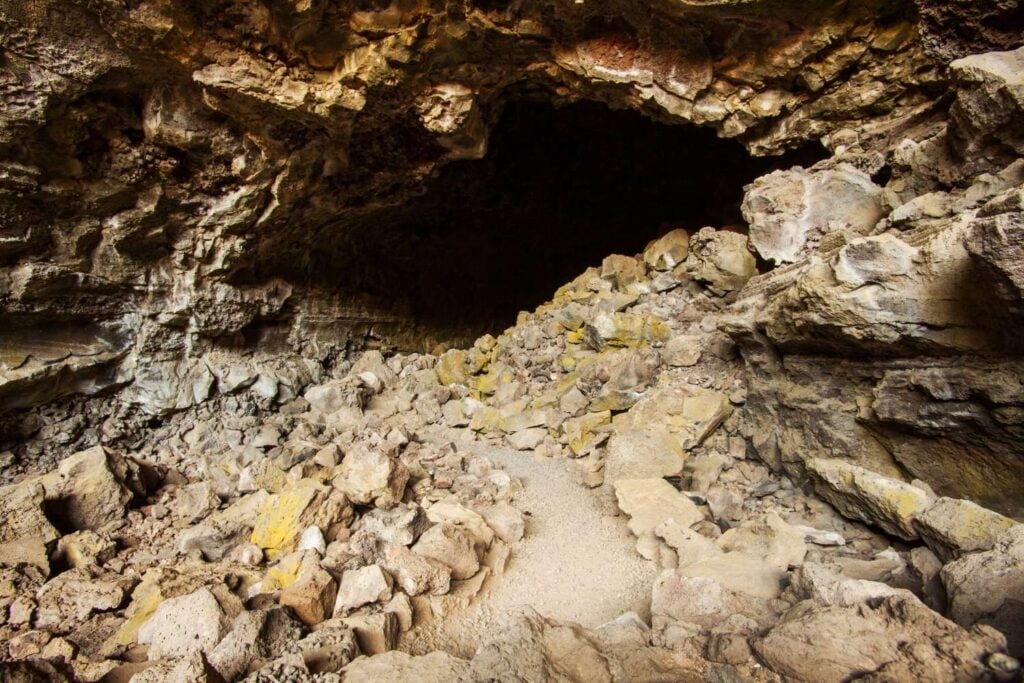
Bruniquel Cave’s entrance collapsed thousands of years ago, sealing the site from disturbance. When it was rediscovered in 1990 by Bruno Kowalczewski, the interior had remained largely untouched.
This natural sealing preserved the structures in situ, protecting them from later human interference. The isolation strengthens confidence in dating and attribution, eliminating the possibility that later Homo sapiens groups constructed the formations.
6. Construction required coordinated group effort.

Moving and arranging hundreds of stalagmites deep underground implies cooperation. Individual effort alone would struggle to transport and position the total volume of material recorded.
Researchers estimate the weight of moved calcite exceeded two tons. Coordination, shared purpose, and possibly division of labor would have been necessary. This level of organization challenges earlier portrayals of Neanderthals as opportunistic or minimally social.
7. No domestic debris surrounds the structures.
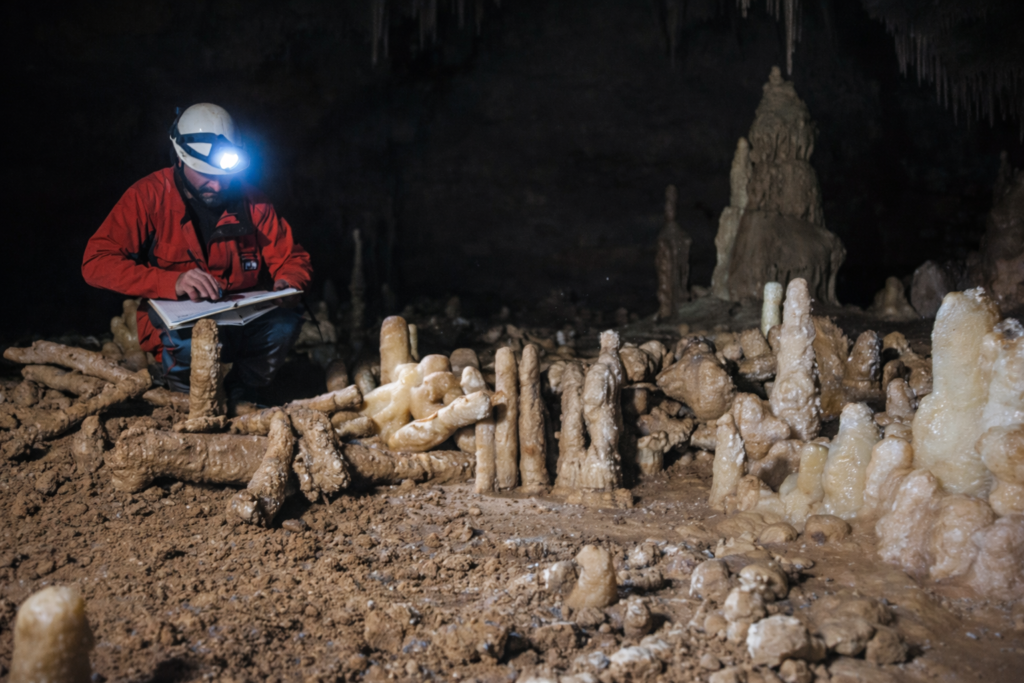
Unlike habitation sites, Bruniquel lacks typical signs of long term occupation. There are no extensive tool scatters, food waste layers, or sleeping areas nearby.
The absence of everyday debris suggests the cave rings were not built for shelter or routine living. Their separation from domestic activity hints at a specialized function, potentially symbolic or communal, though definitive interpretation remains debated.
8. Symbolic behavior can no longer be dismissed.

For decades, symbolic thinking was largely attributed to Homo sapiens. The Bruniquel structures complicate that boundary.
Deliberate geometry, standardized material selection, and deep cave placement imply abstract intention. While purpose remains uncertain, the act of constructing something not tied to survival alone opens discussion about ritual, gathering, or shared meaning among Neanderthals.
9. The timeline predates modern humans in Europe.

Modern humans arrived in Europe roughly 45,000 years ago. The Bruniquel construction predates that by more than 130,000 years.
This eliminates Homo sapiens influence and firmly places responsibility with Neanderthals. The gap in time underscores how independently these behaviors developed, reshaping assumptions about cognitive hierarchy between species.
10. Bruniquel forces a reconsideration of Neanderthal capacity.

The structures at Bruniquel Cave stand as physical proof of planning, cooperation, and environmental control at a surprisingly early date.
Deep underground, far from sunlight, Neanderthals organized material, managed fire, and constructed forms that endured for nearly 176,000 years. The implications extend beyond one cave in France, pressing archaeologists to reevaluate what defines complexity in human evolution and who first crossed that threshold.