
The cliff was never meant to face sky.
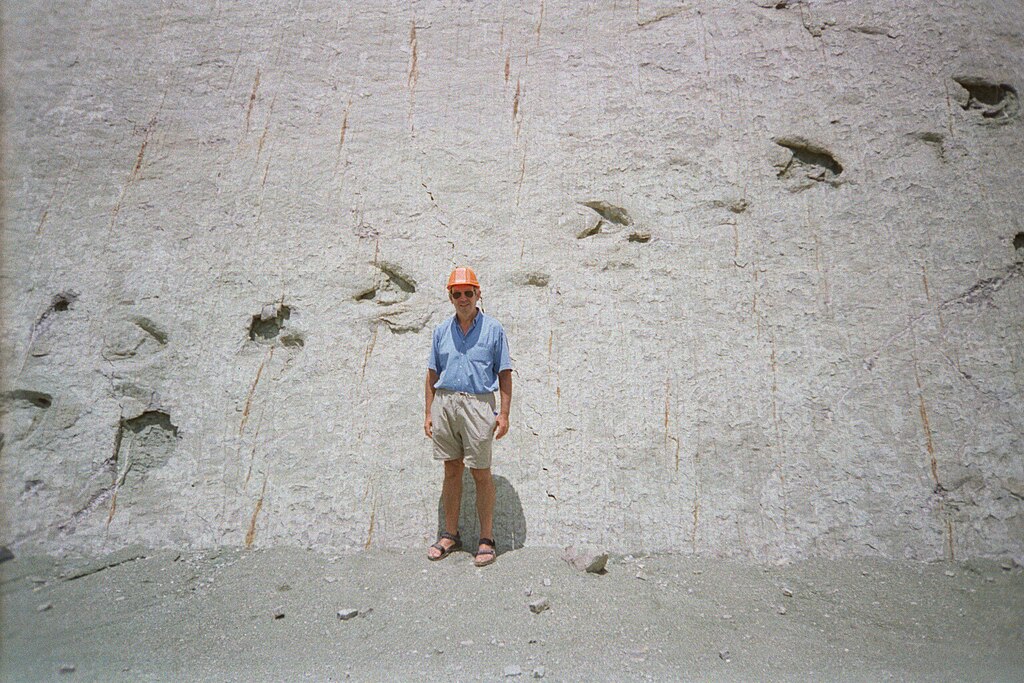
It rises nearly vertical now, a pale wall of stone towering over a modern city. From a distance it looks like an ordinary limestone escarpment, sun bleached and fractured by time. But move closer and the surface begins to shift. Patterns emerge. Lines repeat. Depths vary. The rock stops looking random and starts looking deliberate. Something enormous once walked here. And whatever happened next turned the ground itself on its side.
1. Cal Orck’o cliff towers over Sucre.
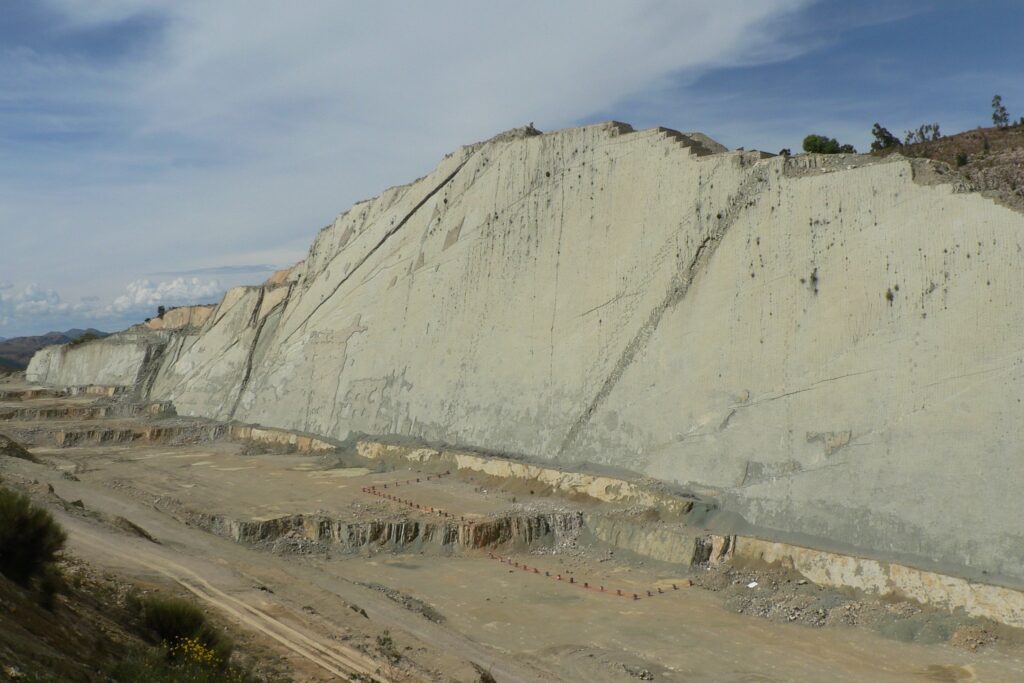
Just outside Sucre in southern Bolivia stands Cal Orck’o, a limestone wall inside Parque Cretácico that rises nearly 80 meters high and stretches roughly 1.5 kilometers long. Today it looks like a vertical rock face.
Sixty eight million years ago, this surface was horizontal mud along the edge of a freshwater lake. During Andean uplift, tectonic compression tilted the sedimentary layers almost upright, preserving what had once been lakebed impressions in dramatic fashion. The cliff sits beside an active cement plant, a reminder of how close industrial activity came to erasing it. Standing at its base, the scale becomes disorienting. What appears small from afar reveals thousands of individual impressions when viewed up close.
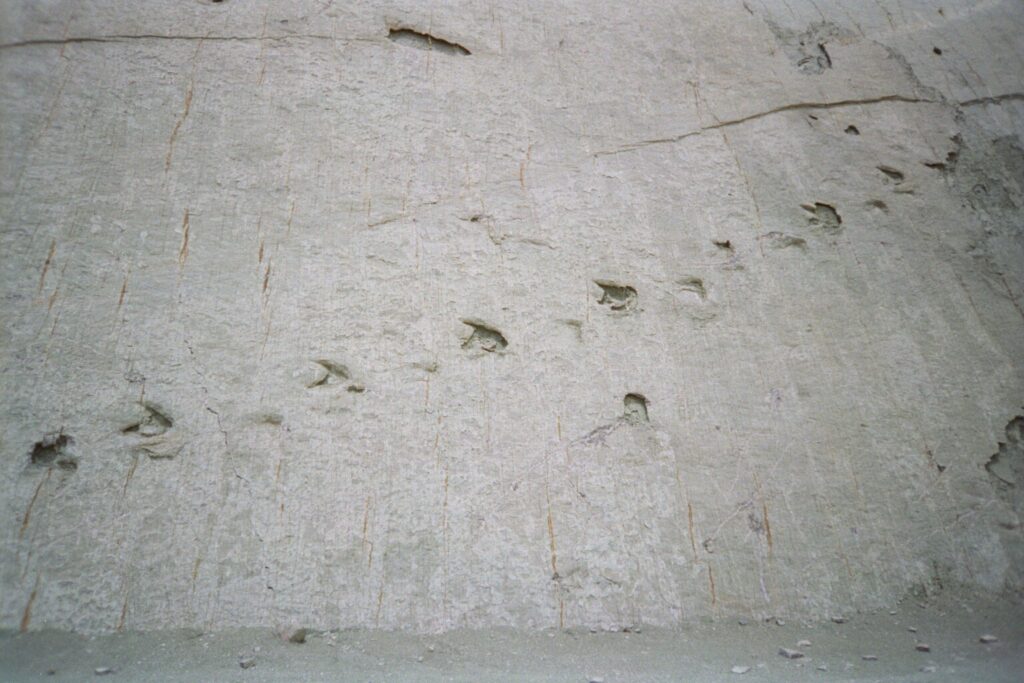
2. More than 18,000 tracks cover surface.
Researchers have documented over 18,000 individual dinosaur footprints across the exposed limestone. The sheer density is staggering, making Cal Orck’o one of the most extensive dinosaur track sites ever recorded.
The impressions overlap in complex sequences, suggesting repeated crossings over time rather than a single event. Herds likely returned seasonally to the same shoreline, each visit layering new tracks atop older ones in soft mud. Some sections resemble crowded intersections frozen in stone. Others display long uninterrupted paths stretching dozens of meters. The variety in depth and spacing offers clues about weight, speed, and group behavior.
3. The site dates to Late Cretaceous.
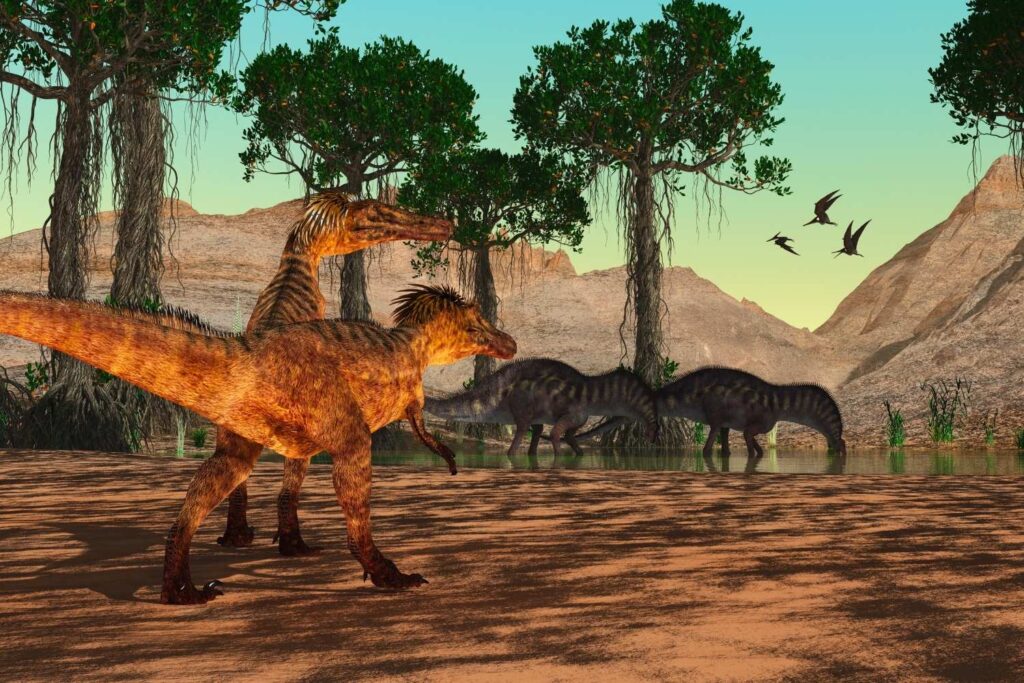
Geological dating places the tracks in the Maastrichtian stage of the Late Cretaceous period, approximately 68 million years ago. This was among the final chapters before the extinction event that ended the reign of non avian dinosaurs.
At the time, the region formed part of a vast inland basin in what is now South America. Lakes, wetlands, and floodplains dominated the landscape, providing ideal conditions for preserving footprints in fine grained sediment. The mud would have been soft enough to capture detail but firm enough to hold shape. Later sediment layers sealed the impressions beneath protective cover. Without that burial, none of this would have survived.
4. Multiple dinosaur groups left their marks.
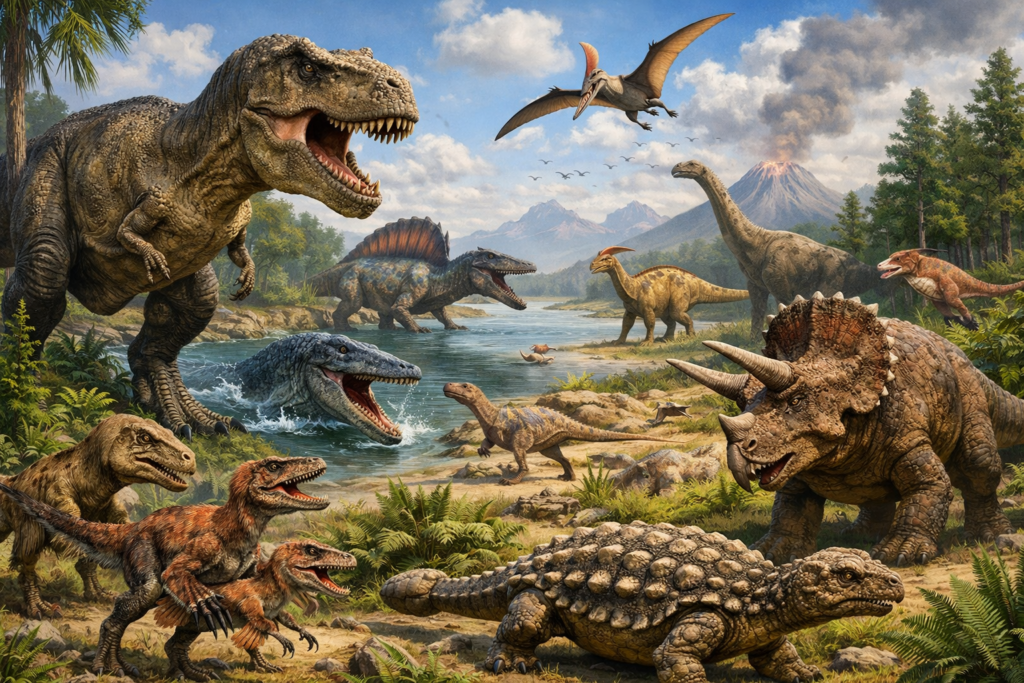
At least eight distinct dinosaur groups are represented at Cal Orck’o. Sauropods, theropods, ornithopods, ankylosaurs, and ceratopsian relatives all appear in the fossilized record.
Some sauropod footprints exceed 60 centimeters in diameter, indicating immense long necked herbivores. Smaller three toed tracks reveal carnivorous theropods moving across the same terrain, their prints sharper and more deeply impressed in places. Distinct heel shapes help paleontologists distinguish species groups. Variations in stride length suggest animals of different sizes traveled here. The diversity points to a vibrant and layered ecosystem.
5. Sauropod trackways dominate certain sections.
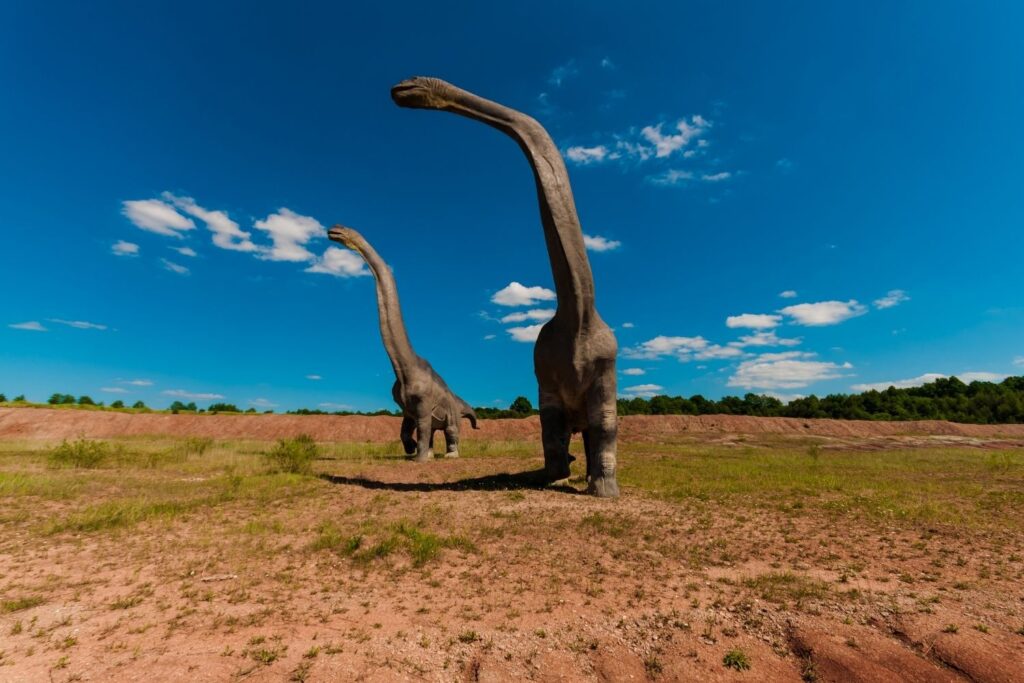
In several areas, parallel sauropod trackways run in near unison across the rock face. The spacing between prints and stride length suggest coordinated movement.
These parallel paths imply herd behavior rather than solitary travel. The repeated alignment of large, rounded impressions hints at social structure among massive plant eaters moving together along the lake margin. Some tracks form continuous lines stretching more than 300 meters. The uniform direction suggests shared purpose rather than random wandering. That level of coordination speaks to complex group dynamics.
6. Carnivorous tracks show sudden direction changes.
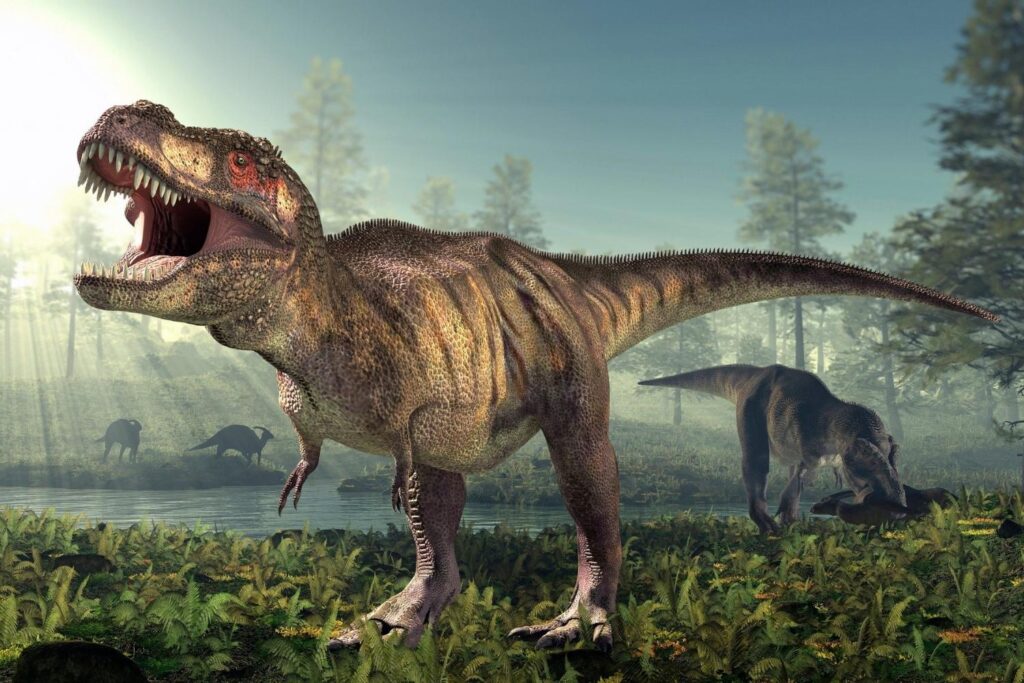
Theropod tracks cut sharply across other footprints, sometimes veering abruptly. The three toed impressions vary in size, suggesting different predator species or age groups.
Some trackways curve dramatically, as if the animal altered direction quickly. Whether pursuing prey or navigating uneven ground, these patterns preserve moments of movement frozen mid decision millions of years ago. A few prints appear deeper at the front, indicating forward momentum. The angle of toe spread can hint at balance shifts. Even subtle variations tell stories of tension and speed.
7. Tectonic uplift flipped lakebed upright.
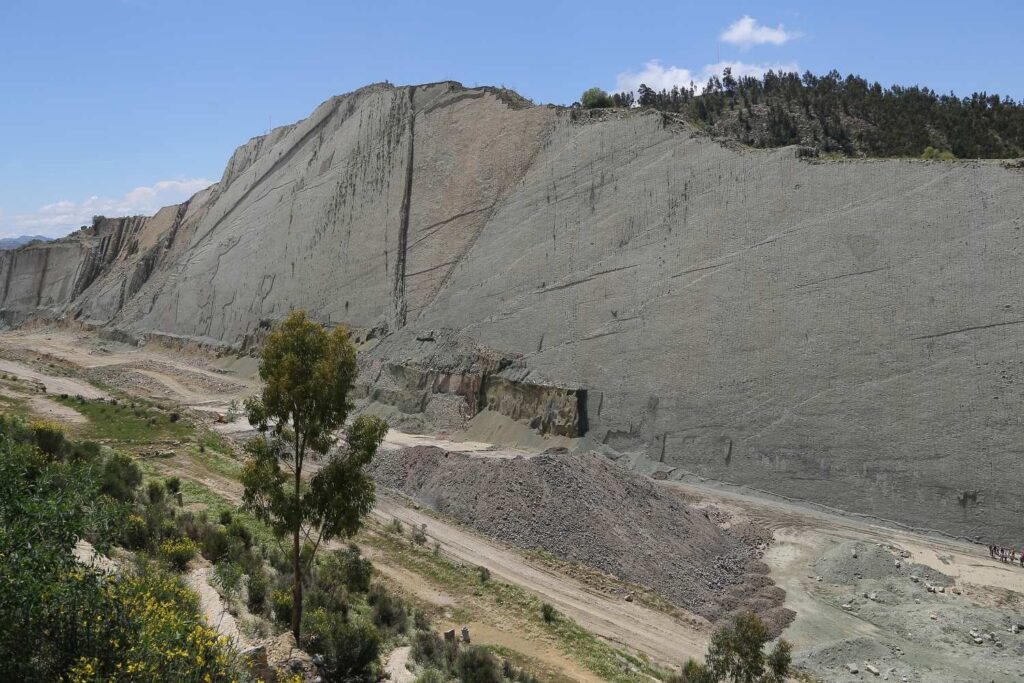
The Andean orogeny reshaped much of western South America. Intense geological forces compressed sedimentary basins, lifting and tilting layers that had accumulated over millions of years.
Cal Orck’o is the result of this immense tectonic pressure. What was once flat shoreline sediment became a towering vertical wall, turning ancient ground into a natural display of preserved behavior. The near vertical orientation reaches about 72 degrees in some sections. Without this tilt, many tracks might have remained buried indefinitely. The geological violence paradoxically became an act of preservation.
8. Cement quarry operations revealed cliff.
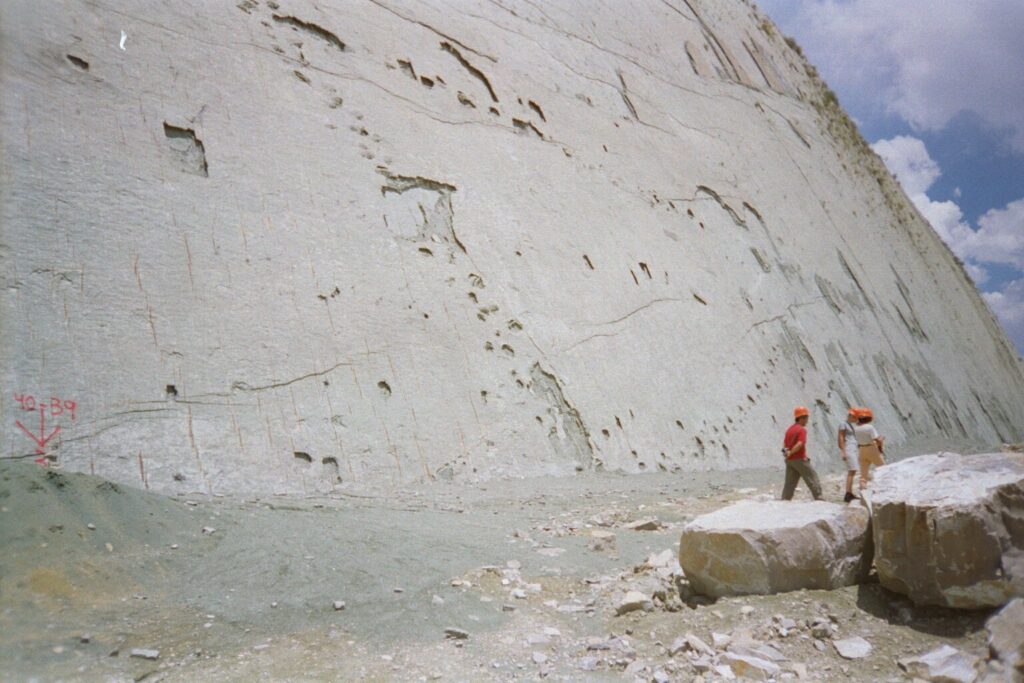
In the 1990s, workers at a nearby cement quarry exposed large sections of the footprint bearing rock while extracting limestone. The unusual impressions quickly drew scientific attention.
Rather than destroy the site, local authorities and paleontologists collaborated to protect it. The exposure created by quarrying inadvertently unveiled one of the most important dinosaur track discoveries in South America. Researchers raced to document tracks before erosion advanced. Protective barriers were installed to limit direct damage. The balance between industry and preservation remains delicate.
9. Parque Cretácico protects the formation.
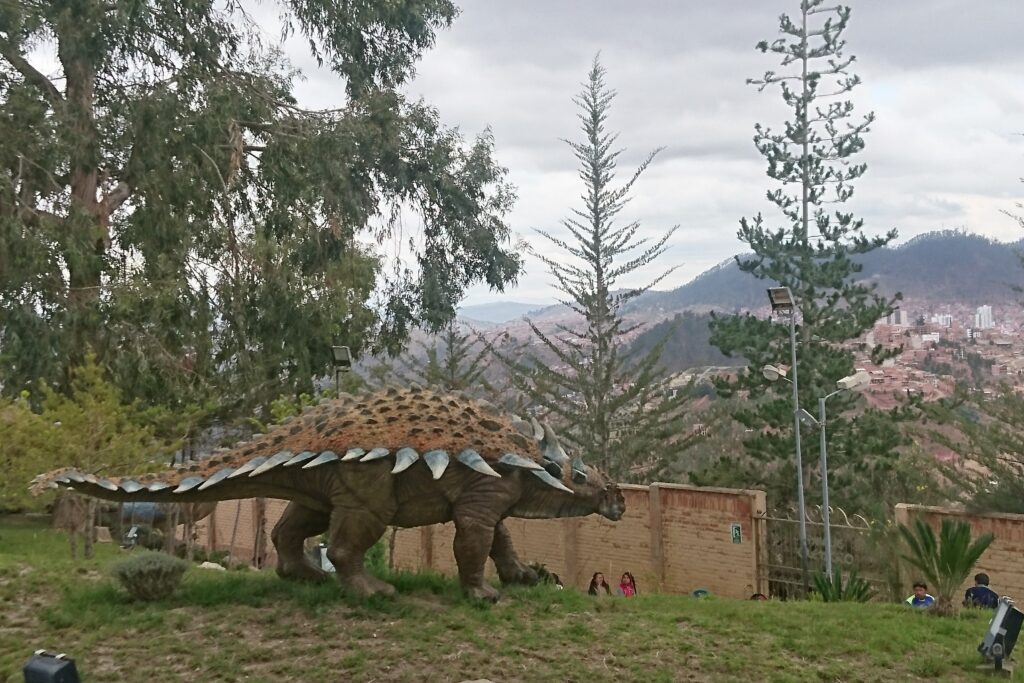
To safeguard the site, Bolivia established Parque Cretácico adjacent to Cal Orck’o. Viewing platforms allow visitors to observe the tracks without directly contacting the fragile rock surface.
Ongoing research continues at the site, with teams mapping trackways and analyzing sediment layers. Preservation remains a priority, as erosion and environmental stress pose long term challenges. Educational exhibits explain how footprints form and fossilize. The park has become a scientific landmark for the region. Its existence reflects growing recognition of paleontological heritage.
10. The cliff reshapes dinosaur ecosystem models.
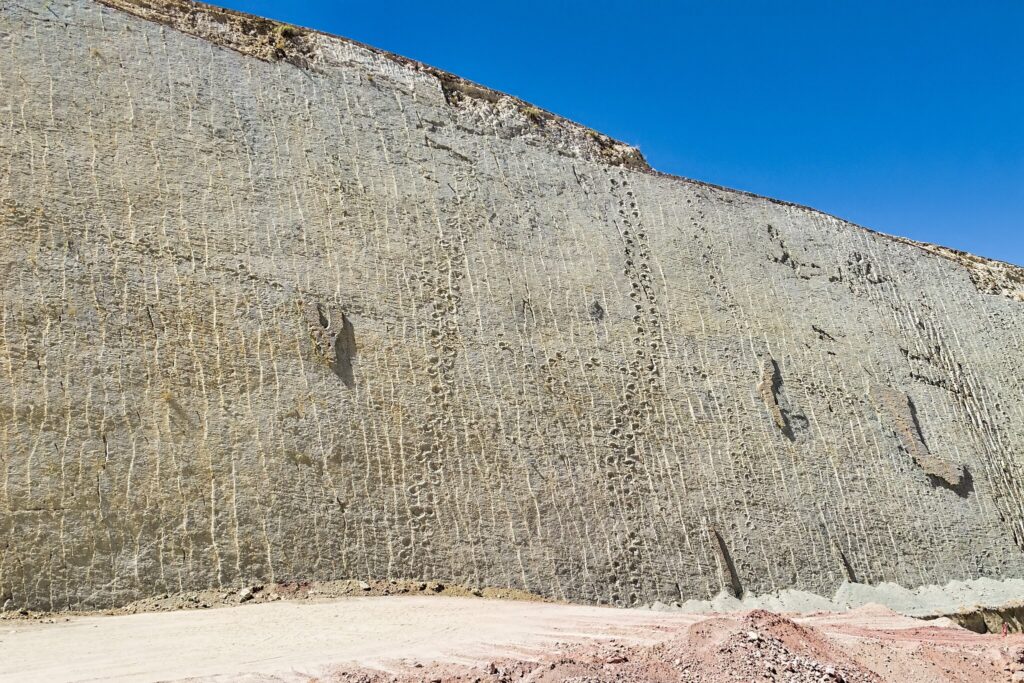
Cal Orck’o challenges earlier assumptions about Late Cretaceous ecosystems in South America. The diversity and density of tracks indicate a thriving environment with complex species interactions.
Rather than isolated individuals, the site reveals dynamic movement across a shared landscape. Herding behavior, predator pathways, and repeated shoreline use suggest a rich, active ecosystem preserved in remarkable detail. The concentration of tracks rivals famous sites in North America. It reinforces that South America hosted equally complex dinosaur communities. Each footprint adds another piece to a vanished world.