
Let’s reintroduce the dogs you thought you understood.
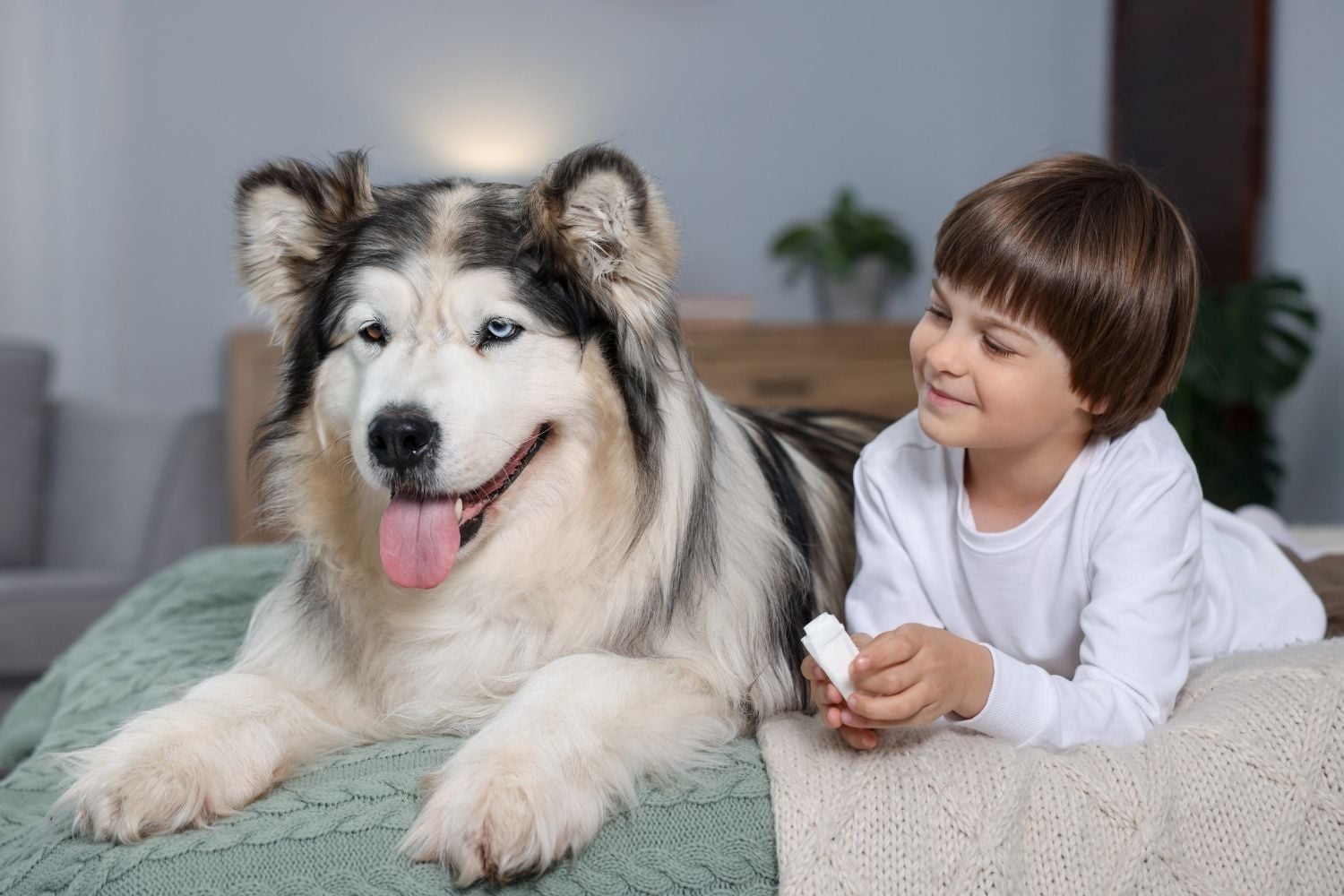
It usually starts with a quick judgment, a glance at size, a quiet assumption about what that must mean. Big dogs carry a reputation that follows them into every room, shaping decisions before they even get a chance to prove anything. But the closer you look, the more those assumptions begin to slip. What feels obvious starts to feel incomplete, even misleading. The real story is not as simple as people make it, and once you see the gaps, it becomes hard to unsee how much has been misunderstood all along.
1. Big dogs are not wired for aggression.

That idea sticks mostly because size feels intimidating at first glance, but it doesn’t hold up once you look at how behavior actually forms. A dog’s temperament comes from training, early socialization, and genetics, not from how large it grows. Many giant breeds move through life with a calm, steady presence that feels more grounded than reactive. They tend to observe before they act, which often gets mistaken for intensity when it’s really just composure.
As stated by St. Hubert’s Animal Welfare Center, breeds like Great Danes and Newfoundlands are widely recognized for their gentle and affectionate nature. When aggression does appear, it usually traces back to fear, inconsistent training, or poor early experiences, not size. Smaller breeds can be far more reactive, yet they rarely carry the same reputation. Once you separate appearance from behavior, the assumption starts to unravel pretty quickly.
2. Small homes don’t automatically rule them out.

It sounds logical to assume a big dog needs a big space, but daily life with many large breeds tells a different story. A lot of them are surprisingly low-key indoors, content to stretch out, nap, and follow the natural pace of the household. They don’t spend their time pacing rooms or demanding constant activity. What matters more is how their energy is managed outside, not how much space they occupy inside.
Breeds like Great Danes and Greyhounds are often described as relaxed and low energy, something many owners come to appreciate over time. As stated by Hobbster Life, they are frequently labeled as couch-oriented dogs that are perfectly happy in smaller living spaces when their basic exercise needs are met. In contrast, a high-energy small dog can feel far more overwhelming in the same environment, which flips the assumption on its head.
3. Owning A Large Dog Will Drain Your Bank Account

It’s easy to assume that the bigger the dog, the bigger the expenses. While food costs may be slightly higher, that doesn’t mean you need to take out a loan to afford a large dog.
According to Big Barker, the most expensive aspect of dog ownership isn’t size, it’s veterinary care. Regular checkups, quality food, and preventative healthcare are essential for any dog, regardless of their stature. Plus, many large dogs are content with a moderate diet that prioritizes quality over quantity. A balanced approach to care keeps costs from spiraling out of control. Responsible ownership means budgeting wisely, no matter your dog’s size.
4. Large Dogs Aren’t Safe Around Kids

If big dogs were inherently dangerous around children, they wouldn’t be some of the most popular family dogs in the world. The truth is, many large breeds are incredibly gentle and patient with kids, often more so than small breeds.
As stated by Help ‘Em Up, breeds like Golden Retrievers, Labradors, and Bernese Mountain Dogs are known for their affectionate and tolerant nature. Any dog, regardless of size, needs proper training and supervision around children. The real risk comes from lack of boundaries and understanding, both from the dog and the child. With structure and guidance, large dogs can become some of the best companions for kids.
5. Giant Dogs Need Endless Exercise

Some people assume that a big dog equals boundless energy. The reality? Some of the biggest breeds are also the laziest. A dog’s exercise needs depend more on breed and personality than their actual size.
Giant breeds like Saint Bernards and Mastiffs are notorious for being relaxed and low-energy. They’re more than happy with a few short walks and some playtime. On the other hand, smaller breeds like Border Collies and Jack Russells demand constant activity. If you want a calm dog that doesn’t need excessive workouts, a larger breed might actually be a better fit. Always consider energy levels over physical size.
6. Big Dogs Aren’t Lap Dogs

Big dogs love to cuddle. Just because they weigh over 100 pounds doesn’t mean they won’t try to be a lap dog. Many giant breeds are incredibly affectionate and crave close contact with their owners.
The idea that big dogs don’t like physical closeness is nonsense. Plenty of large breeds will lean against you, rest their head in your lap, or even try to squeeze onto the couch next to you. If you want a dog that’s always close by, size won’t be a limiting factor. You’ll never have to worry about feeling lonely with a big dog in the house.
7. Big Dogs Automatically Make Great Guard Dogs

Not all large dogs are natural protectors. Some of the most giant breeds are too friendly and trusting to make good guard dogs. Labradors, Golden Retrievers, and Newfoundlands are far more likely to greet an intruder with a wagging tail than a defensive stance.
A true guard dog requires specialized training and the right temperament. While breeds like German Shepherds and Rottweilers can be great for security, size alone doesn’t determine protective instincts. Some small dogs, like Chihuahuas, are far more territorial than many large breeds. Never assume a big dog is a natural watchdog without proper training.
8. Bigger Dogs Have More Health Issues

It’s true that larger dogs are prone to certain conditions like hip dysplasia, but their overall health depends on genetics, breeding, and care. In many cases, purebred dogs, regardless of size, are more likely to have hereditary health issues than mixed breeds.
A responsible breeder who prioritizes health screenings can reduce the likelihood of medical problems. Providing a well-balanced diet, regular exercise, and routine vet checkups plays a much bigger role in a dog’s longevity than just their size. With proper care, many big dogs live long, healthy lives.
9. The Bigger The Dog, The More Destruction They Cause

A dog’s destructive tendencies have nothing to do with their size and everything to do with their environment. Dogs of all sizes can become destructive when they’re bored, anxious, or under-stimulated.
If a large dog is properly trained and given enough mental and physical activity, they’re far less likely to wreck your furniture. Meanwhile, some small dogs, especially those with high energy levels, can be far more destructive if left alone too long.
10. Big Dogs Bark Constantly

It’s actually the smaller breeds that tend to be the biggest yappers. While all dogs bark, many large breeds are quieter by nature and only vocalize when necessary. Their deep, booming barks can be intimidating, but they typically use them sparingly and with purpose.
A breed like a Great Dane or a Mastiff is far less likely to bark obsessively compared to a smaller breed like a Chihuahua or a Dachshund. Training and temperament are much bigger factors in barking behavior than just size alone.
11. Large Dogs Can’t Get Along With Cats

Size has nothing to do with whether a dog can live peacefully with a cat. Proper socialization and training are what truly matter. Many big dogs are more laid-back than smaller, high-strung breeds, making them easier to integrate into multi-pet households.
Many large dogs, especially those with relaxed temperaments, coexist just fine with feline companions. The key is introducing them properly and making sure both animals have their own space.
12. Training A Big Dog Is More Difficult

In many cases, larger dogs are actually easier to train than small ones. Some of the most intelligent and obedient breeds, like German Shepherds, Labradors, and Golden Retrievers, are large dogs. Their eagerness to please and ability to focus for longer periods often make them quicker learners than smaller, more independent breeds.
Training any dog requires consistency, patience, and positive reinforcement. A well-trained big dog is often more predictable and easier to handle than a small dog with an independent streak.
Owning a massive dog isn’t as complicated as people think. With proper training, socialization, and routine care, big dogs make wonderful and devoted companions. Their size doesn’t dictate behavior, expenses, or how much love they have to give. Many large breeds are gentle, affectionate, and surprisingly low-maintenance when their needs are met. With effort, patience, and a little extra space on your couch, they can be just as manageable, if not easier, than smaller breeds.