
Something in these images refuses easy explanation.
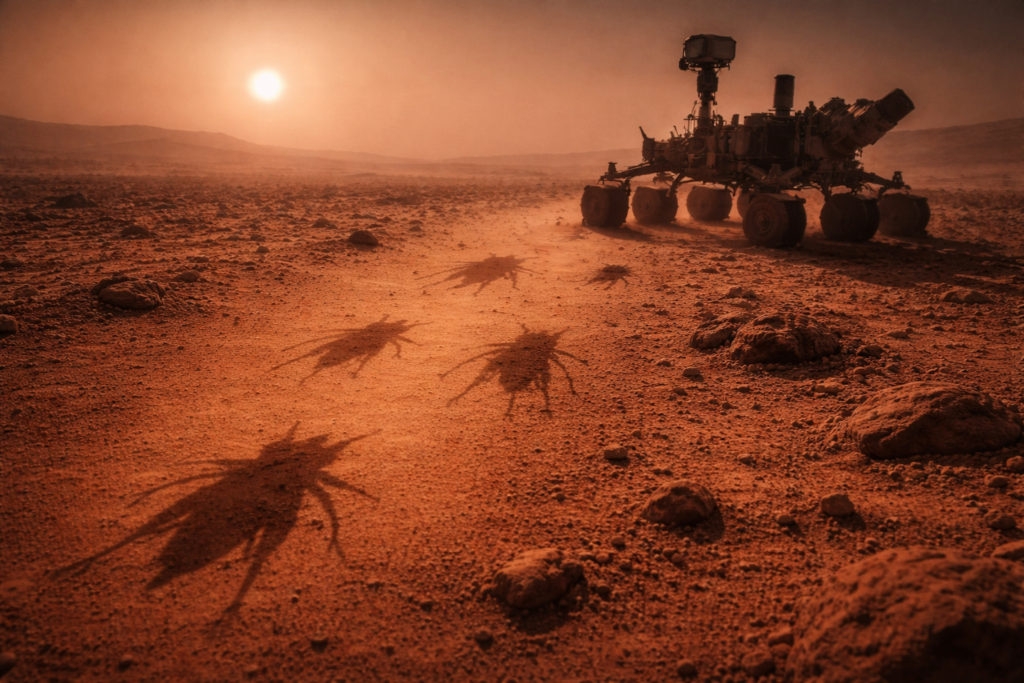
NASA’s Mars rover has been sending back images for years, but a growing group of researchers believes some of those visuals are being read far too conservatively. Shapes, textures, and formations once dismissed as rock or shadow are now being reexamined with a different lens. What’s emerging is not a clear answer, but a rising tension. Because if even a fraction of these interpretations hold, the implications stretch far beyond geology and into something far harder to contain.
1. A researcher reframes images long considered purely geological.
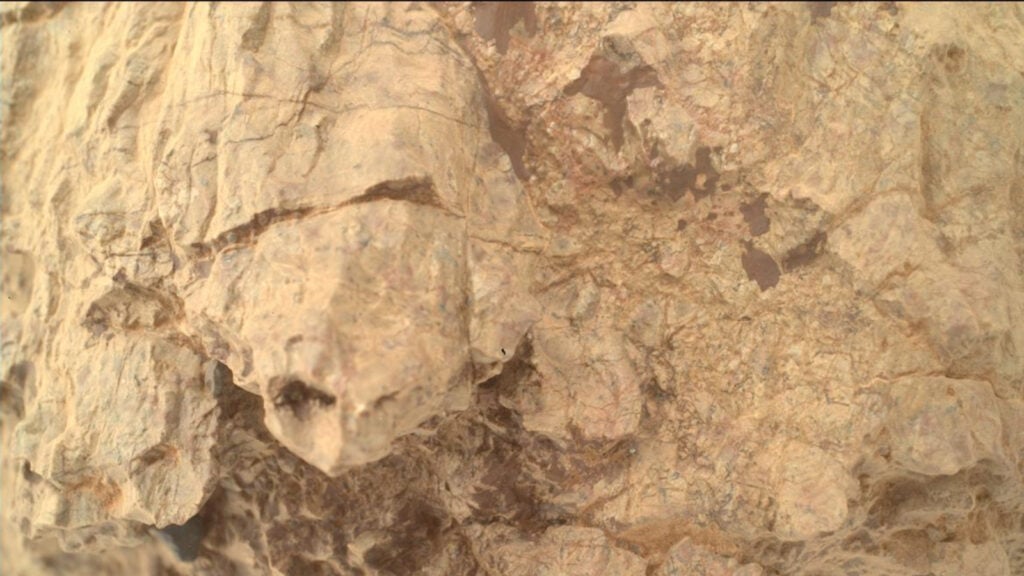
The shift begins with interpretation, not discovery. Images from NASA archives, including Curiosity rover datasets, have existed for years as geological records. But when examined through a biological lens, certain shapes begin to resist simple classification. Symmetry, segmentation, and repeated structures stand out, creating tension between expected terrain features and forms that appear increasingly organized within these widely available but newly scrutinized images.
Ohio University Professor William Romoser made these annotated images public through an Ohio University media release and earlier conference presentations tied to the Entomological Society of America. His materials included circled shapes, zoomed sections, side by side comparisons, and labeled anatomical interpretations highlighting what he describes as insect and reptile like forms embedded within Curiosity rover imagery.
2. Marked up visuals guide the eye toward hidden forms.
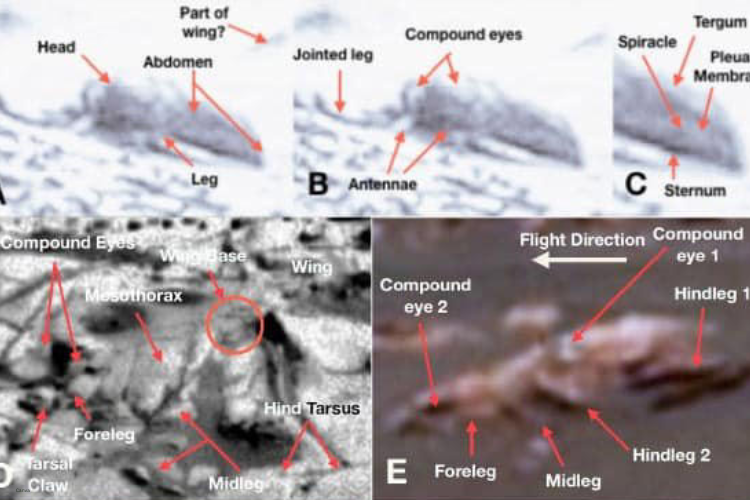
Once the markings are applied, the images begin to shift in meaning. Circles, outlines, and cropped comparisons isolate specific regions, pulling shapes forward that would otherwise remain part of the terrain. Labeled anatomical interpretations add another layer, suggesting where to look for segmentation, appendages, or wing like extensions within otherwise irregular formations.
According to Scientific American, human perception is highly sensitive to suggestion when viewing ambiguous imagery. In these annotated frames, features resembling segmented bodies, jointed appendages, and wing structures become easier to recognize, raising the question of whether these patterns were always present or made visible through guided interpretation.
3. Some shapes appear suspended as if mid motion.
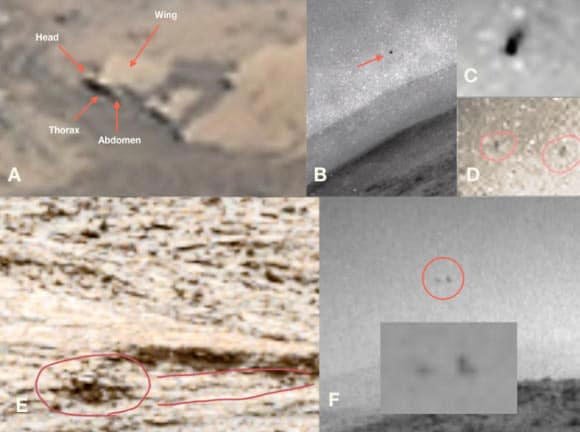
Certain Curiosity rover images introduce a more unsettling possibility. A handful of forms appear slightly elevated or angled in ways that resemble motion rather than rest, creating the impression of movement captured in a single frame. These positions challenge the expectation that all visible features must be static geological structures.
As discovered by NASA image archives, some of these forms appear offset from surrounding terrain in ways difficult to reconcile with flat placement. Romoser interprets these as bee like organisms in flight, describing dive and leveling movements, though the evidence remains based entirely on still imagery rather than continuous observation.
4. Similar structures emerge across distant Martian locations.
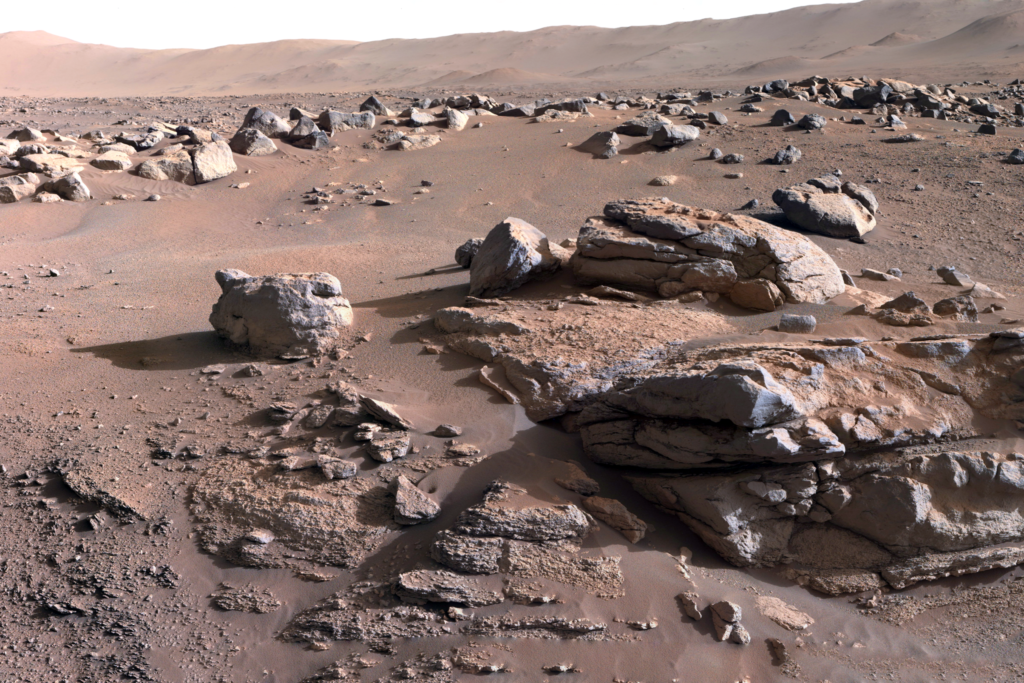
The argument strengthens when similar forms appear across different locations. Comparable shapes, including segmented bodies and thin extensions resembling wings or limbs, have been identified in images taken at separate sites and times. That geographic spread complicates the idea that these are isolated anomalies.
Romoser notes that these repeating forms appear across multiple Curiosity rover image sets, suggesting consistency beyond a single environment. This repetition builds a broader pattern, raising the possibility that these structures are not confined to one area but may reflect something more widespread within the Martian surface record.
5. Close examination reveals eye like formations in pairs.
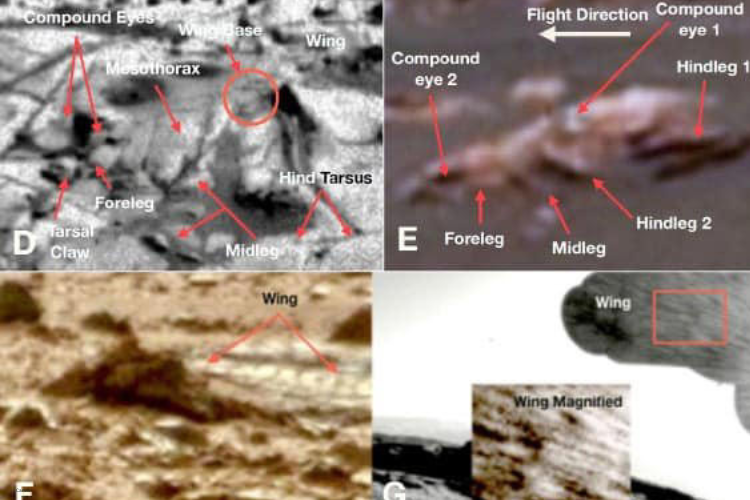
At higher magnification, some formations begin to take on a more specific appearance. Rounded shapes positioned in pairs appear within broader outlines, suggesting head like structures. These features are subtle and often require zoomed perspectives to become visible within the surrounding terrain.
Romoser identifies these as possible compound eyes, pointing to their placement and proportion as consistent with arthropod anatomy. While resolution limits prevent confirmation, their recurrence across multiple annotated images adds another layer to his claim, reinforcing the idea that these forms may share consistent biological characteristics.
6. Surface features are read as possible sheltering sites.
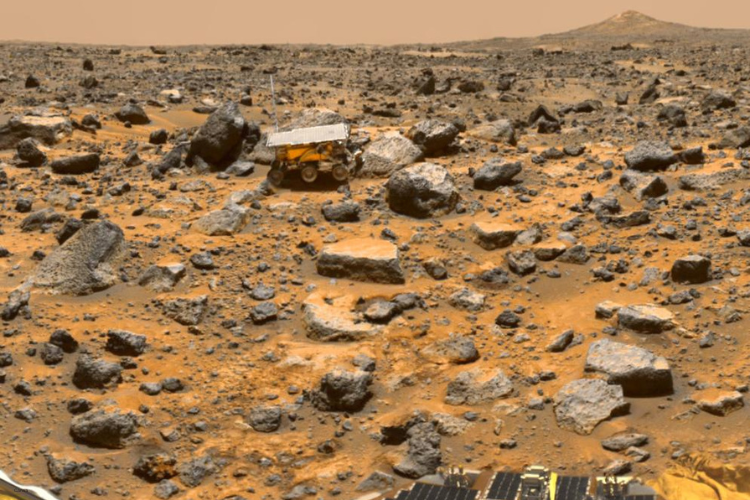
The interpretation expands beyond individual forms into the surrounding landscape. Depressions, cave like openings, and subsurface features are viewed as potential habitats. Some shapes appear partially embedded within these areas, suggesting interaction with the terrain rather than random placement.
Romoser proposes that these features represent nesting or sheltering behavior, describing organisms occupying caves, burrows, or protective structures beneath the surface. This extends the interpretation into behavioral territory, where the environment is not just a backdrop but part of a system that may support activity.
7. Reptile like outlines complicate the insect only narrative.
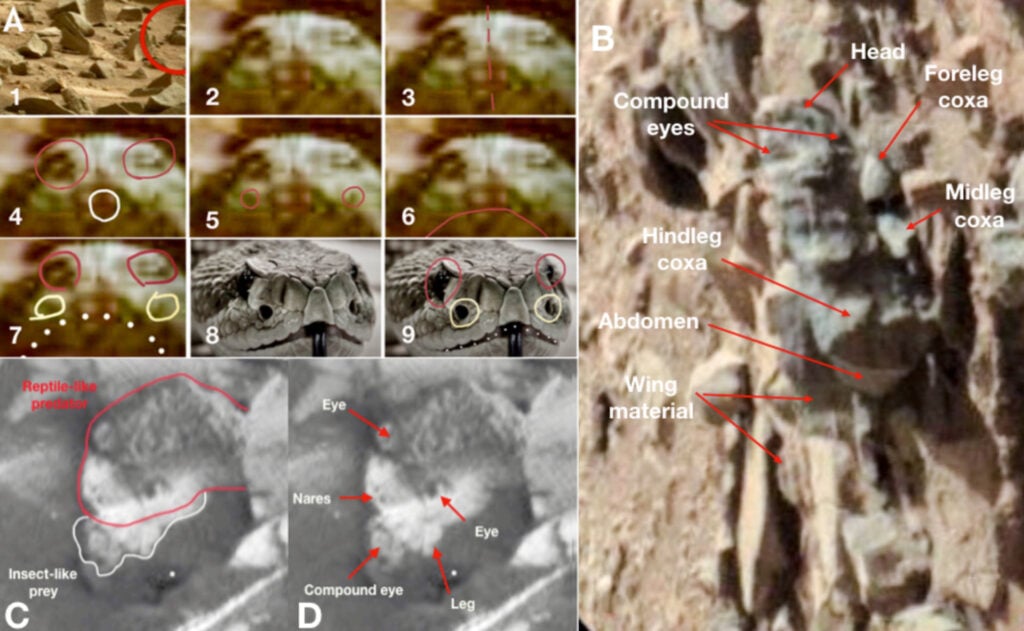
Not all identified forms fit insect like profiles. Some shapes appear thicker and more continuous, with elongated bodies and tail like extensions. These outlines differ from segmented structures, presenting a separate visual category that appears less delicate and more solid in form.
Romoser includes these as reptile like organisms, noting their proportions and positioning within rock formations. Their presence broadens the interpretation beyond arthropods, suggesting that if these observations hold meaning, they may point to multiple types of complex forms rather than a single biological analogy.
8. Image processing may sharpen features beyond their reality.
Many of the most striking examples rely on zoomed views and adjusted contrast. These enhancements bring out edges, shadows, and textures that remain less visible at standard resolution, making shapes appear more structured and defined than they initially seem.
However, this same process can amplify natural patterns in rock and dust. Enhancement can exaggerate edges and deepen shadows, causing irregular formations to resemble familiar biological structures. This raises the possibility that some perceived features are influenced as much by processing techniques as by the original image data.
9. Repetition begins to shift perception from random to intentional.

As similar forms appear across multiple images, interpretation begins to shift. What first seems like coincidence starts to feel patterned, especially when shapes share segmentation, appendage like extensions, or consistent proportions across different locations. This accumulation creates a psychological tipping point, where observers begin connecting images into a larger narrative rather than viewing each one in isolation.
Scientists point to pareidolia as the underlying driver of this shift. The brain naturally recognizes familiar shapes in ambiguous patterns, especially under high contrast lighting, grainy textures, unusual angles, and dramatic shadows. What appears as legs, wings, or bodies may instead reflect how human perception organizes uncertainty into something recognizable.