
One species may rise while others compete.
If humans vanished tomorrow, the shift would not unfold evenly. Cities would empty, infrastructure would decay, and ecosystems would begin reorganizing without warning. Some animals would disappear alongside us, dependent on what we built. Others would surge into the gaps, exploiting resources we left behind. Scientists have modeled these scenarios for years, and while no single outcome is guaranteed, certain species appear unusually well positioned to expand faster than the rest.
1. Rats are considered the strongest early dominance candidate.

Across cities worldwide, rats already thrive in environments shaped by human activity. They navigate complex systems, exploit diverse food sources, and reproduce rapidly. If humans disappeared, the structures and waste they depend on would remain temporarily intact, creating immediate opportunity.
Researchers have identified rats as a leading candidate for early dominance due to adaptability and reproduction rate, according to the Smithsonian Institution. Their ability to expand quickly into abandoned urban spaces could allow them to establish widespread presence before slower species adjust.
2. Cockroaches could outlast nearly every competing species.
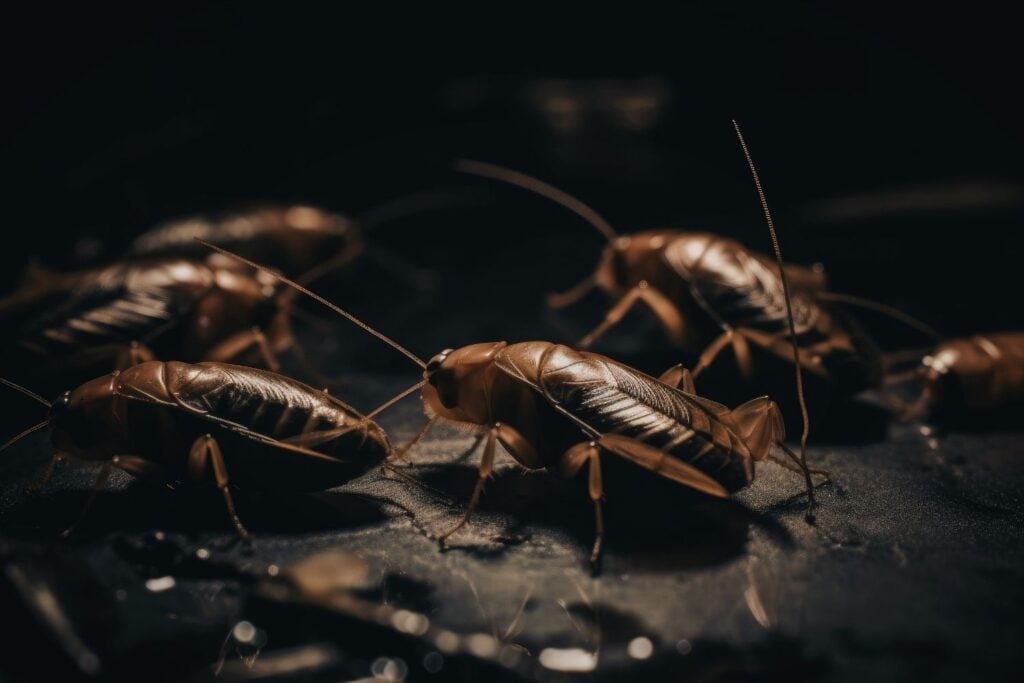
Cockroaches have survived extreme environmental changes for millions of years. Their resilience to radiation, ability to endure long periods without food, and tolerance for varied climates give them an unusual advantage in unstable conditions.
As human systems collapse, many species would struggle with disruption, but cockroaches are built for inconsistency, as reported by National Geographic. Their survival traits allow them to persist where others fail, maintaining populations through conditions that might eliminate more specialized animals.
3. Ant colonies may expand into powerful superorganisms.

Ants operate as coordinated colonies capable of adapting collectively rather than individually. This structure allows them to respond to environmental changes with efficiency that single organisms cannot match.
Scientists have noted that ants already dominate many ecosystems in terms of biomass and influence, as discovered by researchers cited in Nature Ecology. Without human interference, their colonies could expand further, reshaping environments through sheer numbers and coordinated behavior.
4. Feral cats would reclaim urban predator roles quickly.
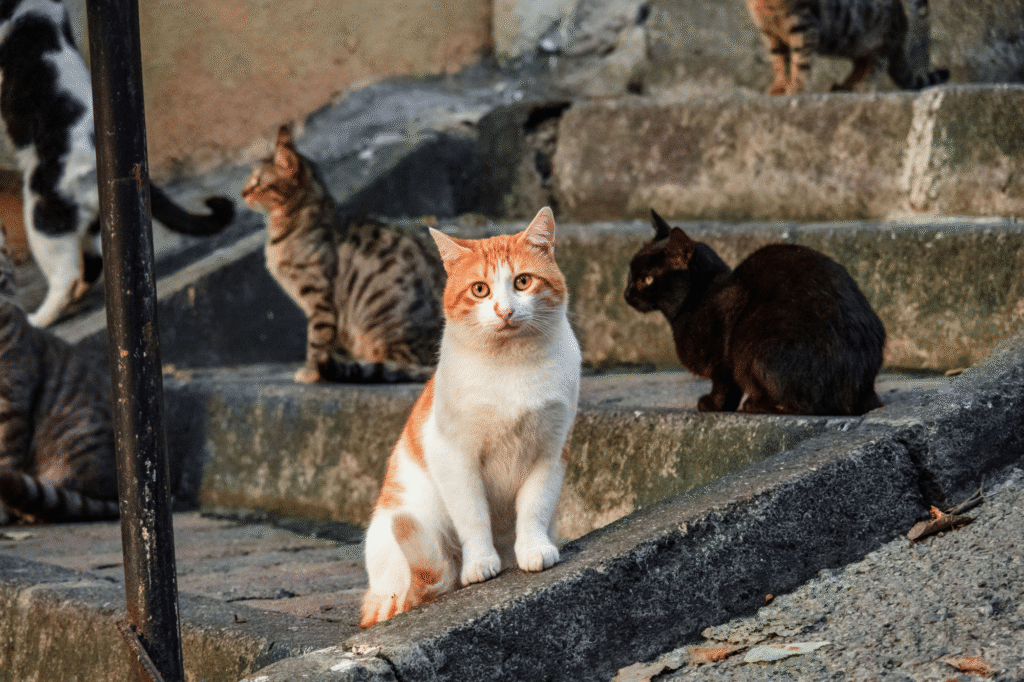
Domestic cats have already established feral populations across many regions. These animals retain hunting instincts and adapt easily to both urban and rural environments. Without human oversight, their numbers could increase rapidly.
As small predators, they would begin controlling populations of birds, rodents, and other animals. This shift could alter local ecosystems, especially in areas where larger predators are absent or slow to return.
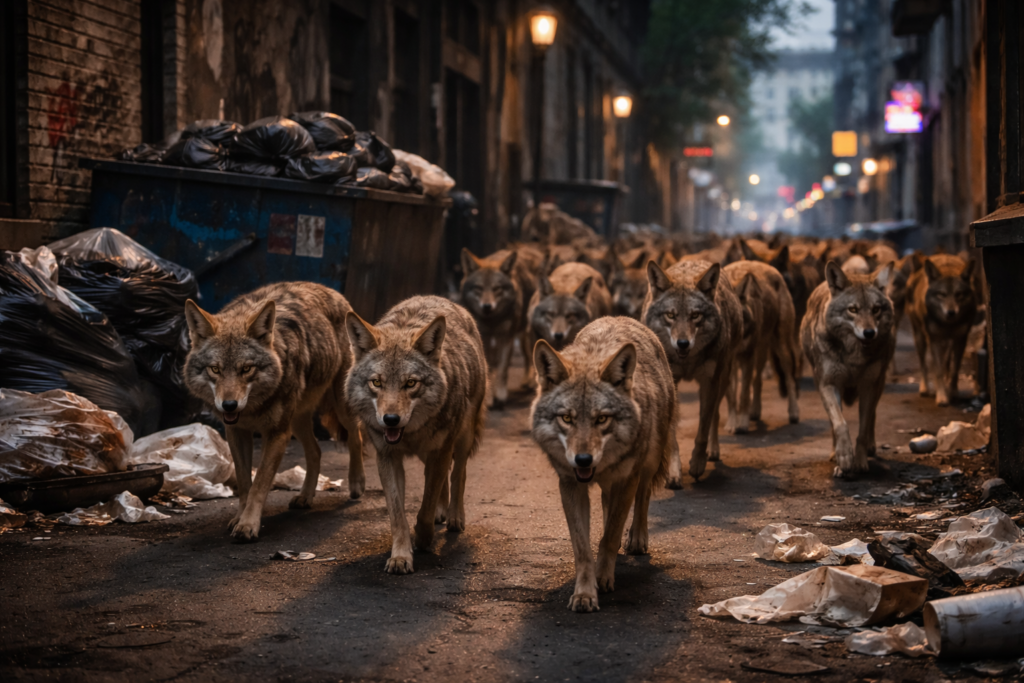
5. Coyotes could expand across cities and suburbs fast.

Coyotes have already demonstrated the ability to live alongside humans in major cities. They adapt their behavior, diet, and movement patterns based on available resources, making them highly flexible predators.
With human presence removed, coyotes could expand into areas currently restricted by development. Their ability to travel long distances and exploit varied food sources positions them as strong competitors in reshaping terrestrial ecosystems.
6. Pigeons may transition from cities into broader habitats.
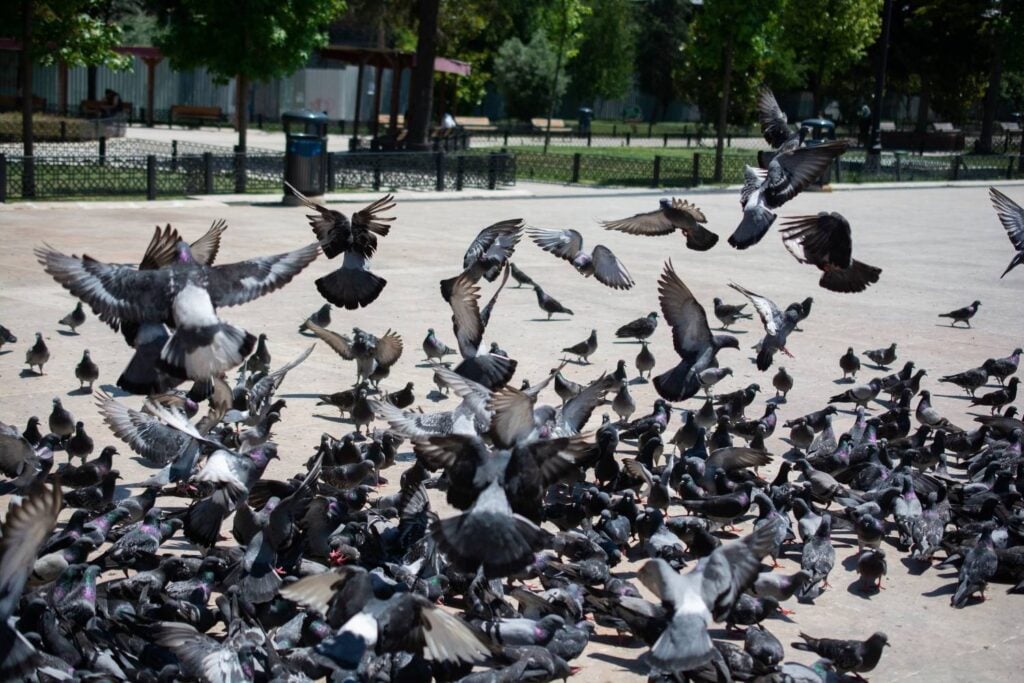
Pigeons are deeply tied to human environments, but they are also capable of surviving independently. Their ability to fly long distances and locate food sources allows them to move between habitats with ease.
As cities change, pigeons could spread outward, adapting to new conditions. Their current global distribution provides a foundation for expansion, especially in regions where other bird populations have declined.
7. Wild boars could reshape landscapes through expansion.

Wild boars are highly adaptable mammals known for their aggressive behavior and ability to thrive in diverse environments. They reproduce quickly and can survive in both forests and human altered landscapes.
Without human control measures, their populations could grow rapidly. Their rooting behavior disturbs soil and vegetation, potentially transforming ecosystems and creating conditions that favor their continued expansion.
8. Raccoons would exploit abandoned infrastructure efficiently.

Raccoons are known for their intelligence and ability to manipulate objects. They thrive in urban environments, using buildings and human structures as shelter and foraging grounds.
With cities left unattended, raccoons could expand into new areas within those environments. Their problem solving skills and varied diet would allow them to adapt as conditions change, maintaining stable populations during transition periods.
9. Crows could dominate through intelligence and cooperation.
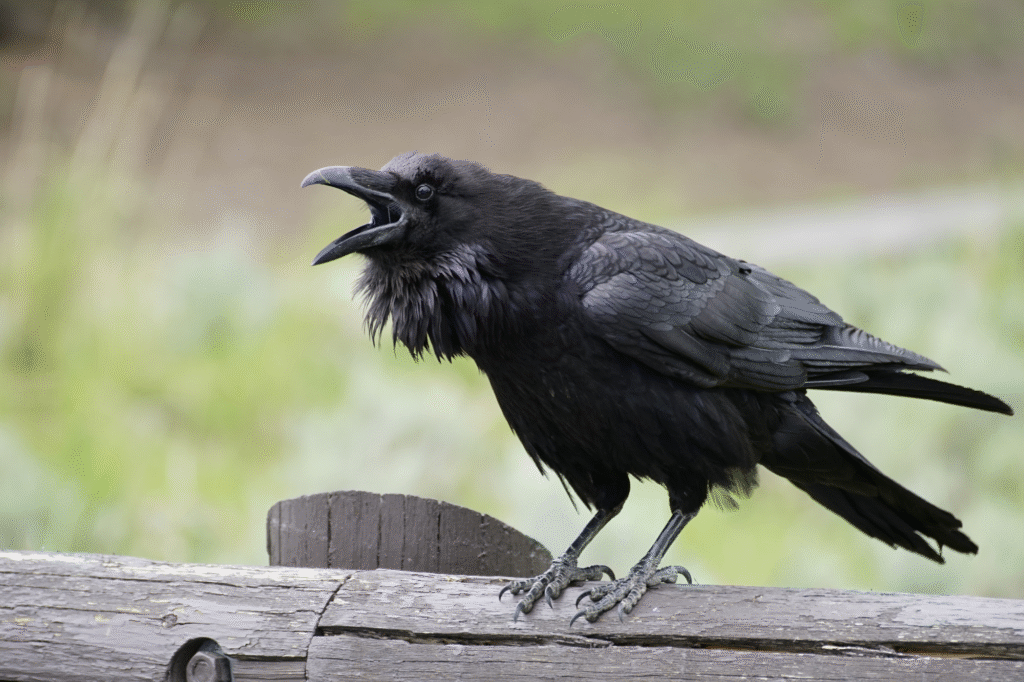
Crows are among the most intelligent birds, capable of using tools, solving complex problems, and communicating within social groups. These traits give them a significant advantage in unpredictable environments.
As ecosystems shift, their ability to learn and adapt could allow them to exploit new opportunities quickly. Their social structure also supports coordinated behavior, increasing their chances of thriving in changing conditions.
10. Octopuses may become dominant in ocean ecosystems.
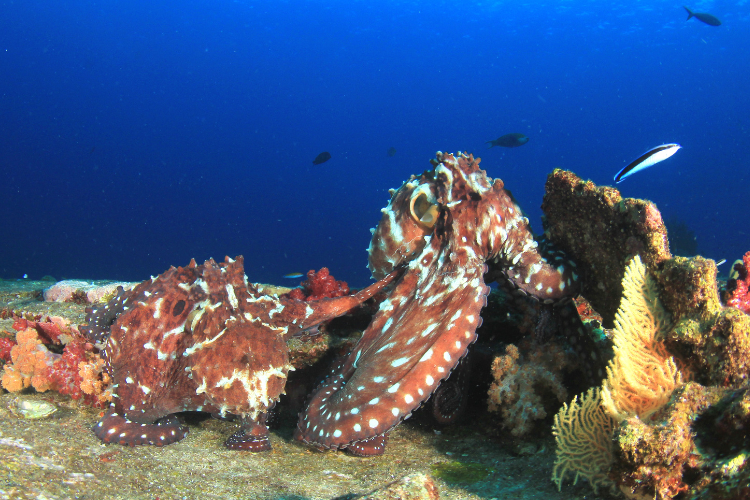
In marine environments, octopuses stand out for their intelligence and adaptability. They can solve problems, escape enclosures, and adjust their behavior based on experience.
Without human pressures such as fishing and pollution, their populations could increase. While they are short lived, their rapid growth and cognitive abilities could allow them to expand their role within ocean ecosystems, influencing marine food webs in new ways.