
A hidden quantum behavior is finally being seen.
Inside every atom, particles move in ways that have long been described by equations but rarely witnessed directly. For decades, scientists have relied on indirect measurements to understand what happens at this scale. Now, new experiments are beginning to capture behavior that was once considered impossible to observe in real time. The findings do not simplify atomic physics. They complicate it, suggesting that something deeper has been happening all along beneath the surface of matter itself.
1. Scientists directly observed superposition within atomic systems.

For the first time, researchers have captured direct evidence of particles existing in multiple states at once inside an atom. This phenomenon, known as superposition, has been predicted for decades but has largely remained inferred rather than seen in action at this level.
Recent experiments using advanced measurement techniques have visualized this dual state behavior within controlled atomic systems, according to Nature Physics. Instead of occupying a single defined state, particles were shown to exist across possibilities simultaneously, confirming a core principle of quantum mechanics in a more direct and observable way.
2. The experiment required extreme isolation and precision control.

To observe this effect, scientists had to isolate atoms from nearly all external interference. Even minor disturbances can collapse superposition, forcing particles into a single state and masking the phenomenon.
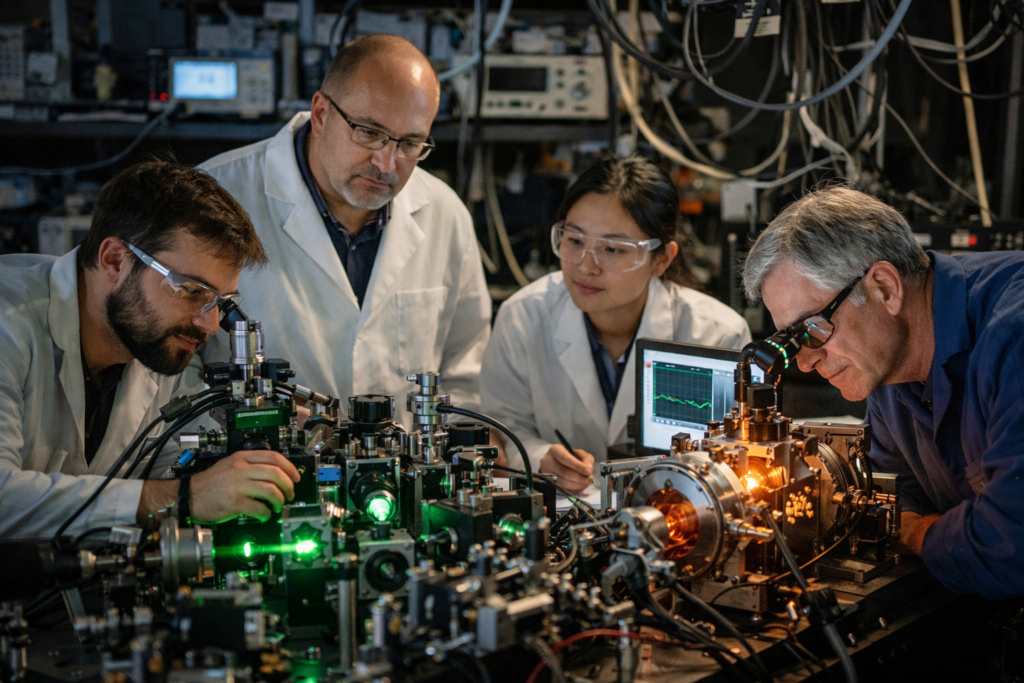
Researchers used ultra cold environments and electromagnetic traps to stabilize the system long enough to measure it, as reported by MIT Technology Review. This level of control allowed them to detect subtle quantum behavior without disrupting it, marking a significant step forward in experimental physics.
3. Measurement itself still influences what is observed.
One of the central challenges in quantum mechanics is that observing a system can change it. This paradox has made direct observation of superposition particularly difficult, as measurement tends to collapse the multiple states into one.
In these experiments, scientists developed techniques to probe the system without fully collapsing it, preserving aspects of the superposition during observation, as discovered by researchers contributing to Science Advances. This approach opens new possibilities for studying quantum systems more directly than before.
4. The results challenge classical ideas about physical reality.

At everyday scales, objects exist in one place and state at a time. Superposition contradicts this intuition, suggesting that at the atomic level, particles do not follow the same rules.
The ability to observe this behavior reinforces the idea that classical physics does not fully describe reality. Instead, it reveals a layer where outcomes exist as probabilities until measured, complicating the way matter is understood at its most fundamental level.
5. Quantum states appear more stable than expected briefly.
One surprising aspect of the findings is how long superposition can persist under controlled conditions. While still extremely brief by human standards, the duration exceeded what some models predicted.
This increased stability suggests that quantum states may be more robust than previously thought, at least in carefully managed environments. It raises questions about how these states behave in less controlled settings and whether similar stability could be achieved in practical applications.
6. The findings could reshape future computing technologies.
Superposition is a key principle behind quantum computing, where particles can represent multiple values at once. Observing it directly inside atoms strengthens confidence in the feasibility of these systems.
If scientists can reliably control and maintain superposition, it could lead to advances in computing power far beyond current capabilities. However, significant challenges remain in scaling these systems and preventing interference that disrupts quantum states.
7. The experiment reveals limits of current measurement tools.

Even with advanced techniques, capturing superposition required pushing measurement tools to their limits. The process highlights how much remains beyond current observational capability.
This limitation suggests that there may be additional quantum behaviors still hidden from view. As technology improves, scientists may uncover further complexities within atomic systems that have so far remained inaccessible.
8. Atomic behavior may be more complex than predicted.
The observed results hint that atomic systems may not behave exactly as simplified models suggest. Subtle variations and interactions could play a larger role than previously understood.
These complexities do not overturn existing theories but indicate that they may need refinement. The deeper scientists look, the more layers of behavior seem to emerge, each adding nuance to the understanding of matter.
9. Researchers are now testing similar effects in larger systems.
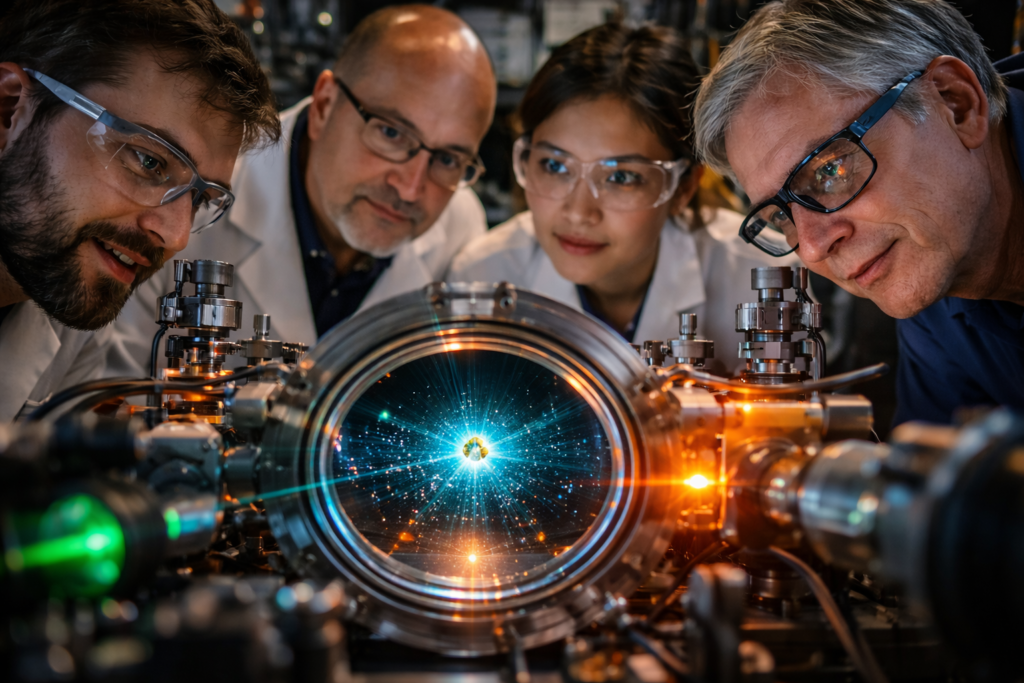
Following these findings, scientists are attempting to observe superposition in more complex structures beyond individual atoms. This progression could reveal how quantum behavior scales with size.
If similar effects are observed in larger systems, it would challenge assumptions about where quantum mechanics transitions into classical behavior. That boundary remains one of the most intriguing questions in physics.
10. The discovery raises new questions about observation itself.
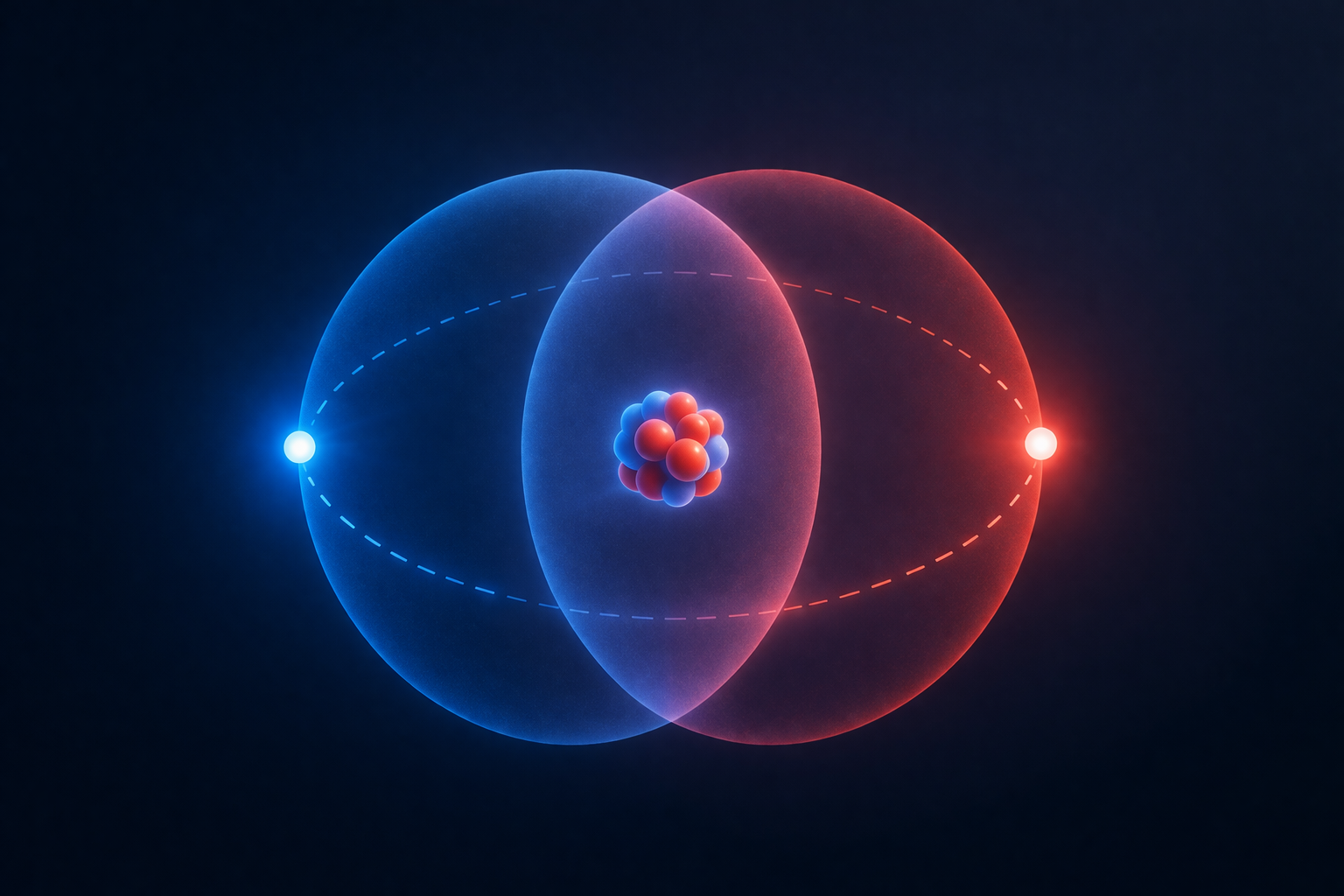
Superposition forces a reconsideration of what it means to observe something. If measurement changes the system, then observation is not a passive act but an interaction that shapes reality.
These findings deepen that paradox, suggesting that understanding the role of observation may be as important as understanding the particles themselves. The implications extend beyond physics, touching on fundamental questions about how reality is defined.