
Vast stone systems emerge from mountains once thought empty.
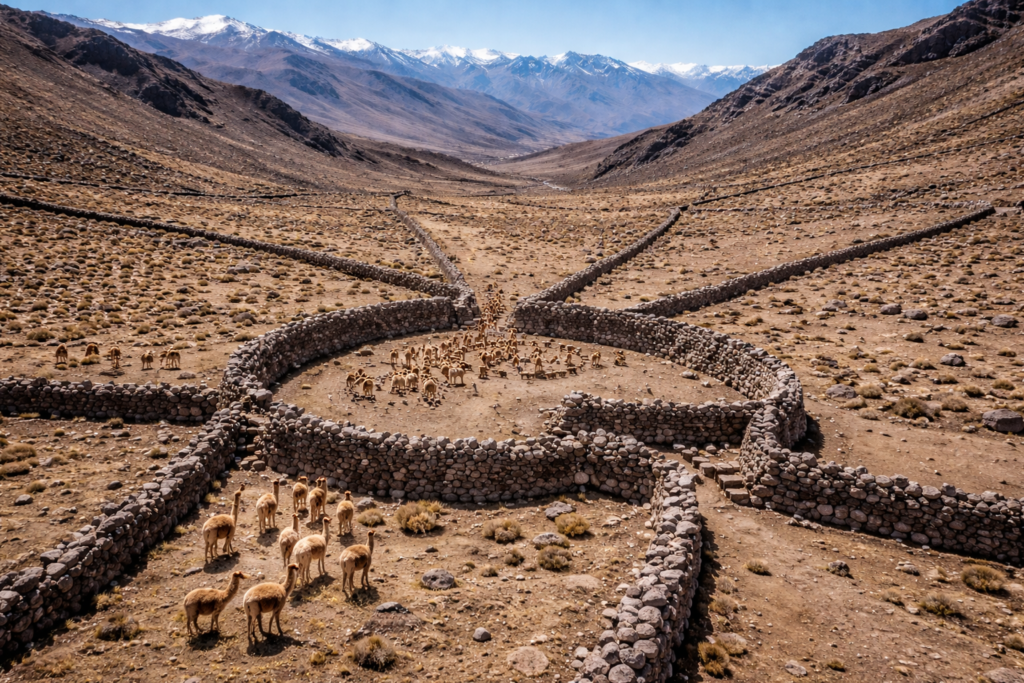
High in the Andes, stone lines stretch across ridges and valleys where few people walk today. For decades, they blended into the landscape, dismissed as erosion or boundary walls. Satellite imagery has changed that view entirely. From above, the formations resolve into coordinated systems built to guide animals across miles of terrain. These were not isolated traps. They were large scale hunting landscapes, engineered with precision, shared knowledge, and collective effort by ancient Andean communities.
1. Satellite imagery revealed patterns impossible to see below.

From the ground, the stone lines appear scattered and disconnected. Elevation and distance hide their shape. Viewed from orbit, they align into funnels that narrow gradually across slopes and plateaus, converging toward enclosed zones where animals could be captured or killed.
As reported by National Geographic, researchers used high resolution satellite imagery to map these formations across multiple Andean regions. The aerial perspective revealed intentional geometry that had remained invisible for centuries, transforming assumed geology into unmistakable evidence of large scale human planning.
2. Archaeologists now connect these systems to chaku hunts.
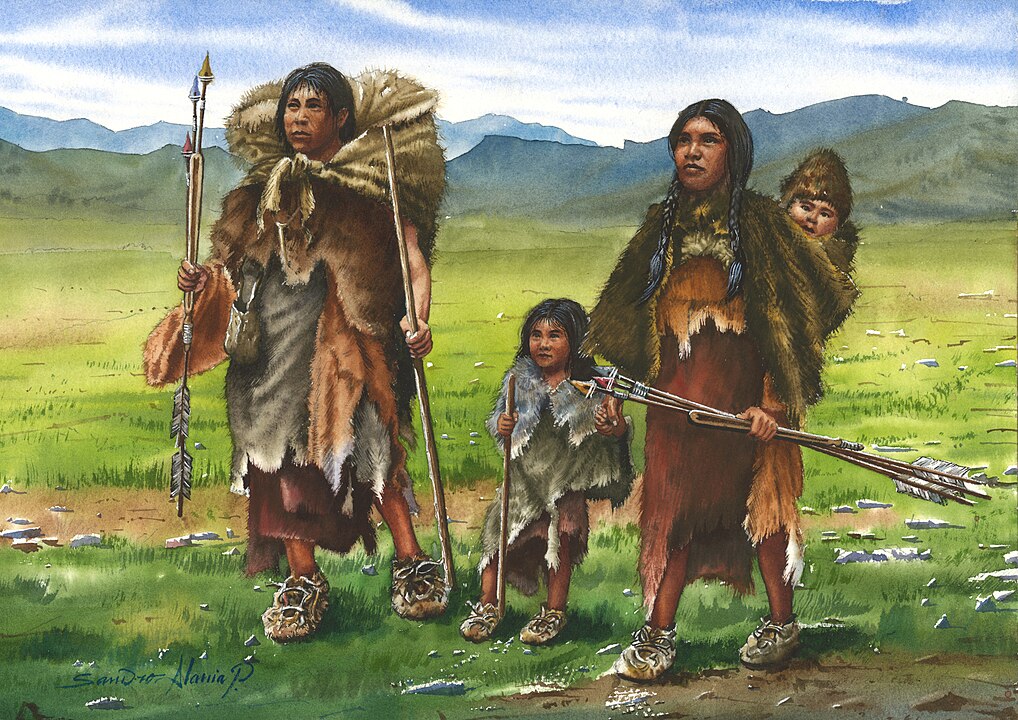
Indigenous Andean traditions describe communal hunts known as chaku. These events relied on people, noise, and stone alignments to guide animals rather than chase them. Until recently, archaeology lacked proof of how extensive these hunts truly were.
Satellite evidence now shows chaku was not a localized activity. It was a landscape scale system. According to ethnographic and archaeological interpretation, the stone drive lines match descriptions of chaku routes used to coordinate large groups across terrain during seasonal hunts.
3. Construction required coordinated labor across entire communities.
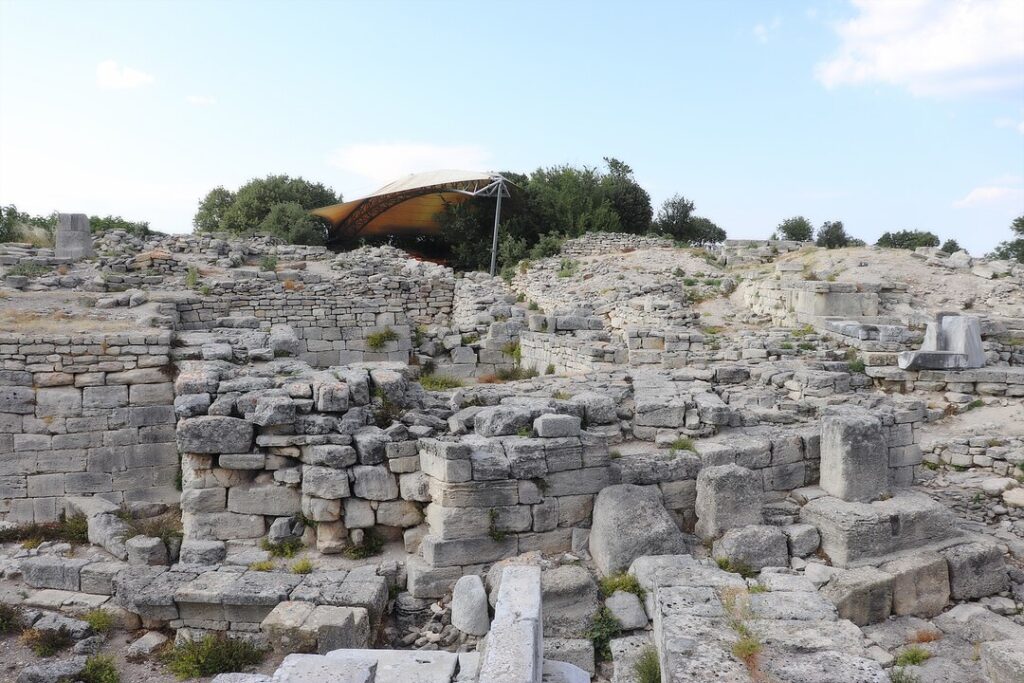
Each system involved thousands of stones positioned with intent across kilometers. This was not ad hoc work. Placement followed terrain contours, animal paths, and visibility lines. Construction required planning, leadership, and timing.
According to research published in Science Advances, the scale of these drive systems indicates organized communal labor rather than individual hunting efforts. Such coordination suggests complex social structures capable of mobilizing people repeatedly for shared survival goals in harsh high altitude environments.
4. The stone lines guided animals without blocking them.

Rather than forming barriers, the walls narrowed space gradually. Herd animals followed the easiest path forward, unaware they were being directed. Panic was minimized until the final enclosure, where hunters waited.
This design shows deep understanding of animal behavior. Hunters relied on instinctive movement patterns rather than force. The traps turned open landscape into a subtle mechanism that reduced risk, conserved energy, and increased success during short seasonal hunting windows.
5. These hunts balanced efficiency with ecological restraint.
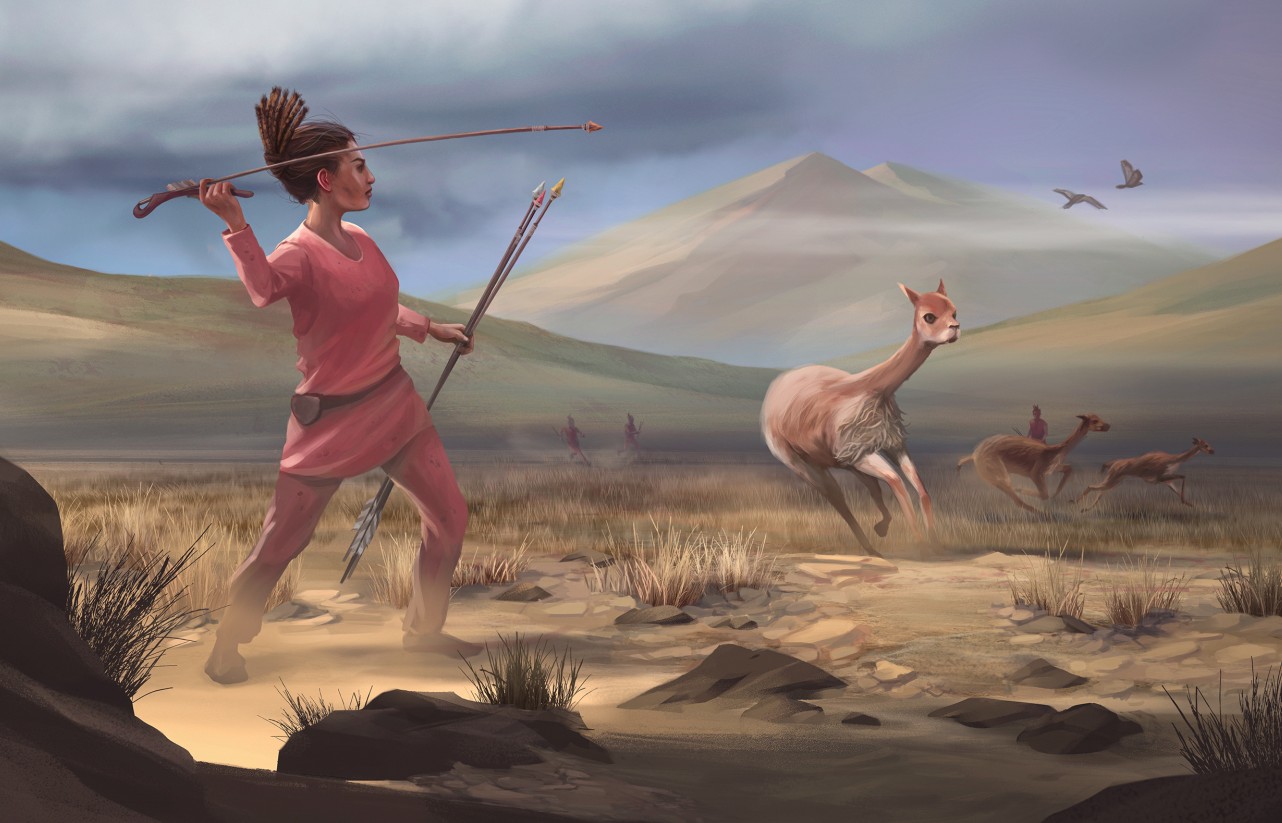
Evidence suggests chaku hunts were not constant. They occurred during specific seasons when animal movement was predictable. Participation followed rules that limited overuse and coordinated effort.
In some cases, animals such as vicuñas were captured, sheared, and released. This indicates management rather than extraction. The hunting systems functioned as renewable resource strategies, supporting long term survival instead of short term depletion in fragile high altitude ecosystems.
6. Many drive systems predate known Andean empires.
Weathering patterns and associated artifacts suggest some structures were built centuries before Inca expansion. Others show signs of repair and reuse long after political shifts occurred.
This continuity challenges assumptions that complex engineering required centralized states. Knowledge persisted across generations independent of empire. The systems endured because they were effective, embedding survival strategies directly into the land rather than institutions.
7. Similar hunting systems appear across distant regions.

Comparable drive line systems exist in deserts and plains worldwide. Despite cultural differences, the underlying logic is consistent. Long stone alignments guide herd animals into controlled spaces using terrain rather than walls.
The Andean examples reflect independent innovation. Faced with similar challenges, human groups arrived at the same solution. This convergence underscores shared problem solving abilities across societies separated by oceans and millennia.
8. Remote sensing is changing archaeological discovery itself.

Traditional archaeology focused on compact sites like villages or tombs. These hunting systems span kilometers, making them nearly impossible to identify without satellite tools.
Remote sensing reframes archaeology as pattern recognition rather than excavation alone. As more landscapes are scanned, similar systems may emerge elsewhere, suggesting ancient human engineering has been vastly underestimated due to scale rather than absence.
9. The Andes reveal hunting as landscape engineering.

These systems blur distinctions between natural terrain and built structure. Stone, slope, and movement became integrated components of a single mechanism.
Seen from above, the Andes preserve a record of human planning written across mountains. These were not simple hunts. They were designed food systems, revealing societies capable of shaping environments collaboratively, intelligently, and sustainably long before modern technology allowed us to finally see them.