
What emerged beneath the ice raised urgent new questions.
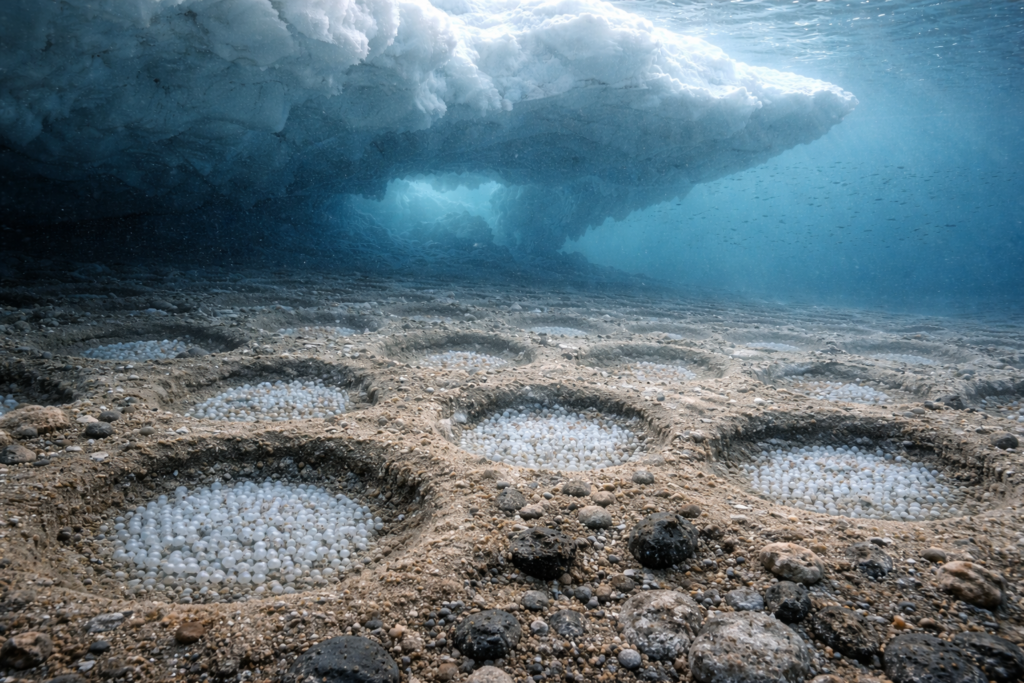
What emerged beneath the ice raised urgent new questions.
For years, the iceberg sealed off a stretch of Antarctica no one could see or study. Then it fractured. As the ice pulled away, researchers were left staring at a landscape that did not match expectations. What appeared beneath the frozen cover suggested long term survival in complete isolation, hidden from satellites and storms alike. Scientists are now trying to understand how life persisted there, how long it had been thriving, and what the sudden exposure could mean for what comes next.
1. The iceberg calved and exposed a hidden seafloor ecosystem.

In the Weddell Sea, a massive iceberg, roughly 5,800 square kilometers in size, broke away from the Larsen C Ice Shelf, exposing a seafloor unseen for centuries, as reported by the British Antarctic Survey. The event created an opening that allowed remotely operated vehicles to descend and survey the area for the first time. What they found beneath wasn’t barren rock or mud, but signs of a living, breathing ecosystem. This fracture in the ice sheet became an unexpected window into one of the most isolated biological environments on the planet.
2. Thousands of circular nests appeared on the newly revealed seabed.
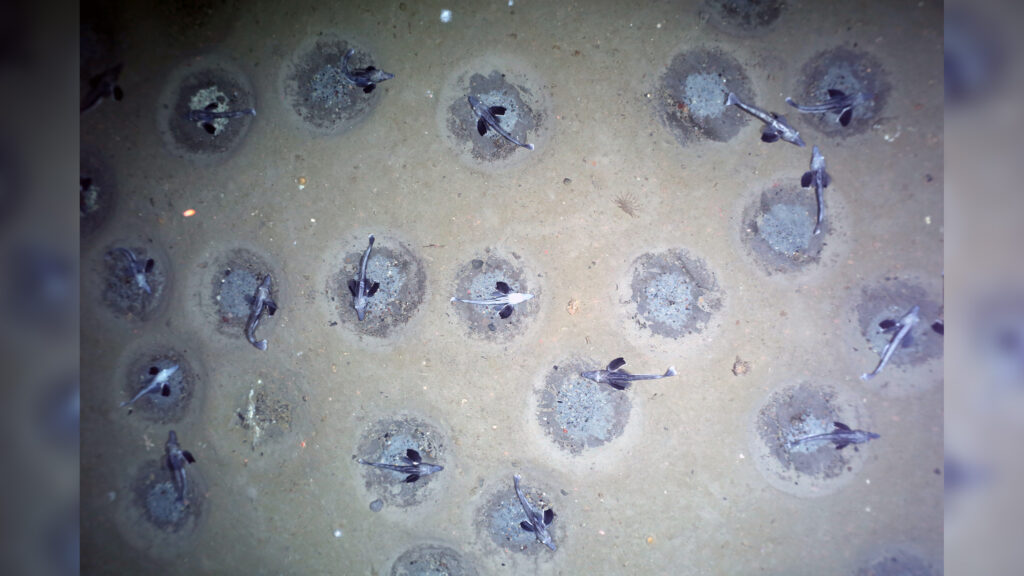
The team’s underwater cameras revealed a field of carefully arranged circular pits, each roughly the size of a car, spanning several square kilometers, as stated by ScienceDaily. These formations weren’t random. Each depression appeared to be cleared of sediment, surrounded by ridges, and spaced with surprising regularity. The organized layout suggested something more deliberate than geological processes. To scientists, it looked like an enormous nesting ground, an aquatic colony built with precision and purpose under complete darkness for untold generations.
3. The nests were made by a creature guarding their eggs.
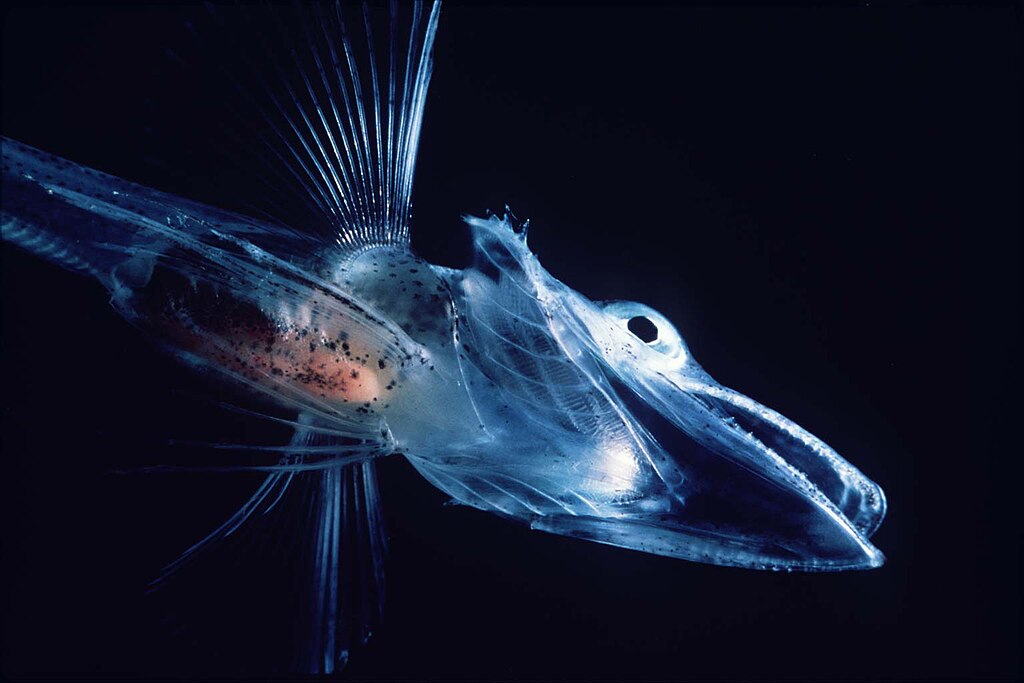
Researchers confirmed the nest builders as Antarctic icefish, a species known for thriving in subzero water, as discovered by the Alfred Wegener Institute. The fish cleared the circular depressions, laid eggs, and remained to guard them, a rare act of parental care in the deep ocean. Thousands of adults hovered protectively over their nests, creating a living mosaic across the seabed. The density and scale of this behavior stunned scientists, proving that even in extreme polar conditions, life organizes itself in complex and cooperative ways.
4. The discovery revealed a vast breeding colony never seen before.

The sheer scope of the nesting field, covering more than 240 square kilometers, suggests this is one of the largest known fish breeding colonies on Earth. Each nest held up to 2,000 eggs, meaning the site could contain millions in total. Scientists believe the colony’s success depends on deep currents carrying oxygen-rich water through the area. This single discovery has expanded understanding of how life persists and reproduces beneath permanent ice cover.
5. The ecosystem depends on delicate balance and ocean currents.
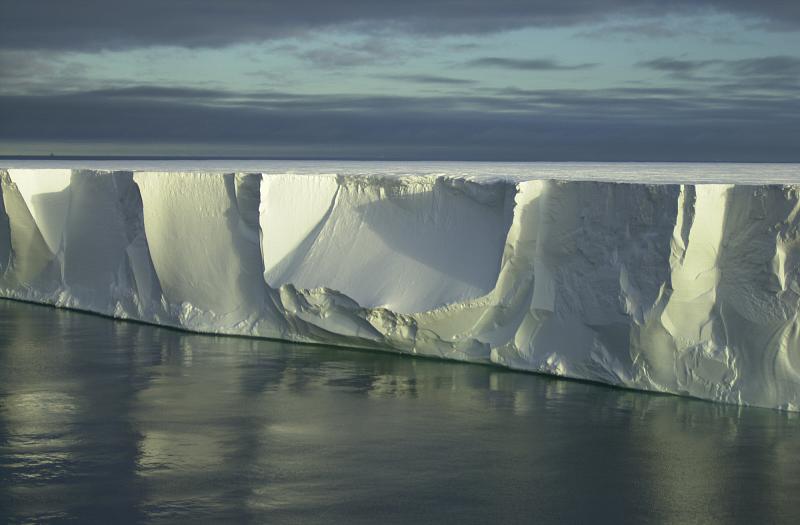
The area where the nests were found sits near the Filchner Ice Shelf, where cold, nutrient-rich water circulates upward. That movement delivers oxygen essential for egg development while sweeping away debris. Such precision in environmental conditions means the colony’s survival relies on a fragile equilibrium. Even slight temperature shifts or current changes could disrupt this ancient breeding ground, reminding researchers how sensitive polar ecosystems truly are.
6. Ice loss from calving exposed the colony to new risks.
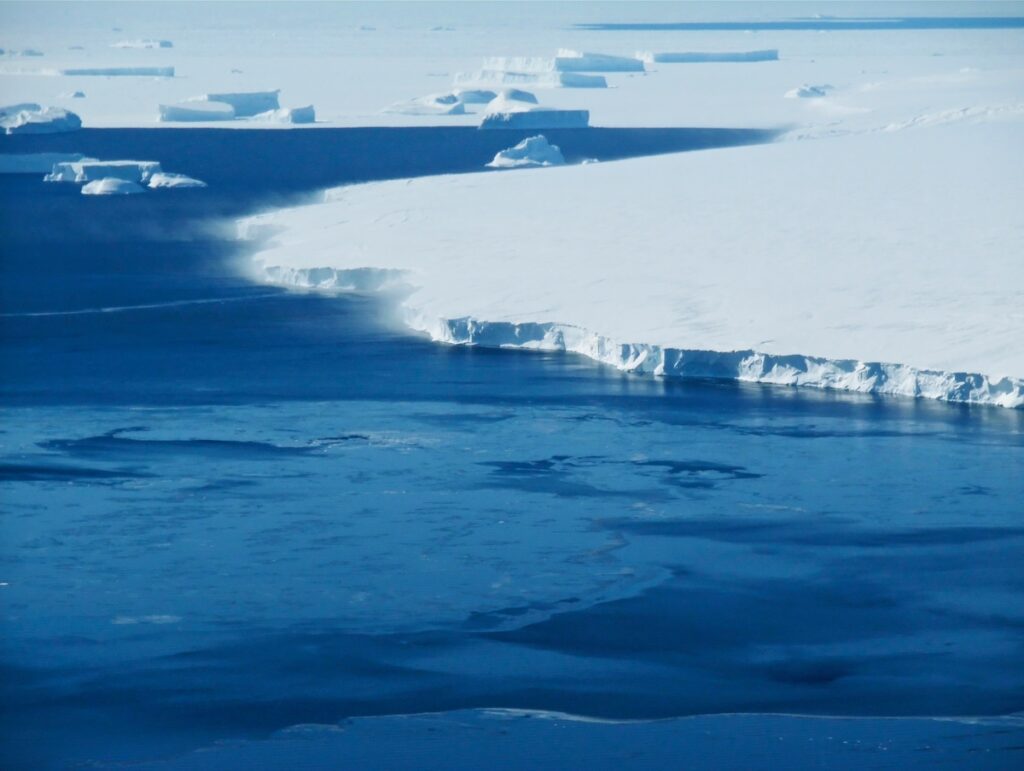
While the iceberg’s break revealed this ecosystem, it also introduced vulnerability. With the seafloor now open to light and changing currents, the fish and their eggs could face new predators or temperature variations. The protective shadow of the ice once provided stability. As more ice shelves calve due to climate change, similar hidden habitats may surface, and not all will adapt to the sudden exposure as well.
7. Scientists are racing to study the site before it changes.
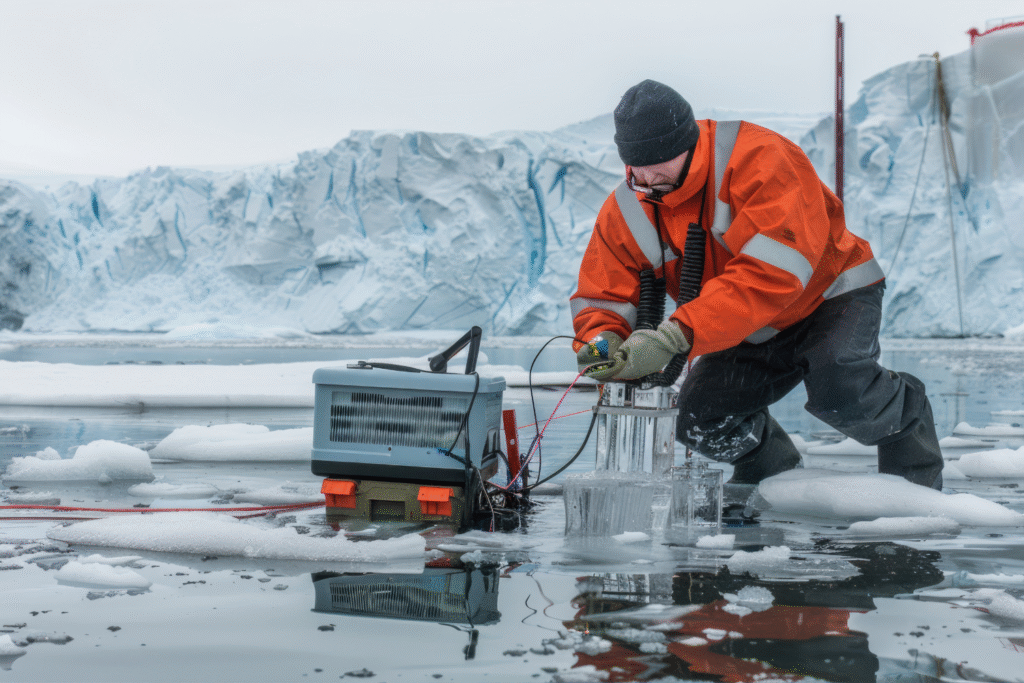
Researchers have deployed monitoring sensors and plan return expeditions to capture how the ecosystem evolves over time. They’re tracking everything from current velocity to egg survival rates to see how open water conditions alter the balance. Because the discovery is so recent, every new data point helps shape the first comprehensive understanding of deep Antarctic reproduction cycles, knowledge that could vanish if warming accelerates.
8. The find challenges old assumptions about life under ice.
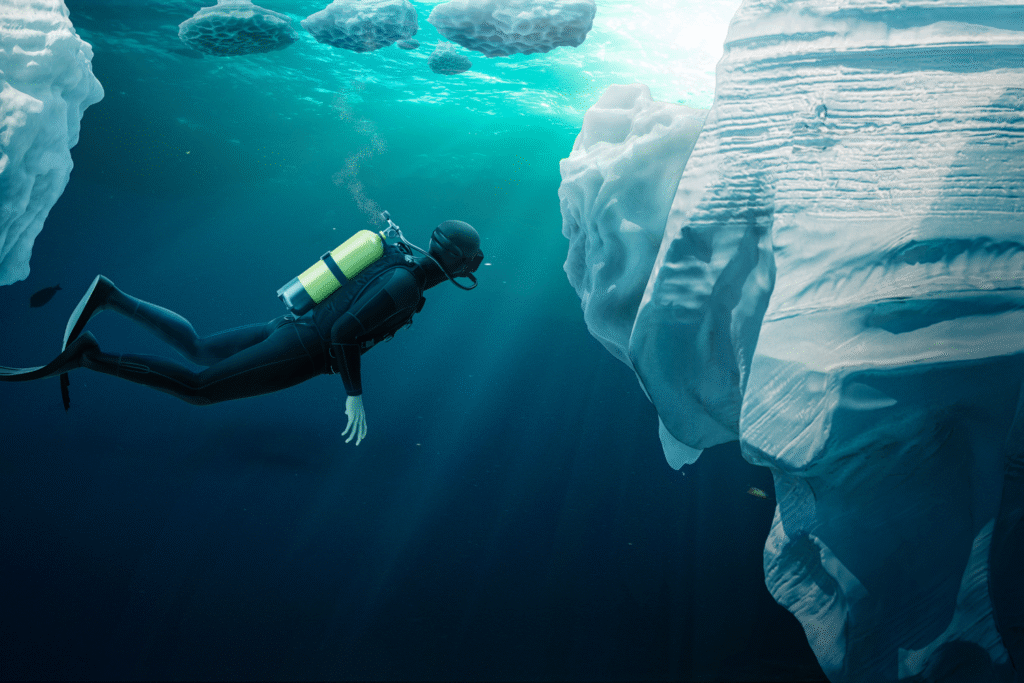
For decades, scientists assumed areas beneath thick Antarctic ice were largely lifeless. This discovery overturned that idea. The dense, structured community of nesting fish proves complex ecosystems can thrive even without light or surface access. It underscores how little is known about the deep polar world and hints that more hidden life may await discovery under other ice shelves still intact.
9. Robotic exploration made the breakthrough possible.

Without remotely operated vehicles equipped with high-definition cameras, this discovery wouldn’t have been possible. The ROVs descended through boreholes and maneuvered across the ocean floor to capture images that stunned researchers back at base. These technologies are now considered essential for future Antarctic exploration, offering eyes and precision where human divers cannot go.
10. What lies beneath other Antarctic ice shelves remains a mystery.
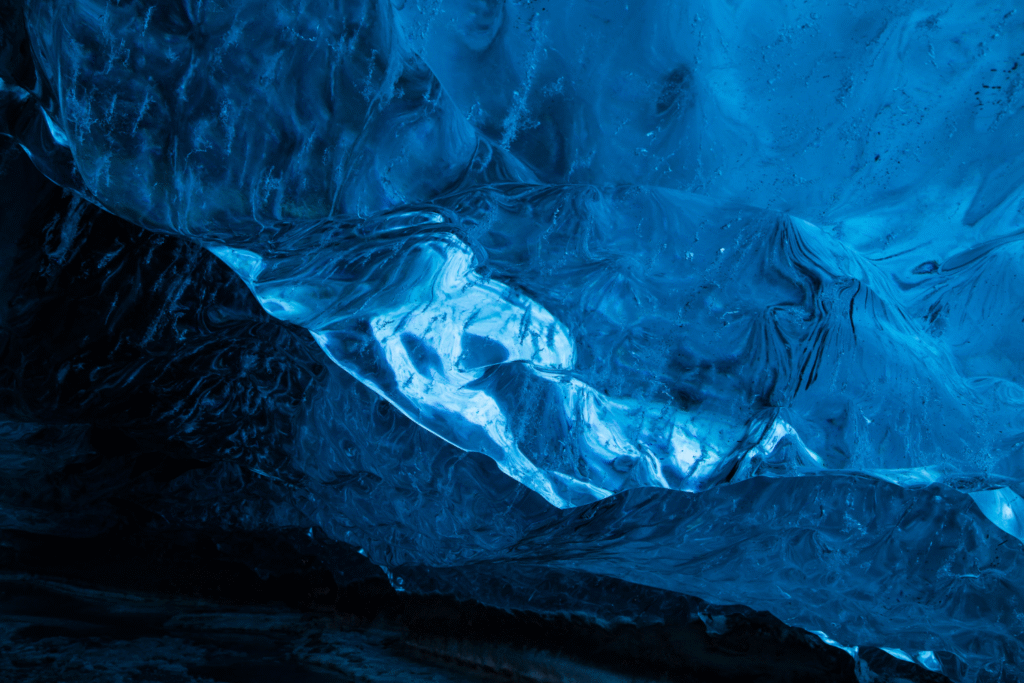
The Weddell Sea colony may only be the beginning. Scientists suspect other ice shelves hide similar ecosystems—perhaps even more diverse or ancient. Each calving event exposes not just loss but opportunity for discovery. As Antarctica continues to shift, what emerges from beneath its ice might change the way humanity understands isolation, survival, and life itself in the coldest reaches of Earth.