A forgotten stone has begun rewriting the map of Europe’s past.
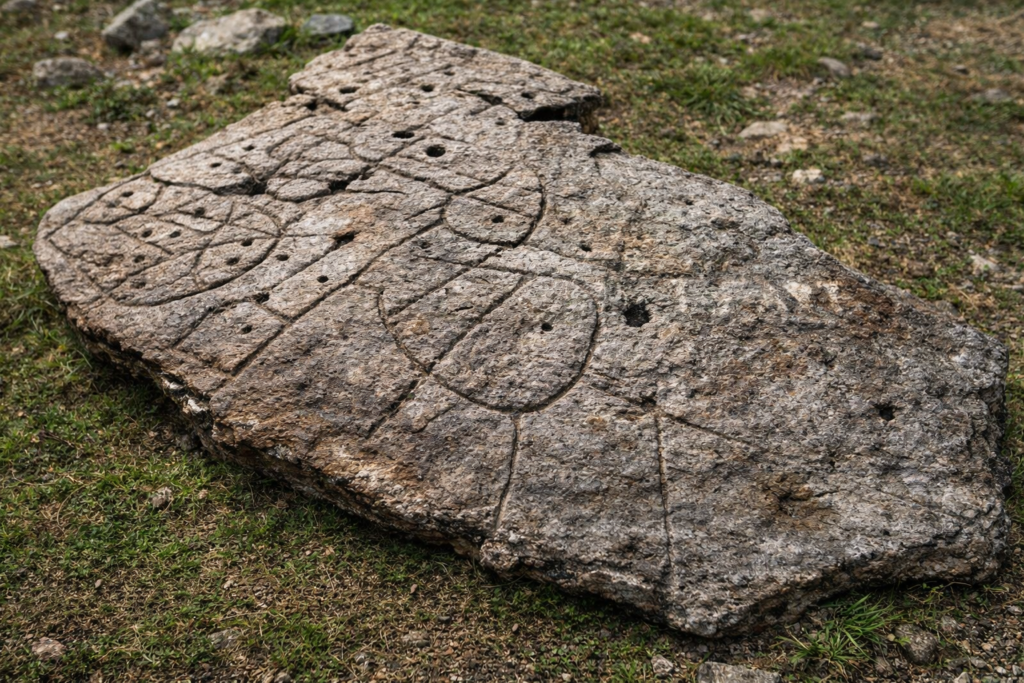
For more than a century, it sat in near obscurity, heavy, carved, and misunderstood. No one suspected that its grooves might hold something far larger than decoration. Only recently did technology illuminate patterns that refuse to be dismissed as coincidence. Lines bend with purpose. Shapes repeat with intent. What first looked like abstract markings now suggest a mind trying to capture space itself. If that interpretation holds, then our assumptions about when Europeans first understood territory, borders, and landscape may have been misplaced for decades. The slab is no longer silent, and its implications stretch well beyond France.