In Every Major Rainforest, At Least 12 Species Communicate Entirely Without Sound

While the rainforest roars with noise, these species stay completely silent—and still manage to say everything they need to.

©Image via Canva

Rainforests might be the loudest places on Earth, but some of their most fascinating creatures have figured out how to skip the noise entirely. No chirping, no howling, no warning cries. These animals rely on visual signals, body language, vibrations, scent trails, and even chemical cues to talk to each other. It’s not because they can’t make sound—it’s because in a place where everyone’s shouting, staying silent can actually give you the upper hand. From stealthy hunters to tiny insect social networks, this list proves that you don’t need a voice to get your message across. These 12 species are living proof that silence is not only golden—it’s strategic.
Read more

Fossas Have 10 Sneaky Hunting Strategies to Become Madagascar’s Most Elusive Predator

Most people don’t even know what a fossa is, but every lemur in Madagascar knows to run.

©Image license via Flickr / zoofanatic

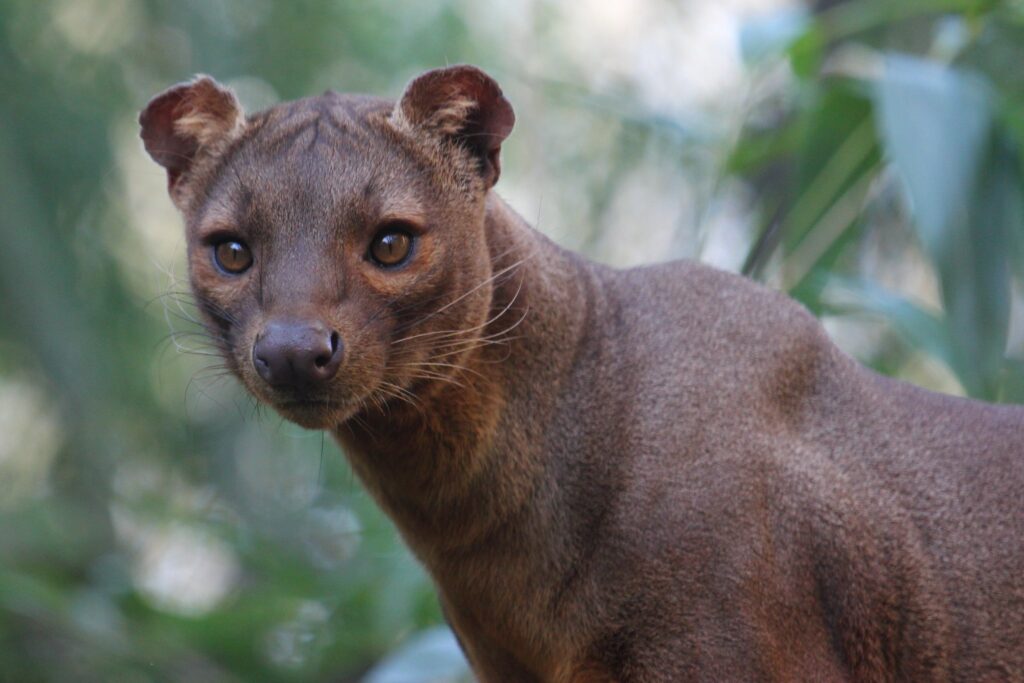
At first glance, the fossa looks like nature couldn’t decide between making a big cat or an overgrown mongoose. Long, sleek, with a tail as long as its body, this predator doesn’t care about fitting into a neat animal category. It only cares about being an absolute menace to anything smaller than itself. In Madagascar’s forests, fossas are silent, persistent, and terrifyingly good at what they do.

They’re not flashy. You won’t see them roaring dramatically or chasing prey across open plains. Fossas are all about stealth, patience, and surprise attacks. They hunt smarter, not harder, using a toolbox of tricks that makes them nearly invisible until it’s way too late. Let’s take a look at how this weird, cat-dog-weasel hybrid became Madagascar’s most skilled and sneaky predator.

Read more

10 Reasons Why Aye-Ayes Tap on Trees Like Drummers and What They’re Listening For

Scientists are still amazed at how these eerie primates turned drumming into a survival skill.

©Image license via iStock

Most people have never seen an aye-aye, and those who have probably walked away thinking they just encountered something from a Tim Burton fever dream. But there’s more to these scraggly, wide-eyed lemurs than meets the eye. Their bizarre drumming habit isn’t random or for show. Aye-ayes tap on trees for reasons that run deeper than curiosity, using a technique so unique that some researchers have compared it to echolocation with a percussive twist. They don’t just drum—they listen, analyze, and make dinner decisions based entirely on the hollow echoes bouncing back at them. It’s weird, smart, and wildly effective, even if it looks a little creepy.

Read more

10 Disturbing Reasons the Pangolin’s Armor Makes It One of the World’s Most Unusual and Poached Mammals

This bizarre, misunderstood mammal has scales that spark an illegal global trade few people ever hear about.

©Image via Canva

The pangolin is not exactly the kind of animal that shows up on cute calendars or viral pet videos, but its life is far stranger than most people realize. Covered head to toe in what looks like medieval chainmail, this odd creature has become one of the most trafficked mammals in the world—and hardly anyone outside conservation circles knows why.

Its armor isn’t just for show, either. The scales, made of keratin like your fingernails, have made the pangolin a target for smugglers and poachers across Asia and Africa. It’s a heartbreaking and oddly fascinating story of biology and human demand colliding in the worst possible way. Once you see how many roles those scales play, you’ll never look at the pangolin the same way again.

Read more

In The World’s Harshest Climates, 12 Creatures Are Rewriting Everything We Know About Adaptation

These species don’t just survive impossible places—they manipulate them.

©Image license via Canva

Some animals adapt by hiding, burrowing, or outwaiting the worst nature throws at them. But others go further. They push the limits of biology in ways that seem impossible on paper—enduring temperatures that shatter scientific expectations, thriving without water, or tweaking their own physiology to fit a landscape that would kill almost anything else.

These 12 creatures aren’t surviving the world’s toughest places by accident. They’ve hacked evolution to do things we didn’t think were on the table. And once you know how they function, the rules about adaptation start to feel completely different.

Read more