
Remote Indonesian cave reveals an uncanny creature.

Deep in the Sangkulirang-Mangkalihat karst of East Kalimantan, Borneo, archaeologists uncovered a haunting image: a reddish-brown beast painted on the limestone wall of Lubang Jeriji Saléh cave. Unlike the deer, banteng, or boar common to ancient rock art, this animal defied identification. Its proportions and posture suggest imagination, memory, or mythology at work. Preserved for over forty millennia, the painting now challenges our view of how early humans saw and recorded the living world around them, and the worlds they might have only dreamed of.
1. The rock art panel shows a beast unlike any known animal.
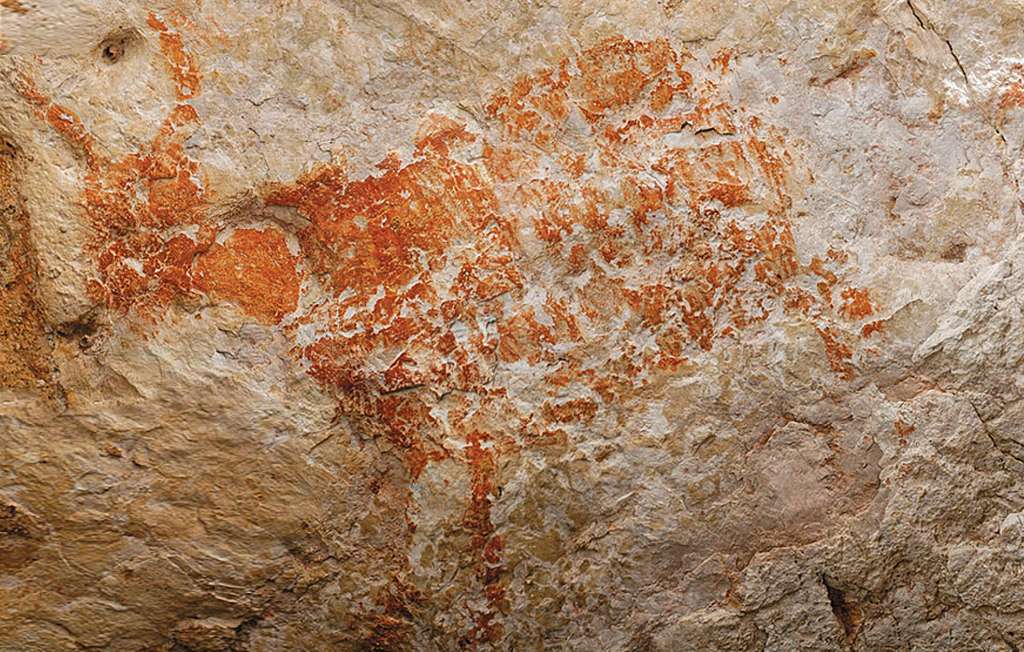
Archaeologists documenting the cave’s interior discovered a large ochre figure with a stocky body, elongated tail, and horn-like ridges above its head, none of which match known regional fauna. In the middle of their field report, researchers remarked that the image appears to depict a “previously unknown animal form” found in Lubang Jeriji Saléh, as stated by Smithsonian Magazine. The creature’s anatomy departs from any realistic animal depiction of its time, hinting at extinct megafauna or symbolic representation. Its presence marks an imaginative leap in Ice Age art, where form meets speculation on a wall of stone.
2. The cave art dates back more than 40,000 years.
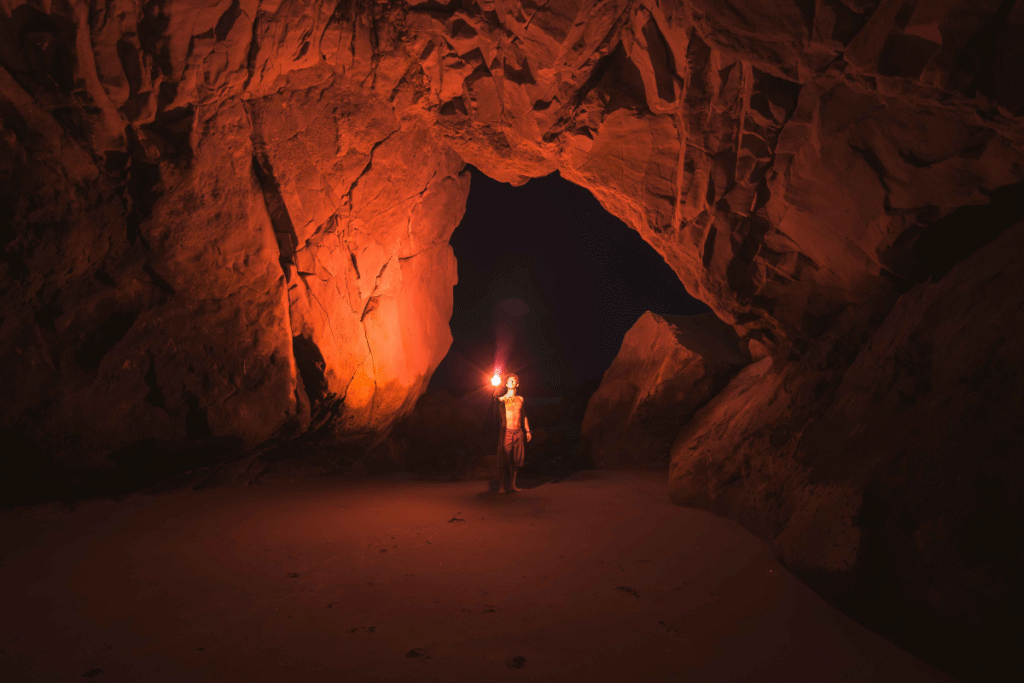
Uranium-thorium dating of mineral layers covering the pigment revealed a minimum age of about 40,000 years, placing the beast among the world’s oldest known figurative depictions, according to National Geographic. The dating pushes the origins of representational art beyond Europe’s Chauvet or Lascaux, forcing scientists to acknowledge that artistic sophistication flourished independently in Southeast Asia. This discovery extends humanity’s creative timeline and reshapes the global map of early symbolic expression. In doing so, it situates Borneo, not Europe, as one of the earliest cradles of visual imagination.
3. The depiction may reflect legends of vanished creatures or ancient myths.

Alongside the mysterious beast, the cave walls bear hand stencils and abstract marks that point to ritual or storytelling activity rather than everyday hunting records. The researchers suggest that the hybrid-like animal might represent a spiritual or mythological entity, as reported by ABC News Australia. If true, it means the artists were capable of creating imagery tied to intangible beliefs, perhaps an ancestral spirit, a remembered extinct species, or a creature of collective myth. The blend of realism and invention makes the panel one of prehistory’s most enigmatic visual statements.
4. The pigment techniques reveal extraordinary prehistoric craftsmanship.

Chemical analyses show that the pigment came from locally sourced hematite ground to fine powder and mixed with plant resin, then applied to limestone pre-cleaned of natural residue. Microscopic examination indicates deliberate layering and touch-ups over time, suggesting planning and reverence for the subject. The consistency and precision of the lines show this was not idle graffiti but an intentional creative act. The artists balanced form and texture with surprising control, their gestures surviving untouched across 40 millennia of humidity and dust.
5. The cave’s remote location suggests intentional sacred access.

Lubang Jeriji Saléh lies deep in a limestone formation accessible only through narrow, elevated passages. This isolation implies selective entry and restricted participation in the creation process. No domestic debris or hearths appear nearby, reinforcing the idea that the chamber served a spiritual or ceremonial function rather than daily life. The beast’s placement—framed by the curvature of the cave wall, enhances its presence under flickering torchlight, implying that the setting itself was part of the artwork’s meaning.
6. Comparative imagery offers no direct match in known species.
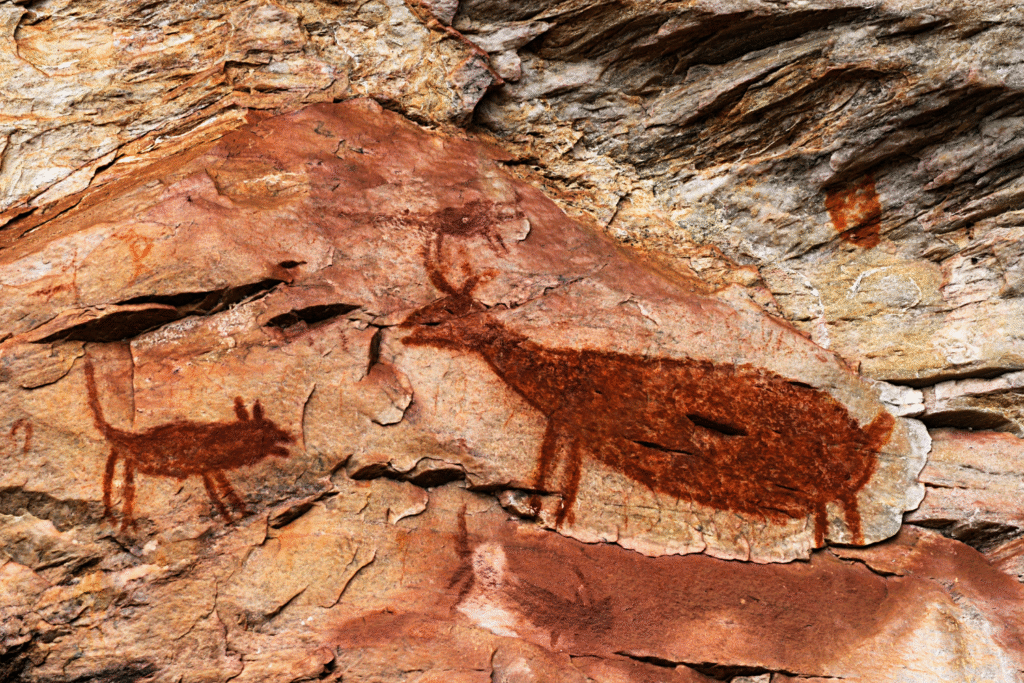
When the figure was compared to living or extinct species in the region, none fit its features. The nearest resemblance might be to the long-vanished Bornean wild cattle, yet key details, such as tail length and cranial shape, diverge sharply. This lack of match invites two possibilities: either it immortalises an animal that humans witnessed vanish from the landscape, or it visualises a creature born of collective imagination. In both cases, it bridges reality and myth, an early testament to the mind’s power to blend observation with creation.
7. The find rewrites what scientists believed about ancient art.
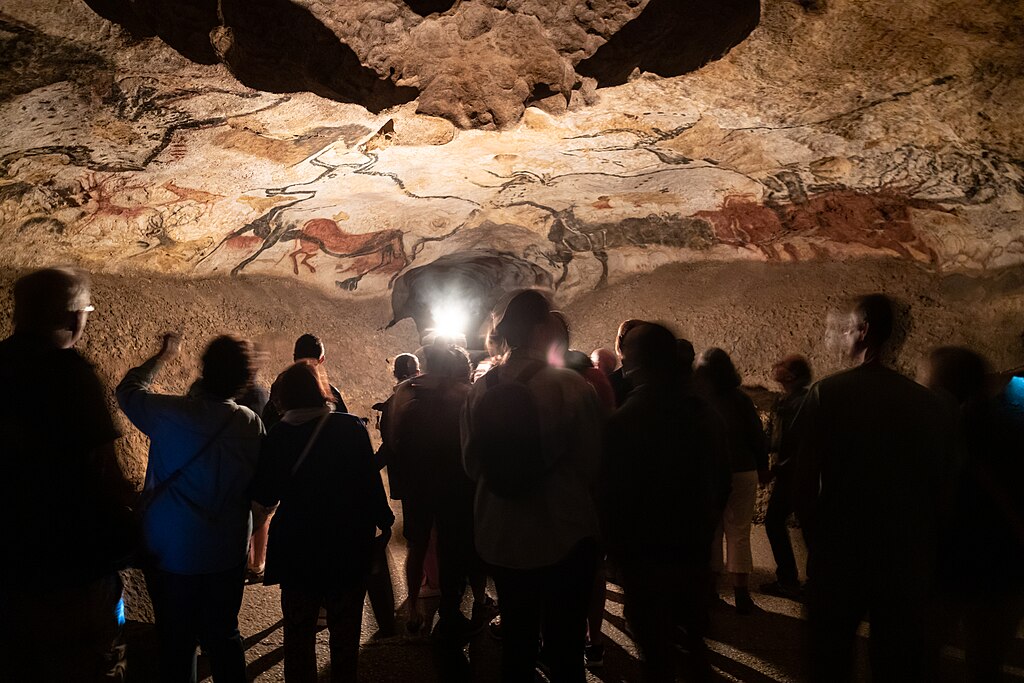
For decades, Europe was assumed to be the birthplace of complex cave imagery, but this discovery in Indonesia dismantles that Eurocentric narrative. Here was a community capable of abstraction, symbolism, and artistic ritual far from Europe’s Paleolithic centers. This revelation underscores that humanity’s drive to depict and mythologise animals was global, emerging wherever imagination met raw pigment. It reframes prehistoric art as a shared human instinct rather than a regional milestone.
8. Exceptional preservation allows for new scientific techniques.

Because the cave remained sealed by calcite and sediment for millennia, its pigments are remarkably intact. High-resolution scanning and spectroscopy now allow researchers to reconstruct how the paint aged and how the artists layered strokes to form texture. These non-invasive methods capture micro-details invisible to the naked eye, preserving the art digitally while protecting the fragile surface. The preservation not only safeguards the image but provides a forensic window into the moment of its creation.
9. The discovery may prompt a re-examination of cave art worldwide.

Archaeologists now suspect that other Southeast Asian caves might contain similar unclassified beasts or composite figures. Many past surveys focused only on recognizable animals, dismissing ambiguous shapes as erosion. With new technology and broader interpretation, previously overlooked markings could reveal further mythic or extinct species. Each new scan and pigment analysis might uncover echoes of forgotten worlds, and expand what qualifies as art in the Paleolithic imagination.
10. The implications reach far beyond archaeology.

This unknown beast is more than pigment on stone, it represents a psychological milestone. Whether it recalls a lost creature or expresses a spiritual belief, it demonstrates that early humans could conceive of beings beyond lived experience. The figure at Lubang Jeriji Saléh shows imagination emerging as a survival tool, linking memory, environment, and identity. Through it, the first artists gave shape to what could not be seen, and in doing so, left behind an image that continues to challenge what it means to be human.