
New evidence is quietly unsettling decades of certainty.

For years, charts, textbooks, and self help wisdom have insisted the brain peaks early, then slides into steady decline. That story shaped careers, education, and how people judge their own mental stamina. But a growing body of research from neuroscience labs and aging studies is poking holes in that timeline. New data suggests mental sharpness may arrive, fade, and return in ways that feel unfamiliar and unsettling. The question now is not when decline starts, but whether we have misunderstood the entire arc.
1. Cognitive peaks may arrive later than expected.

For decades, adults have internalized the idea that mental speed crests in the twenties, then erodes year by year. That belief has influenced hiring practices, self confidence, and how aging is framed socially. New large scale data sets are forcing scientists to question whether that early peak was ever accurately measured across diverse populations.
Recent analysis of cognitive testing across millions of participants suggests certain reasoning skills continue improving into the forties, according to research published by Harvard University psychologists. The findings hint that experience and pattern recognition may quietly compensate for raw processing speed far longer than assumed.
2. Mental decline does not follow one uniform slope.

The idea of a smooth downward slide has always been emotionally persuasive, but biology rarely behaves so neatly. People notice sudden fog, followed by surprising clarity years later, a pattern that never fit tidy graphs. Those inconsistencies are now becoming impossible for researchers to ignore as datasets grow more detailed.
Long term cognitive tracking studies reveal plateaus and rebounds scattered across adulthood, as reported by the Max Planck Institute for Human Development. Different skills weaken and strengthen independently, suggesting decline is staggered, uneven, and far less predictable than previously modeled.
3. Processing speed and wisdom age on different clocks.

Reaction time tests have long dominated conversations about brain aging, reinforcing the impression that slowing equals decline. Yet many adults report sharper judgment and better decision making later in life, an experience science struggled to quantify until recently. That mismatch raised uncomfortable questions about what intelligence even means.
Neuroscientists now separate speed from strategic reasoning, noting that slower responses often come with improved accuracy and insight, as discovered by researchers at Stanford University. The brain appears to trade quickness for depth, not simply lose capacity outright.
4. Education reshapes brain aging more than age itself.

Two people of the same age can show wildly different cognitive profiles, leaving researchers uneasy with age based assumptions. Years of mental stimulation appear to leave structural fingerprints in the brain that resist decline. This suggests the calendar alone is a poor predictor of sharpness.
Imaging studies show continued synaptic growth in adults engaged in complex learning, including new languages and technical skills. These changes alter how aging unfolds, implying that mental trajectories are shaped by habits and environments rather than birthdays alone.
5. Memory systems mature at different life stages.

Memory often gets treated as a single faculty, but the brain stores facts, experiences, and skills using distinct networks. People may forget names while retaining remarkable procedural knowledge, creating confusion about overall decline. That unevenness is now central to new aging models.
Research indicates episodic memory may weaken earlier, while semantic memory continues expanding for decades. This helps explain why older adults excel at vocabulary, storytelling, and contextual reasoning even as recall speed fluctuates unpredictably across years.
6. Midlife stress temporarily masks cognitive ability.

Many adults interpret mental fatigue in their forties as irreversible decline. In reality, chronic stress, sleep disruption, and workload saturation can suppress performance without damaging underlying capacity. That distinction matters more than most people realize.
Studies show stress hormones interfere with attention and working memory, creating the illusion of lost sharpness. When stressors ease, performance often rebounds, revealing that the brain’s core abilities remained intact throughout the strain.
7. Brain networks reorganize rather than simply weaken.

Aging brains do not merely lose neurons, they reroute information flow. This reorganization can look like inefficiency when measured with outdated tools. Modern imaging is beginning to reveala different story beneath the surface.
Older adults frequently recruit additional brain regions to complete tasks, spreading cognitive labor across networks. This compensatory strategy can preserve performance, challenging the idea that greater activation always signals decline.
8. Creativity may peak after analytical speed slows.

Creative insight often arrives after years of exposure and synthesis, not during rapid learning phases. Many renowned artists, scientists, and writers produced their most original work later in life, contradicting narrow definitions of sharpness. That pattern is gaining scientific attention.
Researchers suggest creativity relies on accumulated knowledge and flexible association, both of which expand with age. Slower processing may actually allow deeper integration, supporting novel connections rather than hindering them.
9. Individual brain timelines diverge dramatically.
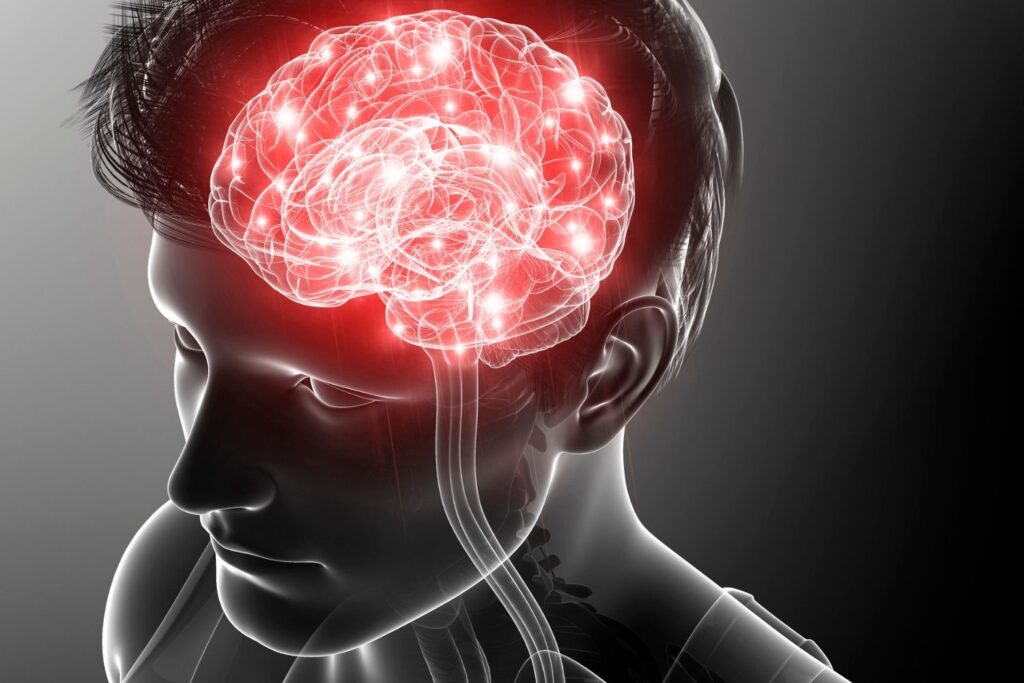
Population averages obscure the lived reality of cognitive aging. Genetics, health, education, and environment interact in complex ways, producing wildly different outcomes. No single curve fits everyone, despite decades of attempts to draw one.
Some adults maintain high performance into old age, while others fluctuate unpredictably. This variability suggests brain aging is better understood as multiple personalized timelines rather than a universal countdown clock.
10. The idea of a single mental prime is fading.

The search for one defining peak may itself be misguided. Evidence increasingly points to multiple primes, each tied to specific abilities that rise and fall independently. That realization unsettles long held assumptions about productivity and aging.
As neuroscience refines its tools, the brain’s lifespan looks less like a mountain and more like a shifting landscape. Sharpness may return, transform, or deepen long after it was presumed gone.