
Where land ends, something unexpected begins to hunt.
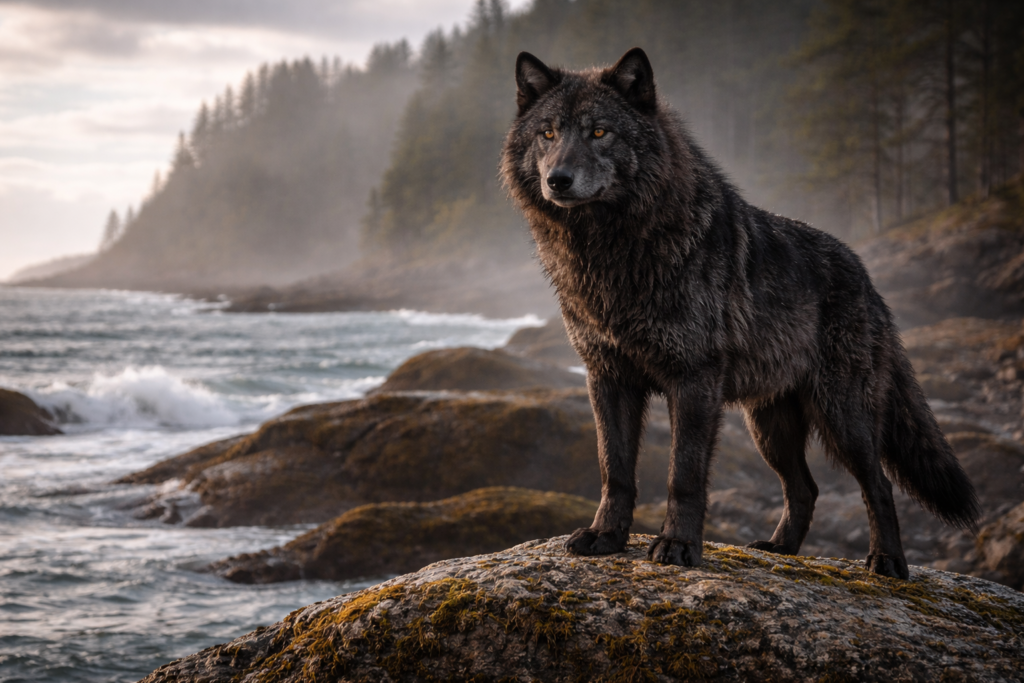
Most wolves follow patterns people think they understand, forests, mountains, open land. But along parts of Canada’s remote coastline, those patterns start to break down. Tracks appear where they should not, along shorelines, across wet sand, even between islands separated by open water. What lives there does not behave like other wolves, and it does not rely on the same rules to survive. It moves between two worlds without fully belonging to either one. The more closely it is studied, the harder it becomes to explain using what we already know about wolves and how they are supposed to live.
1. These Wolves Get Most of Their Food From the Ocean

Unlike traditional wolves, sea wolves rely on marine resources for a large portion of their diet, sometimes reaching up to 90 percent. From fish and seals to washed up whale carcasses, these coastal predators have adapted to make the most of what the ocean provides. They move along shorelines with purpose, scanning for opportunities between tides. In some cases, they have even been observed dipping into tidal pools and searching for shellfish, a behavior rarely seen in other wolf populations and a clear sign of their coastal specialization.
2. They Can Swim Miles Between Islands

Sea wolves aren’t just strong swimmers, they are remarkably capable navigators in coastal waters. They can swim several miles at a time to reach isolated islands in search of food, moving with confidence through shifting tides and currents. This ability allows them to access resources that many land predators cannot reach. Over time, it has shaped a lifestyle that blends land and sea in a way few species manage. Their comfort in open water stands as one of their most striking adaptations, setting them apart from other wolves in a very real way.
3. Their Coats Are Suited for Coastal Living

The fur of a sea wolf is thicker and more water resistant than that of inland wolves, an adaptation that helps them handle constant exposure to damp, coastal conditions. This dense coat allows them to stay warm and relatively dry as they move along rocky shorelines and slip into cold ocean waters. It also offers protection against wind and rain that define their environment. Blending into the muted tones of forest, fog, and shoreline, their coloring provides natural camouflage that helps them move through their habitat without drawing attention.
4. They Live in One of the World’s Last Great Wildernesses

The Great Bear Rainforest, where sea wolves are found, is one of the most pristine and untouched ecosystems on Earth. This vast coastal region stretches across more than 6 million hectares, filled with dense forests, winding rivers, and rugged shoreline. It supports an incredible diversity of wildlife, from salmon runs to rare bears and countless bird species. Within this rich environment, sea wolves have carved out a life that depends on both land and sea. Their presence is a powerful reminder of how vital and interconnected this extraordinary habitat truly is.
5. They Are Smaller and Lighter Than Inland Wolves

Sea wolves are typically smaller and leaner than their inland counterparts, a build that seems perfectly suited to their coastal lifestyle. Their lighter frame likely helps with swimming and allows them to move quickly across rocky shorelines and dense coastal forests. Despite their size, they remain fierce predators with sharp instincts and impressive adaptability. They can shift between hunting on land and foraging along the water’s edge with ease. This combination of agility and determination makes them highly capable hunters in an environment that rarely stays predictable.
6. Their Social Lives Revolve Around Family Bonds

Like other wolves, sea wolves live in tight knit packs, often made up of closely related family members. These bonds shape nearly every part of their lives, from coordinated hunting to raising and protecting pups. Working together allows them to adapt to the shifting challenges of coastal terrain and changing tides. Their social structure is not just about survival, it creates stability within the group. That deep connection is part of what makes them such effective and resilient predators in an unpredictable environment.
7. Indigenous Knowledge Has Preserved Their Legacy

The Indigenous peoples of British Columbia have long known about sea wolves, weaving them into their stories, art, and traditions. Their knowledge reflects generations of close observation and respect for the land and its animals. These communities have played a vital role in protecting sea wolves and their habitat, helping preserve both the species and the ecosystems they depend on. Their stewardship continues to shape conservation efforts today, offering guidance that blends cultural understanding with long term care for the environment.
8. They Are Vital to Their Ecosystem

Sea wolves play a crucial role in their ecosystem by helping to regulate populations of both marine and terrestrial prey. By moving between shoreline and forest, they influence multiple food chains at once. Their scavenging of dead animals also recycles nutrients back into the environment, supporting the health of the coastal ecosystem. In doing so, they help maintain a balance that benefits countless other species. Their presence is less about dominance and more about keeping the entire system functioning as it should.
9. Climate Change Poses a Threat to Their Survival

As sea levels rise and marine ecosystems shift due to climate change, sea wolves face an uncertain future. Changes to fish populations, habitat loss, and rising temperatures could disrupt their delicate balance, making conservation efforts more critical than ever. Even small shifts in coastal environments can ripple through their food sources and movement patterns. Protecting these ecosystems may be key to ensuring that sea wolves continue to survive in the challenging world they call home.
10. They Remain One of Nature’s Best-Kept Secrets

Despite their fascinating adaptations, sea wolves remain relatively unknown to the world. Their remote habitat and elusive nature make them a rare sight, even for researchers. This mystery only adds to their allure, leaving much to be discovered about these extraordinary coastal predators. Limited long term studies mean many of their behaviors are still not fully understood. Each new observation offers just a glimpse into a life shaped by both land and sea.