
Small habits that quietly increase feline stress.

Cat anxiety often develops from ordinary daily patterns that shift slowly while owners assume everything is normal. A cat may start hiding more, startling more easily, or becoming uneasy in rooms it loved. These little reactions stack over time until they change the cat’s comfort level entirely. Many owners only realize something is wrong long after the stress has already set in.
1. Owners disrupt routines without noticing the consequences.
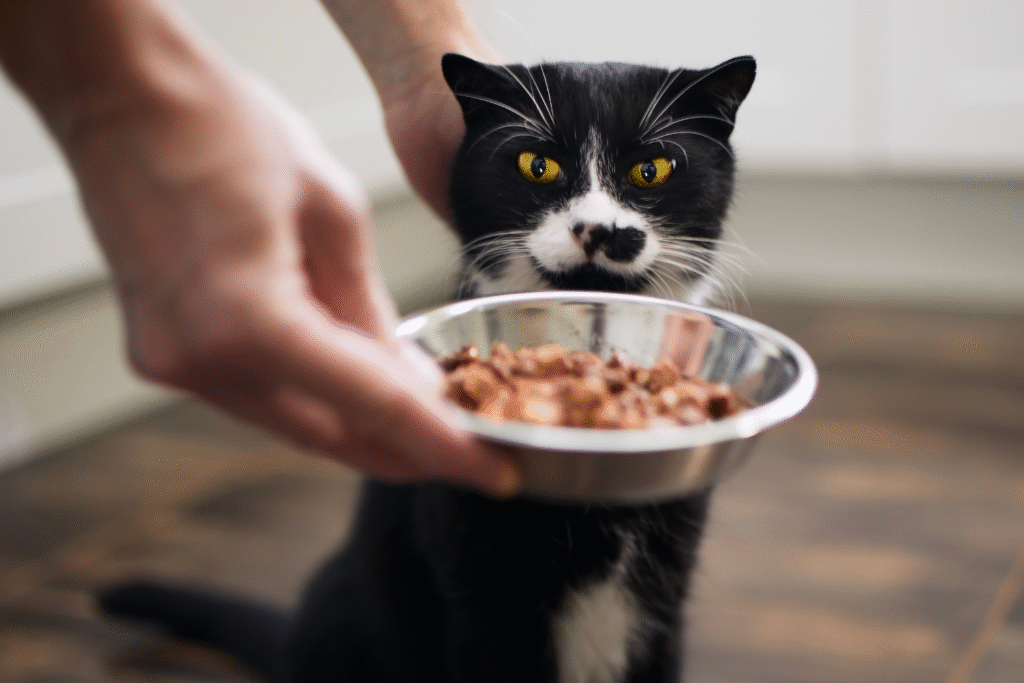
Cats depend on predictable rhythms that make their environment feel stable. A missed feeding time or sudden household noise change can unsettle them quickly. Research outlining feline stress responses shows how even slight disruptions elevate anxiety, as reported by the American Association of Feline Practitioners. Small changes create a sense that nothing happens when expected, and that uncertainty builds tension.
As these disruptions continue, cats retreat more often and watch the home carefully. Their world feels unpredictable, and their behavior shifts in ways owners may misread.
2. People approach their cats when they want distance.

Many owners move toward their cats too quickly, especially during attempts to bond. The cat may step back or flatten its ears, but people often ignore these early cues. Welfare assessments highlight how forced interaction increases stress, as stated by the Royal Society for the Prevention of Cruelty to Animals. Cats feel pressured when they cannot control contact, and that pressure becomes emotional strain.
Over time, they anticipate unwanted handling and stay near hiding spots. This avoidance reflects anxiety, not personality.
3. Overstimulation happens long before owners catch it.
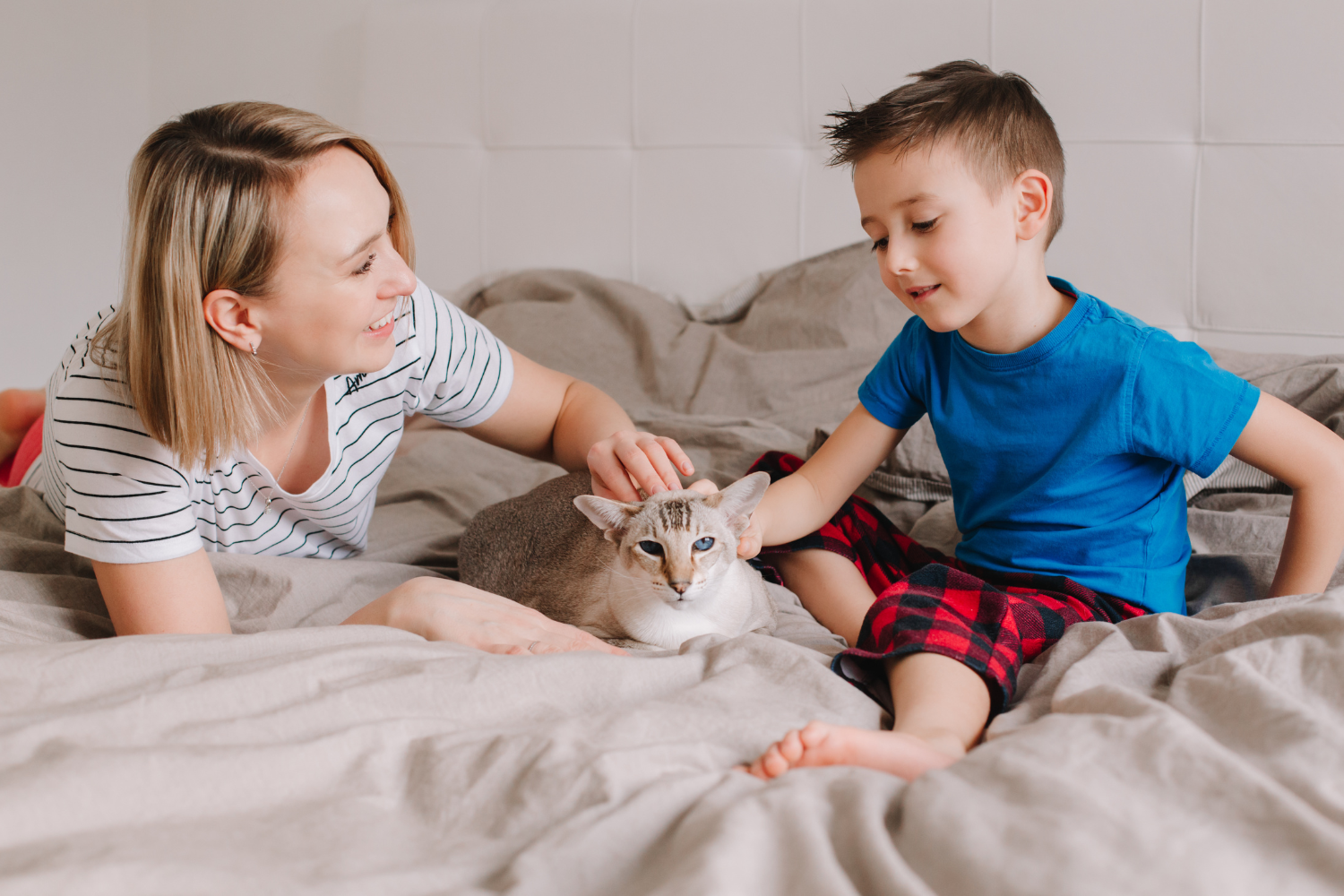
A relaxed cat can shift into discomfort from one extra stroke or slightly firmer pressure. Tail twitches and shoulder tension are often missed until the cat reacts defensively. Clinical observations map this fast escalation clearly, according to the University of California Davis School of Veterinary Medicine. Cats have a narrow threshold before touch becomes too much, and owners rarely notice the moment it changes.
Repeated overstimulation trains the cat to expect discomfort. They pull away sooner during interaction and appear anxious around normal affection.
4. Homes become overwhelming when noise spikes unpredictably.
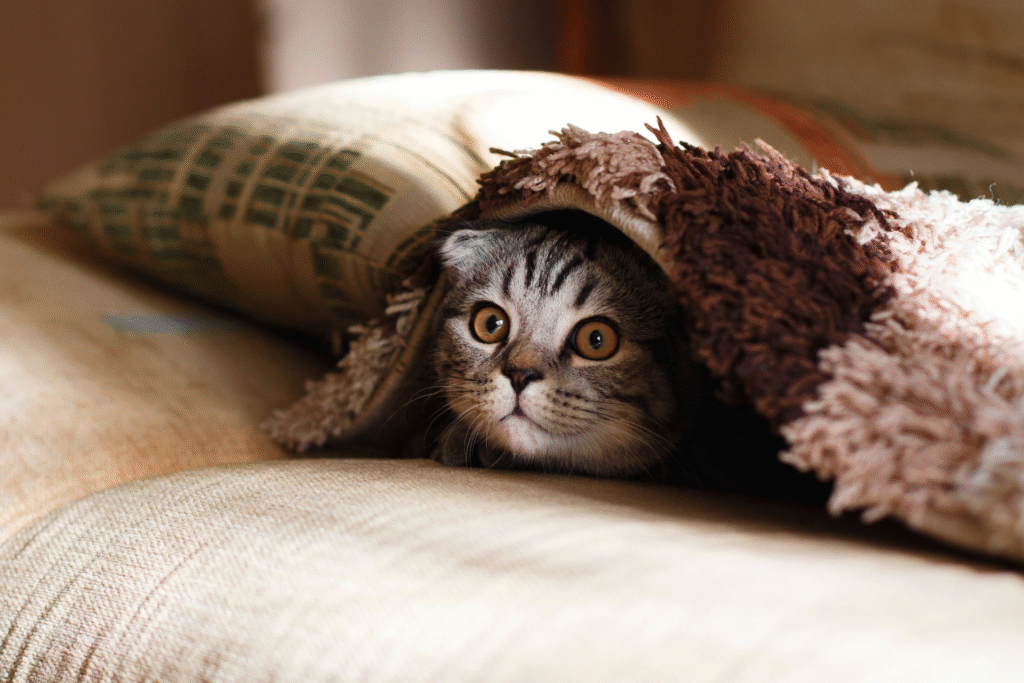
Loud voices, sudden crashes, or high volume entertainment can activate a cat’s stress response instantly. Their hearing is sensitive enough that even short bursts of sound feel intrusive. When these spikes repeat, the cat stops relaxing fully in shared spaces and begins watching the environment instead of resting.
Eventually they shift their routine around quiet areas. The constant anticipation of noise lowers their confidence and changes how they move through the home.
5. Territory changes disrupt a cat’s sense of control.

Small adjustments in furniture arrangement or blocked access to favorite perches can unsettle cats quickly. They rely heavily on stable layouts to navigate and feel secure. When their environment shifts without warning, they lose familiar pathways and vantage points. This change makes the home feel less predictable and more difficult to assess safely.
As these shifts accumulate, they explore less and stay closer to protected areas. Their shrinking comfort zone reflects a growing sense of stress.
6. Punishment teaches cats to expect sudden conflict.

Harsh tones, spray bottles, or abrupt corrections create confusion rather than learning. Cats do not associate punishment with the behavior that triggered it. They only register the sudden negative energy from someone they trust. This response increases their vigilance in everyday moments and makes the environment feel volatile.
As trust erodes, they anticipate tension even during simple interactions. Their anxiety deepens as they struggle to predict how people will react.
7. Owners miss subtle signals that cats rely on.

Cats communicate discomfort through small cues like ear shifts, slow eye narrowing, or stepping away. When these cues go unnoticed, the cat feels unseen and pressured. They eventually stop signaling because it changes nothing, and silence becomes a protective behavior.
Over time, they distance themselves to avoid moments where boundaries are ignored. Their withdrawal is a sign of emotional strain, not independence.
8. Play becomes stressful when it lacks meaningful variety.
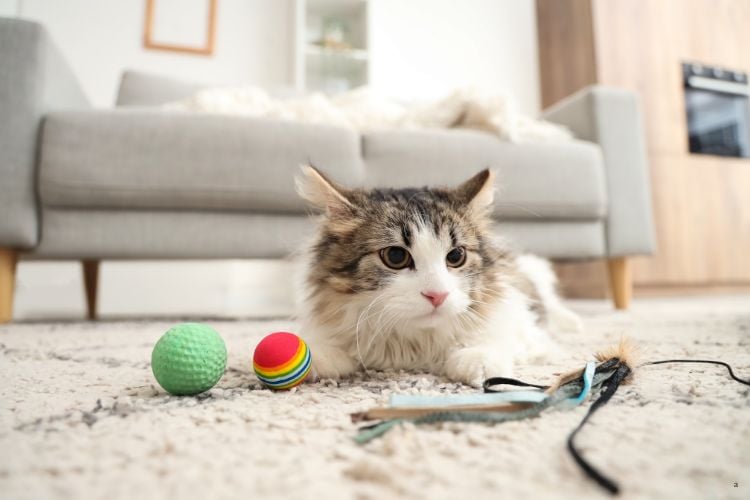
Repetitive games create frustration rather than satisfaction. Cats need changing textures, movement patterns, and challenges to release energy comfortably. When play stays the same every day, it stops engaging their instincts and leaves them restless. They may pace, vocalize, or behave erratically after stagnant stimulation.
That buildup of unused energy shifts into anxiety. Without variety, their natural drive to hunt and problem solve turns inward and heightens stress.
9. Independence gets mistaken for emotional distance.
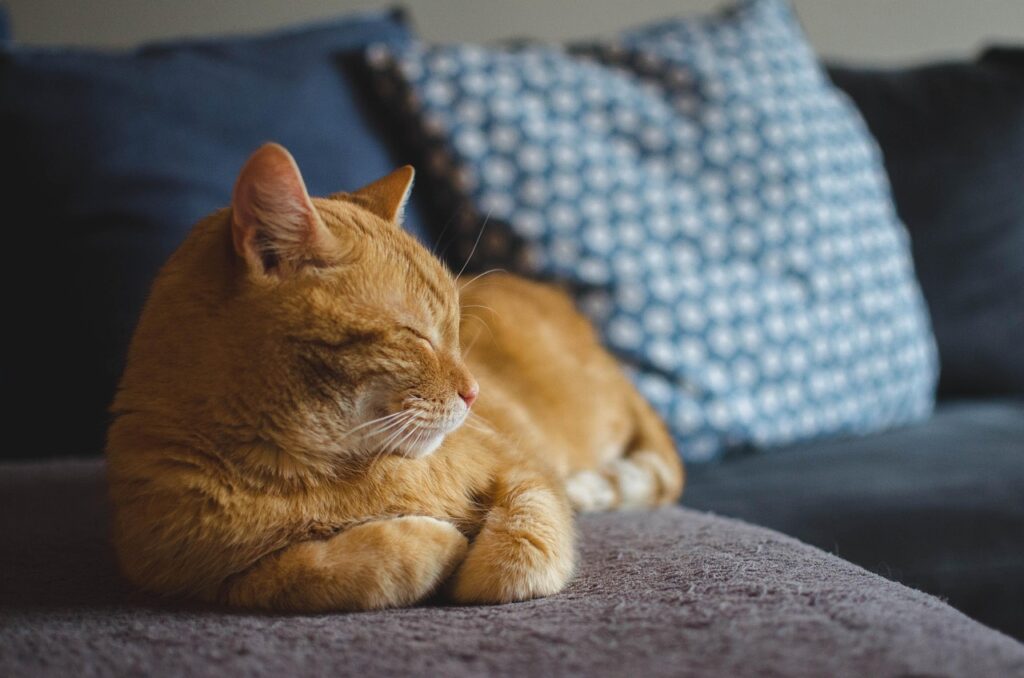
When a cat spends more time alone, owners often assume it prefers isolation. In reality, many cats retreat when overwhelmed. This retreat is a coping mechanism, not a reflection of temperament. When owners stop checking in, the cat feels disconnected socially and drifts further into stress.
Eventually the distance becomes routine. The cat’s quiet withdrawal goes unnoticed, and the emotional gap grows until the anxiety becomes entrenched.