Your Nose Might Know You’re Dying Before Your Brain Does

The body’s scent may reveal death before thought.

©Image license via Canva

Scientists are uncovering an eerie but fascinating truth—our sense of smell may warn of death long before the mind understands what’s happening. Research shows that the ability to detect and identify scents is tightly connected to survival and overall health. As the body weakens, smell fades, and chemical changes emerge that quietly signal internal decline. This isn’t superstition; it’s biology. The human body, through scent, appears to announce its fading vitality before the brain fully recognizes it. The nose, ancient and instinctual, may sense the end approaching with quiet precision.
Read more

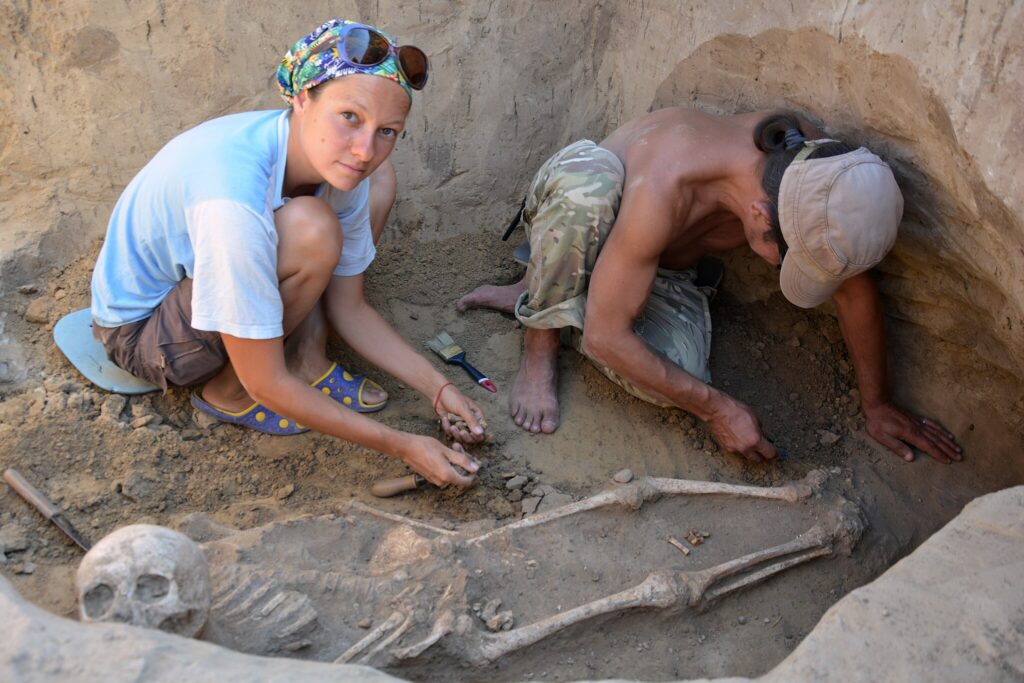
Bronze Age Warrior Grave Discovered, Sealed With Weapons Untouched for 3,500 Years

A remarkable burial unmasks a warrior’s intact weapon cache.

©Image license via Wikimedia Commons/Nataliya Shestakova

On the windswept Ceyranchol plains of western Azerbaijan, archaeologists uncovered a monumental burial mound, known as a kurgan, belonging to a warrior who died around 1800 B.C. Inside the tomb, the man rested in a semi-flexed position holding a rare bronze four-pronged spearhead, surrounded by intact weaponry and ritual items. This grave appears untouched for millennia, offering historians a pristine glimpse into the social structure, warfare and belief systems of the Middle Bronze Age South Caucasus. The intact nature of the find is extraordinarily rare and begins to rewrite what we thought we knew about this region.

Read more

Scientists Claim to Find Human DNA Inside a 2-Billion-Year-Old Martian Rock

A wild discovery sparks disbelief among real scientists.

©Image via Canva

A new viral claim has captured public attention: that human DNA was discovered inside a 2-billion-year-old Martian rock known as Black Beauty. The story exploded online after a Florida lab supposedly found human genetic traces in a meteorite believed to have come from Mars. Scientists, however, are calling the claim scientifically impossible. While Black Beauty is a genuine Martian meteorite, experts agree that any “human DNA” in it almost certainly came from modern contamination. The discovery has reignited fascination with Mars, and frustration among scientists who’ve spent years trying to separate real evidence from wishful thinking.

Read more

If Society Falls Apart, These 8 U.S. Spots Offer the Best Chance of Survival

Where isolation, resources, and resilience quietly intersect.

©Image license via Canva

When people talk about “collapse,” most imagine chaos, shortages, and desperate crowds. Yet certain parts of the United States are uniquely positioned to endure disaster, places where geography, water access, low population, and strong self-sufficiency could keep people alive while others struggle. Researchers studying sustainability and infrastructure have long noted that survival often comes down to one thing: local resilience. From remote valleys to mountain towns that quietly run off their own grids, these locations could become safe havens in a fractured world. What follows isn’t fantasy, it’s where reality and preparedness meet.

Read more

A Wall of Water 1,700 Feet High Wiped Out an Alaskan Bay

A record-breaking wave erased an entire landscape.

©Image license via Canva

In 1958, deep within the remote wilds of Alaska, one of the most violent natural events ever recorded unfolded in seconds. A massive earthquake along the Fairweather Fault dislodged an enormous slab of rock that crashed into Lituya Bay, creating a wave taller than any skyscraper on Earth. That wave, estimated at 1,720 feet high, obliterated everything in its path—trees, soil, and even sections of mountain. The story sounds almost mythical, but it’s entirely true. Decades later, scientists continue to study this staggering event to understand how land, water, and gravity created the world’s tallest tsunami.

Read more