Hidden layers may record Mars’s climate history.
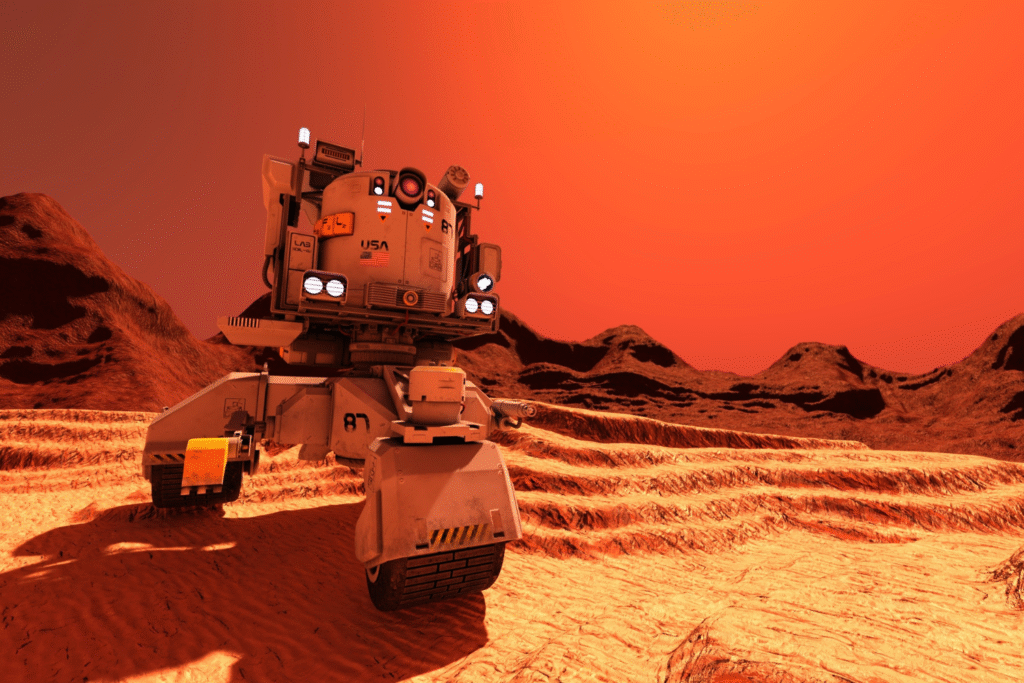
Mars might be playing the long game with its history, storing clues beneath its surface in thick layers of ice and dust that act like time capsules. Recent radar studies have revealed that in regions like the Medusae Fossae Formation near the equator, kilometers of buried water ice lie beneath layers of dust, preserving snapshots of past climate cycles and atmospheric shifts.
These ice-rich deposits aren’t just relics. They may chronicle epochs when Mars tilted differently, when its atmosphere was denser, and when water might have flowed more freely. Scientists see in those stratified layers a story that Earth can’t tell us about Mars’s changing face.