
Trust forms slowly through patterns cats never ignore.

In homes with more than one person, many cats make a clear, quiet choice. One human becomes the preferred presence, the one a cat seeks during rest, stress, or routine moments. This choice is not random and it is rarely about who tries the hardest. Cats assess humans the way they assess environments, through predictability, safety, and emotional regulation. Trust develops gradually through repeated interactions, not single gestures. What looks like favoritism is usually a long record of small, consistent signals that taught the cat where safety truly lives.
1. Consistency teaches cats which humans feel safe.

Cats are deeply pattern oriented animals. A human who behaves consistently day after day becomes easier for a cat to predict, and predictability lowers stress. Tone of voice, movement speed, reactions to mistakes, and daily rhythms all feed into this assessment. When a cat can reliably anticipate how someone will act, the nervous system relaxes and trust can begin forming.
Over time, the cat’s body language changes around that person. Muscles loosen, sleep deepens, and proximity increases. Inconsistent behavior, even when well intentioned, keeps cats alert. Trust grows fastest with humans whose behavior rarely surprises, because emotional safety depends more on reliability than affection.
2. Respect for boundaries becomes a defining trust signal.

Cats pay close attention to whether humans listen when they communicate discomfort. Subtle cues like tail flicks, ear rotation, skin rippling, or body stiffening are clear boundary signals to another cat. When a human responds appropriately by stopping or backing away, that respect registers immediately.
Ignoring boundaries damages trust quickly and deeply. Forced handling, prolonged petting, or restraining a cat after warning signs teaches the cat that communication is pointless. The human who honors limits teaches the opposite lesson, that signals matter. Over time, cats gravitate toward people who consistently allow them control over interaction, because control equals safety in feline social systems.
3. Feeding routines establish early emotional reliability.
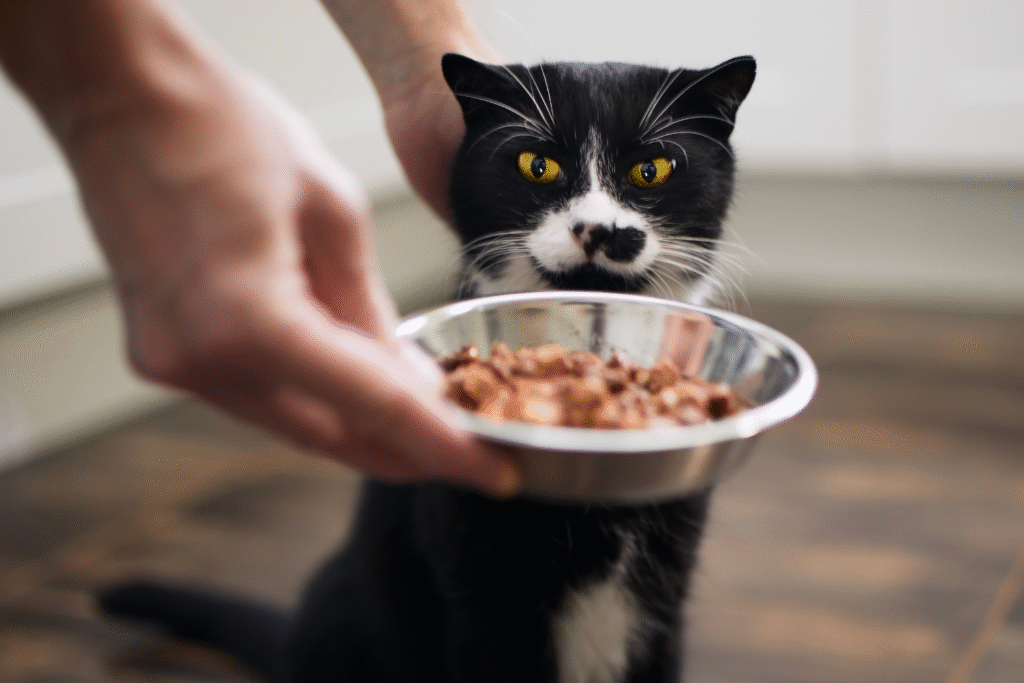
Food itself is important, but the emotional context around feeding matters more. Cats associate the human who feeds them consistently and calmly with resource security. Predictable timing, steady movements, and absence of tension during meals all contribute to a sense of stability.
This association goes beyond hunger. Feeding rituals become daily proof that needs will be met without conflict or unpredictability. Cats remember missed meals, rushed handling, or chaotic feeding environments. The human who delivers food with calm reliability becomes emotionally significant early, often forming the foundation for long term trust before other bonds develop.
4. Vocal tone influences long term emotional comfort.
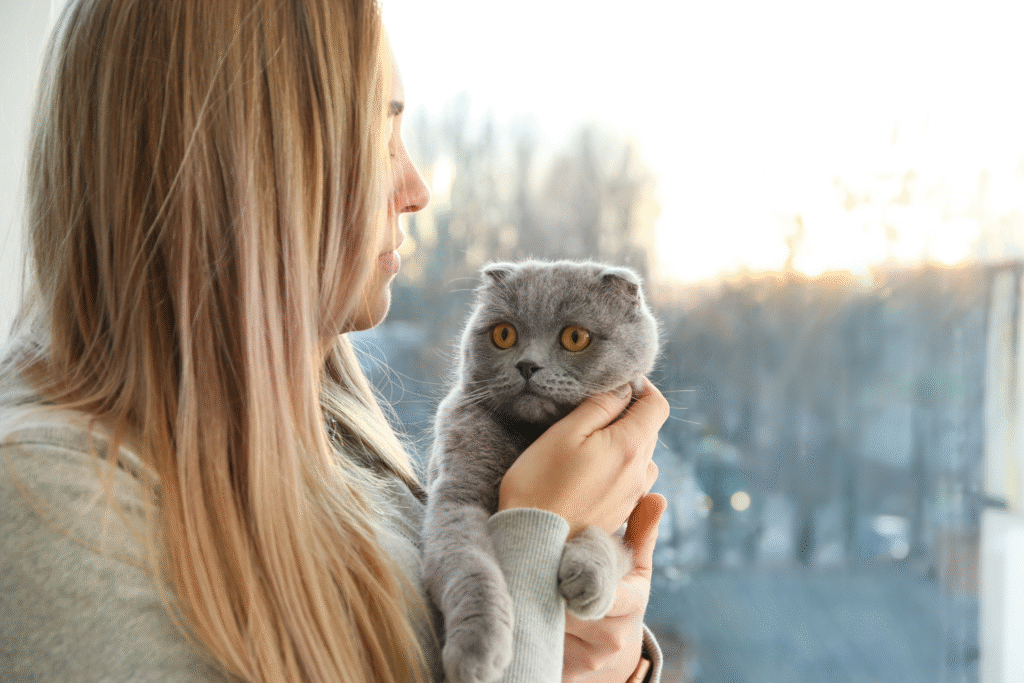
Cats respond far more to tone and cadence than to words. A steady, low, predictable voice communicates calm intent. Raised voices, sharp tones, or emotionally charged speech trigger vigilance, even when not directed at the cat.
Over time, cats learn which voices regulate their nervous system and which ones elevate it. The trusted human often speaks gently, even during stress or correction. That consistency teaches the cat that sound from this person does not predict danger. Trust deepens when auditory cues remain soothing rather than startling across many situations.
5. Movement patterns shape perceived threat levels.

Cats evaluate humans through body language constantly. Slow, deliberate movement feels readable and safe. Sudden gestures, looming approaches, or unpredictable changes in posture signal potential threat, even without negative intent.
The human a cat trusts most tends to move in ways the cat understands. Sitting instead of towering, approaching from the side, pausing before contact, and allowing the cat to initiate closeness all reduce perceived risk. Over time, these movement choices teach the cat that proximity to this person does not require constant vigilance, allowing trust to settle naturally.
6. Emotional availability outweighs constant attention.
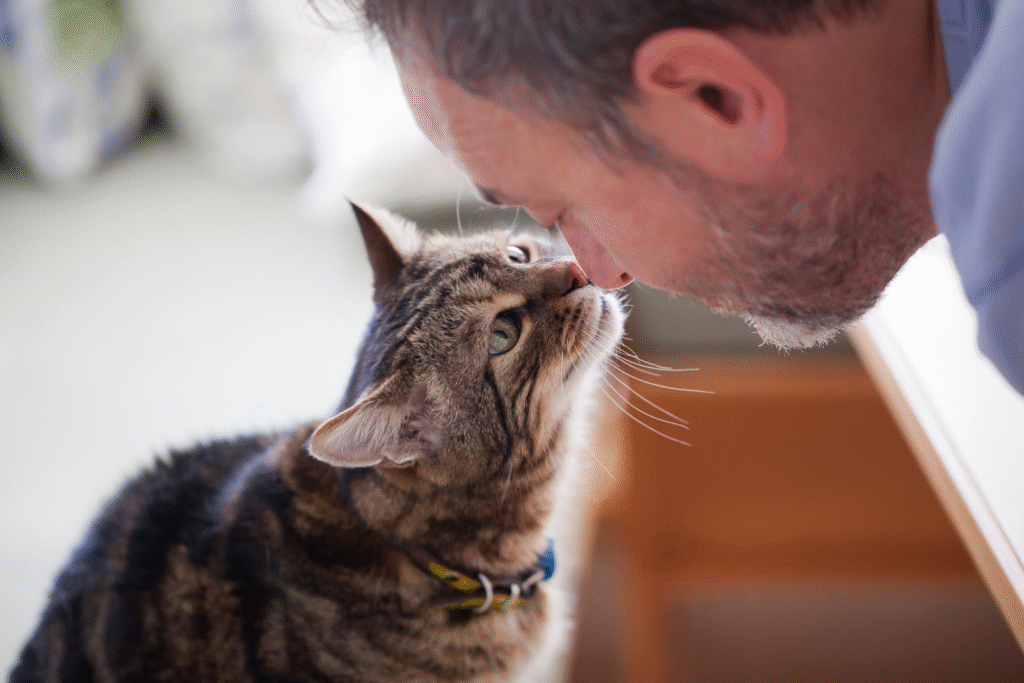
Cats distinguish between presence and pressure. A human who is emotionally available without demanding interaction creates a low stress environment that invites trust. Sitting nearby without staring, touching, or calling allows the cat to approach on its own terms, which reinforces a sense of control.
Over time, cats associate that human with emotional neutrality and safety. Constant attempts to engage, even affectionately, can feel intrusive. The trusted human becomes the one who is reliably there but never insistent. This balance teaches the cat that closeness is optional, not enforced, and that choice strengthens long term trust more than frequent attention ever could.
7. Reactions during stress permanently shape trust levels.

Stressful moments reveal far more than calm ones. Loud noises, visitors, moving furniture, or schedule disruptions all activate a cat’s threat response. During these moments, cats closely observe how humans react. Panic, anger, or chaotic behavior amplifies fear and erodes trust quickly.
Humans who remain steady during stress become emotional anchors. Calm voice, slow movement, and protective behavior signal safety when the environment feels unstable. Over repeated events, the cat learns which human helps regulate fear rather than magnify it. Trust often deepens most during disruption, because safety proven under pressure carries lasting weight in a cat’s memory.
8. Handling during vulnerable moments leaves lasting memory.

Cats never forget how they are treated when they feel vulnerable. Grooming, nail trimming, medication, illness, or carrier preparation all create heightened sensitivity. Rough handling or impatience during these moments damages trust deeply, even if daily interactions are positive.
Gentle, deliberate handling has the opposite effect. A human who moves slowly, pauses when tension rises, and communicates calm presence teaches the cat that vulnerability does not equal danger. These moments form powerful emotional memories. Trust earned during discomfort often outweighs trust built during play, because it proves safety when the cat has the least control.
9. Shared routines create a private bond language.
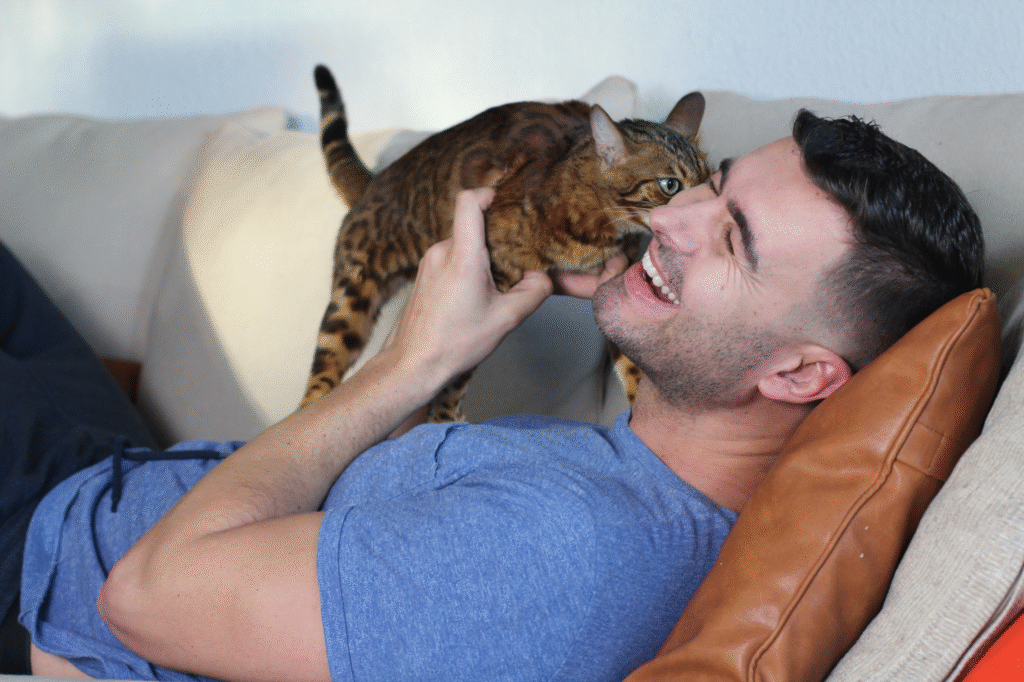
Cats thrive on routine, and shared rituals build a quiet emotional shorthand between cat and human. Morning greetings, evening settling, window watching, or bedtime routines become predictable anchors that reinforce belonging and familiarity.
These routines are rarely dramatic, but repetition gives them weight. The human involved in these daily moments becomes emotionally distinct. Over time, the cat associates that person with continuity and comfort. Trust grows through familiarity, and familiarity grows through shared rhythms that remain stable even as other parts of life change.
10. Trust forms through countless small evaluations.
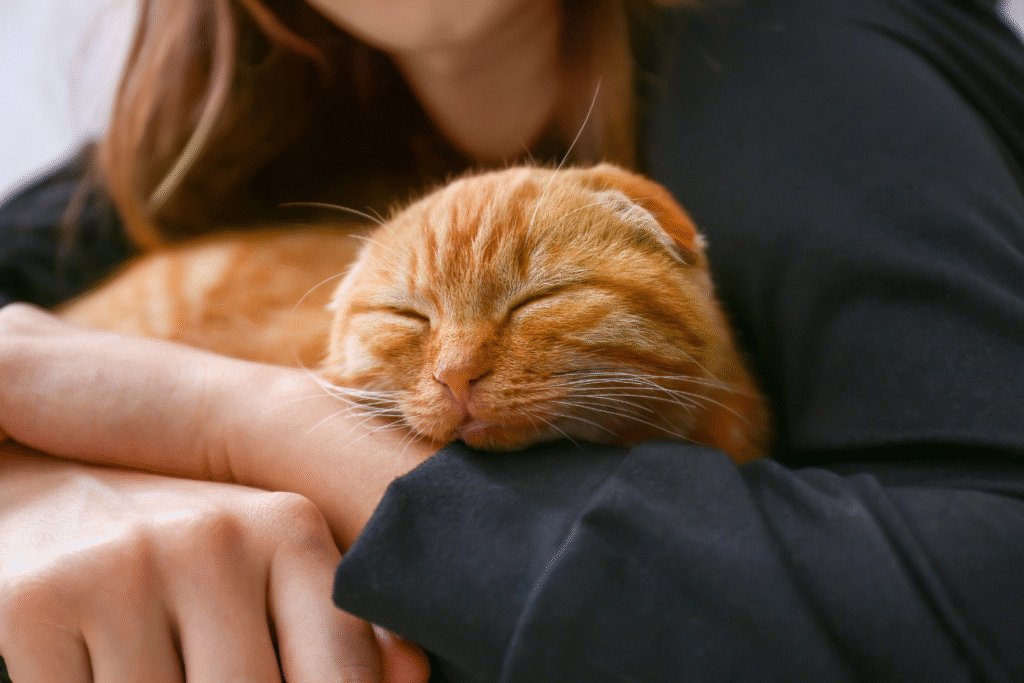
Cats do not choose a trusted human suddenly. The decision forms through hundreds of micro evaluations made over time. Each respectful interaction, calm response, and predictable behavior adds weight. Each ignored boundary or stressful reaction subtracts from it.
Eventually, the balance becomes clear. The trusted human is the one who consistently made the cat feel safe, understood, and in control. This choice reflects accumulated experience, not favoritism. To a cat, trust is not emotional loyalty. It is a survival judgment, carefully built and rarely reversed once fully formed.