
One calm decision shapes everything that follows.
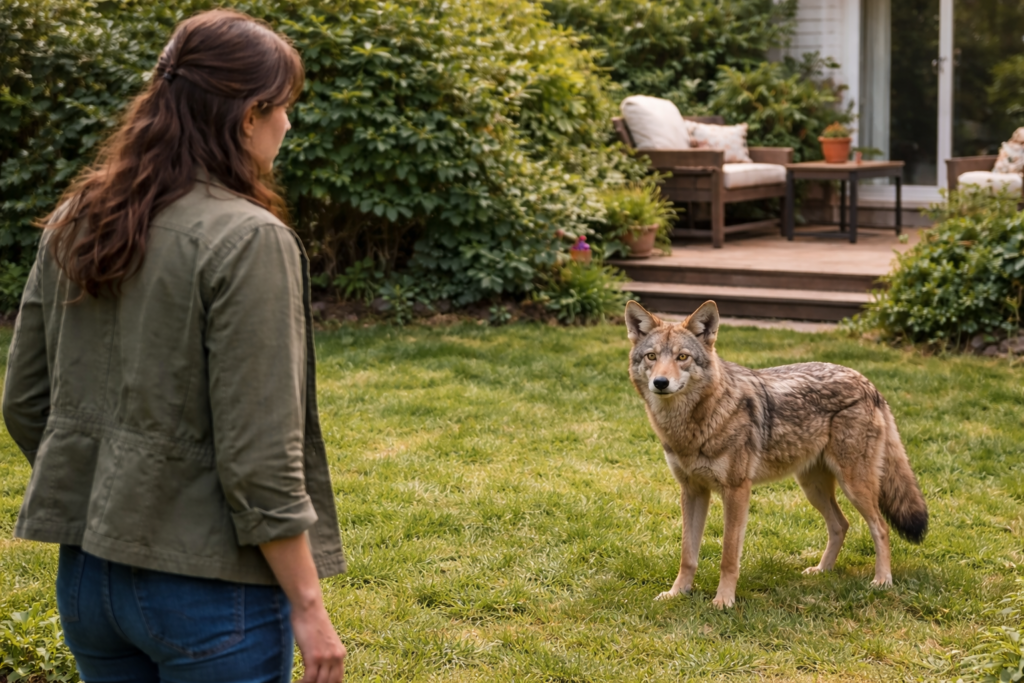
Coyotes now move comfortably through suburbs from Los Angeles to Denver to Toronto. Seeing one in a yard can feel sudden and unsettling, especially during early morning or dusk. Yet these encounters rarely turn dangerous when humans respond correctly. Wildlife biologists stress that the first moments matter because coyotes quickly learn from outcomes. A single reaction can either reinforce fear or accidentally teach confidence. What you do next sets the tone not just for that coyote, but for future visits as well.
1. Stand your ground and stay visibly confident.

When a coyote appears, the most important action is to hold your position and project confidence. Coyotes constantly assess risk. Retreating quickly can register as weakness or prey behavior. Standing tall, facing the animal, and making deliberate movements communicates that your space is not negotiable. This moment shapes how the coyote categorizes humans in that area.
Wildlife conflict researchers emphasize this response because coyotes that learn humans yield space lose fear over time according to the California Department of Fish and Wildlife. Confidence reinforces natural wariness and reduces repeat visits to residential yards.
2. Use your voice to reassert human presence.
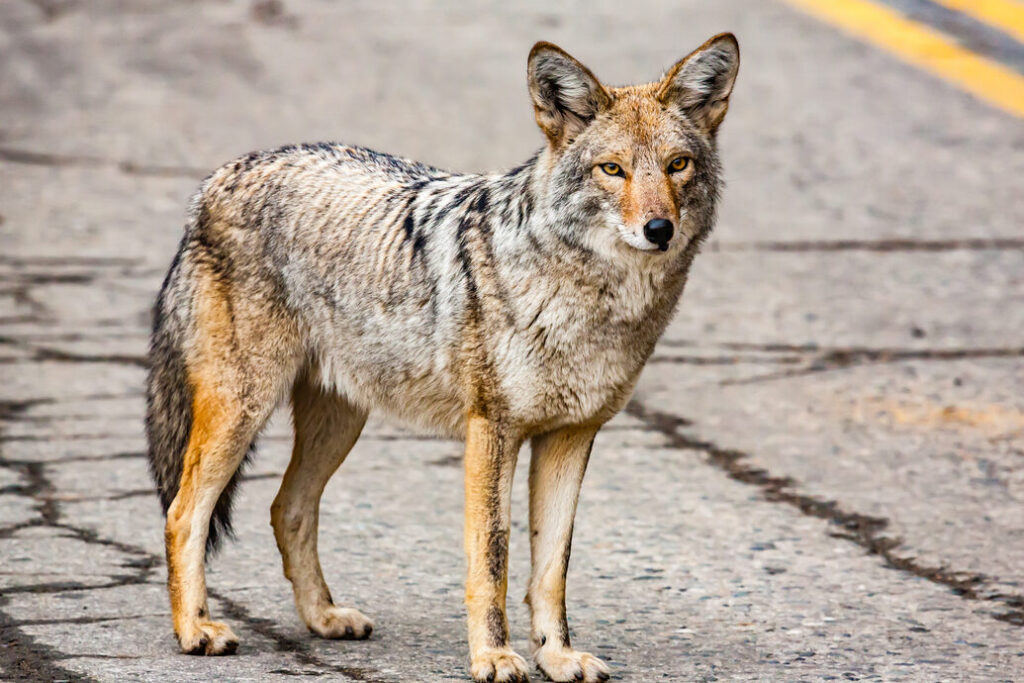
Coyotes are highly attuned to sound and tone. Speaking loudly and firmly signals that a human has noticed them and is not passive. Short assertive phrases or shouting works better than high pitched panic noises. The goal is clarity, not chaos, so the animal understands it has crossed a boundary.
Urban wildlife managers note that vocal deterrence is effective when paired with posture as stated by the National Park Service. Coyotes that associate human voices with confrontation rather than retreat are less likely to linger or return.
3. Maintain eye contact without advancing forward.

Direct eye contact communicates awareness and control. Coyotes rely heavily on body language when deciding whether to stand ground or retreat. Looking away too quickly can be read as disengagement. However moving toward the animal aggressively can escalate the encounter unnecessarily.
Field observations show that steady eye contact paired with stillness encourages retreat as reported by the Humane Society of the United States. The animal often pauses reassesses and then moves off once it recognizes the human is alert and unafraid.
4. Keep pets indoors immediately and securely.

Coyotes are opportunistic hunters and small pets resemble natural prey. Even confident coyotes that avoid people may fixate on animals moving erratically. Bringing pets inside removes the strongest incentive for lingering.
Veterinarians often see incidents occur when owners underestimate this risk. Coyotes that associate yards with accessible pets are more likely to return. Removing that reward quickly helps reset the yard as uninteresting territory.
5. Avoid running which can trigger chase instincts.

Coyotes possess a strong chase response shaped by hunting behavior. Sudden running movements can activate pursuit even when the animal was initially cautious. Remaining calm and deliberate prevents that instinct from engaging.
Wildlife experts consistently note that encounters escalate when humans flee. Slow controlled steps backward maintain safety while reinforcing that the coyote has not gained control of the interaction.
6. Remove food attractants once the coyote leaves.
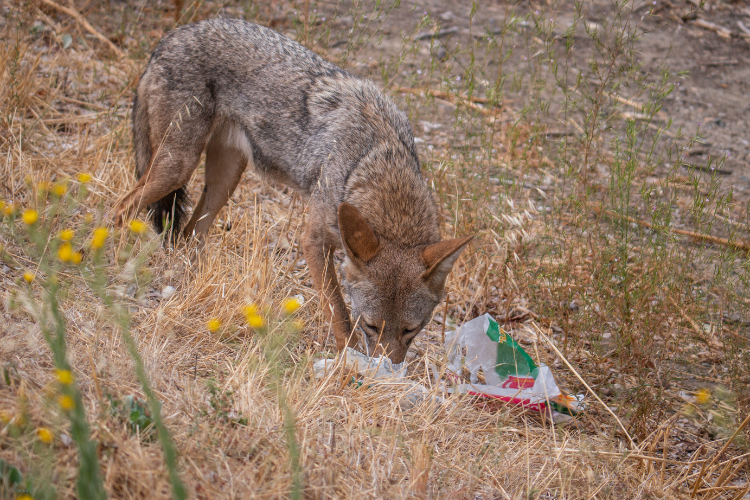
Coyotes visit yards for reasons. Fallen fruit unsecured trash compost and pet food create predictable rewards. Even bird feeders can attract rodents that coyotes follow. Cleaning these up matters more than deterrents alone.
After a sighting wildlife agencies recommend inspecting the property thoroughly. Reducing food access lowers the chance of repeat visits and helps keep coyotes focused on natural prey elsewhere.
7. Understand seasonal behavior to reduce misinterpretation.

Coyotes behave differently throughout the year. During spring and early summer adults defend den areas more actively. In fall juveniles disperse and explore new territories. A sighting does not always indicate aggression.
Recognizing these patterns helps homeowners respond appropriately rather than with fear. Most defensive behavior involves escorting rather than attacking and ends once boundaries are respected.
8. Use deterrents consistently not sporadically.
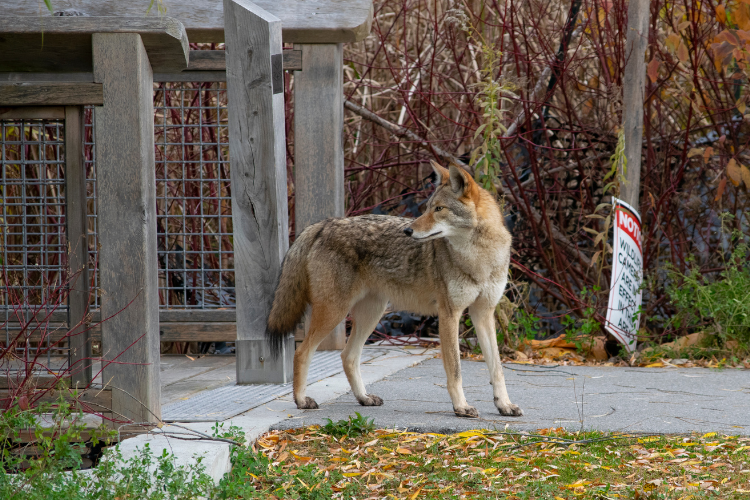
Motion lights noise devices and yard modifications work best when applied consistently. Coyotes quickly learn patterns. A deterrent used only once loses effectiveness. Consistency maintains unpredictability from the animal’s perspective.
Wildlife specialists emphasize routine reinforcement. When coyotes encounter resistance every time they pass through an area they shift routes and reduce residential use naturally.
9. Teach neighbors to respond the same way.
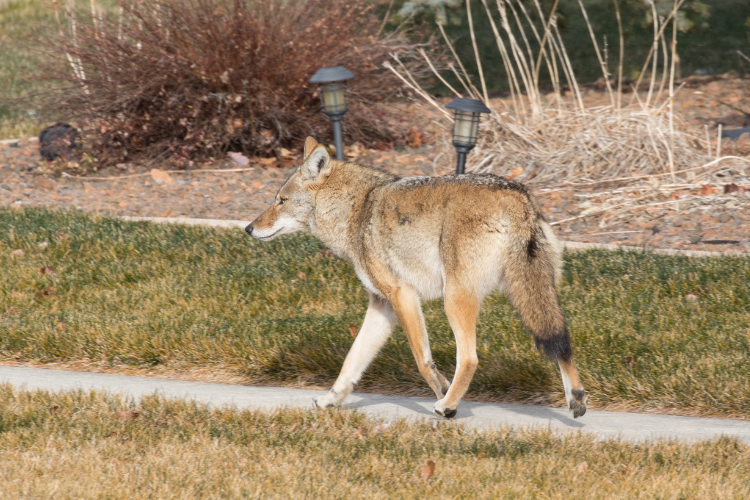
Coyotes do not recognize property lines. One household reacting confidently while another retreats or feeds wildlife sends mixed signals. Consistent community response shapes coyote behavior more effectively than isolated action.
Neighborhood education programs in cities like Chicago show reduced conflicts when residents follow the same guidelines. Shared understanding prevents habituation and keeps coyotes wary of human spaces.
10. Remember coexistence works better than removal.
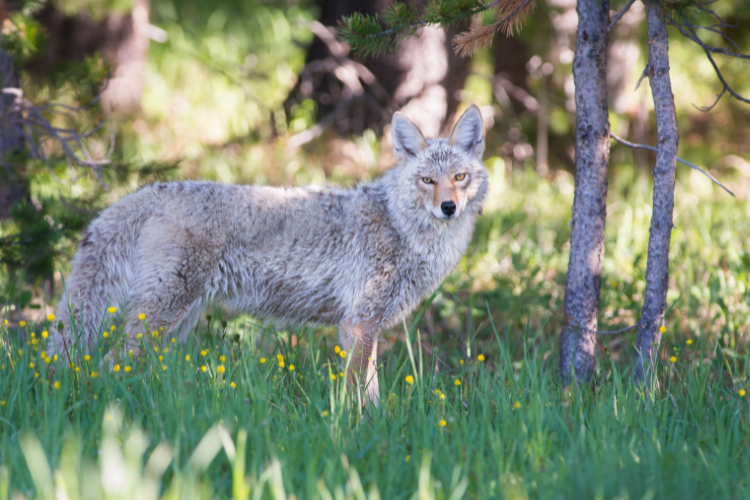
Removing coyotes rarely solves long term issues. Vacated territory is quickly filled by others. Stable populations with healthy fear of humans create fewer conflicts than constant disruption.
Wildlife ecologists emphasize coexistence strategies because they align with natural behavior. Calm confident responses teach coyotes to keep distance, allowing humans and wildlife to share space with minimal risk.