
This discovery showcases preservation far beyond typical fossils.
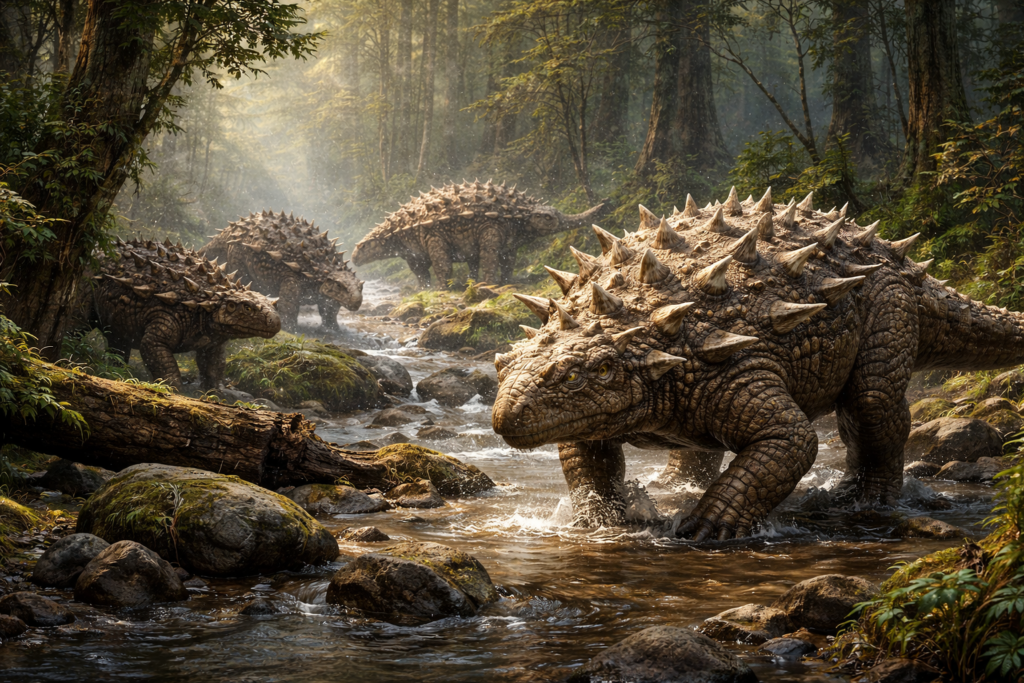
At first, it did not look like something that should be possible. Fossils are supposed to leave behind fragments, impressions, pieces that hint at what once existed, not something that appears almost intact. But this discovery did not follow those expectations. What emerged looked preserved in a way that seemed to resist time itself, holding onto details that should have disappeared millions of years ago. Scientists immediately recognized that this was not just another fossil, but something that did not fit comfortably within existing explanations. The more closely it was examined, the harder it became to explain how so much had remained.
1. The discovery began when a miner uncovered the fossil unexpectedly.
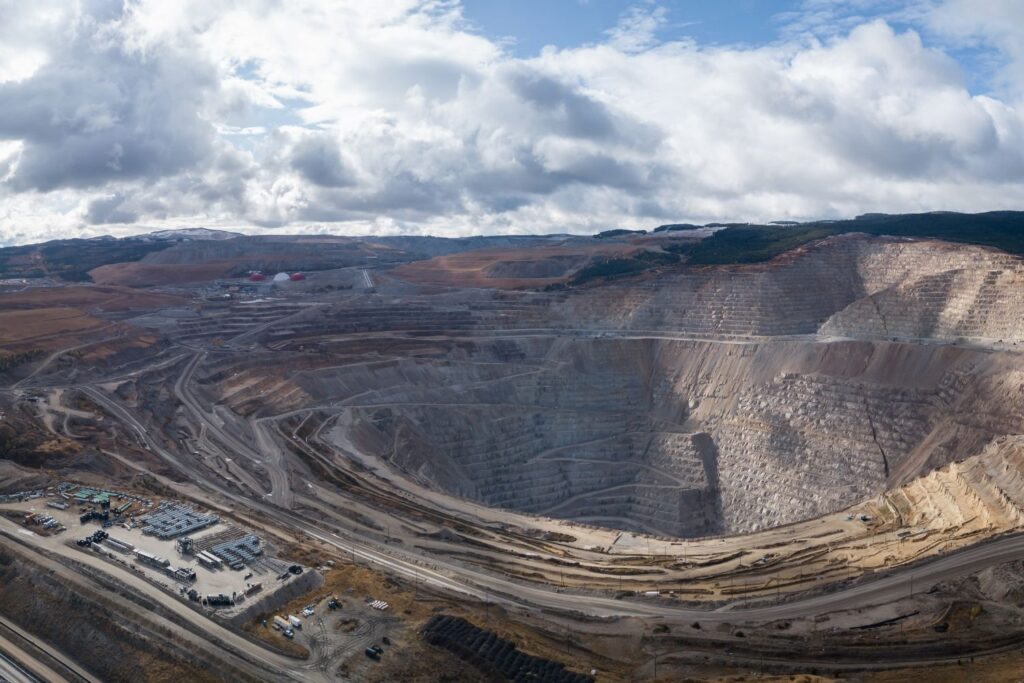
In 2011, a worker from Suncor Energy noticed irregular rock patterns while clearing material at an Alberta mine. The structure was too organized to be random, prompting him to alert his supervisor. When paleontologists arrived, they realized the find was extraordinary, as reported by National Geographic in their coverage of the event. The fossil of a Borealopelta markmitchelli did not resemble typical dinosaur remains found in the region.
The team immediately stabilized the block and transported it to the Royal Tyrrell Museum. Once safely inside the lab, they saw how intact the specimen truly was. The outlines of the body were preserved in full three dimensional form. Its condition promised information that most fossils cannot provide.
2. Researchers identified the specimen as Borealopelta markmitchelli.
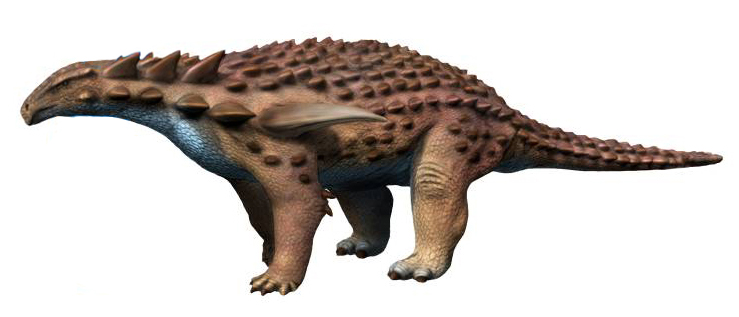
Once preparation began, paleontologists recognized the animal as a nodosaur, a heavily armored plant eater. The skin impressions and armor arrangement were so clear that they could classify it with confidence. This level of preservation allowed for unusually detailed anatomical study, as stated by the Royal Tyrrell Museum in their research documentation.
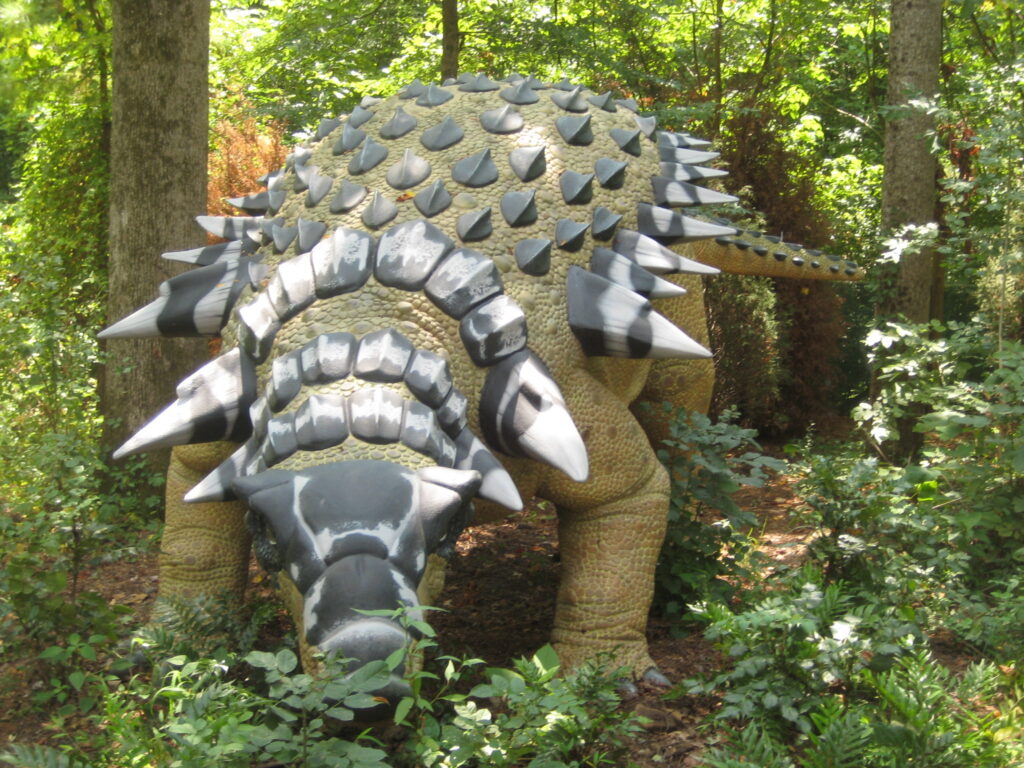
Its armor plates and spikes matched patterns predicted for this group but had never been seen with such clarity. The plates followed the curve of its body as though the animal had been frozen mid movement. This made the specimen invaluable for understanding how nodosaurs defended themselves and navigated their environment.
3. Preparation revealed soft tissues rarely preserved in dinosaurs.
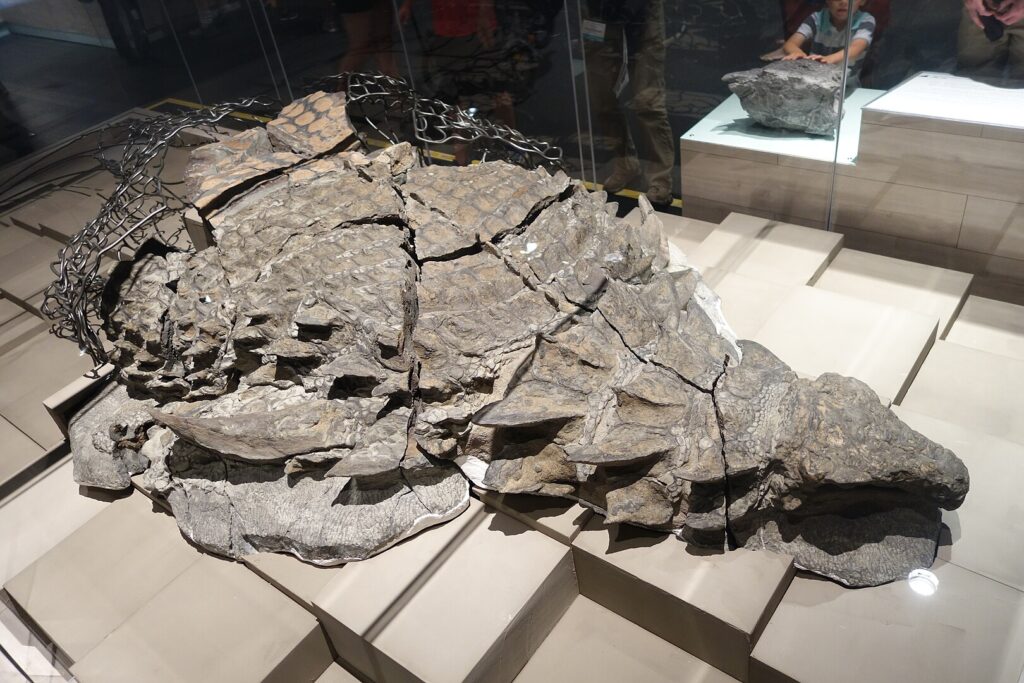
Technician Mark Mitchell spent more than six thousand hours removing rock from the body. His work exposed muscle outlines, skin patterns and the arrangement of connective tissue that remained in remarkable condition. These details were far beyond what paleontologists typically expect, as discovered by Smithsonian Magazine during their reporting on exceptional dinosaur soft tissue finds.
The clarity allowed researchers to identify structures that normally disappear within days of death. Even the scales varied in shape across different regions of the body. These variations helped map how the animal’s skin adapted for protection and flexibility.
4. The fossil was likely buried rapidly after a flood event.
Sediment around the body suggested it died near a coastal region before being washed into deeper water. The weight of fine mud covered it quickly, sealing it from scavengers. Without oxygen, decay slowed long enough for minerals to replace the tissues while retaining their shape.
This rare combination of burial speed and environmental chemistry preserved the body in its lifelike pose. Such conditions are so rare that paleontologists considered the find a once in a lifetime event. It offered an almost perfect snapshot of a moment from the early Cretaceous period.
5. Its preserved skin revealed details about color patterns.
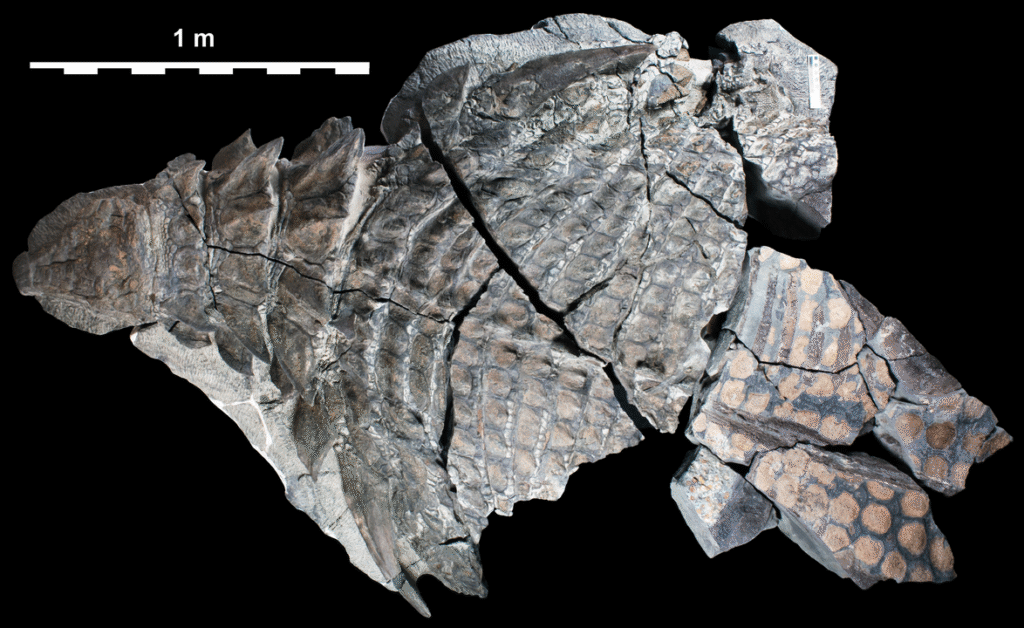
Mineral staining across the skin showed distinct shading along the back and sides. Researchers used chemical analysis to identify remnants of pigmentation in the scales. This allowed them to estimate the dinosaur’s original coloration with surprising accuracy.
The pattern suggested Borealopelta used darker tones across its upper body for concealment. These findings aligned with theories that even armored dinosaurs relied on camouflage for survival. The preserved skin made these interpretations possible in a way no other nodosaur fossil could.
6. The armor plates stayed fixed exactly as they appeared in life.
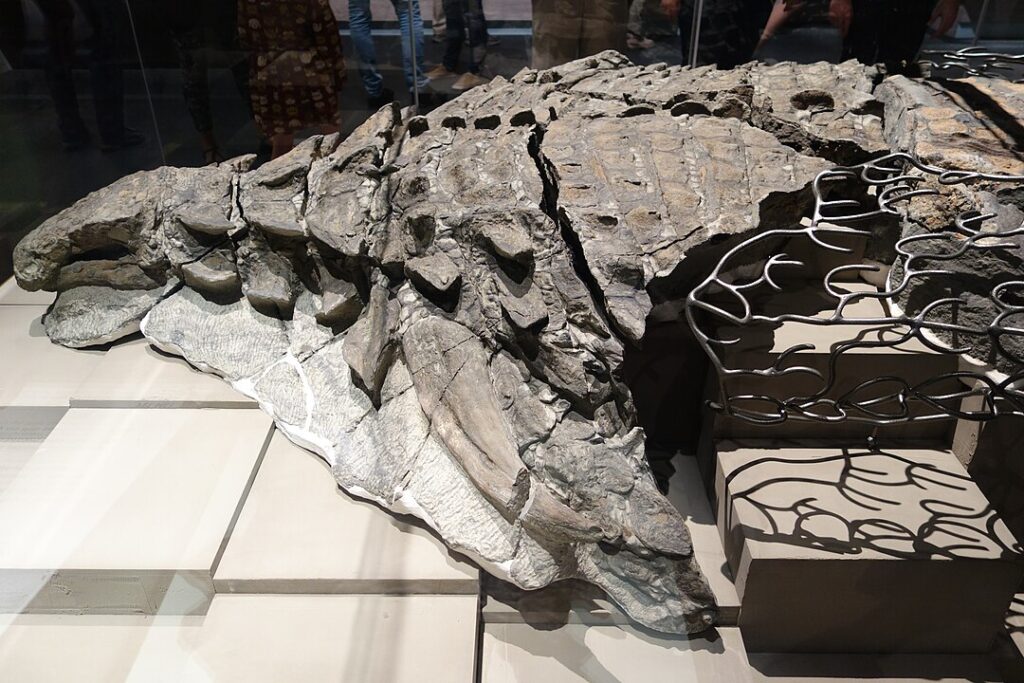
Most fossils shift or flatten during burial, but this specimen kept the plates locked in position. They curved neatly along the ribcage and tail. This arrangement allowed researchers to reconstruct the dinosaur’s defensive structure without speculation.
Each plate showed clear edges and texture. These details confirmed theories about how nodosaurs layered their armor to resist predators. The fossil served as the most complete visual reference for the group ever found.
7. The discovery shed light on early Cretaceous ecosystems.
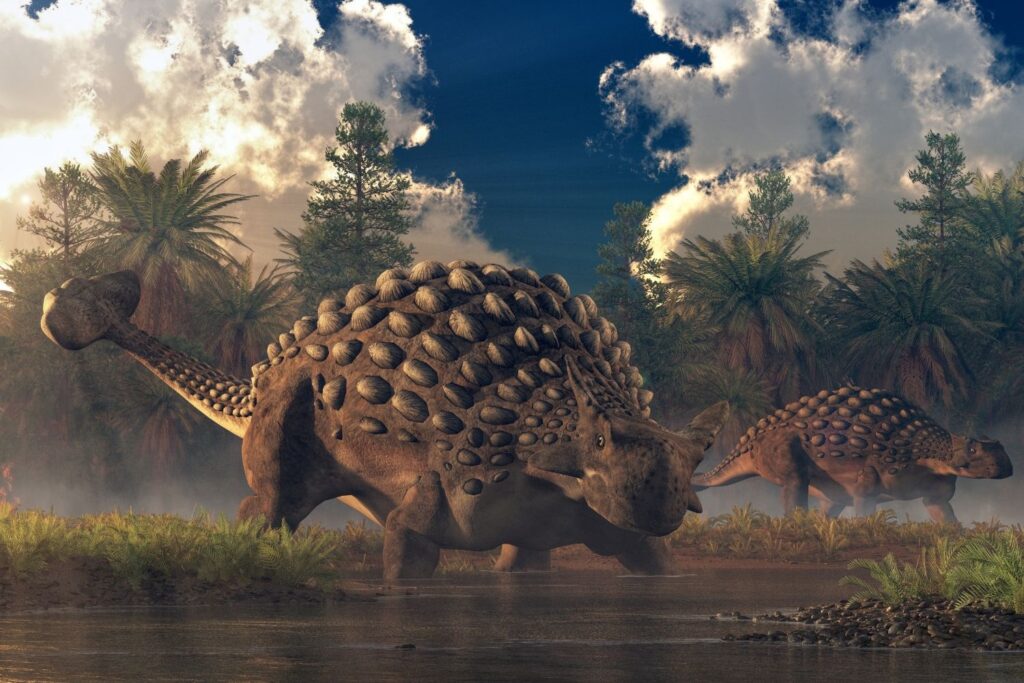
Because the skin remained intact, researchers gained insight into the climate and habitat the dinosaur lived in. Chemical traces in the surrounding rock indicated a warm coastal environment rich in vegetation. These conditions matched models for early Cretaceous Alberta.
By studying the fossil’s preserved stomach contents, scientists concluded it fed on specific types of ferns and cycads. These details helped refine environmental reconstructions for that region of ancient Canada.
8. Researchers learned new details about nodosaur muscle structure.

The preserved contours of the limbs showed how the muscles attached and functioned. This helped paleontologists model how the animal walked and supported its weight. They found evidence of powerful forelimbs that helped the dinosaur navigate dense vegetation.
The tail structure also indicated strong musculature for balance. These insights would not have been possible without the fossil’s exceptional preservation. The animal’s biomechanics became clearer than ever before.
9. The fossil confirmed behavior patterns previously based on speculation.
Evidence of healed injuries in the skin suggested Borealopelta survived encounters with predators. The placement of scars matched expected attack points for large theropods. This offered direct proof that nodosaurs interacted with carnivores in predictable ways.
These details helped scientists understand survival strategies beyond armor alone. They saw how the dinosaur positioned itself during conflict and how its body absorbed stress. The fossil added behavioral context to a species previously known mostly from scattered bones.
10. The find redefined what paleontologists consider possible in fossil preservation.
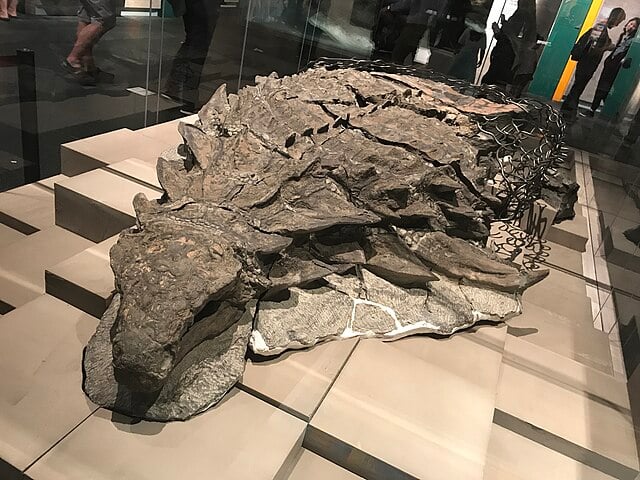
Before this discovery, many believed large dinosaurs almost never preserved soft tissue in lifelike detail. Borealopelta changed that view instantly. It proved that under the right circumstances, entire sections of skin and armor can survive intact for millions of years.
The specimen encouraged researchers to reconsider how often similar finds might be waiting in overlooked deposits. New scanning and imaging methods now focus on detecting subtle soft tissue signals. The Alberta discovery showed that fossils can exceed expectations in ways no one predicted.