
The early signs often look subtle before becoming disruptive.

Watching a dog hesitate at a familiar doorway or struggle to recognize a once loved routine can feel devastating. For many aging pets, these moments are not stubbornness or disobedience, but early signs of canine dementia. As memory, awareness, and sleep patterns change, dogs may become anxious, disoriented, or distant. Owners are often left wondering when normal aging crosses into something more serious, and how to help before confusion deepens.
1. Your dog seems confused by familiar faces.
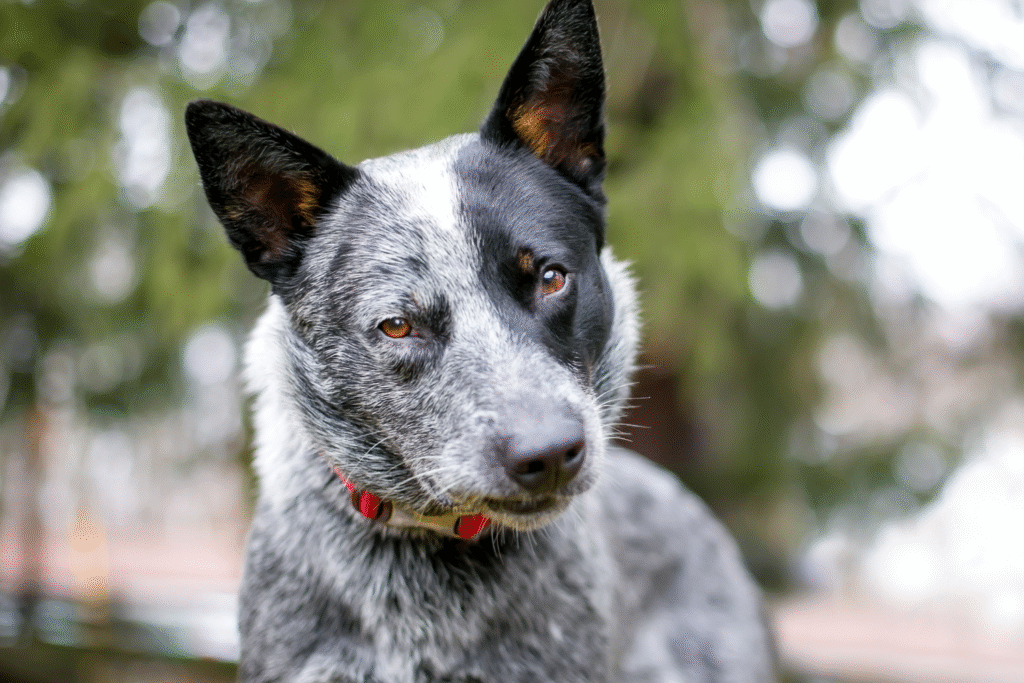
A dog may pause when you enter the room, studying you instead of rushing in. This often shows up in calm places like the kitchen at breakfast or the quiet hallway before bed. The dog is not being stubborn, it is searching for context and coming up blank.
That stalled recognition can reflect early cognitive decline in social memory pathways. According to the American Veterinary Medical Association, difficulty recognizing familiar people can be an early sign of canine cognitive dysfunction.
2. Greeting rituals suddenly disappear without warning.

Sometimes the front door opens and nothing happens. A dog who used to spin and grin may stay planted, blink slowly, then approach late. Owners notice it on weekdays in the evening, not just after travel. The ritual is missing, like a familiar song with the chorus erased, even when the leash appears.
This shift often traces to weakened associative memory, not coldness. Routine linked behaviors can fade as cognitive processing slows, as reported by the Journal of Veterinary Behavior.
3. Familiar rooms start to feel unfamiliar.

A dog can wander into the living room and stop, staring as if the furniture moved overnight. It may pace near corners, hesitate at thresholds, or choose the wrong doorway. Many families notice it most around dusk when shadows stretch and cues get muddy, especially after dinner and lights dim indoors.
Spatial disorientation is a hallmark of canine cognitive dysfunction. Declining brain mapping has been documented in aging dogs, as discovered by Veterinary Clinics of North America Small Animal Practice.
4. Nighttime restlessness becomes a repeating pattern.

Night can flip a calm dog into a restless one. Pacing begins in the hallway, then a stop at the water bowl, then a long stare at a blank wall. Some dogs wake at 2 a.m. and wander as if waiting for directions, noses low to the floor. Owners in apartments notice it because every step echoes.
As circadian control weakens, the brain struggles to settle into sleep. Darkness removes cues, so confusion grows, and the dog cannot fully relax.
5. Learned commands stop making sense to them.

A command lands, but the meaning slips away. You say sit and the dog looks to the side, then offers paw, then freezes. In the yard it may forget recall, even with a familiar tone and a favorite treat in hand right there. This can feel like disobedience, yet the dog often seems earnest and slightly puzzled.
Memory circuits that connect words to actions degrade with cognitive dysfunction. Response speed drops, and the dog cannot retrieve the learned sequence reliably.
6. Emotional responses feel delayed or mismatched.

Emotions can arrive late, or arrive wearing the wrong outfit. A hug that once melted the dog may trigger a startle. A door closing softly can spark frantic barking. Then, a moment later, the dog settles as if nothing happened. Families often notice this during busy mornings when small noises stack up, like keys and footsteps in a row.
Cognitive decline disrupts how the brain filters and labels stimuli. When interpretation is inconsistent, reactions become mismatched and harder to predict.
7. Social withdrawal replaces once strong attachment.

Closeness may start feeling like work for the dog. A pet that used to follow you room to room might choose the laundry area or a back corner instead. During gatherings it may leave the living room and lie alone, even when called, then drift to another spot. The shift can be gentle, but it repeats day after day.
Processing multiple voices and movements taxes an aging brain. Solitude reduces overload, so withdrawal becomes a coping strategy, not a grudge.
8. House training accidents return unexpectedly.

Accidents can return after years of perfect habits. The dog may stand by the door, then turn away, then urinate nearby as if the cue arrived too late. Some dogs forget their usual outdoor spot and circle in confusion. Owners often notice this first on nights or cold mornings when routines shift and schedules tighten.
Cognitive dysfunction can break the link between bodily signals and learned rules. The dog may not recognize urgency, or may not remember where to go.
9. Repetitive behaviors start appearing daily.

Repetition can take over the day. A dog may pace the same loop from couch to window to hallway, then repeat it again, even after being redirected. Others lick floors, circle before lying down, or get stuck behind furniture. The behavior often appears at the same time each afternoon, like an internal alarm, without pause.
When executive function declines, smooth transitions between actions fail. The brain defaults to predictable loops that feel safe, even if they look purposeless to us.
10. Anxiety increases in predictable environments.

Anxiety can rise in the safest places. The dog may cling, whine, or shadow you through the house, then panic when you step into another room. Some startle at the dishwasher or the mail slot, sounds they once ignored. This often intensifies during evenings when the home is quiet and shadows lengthen near doorways, even in daylight sometimes.
With cognitive decline, filtering and interpretation weaken. Ordinary stimuli feel unfamiliar, and the dog reacts as if the environment cannot be trusted.
11. Personality changes feel subtle but persistent.

Personality shifts can feel like watching a friend change. A playful dog may stop initiating games, or a patient dog may snap when bumped. Some become unusually needy, others seem distant. The changes are often small at first, then they settle into a new normal that is hard to explain, especially to visitors.
Dementia alters brain networks that shape mood and social behavior. When the pattern persists across weeks, it points to neurological change, not a temporary phase, over months.