
Beloved purebreds face a biological point of no return.

Purebred dogs were shaped by history, geography, and human preference, but modern genetics is revealing an unintended cost. Across Europe and North America, researchers are documenting patterns once associated with endangered wildlife populations. Entire breeds now carry dangerously low genetic diversity, with inherited diseases stacking across generations. These are not distant risks or theoretical models. They are measurable changes happening now in clinics, breeding records, and DNA databases, forcing scientists to confront how close some familiar breeds are to irreversible genetic failure.
1. The Cavalier King Charles Spaniel population is critically bottlenecked.

The Cavalier King Charles Spaniel descends from an exceptionally small number of mid twentieth century founders. When the breed was re established after World War II, only a handful of dogs shaped the entire modern population. That narrow base locked in mutations that spread rapidly as the breed gained popularity across Europe and North America.
Today, nearly all Cavaliers carry genes linked to mitral valve disease and syringomyelia. These conditions are not rare exceptions but statistical expectations. Breeders cannot realistically avoid them through selective pairing alone. According to the American Kennel Club Canine Health Foundation, over fifty percent of Cavaliers develop heart disease by age five, reflecting population wide genetic collapse rather than individual breeding errors.
2. English Bulldogs exhibit textbook signs of genetic exhaustion.

English Bulldogs have undergone extreme selection for appearance over the last century. Traits like shortened muzzles, broad chests, and compact frames became dominant while genetic diversity steadily vanished. The breed now has one of the lowest effective population sizes recorded among domestic dogs.
This depletion shows up everywhere. Natural mating is rare. Caesarean delivery is routine. Chronic airway disease is expected rather than exceptional. As reported by the Royal Veterinary College in London, the breed’s genetic diversity is now so limited that continued closed breeding cannot restore health, regardless of selection intensity or breeder intention.
3. Doberman Pinschers carry lethal heart mutations worldwide.

Doberman Pinschers are globally admired for intelligence and loyalty, yet genetically they are alarmingly uniform. The breed was founded from a small pool in late nineteenth century Germany, and modern lines trace back repeatedly to the same sires.
This structure allowed dilated cardiomyopathy to spread silently for decades. Dogs often appear healthy until sudden heart failure occurs. As discovered by researchers at the University of California Davis Veterinary Genetics Laboratory, specific mutations linked to this disease now occur at extremely high frequencies across unrelated Doberman lines, signaling deep genetic saturation.
4. German Shepherds reflect fragmentation driven genetic narrowing.
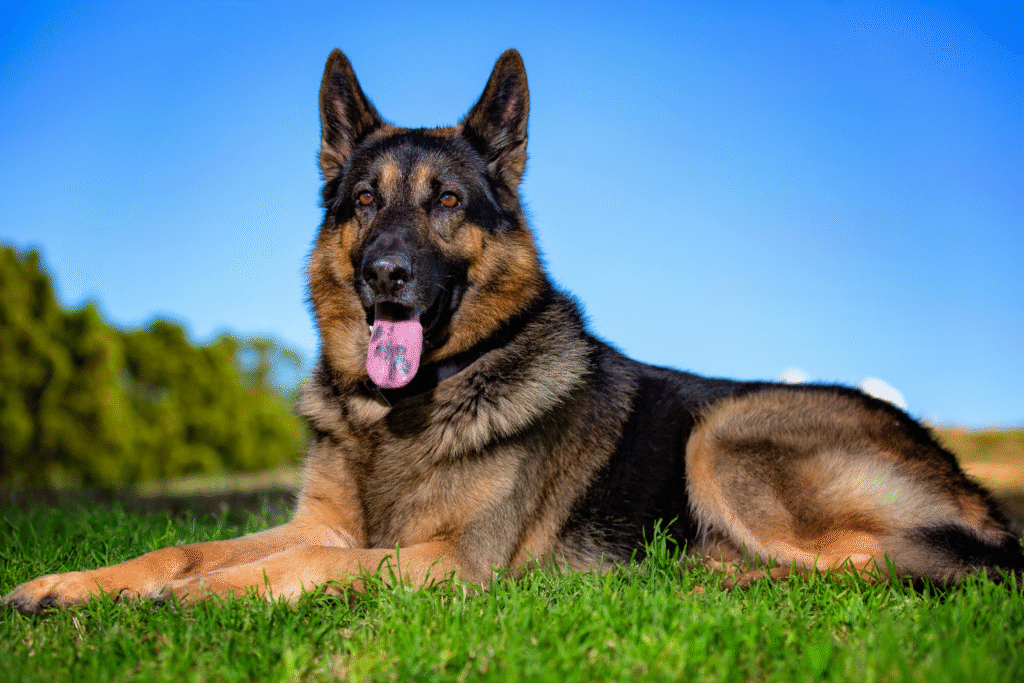
German Shepherds were originally bred for versatile working ability. Over time, the breed fractured into show lines and working lines with limited cross breeding. This separation reduced gene flow and concentrated defects within each subgroup.
Hip dysplasia, degenerative myelopathy, and autoimmune conditions rose steadily. Even well managed programs struggle because many risk genes are already fixed. The breed remains numerous, yet its genetic health mirrors that of a shrinking population rather than a robust one.
5. Boxers reveal immune breakdown from narrowing bloodlines.
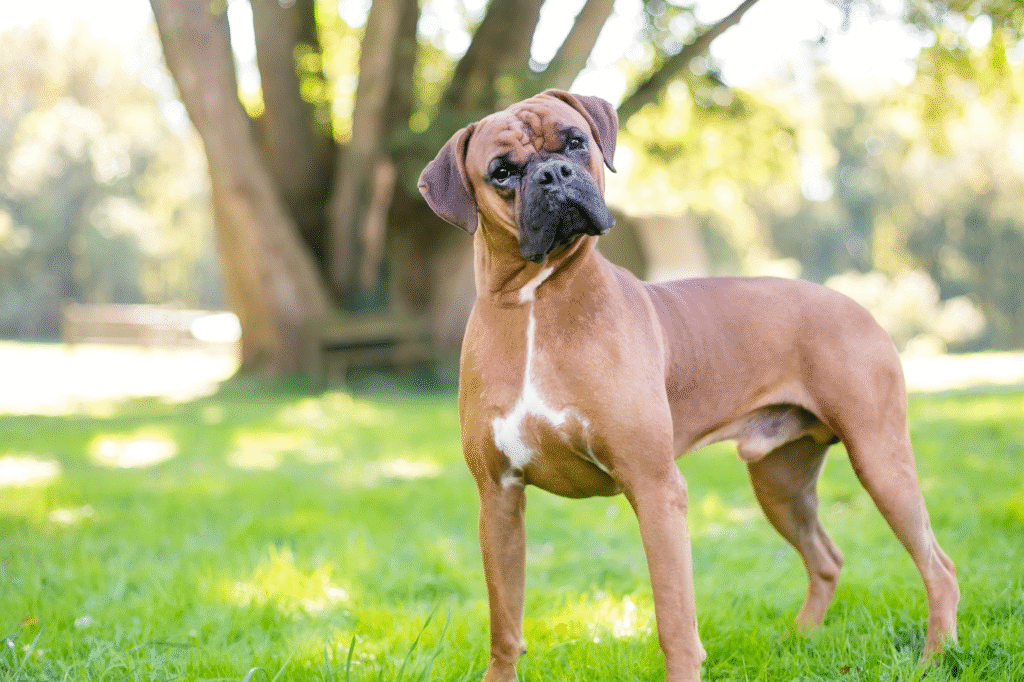
Boxers were once valued for physical stamina and emotional steadiness, yet their modern genetic profile tells a quieter story. Across North America and Europe, veterinarians report unusually high rates of lymphoma, mast cell tumors, and immune mediated diseases in relatively young dogs. These patterns persist across unrelated kennels, suggesting inheritance rather than coincidence. The breed’s gene pool contracted sharply during the twentieth century, concentrating immune response genes that once varied widely. When that variation disappeared, resilience went with it, leaving Boxers less able to regulate inflammation or respond predictably to cellular damage.
What makes this especially troubling is how invisible the process was while it unfolded. Dogs could look robust while carrying silent vulnerabilities. Over generations, immune instability accumulated without obvious outward signs until disease rates crossed a visible threshold. Even careful breeding cannot easily correct this because most Boxers now share similar immune profiles. The body still fights, but it fights poorly, often attacking itself or failing to recognize malignant change early enough to stop it.
6. French Bulldogs illustrate demand driven genetic compression.

French Bulldogs surged in popularity faster than almost any breed in modern history. That explosive demand reshaped breeding practices worldwide within a single decade. A limited number of fashionable sires produced thousands of offspring, shrinking diversity at record speed. This compression magnified inherited airway disorders, spinal deformities, and reproductive failure. The breed’s charming appearance masked how rapidly biological limits were being crossed, especially as international trade moved the same bloodlines across continents.
As diversity collapsed, even responsible breeders found themselves cornered. Finding unrelated mates became increasingly difficult. Genetic overlap turned common, not exceptional. Health screening can identify individual risks, but it cannot create variation where none exists. The breed now faces a future where intervention may be the only option to restore basic biological function, a situation created not by neglect but by overwhelming popularity.
7. Irish Setters demonstrate how rare mutations become fixed.

Irish Setters were once genetically diverse hunting dogs spread across wide working populations. As breeding narrowed and numbers declined, certain recessive disorders quietly persisted through carriers. Epilepsy, progressive retinal atrophy, and autoimmune conditions appeared sporadically at first, rarely raising alarms. Over time, however, reduced diversity made carrier to carrier pairings increasingly likely, allowing these diseases to surface with greater regularity.
Today, avoidance strategies offer limited relief because the underlying gene pool is already saturated. Many healthy appearing dogs still carry harmful mutations. This creates heartbreaking outcomes for breeders and owners alike, where careful planning cannot fully prevent inherited illness. The breed’s experience shows how quickly population mathematics can overpower intention once diversity slips below a critical threshold.
8. Shar Pei health reflects tradeoffs embedded in appearance.

The Shar Pei’s signature wrinkles come from a genetic mutation that increases hyaluronic acid production. While visually distinctive, this mutation also triggers chronic inflammation throughout the body. As breeding favored deeper folds, the mutation became fixed, and protective genetic modifiers gradually disappeared from the population.
The result is a breed prone to fever syndromes, immune dysregulation, and kidney damage. These conditions are not side effects but direct consequences of narrowing genetic options around a single trait. Once diversity declined, there was no buffer left to soften the biological cost. The Shar Pei demonstrates how quickly cosmetic preference can reshape internal physiology in ways that cannot be reversed easily.
9. Dachshunds accumulate structural risk through uniformity.

Dachshunds were intentionally shaped for underground hunting, with elongated bodies and short legs offering practical advantages. Over generations, that structure was reinforced more narrowly, reducing skeletal variation. As diversity declined, the spine became increasingly vulnerable to mechanical stress.
Intervertebral disc disease now affects a significant portion of the breed, often appearing in middle age. While weight management and activity modification help, genetics largely determine risk. The breed’s uniform shape leaves little room for biological compensation. Once flexibility vanished from the genome, injury became a matter of timing rather than chance.
10. Scientists warn recovery windows may soon close.
Geneticists studying domestic dogs increasingly use language once reserved for conservation biology. When diversity drops too low, recovery becomes mathematically improbable without external intervention. Several breeds now approach that boundary, where selective breeding alone cannot restore lost variation.
Each closed generation accelerates decline. Health issues stack, fertility falls, and resilience erodes. The concern is not extinction in the traditional sense but biological unsustainability. Without deliberate genetic expansion, some breeds may persist only through medical support, surviving outwardly while quietly losing the capacity to thrive across generations.