
New research uncovers unsettling breed specific heart risks.

The unsettling part is how quietly it happens. One moment a dog seems healthy and energetic, and the next something inside its chest falters in ways the owner never saw coming. Genetic heart conditions move silently through certain lineages, shaped by decades of selective breeding and hidden mutations. Researchers are now tracing those patterns with sharper tools, revealing which breeds carry the greatest risks and why. The more they uncover, the clearer the stakes become for families who love these dogs.
1. Some Dobermans carry a mutation tied to abrupt collapse.

Dobermans have been a focus of heart research for years because of how often they develop dilated cardiomyopathy. The condition stretches the heart muscle until it cannot contract well, and it often progresses with very few outward signs. Geneticists have pinpointed a mutation that makes some dogs far more vulnerable, as stated by the American College of Veterinary Internal Medicine. The danger rises because these subtle changes can go unnoticed until the heart is already failing.
Once researchers recognized how widespread this mutation was within certain bloodlines, they pushed for more routine screening. That work created new pressure for breeders to test their dogs and avoid passing the high risk variant forward. Families already living with Dobermans often discover that early monitoring gives them a chance to intervene with medication before the condition spirals. Even with those tools, the unpredictability of the disease keeps many owners on edge.
2. Boxers can inherit a disruptive rhythm disorder without warning.

Boxer cardiomyopathy is a genetic electrical issue rather than a structural one, and it can cause sudden irregular rhythms that turn deadly. Many dogs appear completely normal until the underlying glitch triggers fainting or collapse, sometimes during play. The pattern has been documented for years in veterinary cardiology, as reported by Tufts University at the end of one of their summaries. Owners are often surprised by how deceptively quiet the condition remains until the first episode.
As more Boxers undergo Holter monitoring, researchers are seeing how early these rhythm disturbances start. Some dogs show subtle abnormalities as youngsters that progress over time, passing unnoticed without specialized tests. The families who choose regular screenings gain insight into patterns that would otherwise remain invisible. That makes early medication or lifestyle adjustments easier to time, even though the genetic root still shapes the dog’s long term risk.
3. Certain Cocker Spaniels show a hereditary pattern of heart muscle degeneration.

Cocker Spaniels have a surprisingly documented history with familial cardiomyopathy, and some lines are significantly more affected than others. The issue is complicated because the symptoms can resemble many unrelated conditions during early stages. Veterinary researchers noted the pattern decades ago, as discovered by the Merck Veterinary Manual in their discussion on inherited heart disease. The condition tends to emerge quietly before progressing into weakness or sudden collapse.
Families with Cockers often learn that the earliest clues are subtle changes in stamina that only show up during high energy moments. By the time coughing or breathlessness appear, the heart may already be struggling. Knowing this, many veterinarians encourage baseline imaging for young dogs from high risk lines. That simple step gives owners a way to catch early enlargement or weakening before the dog reaches a critical point.
4. Great Danes can develop silent enlargement of the heart.

Great Danes tend to mask early heart changes with their size and calm temperament, and many owners misread mild fatigue as normal. What researchers have found is that some Danes carry inherited weaknesses in their cardiac muscle that slowly widen the chambers. The slow pace lulls families into thinking nothing is wrong until the dog suddenly collapses. Screening is often the only way to differentiate normal giant breed tiredness from a deeper issue.
Routine echocardiograms have become essential for breeders trying to preserve healthier lines. When abnormalities surface early, veterinarians can start treatment that prolongs quality of life and slows progression. For a breed that already has a short lifespan, gaining even a couple of extra years can mean everything. The genetic influence remains strong, but awareness gives families a chance to stay ahead of it.
5. Irish Wolfhounds face an elevated risk for sudden cardiac failure.

Irish Wolfhounds are known for gentle behavior, but their hearts can be far more fragile than their personalities suggest. Some families learn about the genetic risks only after a sudden event leaves them searching for answers. Research has shown that certain lines carry traits that make the heart chambers enlarge more quickly. Owners often notice that their dog tires earlier during long walks before any obvious signs appear.
Veterinarians who work closely with the breed encourage regular cardiac evaluations starting young. Early medication slows the progression and buys time that would otherwise be lost. The emotional impact is heavy because these dogs bond deeply with their families, making any hint of risk feel personal. That connection is one reason researchers have pushed to better understand the hereditary side of their vulnerability.
6. Portuguese Water Dogs sometimes inherit rare but serious defects.

These energetic dogs are usually robust, which makes sudden heart issues harder for families to anticipate. Some Portuguese Water Dogs develop genetic cardiac defects that place strain on the heart as it matures. The signs can be subtle, like brief rest periods after play or a momentary hesitation on stairs. Over time, the misplaced pressure on the heart can trigger fainting or abrupt failure.
Breed specific screening programs have become more common as awareness grows. Owners who participate often discover early changes that respond well to treatment. While not every line carries the risk, the families who are proactive gain peace of mind. Maintaining their high activity level safely becomes easier when veterinarians have imaging data to guide them.
7. Newfoundlands are vulnerable to a hereditary rhythm disturbance.

Newfoundlands often seem unbothered by anything, which makes it easy to miss early signs of heart rhythm problems. Some lines carry inherited traits that disrupt the electrical signals controlling the heartbeat. The first outward clue might be a brief collapse that resolves quickly, leaving owners confused. Because the episodes can be so fleeting, many families delay seeking testing.
Once monitored, these rhythm irregularities can be managed with medication that stabilizes the heartbeat. Early detection means dogs can return to normal activities without the constant risk of sudden failure. Owners who know their dog’s lineage often feel more prepared, especially when the breed club encourages genetic screening. The goal is to keep these large, affectionate dogs safe despite the hidden risks.
8. Saint Bernards may carry genetic changes that weaken their heartbeat.

Saint Bernards have tremendous size that places natural stress on their hearts even without inherited issues. Some bloodlines, however, show genetic patterns that make the heart less efficient at pumping. The strain builds over time and can lead to sudden collapse during exertion. Families often mistake the earliest signs for simple overheating or heavy breathing.
Veterinarians familiar with the breed recommend screening at intervals throughout adulthood. Those snapshots help track any widening or weakening before it becomes dangerous. Treatment can significantly improve quality of life for affected dogs, giving families more time with their companions. Because the breed grows so rapidly, early monitoring is especially important.
9. English Bulldogs sometimes hide congenital defects behind their calm exterior.

Bulldogs carry so many breed specific traits that heart issues can easily blend into the background. Some dogs develop congenital defects that place uneven pressure on the heart from a young age. The signs are minor at first, like brief pauses during play or persistent mild fatigue. Without targeted testing, the problem progresses until sudden events become more likely.
Awareness among bulldog owners has grown as more veterinarians highlight the importance of early imaging. Even small defects respond well to treatment when caught in the early stages. This gives families time to adjust exercise routines and minimize strain. With close monitoring, many affected dogs still maintain an active, happy life.
10. German Shepherds can inherit an under recognized form of heart disease.
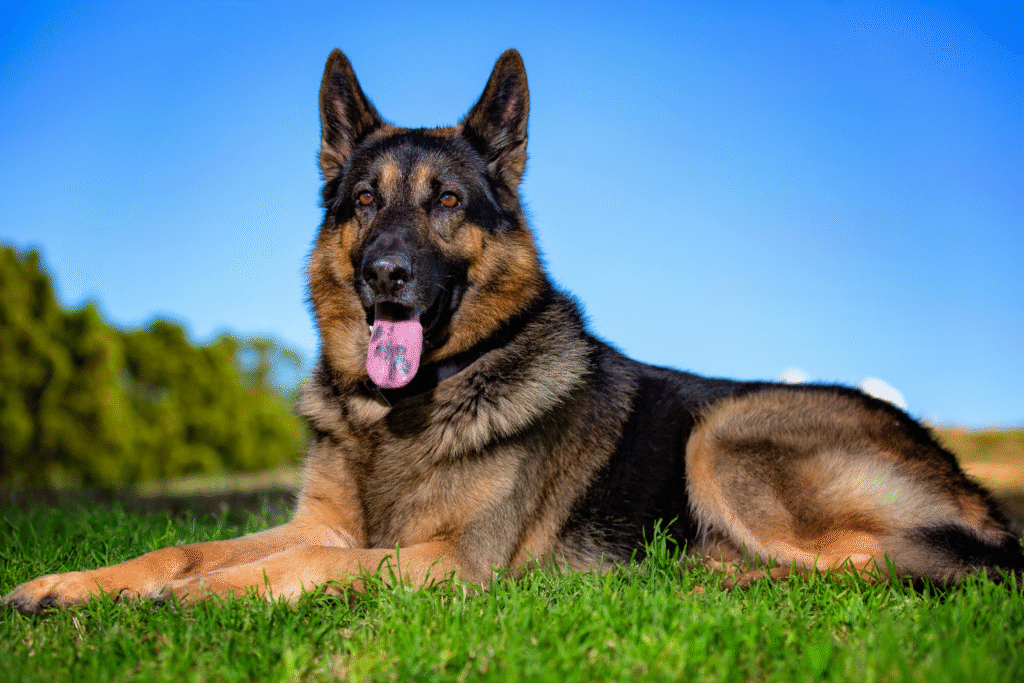
German Shepherds are widely viewed as strong working dogs, yet some lines carry inherited cardiac weaknesses. The earliest symptoms are often brushed aside as normal training fatigue. Over time, however, the heart struggles to maintain output during exertion, creating moments of dizziness or brief collapse. Because these episodes are unpredictable, families often discover the issue only after a sudden scare.
Routine screening has become more common as awareness spreads. Catching early heart changes allows veterinarians to develop tailored care plans that keep the dog active without undue strain. With more research exploring their genetic landscape, the hope is to uncover markers that help breeders reduce the risk in future generations.