
Love shows itself through quiet, consistent choices.
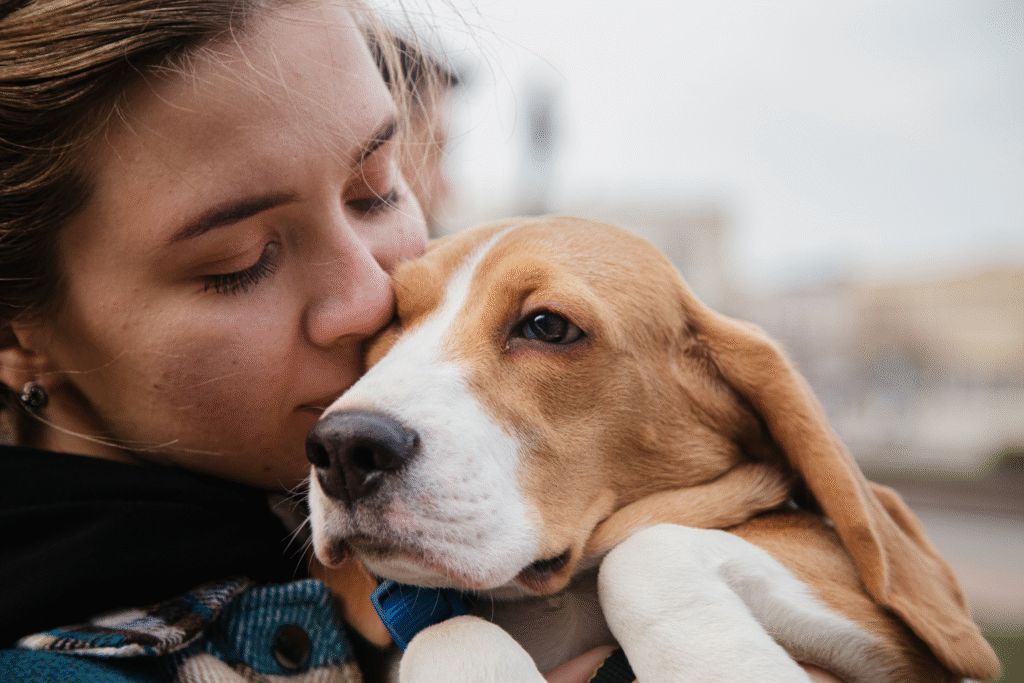
Love in dogs rarely arrives as a single moment. It builds quietly through shared routines, repeated safety, and emotional trust. Veterinarians and behaviorists often recognize it during moments of stress, recovery, or aging, when dogs reveal who they rely on most. These behaviors are not tricks or training results. They emerge naturally when a dog feels emotionally bonded. The signs are subtle, steady, and deeply personal. Once you notice them, the relationship begins to feel intentional rather than accidental.
1. Your dog consistently chooses closeness without prompting.

A dog in love gravitates toward you even when nothing is required. During yard time, family gatherings, or relaxed evenings, they position themselves nearby without being asked. This is not separation anxiety or insecurity. It is preference shaped by emotional safety and trust.
Studies on canine attachment show bonded dogs demonstrate voluntary proximity seeking, according to the American Veterinary Society of Animal Behavior. Veterinarians recognize this pattern when dogs calmly follow owners room to room, not demanding interaction, simply wanting shared space that feels emotionally grounding.
2. Eye contact softens and lingers naturally.

When a dog falls in love, eye contact changes. It becomes relaxed, gentle, and sustained during calm moments. This gaze is not vigilance or control. It is connection. Dogs often look at their bonded humans during rest, reassurance seeking, or quiet observation.
Neuroscience research shows mutual gaze increases oxytocin levels in dogs and humans, strengthening emotional bonds, as reported by the National Institutes of Health. Veterinarians observe this during exams when bonded dogs seek eye contact with owners to regulate stress.
3. Emotional states begin quietly mirroring your own.
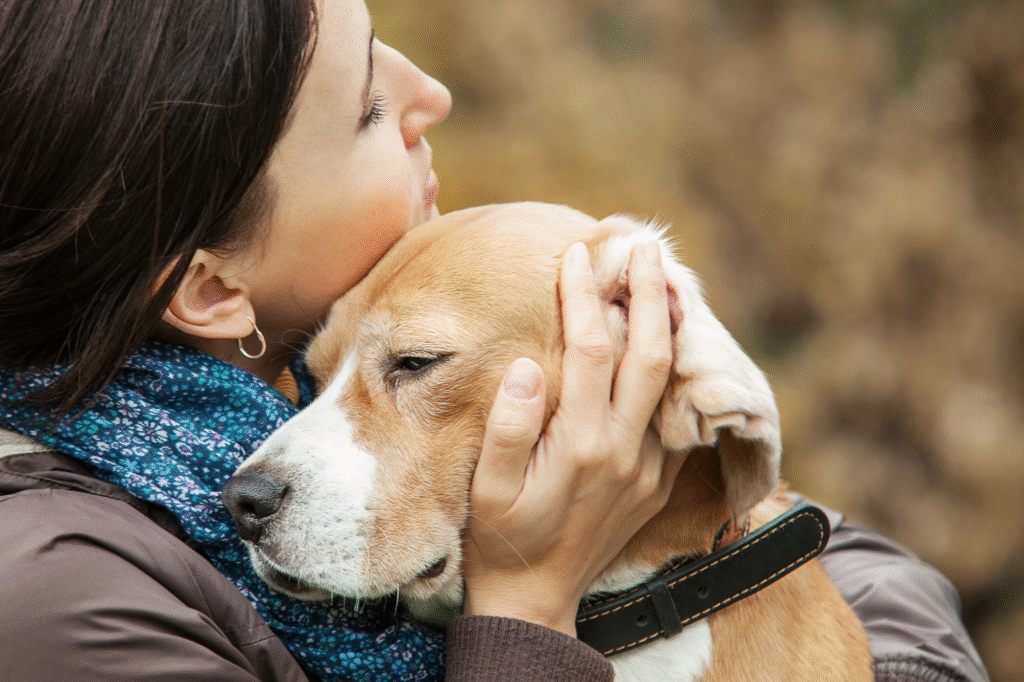
Dogs deeply bonded to humans start responding to emotional shifts rather than commands. When you slow down, they settle. When tension rises, they become attentive and calm. This is not learned obedience. It is emotional attunement.
Behavioral studies have shown dogs adjust behavior based on human emotional cues, as discovered by researchers at the University of Vienna. Vets see this most clearly in clinical settings where bonded dogs respond more to owner mood than environmental stressors.
4. Monitoring replaces constant attention seeking.
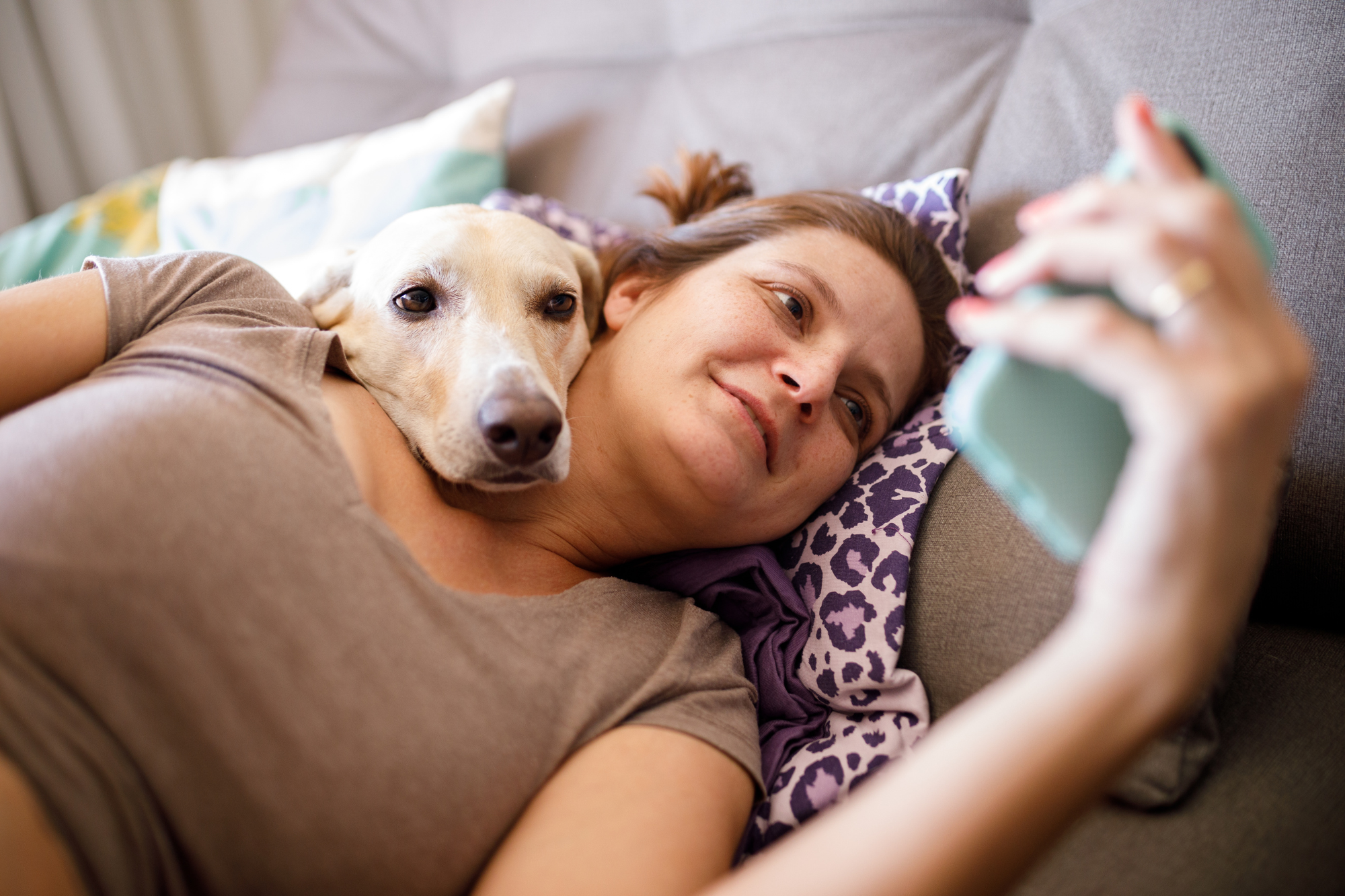
A dog in love does not demand interaction nonstop. Instead, they track your presence quietly. They nap facing doorways, lift their head when you move, then relax again once you settle.
This behavior reflects secure attachment. The dog trusts your availability and does not need reassurance through constant touch. Veterinarians often describe this as emotional confidence rather than clinginess, a sign the bond feels stable and reliable.
5. Physical affection becomes slower and more intentional.

Touch changes when love deepens. Leaning becomes full body contact. Movements soften. Paw placement becomes careful rather than restless. Affection shifts from excitement to comfort.
Dogs that feel emotionally safe reduce jittery contact. Physical closeness becomes regulating instead of stimulating. This behavior often intensifies during illness or aging, when dogs seek grounding contact rather than play driven interaction.
6. Protective awareness increases without aggression.
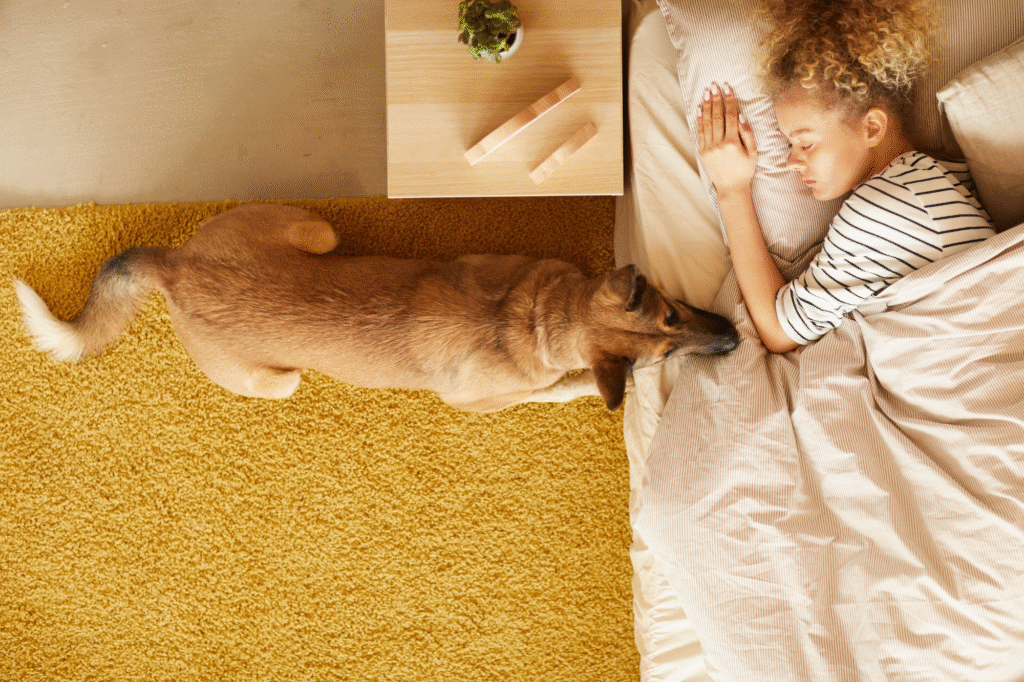
A bonded dog becomes subtly aware of changes around you. They adjust body position, angle themselves between you and unfamiliar stimuli, or remain alert while staying calm.
This is not guarding or dominance. It is social awareness rooted in attachment. Trainers and veterinarians recognize this behavior as quiet vigilance, where the dog monitors surroundings while prioritizing your comfort rather than reacting defensively.
7. Stress recovery accelerates when you are nearby.
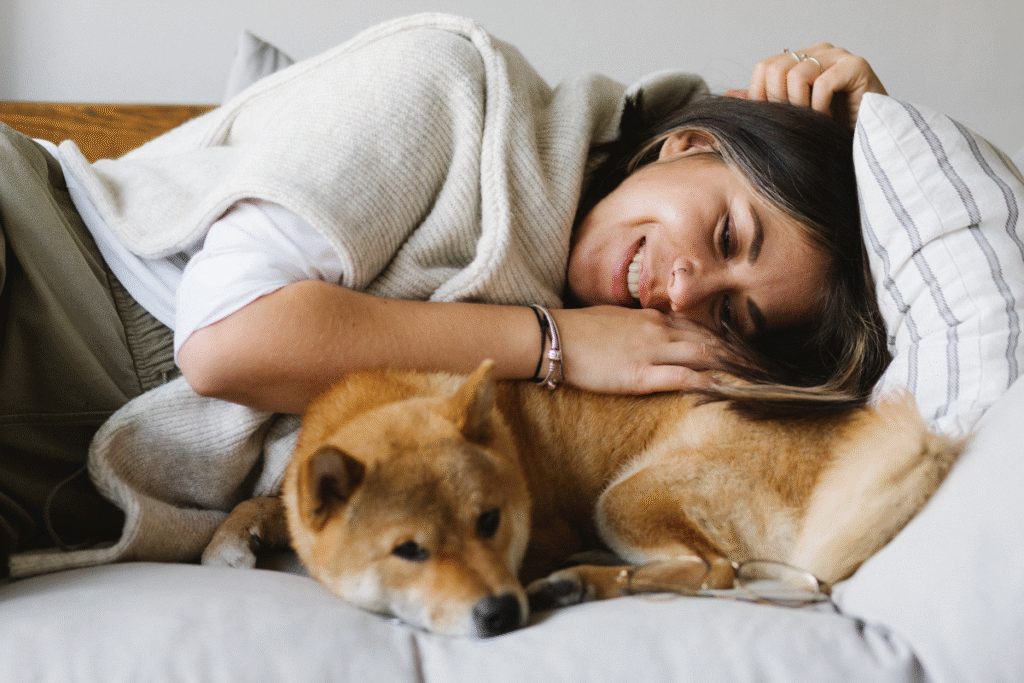
When startled or overwhelmed, a dog in love settles faster in your presence. Breathing slows. Muscles relax. Body language softens.
Veterinarians observe this during exams when anxious dogs calm quickly once owners return. Your presence functions as a regulatory anchor. The dog associates you with safety, allowing their nervous system to reset more efficiently after stress.
8. Comfort behaviors appear during your vulnerability.
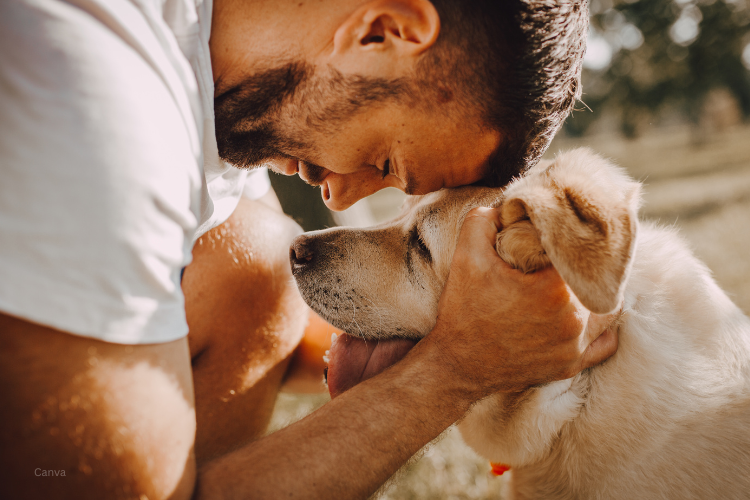
Dogs in love respond differently when you are sick, sad, or exhausted. They move closer, reduce rough play, and rest quietly nearby. These behaviors are not trained.
Vets often hear owners describe dogs changing behavior during grief or recovery. These responses emerge when a dog recognizes your emotional state as meaningful. Love shows itself when the dog adapts without being asked.